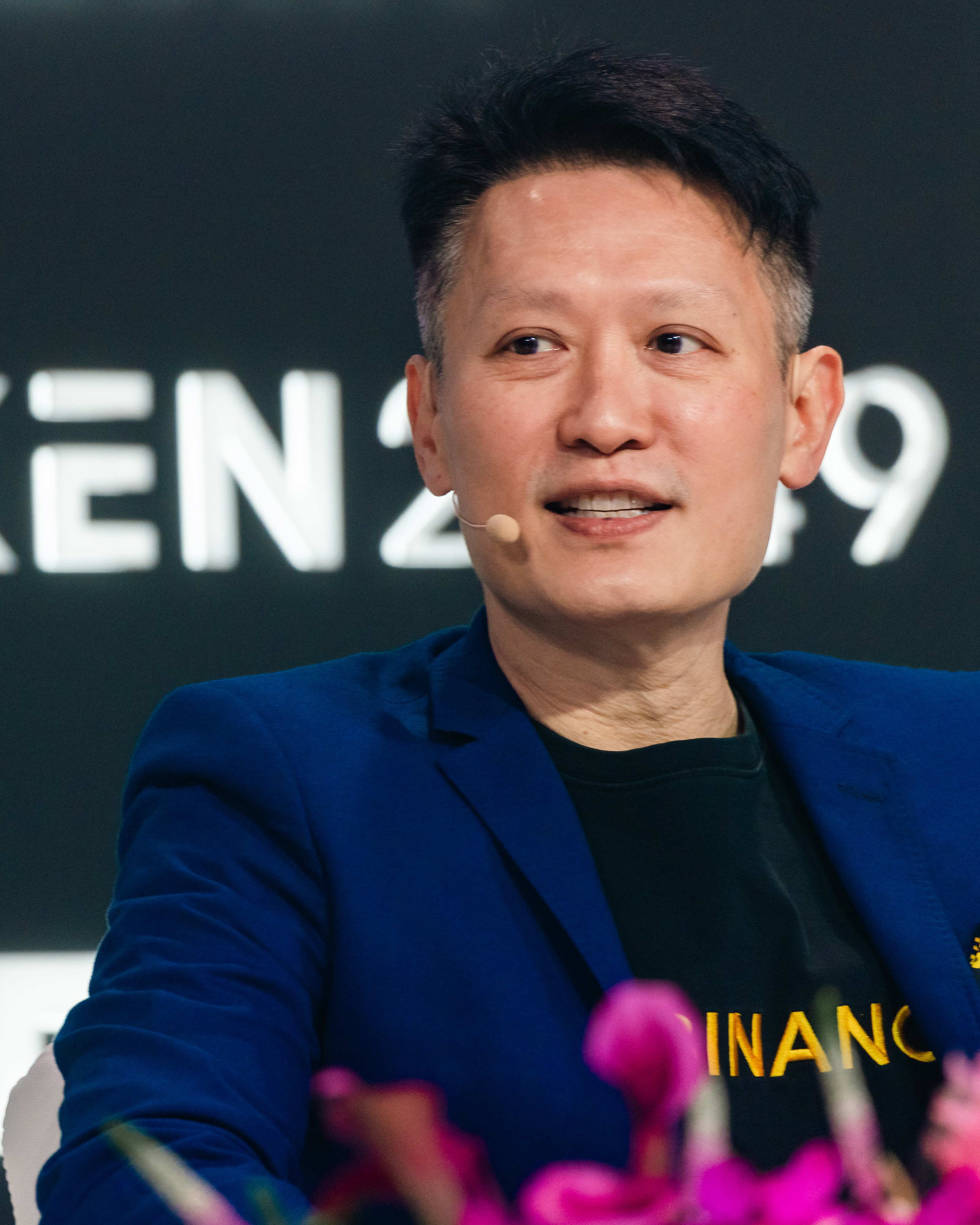
Cover Antony Leung, the group chairman of Hong Kong conglomerate Nan Fung Group, on a panel during the 10th Belt and Road Summit (Photo: Belt and Road Summit)
Antony Leung, the group chairman of Hong Kong conglomerate Nan Fung Group, on a panel during the 10th Belt and Road Summit (Photo: Belt and Road Summit)
1 / 1
During the Belt and Road Summit 2025, industry leaders shared strategies for succeeding in the next phase of China’s Belt and Road Initiative, including fostering local growth to utilising Hong Kong as a springboard
The 10th Belt and Road Summit, co-organised by the Hong Kong government and the Hong Kong Trade Development Council, convened over 90 government officials and business leaders to explore new frontiers of China’s Belt and Road Initiative (BRI).
The initiative, also known as the Silk Road Economic Belt, was launched by the Chinese Government in 2013 to accelerate growth between Asia and the broader world through large-scale infrastructure projects. It spans markets including Asean, the Middle East and central and eastern Europe.
The two-day summit featured panel discussions and breakout sessions offering fresh perspectives on the project. Here are some key takeaways from industry leaders on capturing the next wave of opportunities.
Read more: Wang Ning: Who is China’s youngest billionaire behind the multi-billion-dollar Labubu empire?


Above Algernon Yau, Hong Kong’s Secretary for Commerce and Economic Development; Anthony Loke, Malaysia’s Minister of Transport; H.E. Dr Ahmed bin Mohammed Al-Sayed, Qatar’s Minister of State for Foreign Trade Affairs; Khaled Al Khattaf, CEO of Saudi Arabia’s Saudi Investment Promotion Authority; Yerlan Sagnayev, Vice Minister of National Economy of the Republic of Kazakhstan; and Umid Abidkhadjaev, Uzbekistan’s Deputy Minister of Economy and Finance spoke at a panel (Photo: Belt and Road Summit)
Algernon Yau, Hong Kong’s Secretary for Commerce and Economic Development; Anthony Loke, Malaysia’s Minister of Transport; H.E. Dr Ahmed bin Mohammed Al-Sayed, Qatar’s Minister of State for Foreign Trade Affairs; Khaled Al Khattaf, CEO of Saudi Arabia’s Saudi Investment Promotion Authority; Yerlan Sagnayev, Vice Minister of National Economy of the Republic of Kazakhstan; and Umid Abidkhadjaev, Uzbekistan’s Deputy Minister of Economy and Finance spoke at a panel (Photo: Belt and Road Summit)
1 / 1
Collaborations around the region
Ibrahim Al-Eisri, chief investment officer of the Oman Investment Authority—the investment arm of the Sultanate of Oman—highlighted how the Middle East is evolving from a capital source into a partner driving innovation. He described a region eager for the future and ready to collaborate with established international firms, particularly those from China.
This shift underpins a new, more collaborative investment model designed to attract world-class companies. “The offering we provide for these specific companies, as a country at the moment, is: ‘We will be your partner. We will help you set up in Oman and support your growth in the region and across the globe,” he explained. “For the Chinese investors, it gives them comfort that a sovereign partner is collaborating with them.”
Read more: Are humanoid robots overhyped? Chinese tech leaders weigh in at Beyond Expo 2025
Leveraging Hong Kong as a launch pad
Speakers repeatedly underlined Hong Kong’s crucial role as the launch pad for companies expanding into Belt and Road markets. Ronald Lam, CEO of Cathay Group, which operates the city’s flagship carrier Cathay Pacific, framed this as central to one of his company’s missions: connecting China with other Belt and Road countries not only through passenger and cargo services, but also by facilitating capital flow and professional services.

Above Ronald Lam, CEO of Cathay Group, said that its premium airline, Cathay Pacific, operates between Hong Kong and around 30 destinations within the Belt and Road Initiative region (Photo: Getty Images)
Ronald Lam, CEO of Cathay Group, said that its premium airline, Cathay Pacific, operates between Hong Kong and around 30 destinations within the Belt and Road Initiative region (Photo: Getty Images)
1 / 1
Echoing this, Gansha Wu, co-founder and CEO of Beijing autonomous driving company Uisee Technologies, described Hong Kong as a platform offering a “world scenario” to test products. He further emphasised that it has the world’s highest standard to ensure quality; access to the world market to build presence and world capital for growth via IPOs. “I think these are the four factors that Chinese mainland companies, particularly high-tech companies, can really leverage in their go-global strategy,” he said.
Read more: Introducing XPeng, the Chinese company building the future with EVs, flying cars and robots
Tailoring approaches for diverse economies
Professor KC Chan, chairman of Hong Kong-based digital bank WeLab Bank, stressed that businesses must not view the BRI as a monolithic market. He emphasised the diversity of economies involved, each with distinct characteristics, challenges and stages of development, requiring tailored strategies for entry and growth.
“Belt and Road covers a huge, diverse set of economies. They’re very different in terms of size, wealth level and technology sophistication, and often many parts of the Belt and Road countries are not even well-connected,” he observed. He urged business leaders to conduct in-depth, market-specific research and adapt models to local conditions rather than applying a one-size-fits-all approach.
Read more: Why is China putting the brakes on self-driving claims on cars?

Above The Suifenhe Railway land port, located in northeast China’s Heilongjiang province, has served as a key hub for the east corridor to the China-Europe freight train service under the framework of the Belt and Road Initiative (Photo: Getty Images)
The Suifenhe Railway land port, located in northeast China’s Heilongjiang province, has served as a key hub for the east corridor to the China-Europe freight train service under the framework of the Belt and Road Initiative (Photo: Getty Images)
1 / 1
Catalysing local growth
Gim Huay Neo, managing director and member of the managing board at the World Economic Forum, said that the initiative’s true potential lies not only in large-scale infrastructure but also in unlocking entrepreneurial energy from the ground up. She called for a shift towards nurturing vibrant, self-sustaining ecosystems.
She stressed that success depends on empowering local actors to participate directly. “The challenge is whether even as we pursue big, bold transboundary projects, we can also create space and catalyse local and regional ecosystems, enabling local communities, the small and medium enterprises, to co-create, contribute and thrive within the richness and beauty of this ecosystem.” Such an approach, she added, ensures inclusive development and shared value across all levels of the economy.
NOW READ
Curated for you
The stories, profiles, and cultural moments featured on our Instagram feed