Cover At Marina Bay Sands’ Jin Ting Wan, Joe Yang curates an exclusive collection of Chinese wines that deepen—not overshadow—the nuances of Cantonese cuisine
At Marina Bay Sands’ Jin Ting Wan, Joe Yang curates an exclusive collection of Chinese wines that deepen—not overshadow—the nuances of Cantonese cuisine
1 / 1
At Marina Bay Sands’ Jin Ting Wan, wine is no longer an afterthought to Cantonese cuisine—it is a dialogue. With one of Singapore’s most extensive collections of rare Chinese vintages, head sommelier Joe Yang is quietly reshaping how diners experience flavour, culture and craftsmanship at the table
Perched on Level 55 of Marina Bay Sands, Jin Ting Wan is not merely a dining room—it is a point of view. Here, Cantonese cuisine is expressed with precision and reverence, but also with a subtle, forward-looking ambition that feels distinctly of the moment. It is a space where tradition is neither static nor performative; instead, it is continuously refined, reinterpreted and, crucially, placed in conversation with something that has long existed at its periphery: wine.
That conversation is being led by Joe Yang, whose approach to pairing moves beyond the expected binaries of East and West. Trained in some of Macao’s most exacting Michelin-starred kitchens and armed with both a WSET Level 4 Diploma and an Advanced Sommelier Certificate, Yang operates with a duality that defines the modern sommelier: technical precision balanced by instinct. At Jin Ting Wan, his philosophy of “wine with the cuisine” places the dish firmly at the centre, allowing pairings to unfold organically from the integrity of the ingredient, the nuance of technique and the emotional resonance of flavour.
In case you missed it: Curtain Call: Best restaurants and bars in Marina Bay Sands for pre-show dining
What emerges is a programme that does more than complement—it deepens. With rare Chinese vintages, some available exclusively within the restaurant, Yang is also quietly challenging long-held perceptions around Chinese fine wine. Regions such as Ningxia and Yunnan are no longer curiosities, but serious contenders, offering structure, elegance and a distinct sense of terroir that speaks to a new generation of diners. At Jin Ting Wan, the result is a dining experience that feels layered and immersive—where each glass does not compete with the plate, but amplifies it, revealing a shared cultural language that is as much about identity as it is about taste.


Above Joe Yang brings a rare duality to Jin Ting Wan at Marina Bay Sands—technical mastery tempered by instinct, and precision softened by emotion
Joe Yang brings a rare duality to Jin Ting Wan at Marina Bay Sands—technical mastery tempered by instinct, and precision softened by emotion
1 / 1
Tatler: You were born in Guangdong and trained in some of Macao’s most exacting Michelin-starred kitchens. How has that shaped your understanding of Cantonese cuisine as a partner to wine?
Joe Yang: Cantonese cuisine is instinctive to me—I grew up with its flavours, techniques and respect for ingredient purity. That foundation allows me to understand a dish intuitively when pairing it with wine.
My time in Michelin-starred kitchens in Macao expanded that perspective. Those environments are disciplined but also push innovation. They taught me that Cantonese cuisine can evolve while staying true to its roots.
When pairing wine, I always begin with the soul of the dish. For example, a traditional suckling pig may be elevated with caviar at Jin Ting Wan. The challenge is finding a wine that honours the classic base while complementing these refined additions.
Tatler: You describe your philosophy as “wine with the cuisine”. What does that look like in practice?
Joe Yang: It means the food always comes first. Every pairing begins with understanding the core ingredient—its intensity, character and preparation.
Take our roasted pipa duck. It has delicate gaminess, crisp skin and layers of sweet-tart flavour from tangerine peel and plum sauce. The wine needs balance: medium body, bright acidity, gentle herbal notes and ripe fruit.
We test extensively before deciding. For this dish, a Ningxia Pinot Noir works beautifully—it supports the dish without overpowering it. Ultimately, though, the guest matters most. Pairings should adapt to them, not the other way around.
In case you missed it: Inside the global debut of Johnnie Walker Vault x Olivier Rousteing’s ‘The Couture Blend’
Tatler: Many diners still see wine as secondary in Cantonese dining. Has that mindset shifted?
Joe Yang: Our goal is not to make wine the centre of attention. Cantonese cuisine remains the foundation.
What wine can do is add dimension. When paired thoughtfully, it reveals nuances in the dish that might otherwise go unnoticed. It complements rather than replaces tradition.
If guests leave with a deeper appreciation of how wine and Cantonese cuisine can coexist, that’s a natural outcome—not something we force.
Tatler: With both a WSET Level 4 Diploma and an Advanced Sommelier Certificate, how do you balance technical precision with intuition?
Joe Yang: Technical knowledge gives me the framework—understanding structure, acidity and flavour profiles. But dining is emotional, not academic.
A great pairing shouldn’t require explanation. When it works, guests feel it instinctively.
My role is to use technical precision behind the scenes, but present the experience with warmth and intuition. If I’ve done it right, the guest feels the harmony before they analyse it.

Above At Jin Ting Wan, perched atop Marina Bay Sands, Joe Yang is redefining the dialogue between Cantonese cuisine and Chinese fine wine—one thoughtful pairing at a time
At Jin Ting Wan, perched atop Marina Bay Sands, Joe Yang is redefining the dialogue between Cantonese cuisine and Chinese fine wine—one thoughtful pairing at a time
1 / 1
Tatler: How do Chinese wine regions like Ningxia differ from classic Old World regions?
Joe Yang: They can’t be directly compared. Technique can be replicated, but climate cannot.
Ningxia has more sunlight, higher altitude and a drier climate than Bordeaux. This produces riper fruit, fuller body and more concentrated flavours. The viticulture is also unique—vines must be buried each winter to survive.
These conditions create wines with their own identity. While they may resemble Old World styles on paper, in reality they express something entirely distinct.
Tatler: Ningxia reds are often described as powerful and structured. How do they compare to Bordeaux?
Joe Yang: Bordeaux has centuries of refinement and a clearly defined identity. Ningxia is still evolving, which makes it exciting.
Its reds tend to be more powerful, with firmer tannins and strong ageing potential. But the region is still discovering its full range of expression.
Rather than comparing directly, I see Ningxia as a region in motion—one that is steadily establishing its place on the global stage.
In case you missed it: Inside Little Luxury Stars 2025 at The Shoppes at Marina Bay Sands: four days of children’s style, play and creativity
Tatler: Yunnan wines are known for their freshness. How does altitude shape their character?
Joe Yang: Altitude slows ripening, allowing grapes to retain acidity while developing flavour gradually.
At the same time, stronger UV exposure creates thicker skins and more concentrated aromatics.
The result is wines that are bright, lifted and precise—often surprising guests who expect something heavier.
When people see the dramatic mountain landscapes where these wines are grown, the character in the glass suddenly makes sense.
Tatler: There is still scepticism around Chinese fine wine. What are the biggest misconceptions?
Joe Yang: Many people associate Chinese wine with mass production, based on older, entry-level labels.
Today, the reality is very different. Top producers work with small parcels and meticulous viticulture, often in remote regions. Their wines are artisanal, expressive and limited in production.
Exposure is the challenge. Once guests taste these wines, perceptions begin to shift naturally.

Above From Ningxia to Yunnan, Jin Ting Wan’s wine programme at Marina Bay Sands brings China’s most compelling terroirs to the table—elevating dishes such as Alaskan King Crab with nuance, precision and depth
From Ningxia to Yunnan, Jin Ting Wan’s wine programme at Marina Bay Sands brings China’s most compelling terroirs to the table—elevating dishes such as Alaskan King Crab with nuance, precision and depth
1 / 1
Tatler: Do Chinese wines behave differently when paired with Cantonese cuisine?
Joe Yang: Not necessarily better, but differently in context. Western wines can pair beautifully as well.
What Chinese wines offer is cultural continuity. They are shaped by the same philosophies of balance and subtlety found in Cantonese cuisine.
That creates a more cohesive experience—not just in flavour, but in storytelling.
Tatler: How did you approach curating Jin Ting Wan’s rare wine collection?
Joe Yang: It’s built on direct relationships. I visit wineries, understand their philosophy and work closely with producers.
Some wines we offer are not even commercially available. Through these relationships, we are able to bring them exclusively to Singapore.
For me, it’s not about rarity alone—it’s about presenting wines that carry meaning, intention and cultural depth.
In case you missed it: 7 stylish kids’ holiday picks from The Shoppes at Marina Bay Sands
Tatler: What is one bottle that convinced you Chinese wines deserve a global stage?
Joe Yang: The 2012 Domaine Franco-Chinois Reserve Marselan from Hebei.
It has aged beautifully, developing complexity—leather, tobacco, cocoa—while retaining structure and balance.
It proves that Chinese wines are capable of ageing and evolving in the same way as the world’s great wines.
Tatler: How are you introducing Chinese wines to younger diners?
Joe Yang: Younger diners are curious and open-minded. The key is to create the right environment for discovery.
Our team plays an important role—we share the stories behind the wines in an approachable way.
It’s not about persuasion, but about sparking curiosity and allowing guests to explore naturally.
Tatler: What do you hope a first-time guest takes away from the experience?
Joe Yang: A sense of discovery.
I want them to realise that Chinese wines can stand confidently on the world stage, and that there is an entire world waiting to be explored.
If that experience opens their mind, then we’ve achieved something meaningful.
NOW READ
Day 1 of Little Luxury Stars 2025 brings Halloween magic back to The Shoppes at Marina Bay Sands
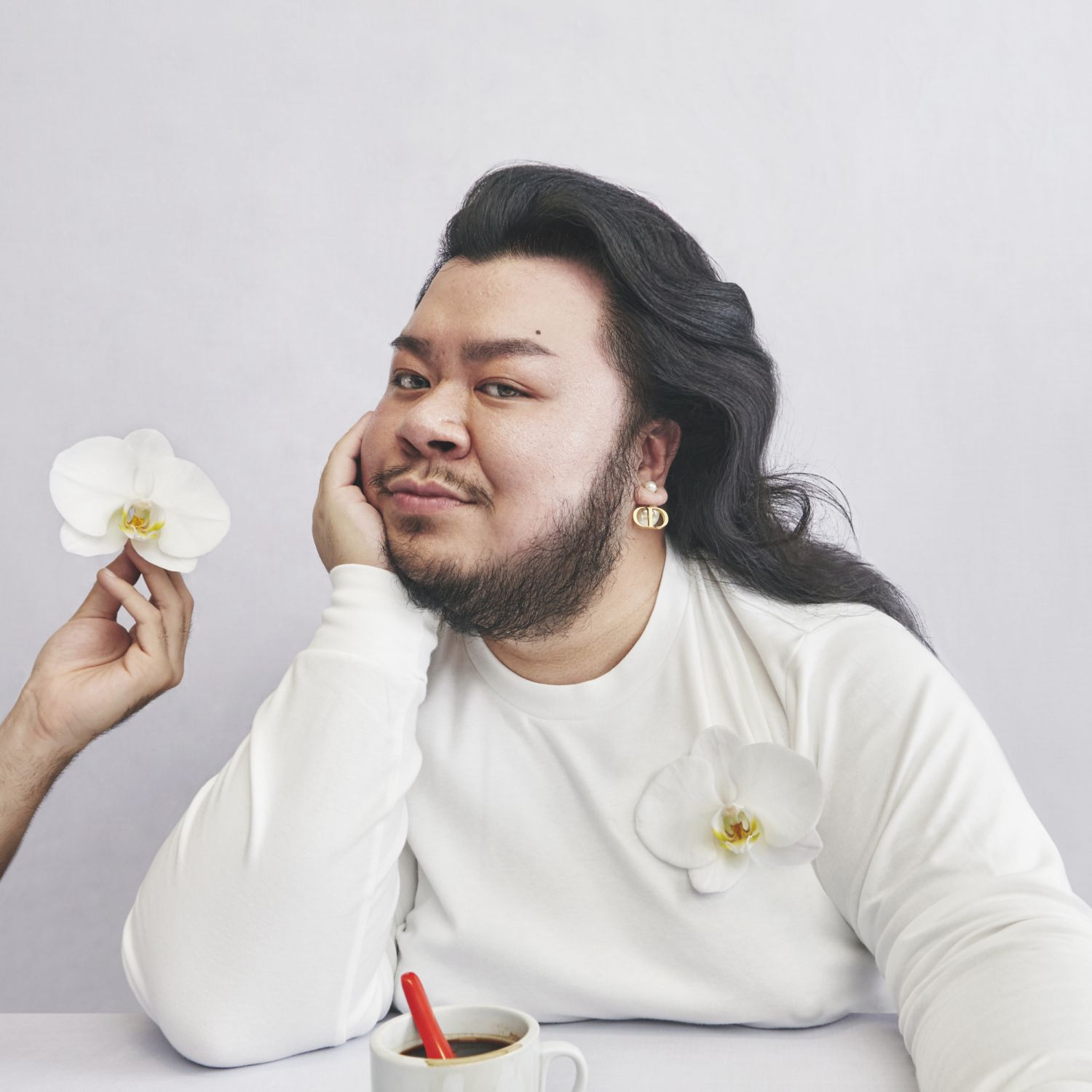
Adriel Chiun is the Branded Content Editor of Tatler Singapore.
Curated for you
The stories, profiles, and cultural moments featured on our Instagram feed