Cover Kevin Lin is the co-founder of Twitch, the world’s most dominant video game streaming platform (Photo: Yu Wei)
Kevin Lin is the co-founder of Twitch, the world’s most dominant video game streaming platform (Photo: Yu Wei)
1 / 1
After spending nearly a third of his life building one of the internet’s most influential platforms, Twitch co-founder Kevin Lin reflects on what comes after winning in tech
Kevin Lin had his doubts when he first heard the idea for Justin.tv, a site that would eventually evolve into Twitch, the world’s largest video game streaming platform.
He was hanging out with three of its co-founders—Justin Kan, Emmett Shear and Michael Seibel—while dog-sitting at his then-boss’s house in California. “They were like, ‘We’re going to stream Justin’s life 24/7’. And I was just thinking in my head like, ‘Wait, are you sure?’,” Lin, who later became one of Twitch’s co-founders, recalls.
Several things ran through his mind: The Truman Show, the 1998 American comedy film depicting a man whose entire life is unknowingly broadcast; the fact that Kan would have no privacy; and the potential danger of letting the internet know his whereabouts.
Lin wasn’t entirely wrong; the police once entered Kan’s apartment while he was streaming after a viewer spoofed his phone number and made a false report. But what he didn’t realise was how this unconventional idea could become a global broadcasting system.
Read more: Seven start-ups later, Rotten Tomatoes co-founder Patrick Lee now knows when to quit


Above Twitch, a live streaming platform acquired by e-commerce giant Amazon, attracts an average of 105 million monthly visitors (Photo: Getty Images)
Twitch, a live streaming platform acquired by e-commerce giant Amazon, attracts an average of 105 million monthly visitors (Photo: Getty Images)
1 / 1
Twitch is now a major multinational company owned by Amazon, which acquired the platform for US$970 million in cash in 2014. It attracts an average of 105 million monthly visitors, with more than 7 million creators streaming on the platform. Much of its content centres on gaming, but creators also host talk shows, make art and vlog in real time. This diverse mix, supported by a live messaging system that allows viewers to interact with both streamers and one another, attracts a distinctive audience: 65 per cent of Twitch viewers cannot be reached on other leading social media platforms like Facebook, Instagram or X.
Lin, who served as Twitch’s chief operating officer, described the platform as a collection of communities. “Personal is not really the right [word] to describe it,” he says. Instead, he offered a different metaphor: “There’s a campfire, and the storyteller is the creator. Video games are a backdrop, the activity that’s going on. But people are there to tune in for the creators, what they’re talking about and for each other.”
While community rules, which can be as simple as “don’t be mean to others”, helped keep these spaces running smoothly, Twitch’s appeal also lay in its rawness. The live format left little room for performative polish. “On Twitch, you can’t edit and undo. You say something, you do something, it’s there,” says Lin.
Read more: While the world watches humanoid robots dance, this founder thinks we’re missing the point
Anybody can do anything
Lin graduated from Yale University in 2004 with a Bachelor’s degree in ecology and evolutionary biology. He went on to try out a range of roles, including serving as a project manager at New York City Tourism + Conventions, the city’s official marketing, tourism and partnership organisation, as well as a sales and operations manager for the beverage brand Adina for Life in San Francisco. “I didn’t really have a clear vision for what my life would be like in my mind,” he recalls.
In 2008, as Justin.tv began opening up to the public for streaming, his college friend, Seibel, asked him to help with the platform’s financial modelling and, to his surprise, recruited him after just a couple of weeks. “I didn’t know how the internet worked, how to think about costing and making money at the time. I really knew nothing,” he says. But what mattered more to the founders was that he was someone they trusted and liked working with. “They thought anybody could figure out anything. And, you know, they were right. They were totally right.”

Above Justin Kan, co-founder of Justin.tv and so-called ‘lifecaster’ at the time, streams through a webcam attached to his baseball cap. Beside him is another co-founder, Michael Seibel, and two photographers chronicling what Kan is doing (Photo: Getty Images)
Justin Kan, co-founder of Justin.tv and so-called ‘lifecaster’ at the time, streams through a webcam attached to his baseball cap. Beside him is another co-founder, Michael Seibel, and two photographers chronicling what Kan is doing (Photo: Getty Images)
1 / 1
The early days of building the start-up were a grind, but to Lin, it didn’t feel like work. He remembers days spent listening to Justin.tv co-founders—Kyle Vogt, Kan, Shear and Seibel—argue over ideas and building product features that users ultimately didn’t adopt. After dinner, the team would unwind by playing video games and continue their conversations about the company well into the night. “It was a bit of a blur, you know?” Lin says. “Everything moved so fast. Every day felt so long, but then every year was so quick.”
While Justin.tv was growing, monetisation was difficult. Advertisers viewed live streams as risky because they lacked control over what content might appear on screen. So, the team decided to narrow its focus to a single content category. They explored music and sports, but were deterred by stringent content restrictions and high costs. Gaming, however, stood out. It had highly engaged audiences on Justin.tv and was slowly gaining traction online. The launch of the video game StarCraft II in 2010 solidified their hutch, as there was a surge of gameplay videos on YouTube.

Above Lin and Twitch CEO Emmet Shear speaking at TechCrunch Disrupt in 2014 (Photo: Getty Images)
Lin and Twitch CEO Emmet Shear speaking at TechCrunch Disrupt in 2014 (Photo: Getty Images)
1 / 1
In 2011, the start-up spun off the site’s gaming category into a separate platform, Twitch.tv, later shortened to Twitch. At the time, the new platform drew close to 3.2 million unique visitors per month.
Read more: Nobody talks about nanospinning. These brothers are making it matter
The cost of going live
Built at the dawn of the creator economy, Twitch became a viable livelihood for many individuals who earned a living by sharing what they loved online—one of the motivations that fuelled Lin to build the platform. Qualified streamers could earn a share of their supporters’ subscriptions and advertising revenue. “We’re the only interim [platform] where you watch people, consume the content, chat with people, but also where you transact,” Lin says. As their followings grew, creators could also tap external brand partnerships or sell their own merchandise.
While live streaming won over audiences with its real-time interaction and sense of authenticity, its immediacy also made it difficult to detect and moderate violent content. Shooting and stabbing incidents were live-streamed on social media platforms, including Twitch, among the most serious crises Lin had to confront.
“The world is tough, and not everyone is having a good time all the time,” he says. “Unfortunately, some of [these challenges people are facing] are demonstrated online through social media. What do you do?”
He says the team removed such content as quickly as possible once the community flagged it. According to Twitch’s website, the platform uses automated detection technology to scan content and flag it for review by human specialists. It also suspends and bans users for severe misconduct, such as violent extremism and sexual assault, which occurs off-platform. “Even with AI, as much detection as you put on it, it’s still hard. If people really want to do something bad on your platform, they are going to figure it out.
“The policy changes afterwards, technical updates and so on to prevent future issues are not easy,” Lin continues. “How do you work with local governments not only to learn from these experiences and prevent similar situations in the future, but also from a site and product policy perspective? What steps do you take to educate your community to help prevent these issues?”
Read more: Agentic AI, value investing: 8 global megatrends to watch in 2026
Why Amazon won Twitch
Twitch grew rapidly after its launch in 2011. In the years that followed, the start-up closed a US$15 million Series B round and then a US$20 million Series C round. By 2014, its monthly unique viewers had surged to more than 100 million—roughly 30 times the figure at launch. Justin.tv was shut down so that all resources could be put into Twitch.
“The options for start-ups are, at a certain point, somewhat limited for many reasons,” Lin says. In the case of Twitch, the team remained concerned about whether they could raise enough capital to sustain operations at the time. It was difficult to close the previous two funding rounds despite the platform’s rapid growth. Besides revenue share with streamers, powering a massive network of servers with the bandwidth to support live videos around the world has been expensive.
That paranoia was also shaped by their experience building the company during the Great Recession from 2008 to 2011. “We could have raised, with a lot of pain. It would have taken another six to 12 months to raise a Series D,” Lin says.
Read more: Where’s the Money: why Singapore’s early-stage startups are facing a VC funding shortage
The options for start-ups are, at a certain point, somewhat limited for many reasons
As Twitch took the internet by storm, web portal providers Google and Yahoo offered to acquire the platform. The start-up eventually chose e-commerce retailer Amazon as its new home because of its strong focus on gaming. Twitch’s co-founders also believed their platform would remain a distinct and meaningful operation within the tech giant, rather than a peripheral feature. “It was a tough decision, but ultimately the right one,” Lin says. “They gave us a lot of resources to keep growing and to do a lot of things we really wanted to do.”
After the acquisition, Twitch entered another phase of exponential growth. Lin recalls that headcount grew from 240 to 400 in the year following the deal, and eventually surpassed 2,000 employees by 2020. “It grew fast, and it became harder,” he says. “The culture changed.”
Read more: Richard Teng took over Binance amid a scandal but is rebuilding its credibility, one rule at a time

Above Twitch collaborated with the British Academy of Film and Television Arts to live-stream the Bafta Games Awards directly from the red carpet in London in 2017 (Photo: Getty Images)
Twitch collaborated with the British Academy of Film and Television Arts to live-stream the Bafta Games Awards directly from the red carpet in London in 2017 (Photo: Getty Images)
1 / 1
‘It felt like I mattered’
Was the change good or bad? Lin says he wouldn’t label it either way. Rather, it was simply different to run a company at the scale of a start-up versus an enterprise.
After Amazon bought Twitch, he felt the team was pulled in multiple directions, with staff spread across the globe and the need to accommodate priorities from the mothership. “At these big corporations, fundamentally, what happens is you have selfish behaviour where everyone is trying to get ahead because they want to get promoted or more resources,” he says. “But we had tons of resources, so it’s a trade-off.”

Above Lin speaking about how Twitch’s co-founders built the live-streaming platform from scratch at Rise 2019 in Hong Kong (Photo: Getty Images)
Lin speaking about how Twitch’s co-founders built the live-streaming platform from scratch at Rise 2019 in Hong Kong (Photo: Getty Images)
1 / 1
In 2018, Lin stepped down as the platform’s COO and later took on several roles at the company, including managing director of Asia-Pacific and head of culture, strategy and innovation. His day-to-day work changed a lot; the issues he dealt with were no longer the ones he found most energising, such as speaking directly with users or brainstorming product ideas. “I learned a lot, met a lot of cool people, but it wasn’t for me. I wasn’t good at it,” he says.
After six and a half years under Amazon, he decided it was time to leave the company he had spent more than 12 years helping to build. That decision crystallised after he moved from San Francisco to Taiwan with his family during the Covid-19 pandemic. He began reassessing his priorities, including caring for his mother—something he realised mattered more to him than before.
Ahead of his final day at Twitch in December 2020, Lin published a farewell post on Medium addressed to the Twitch community: “My life has been forever changed for the better by Twitch; it has been a source of hope, optimism, reflection, support, energy, sharing, friendship and belonging. I will always be part of the Twitch community, and Twitch will always be part of me.”
Read more: No, unless AI can’t do it: CEOs on Shopify’s bold hiring directive
I will always be part of the Twitch community, and Twitch will always be part of me
Looking back, he doesn’t regret leaving Twitch. “I don’t know if I could have done anything differently, but work is always iterative,” he says. “There’s always more you can build, think about or help with.”
But he misses the work. “It was mind-blowing to think about the amount of work I was able to do in my life,” he says. “It felt like I was doing something for the world. It felt like I mattered.”
In 2023, the investment bank Needham & Company estimated Twitch’s value at US$45 billion. However, its current CEO, Dan Clancy, told video game news site IGN that the company wasn’t profitable in 2024, following layoffs that affected about 900 staff over the previous two years to “rightsize” it. The industry giant is also facing pressure from rivals offering a more lucrative revenue model and a less saturated market for streamers.
Read more: This filmmaker found a new design partner in AI, but doesn’t want it to take over
Games are a core
Video games were a significant part of Lin’s childhood; he would visit his friends’ homes to chat and watch each other play. After some thought—and clearly finding it hard to choose—Lin, who is an avid gamer, revealed his top three video games of all time: StarCraft, Chrono Trigger and Warcraft III.
“Games are like this great source of joy and connection,” he says. “Playing is core. Games are core. We’ve been making and inventing games since the dawn of time.”

Above Lin as a child in the US (Photo: Kevin Lin/Instagram)

Above Young Lin with a friend at a shopping mall (Photo: Kevin Lin/Instagram)
Lin as a child in the US (Photo: Kevin Lin/Instagram)
1 / 2
In 2021, he founded Metatheory, a start-up initially focused on building Web3 games based on the play-to-earn model, where players could earn assets such as cryptocurrencies or non-fungible tokens through in-game achievements. Lin was moved by the notion that these blockchain-based games could be a source of income for people in emerging economies. He wanted to build a lasting community centred around original games, seeing this as a possible evolution for gaming.
Read more: Richard Teng took over Binance amid a scandal but is rebuilding its credibility, one rule at a time
After three years of experimentation, however, that vision didn’t come to fruition. “A lot of early users—and still today—in Web3 gaming are just there to click the fastest possible button to earn. They don’t really want to play a game,” Lin says. “The deeper the game is, the less likely they’re going to play because they don’t want to do work. They just want to gamble.”
He has since pivoted away from the digital asset space, focusing on building games and researching ways to increase development speed while reducing resource requirements. This January, Metatheory’s internal development studio, Myth & Mortar, launched Gido Gido: Kaiju Battle Party, a cooperative game where players can merge their kaiju—meaning “strange creature” in Japanese—into one massive monster to battle against each other.
Above A trailer of ‘Gido Gido: Kaiju Battle Party’, the first game created by Myth & Mortar, Metatheory’s new internal development studio (Video: Gido Gido: Kaiju Battle Party/YouTube)
Lin’s mind these days is also occupied by his son, particularly the world he will grow up in. He’s also finding ways to support founders who want to make a positive impact on society. These, he says, bring him sympathetic joy, a sense of happiness in the success of others: “What if we all wanted each other to win instead of lose?”
His early-stage consumer venture fund, Lifelike Capital, targets solutions that aim to improve the attention economy, where companies compete to capture and monetise users’ clicks and views. “A lot of those systems [involved in the attention economy] are bad, so we are looking for founders who want to replace them with better ones.” In addition, he provides mentorship through Ikigai Launchpad, a 12-week accelerator programme based in Taipei.
Read more: Why brands are now letting you spend loyalty points on Roblox instead of flights

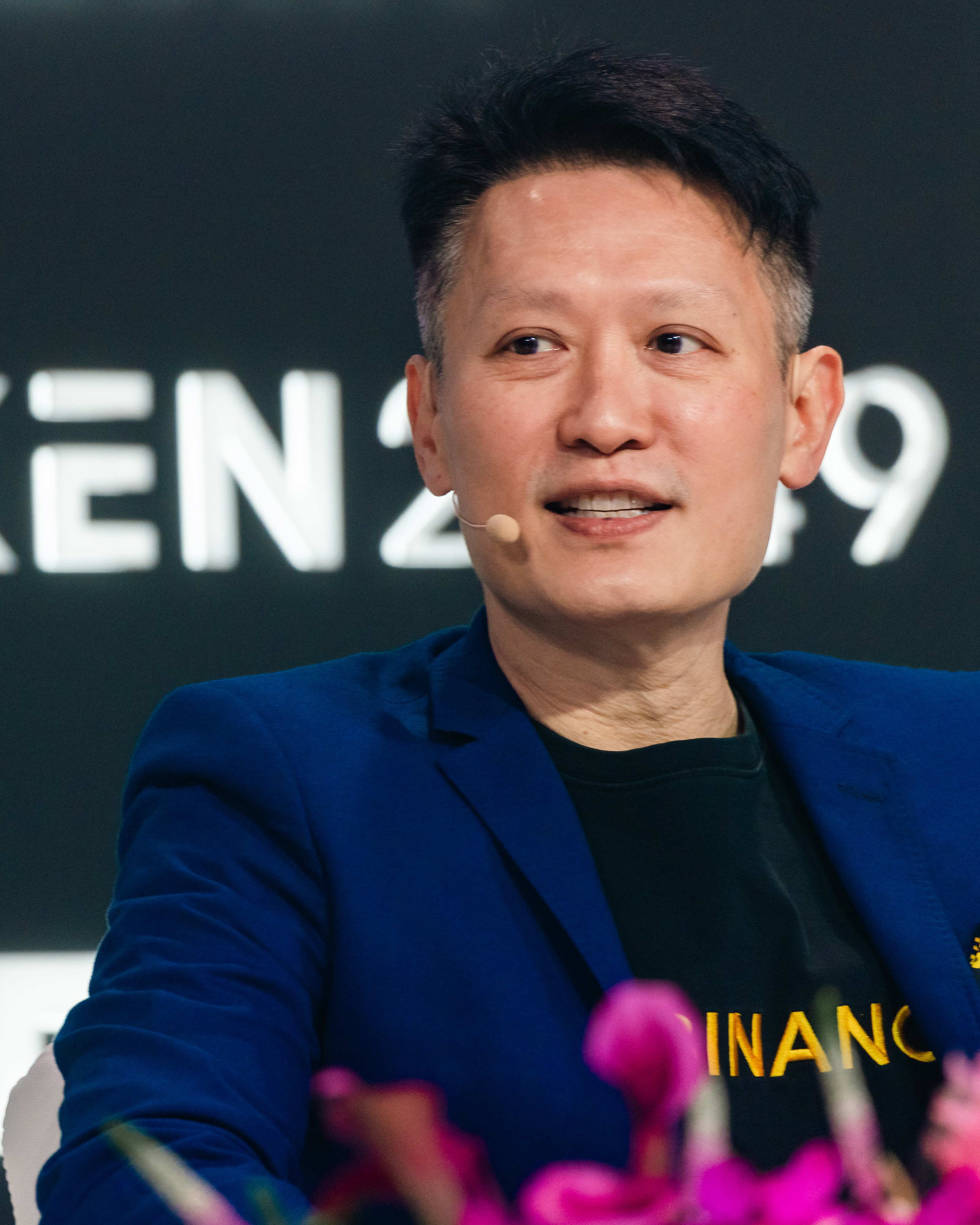
Above Lin spoke at a panel on how fandoms are shaping trends and industries at the Milken Institute Asia Summit alongside Baobab Studios’ Maureen Fan, Crunchyroll’s Kun Gao and Rotten Tomatoes’ Patrick Lee, moderated by Tatler’s Chong Seow Wei (Photo: Tatler Asia/LinkedIn)
Lin spoke at a panel on how fandoms are shaping trends and industries at the Milken Institute Asia Summit alongside Baobab Studios’ Maureen Fan, Crunchyroll’s Kun Gao and Rotten Tomatoes’ Patrick Lee, moderated by Tatler’s Chong Seow Wei (Photo: Tatler Asia/LinkedIn)
1 / 1
Stepping away from Twitch clarified his preference to work in a lean team. “I believe the future of capitalism is small teams,” he says, where work is more efficient, and everyone is satisfied because they know they have contributed. After investing in roughly 400 companies and several funds, Lin reached a similar conclusion about capital allocation: fewer teams, deeper focus and greater impact.
The most important lesson he took away from spending nearly a third of his life “bleeding purple”—Twitch’s signature colour—is that anyone can be the change that shapes a better world. “You can do anything you put your mind to,” he says, echoing the leap he once took in joining Justin.tv despite lacking formal experience.
After figuring out what you want to do, he says the next step is to find someone you like and can work with, because these two qualities do not always coexist. “You can tolerate them. You respect them. You love them. You think they’re smart and have good intentions, similarly aligned with yours,” he says.
“It’s hard. It takes time. It’s stressful. But anything is doable.”
Now, meet the Gen.T Leaders of Tomorrow shaping Asia’s future through technology.
NOW READ
Tennis star Aryna Sabalenka on style, strength and the life she’s shaping beyond the court
The making of Lhakpa Sherpa: inside the extreme athlete’s record-breaking journey
The body has its own pharmacy—Wim Hof is on a mission to help the world learn how to access it
Topics
Based in Hong Kong, editor Yoyo Chow covers the people and ideas redefining Asia’s future—from cutting-edge innovation and AI to bold moves in sustainability and diversity. She also drives content for Tatler Gen.T in Hong Kong, a platform and community spotlighting the region’s next generation of startup founders, creatives and changemakers.
Before that, she was a video journalist producing content for international TV and digital platforms, including Reuters and South China Morning Post. If you have a powerful story to share, she’s all ears. Send press materials, event invites and any inquiries to yoyo.chow@tatlerasia.com.

Curated for you
The stories, profiles, and cultural moments featured on our Instagram feed