

Cover Tobi Lutke (left), co-founder and CEO of Shopify, and his wife Fiona McKean at the Allen & Company Sun Valley Conference in 2023 (Photo: Kevin Dietsch/Getty Images)
Tobi Lutke (left), co-founder and CEO of Shopify, and his wife Fiona McKean at the Allen & Company Sun Valley Conference in 2023 (Photo: Kevin Dietsch/Getty Images)
1 / 1
In an internal memo to staff by Shopify’s Tobi Lütke, the co-founder and CEO declares AI proficiency as a baseline. Asian business leaders share their views on the matter and their approach to reshaping their teams for the future of work
This week, another CEO’s memo has gone viral: in a bold directive to Shopify’s staff, Tobi Lütke, who also co-founded the commerce giant, has established AI proficiency as a non-negotiable skill for all employees.
The memo outlines a fundamental shift in workplace expectations, declaring that “reflexive AI usage is now a baseline expectation” and that opting out is essentially choosing “slow-motion failure”. Lütke frames this transition as both an opportunity and requirement deeply connected to Shopify’s core values of continuous learning and embracing change.
The CEO articulates specific implementation measures, including incorporating AI exploration into all project prototypes, adding AI usage questions to performance reviews and requiring teams to demonstrate why AI cannot solve their problems before requesting additional resources.
Read more: This Chinese unicorn company uses AI to help Unilever and L’Oréal with their content
I heard this internal memo of mine is being leaked right now, so here it is: pic.twitter.com/Qn12DY7TFF
— tobi lutke (@tobi) April 7, 2025
Lütke’s approach emphasises self-directed learning while encouraging knowledge sharing across teams through platforms like chat.shopify.io and Slack.
His message to his employees is clear: AI represents a “mindblowing step function change” that will enable merchants to achieve more than they previously imagined possible.
Read more: What Studio Ghibli’s founder thinks of all your AI-generated cartoon photos
This directive reflects a growing trend among technology companies to integrate AI into their operational DNA, viewing it as a critical multiplier of human potential rather than merely another workplace tool. As Lütke states, “AI will totally change Shopify, our work, and the rest of our lives.”
The memo has since drawn more than 1,000 comments on social media platform X, including from the likes of “Don’t Die” proponent Bryan Johnson.
What do CEOs in Asia think? And how are they approaching hiring in the age of AI? Two of them weigh in below.
Joel Neoh, managing director of Prenetics


Above The managing director of Hong Kong-listed health sciences company Prenetics, Joel Neoh has led, started and exited multiple startups prior to this role, including Fave Group, BookDoc and Groupon Asia Pacific (Photo: Joel Neoh)
The managing director of Hong Kong-listed health sciences company Prenetics, Joel Neoh has led, started and exited multiple startups prior to this role, including Fave Group, BookDoc and Groupon Asia Pacific (Photo: Joel Neoh)
1 / 1
What are your thoughts on Tobi Lütke’s approach to hiring in the age of AI and his message in particular?
Joel Neoh (JN): “AI is not a tool. It’s our first hire.” The line “hire an AI before a human” crystallises the shift we’re living through. We must start thinking of AI as a teammate and not just a tool and how it transforms how we structure roles, workflows and entire organisational charts.
As an investor with First Move, most of our recent investments are founders with ultra-lean teams using AI to build products, ship faster and punch way above their weight.
In China and the US, AI fluency is quickly becoming the new literacy; Southeast Asia needs to move fast to stay competitive.
I also see more CEOs benchmarking success through revenue per headcount, which is a clear sign that the era of AI-native teams is here.
Ten to 15 years ago, every business had to become a digital business that happened to do X. Today, we need to think of being an AI business that happens to do X. For example, Tatler is an AI business that happens to do media, First Move is an AI business that happens to do VC investments.
Tobi Lütke’s memo is not just a philosophy, it’s a new operating system for modern companies.
Read more: How AI is revolutionising the Korean entertainment industry
As a business leader, how do you approach hiring and retaining talent in the age of AI?
JN: There’s a quote that goes, “This is a generational opportunity for founders and company builders. If our teams aren’t AI-native, we are already behind.” Every team member should go through a “can we 10x with AI?” lens. That’s a new productivity benchmark.
Organisational charts should include AI agents across functions like marketing, operations, finance and customer service. Everyone must be able to prompt, automate workflows and execute with AI.
In the next 12 to 24 months, many repetitive professional roles will be reduced by at least half with AI-native solutions. This shift isn’t about replacing people; it’s about unlocking new levels of productivity and creativity per person.
Most entrepreneurial leaders I know are recalibrating hiring strategies to prioritise impact per individual, not just experience or pedigree.
Read more: Can AI become your closest confidant? That’s Jeanne Lim’s mission
Tommie Lo, founder and CEO of Preface

Above Tommie Lo’s Preface offers design and technology-focused education. It uses AI models and student-teacher matching to tailor its courses (Photo: Affa Chan)
Tommie Lo’s Preface offers design and technology-focused education. It uses AI models and student-teacher matching to tailor its courses (Photo: Affa Chan)
1 / 1
What are your thoughts on Tobi Lütke’s approach to hiring in the age of AI and his message in particular?
Tommie Lo (TL): I resonate with Tobi Lütke when he says AI is now a “fundamental expectation”. In today’s tech landscape, opting out of AI education isn’t an option. To quote Lütke, “If we’re not climbing, we’re sliding.”
Like Shopify, we believe continuous learning and adaptation is essential. AI is transforming every discipline—from finance and marketing to operations and design—and it’s reshaping how businesses work.
Read more: 5 things to know about AI industry disruptor DeepSeek
As a business leader, how do you approach hiring and retaining talent in the age of AI?
TL: As an upskilling company trusted by tech giants like Google and Alibaba, we’ve seen firsthand the urgency for organisations to empower their teams with AI skills. Our approach mirrors Shopify’s ethos: we prioritise re-skilling teams to harness AI’s potential, enhancing efficiency with tools like generative AI and automation.
Internally, we integrate AI tools into our daily activities across all disciplines. We hold regular “Lunch & Learn” sessions for the entire company to share the latest tech developments and how to apply them to our work.
Externally, we provide upskilling and onboarding training for our clients, teaching employees to use AI tools for automating workflows and enhancing efficiency.
We also prioritise hiring for adaptability. Curiosity and lifelong learning are key values for us. Retention hinges on fostering a culture that encourages AI experimentation and knowledge-sharing. This philosophy extends to our youth programmes, where we’re cultivating AI natives from a young age, aligning with global trends like Beijing’s mandatory AI education.
The future belongs to those who view AI not as a threat but as a collaborator. At Preface, we’re committed to ensuring that individuals, organisations and especially our team don’t just keep pace but thrive in this new landscape—because in the age of AI, standing still is the only true risk.
Discover more Leaders of Tomorrow in Technology.
NOW READ
When AI revolutionises home living: Butler’s Jonathan Lam on the future of real estate
From Nvidia’s droid to agile humanoids: Meet the next-gen robots shaping the future
The battle for EV dominance is shifting towards Asia. Here are the Chinese brands to watch out for
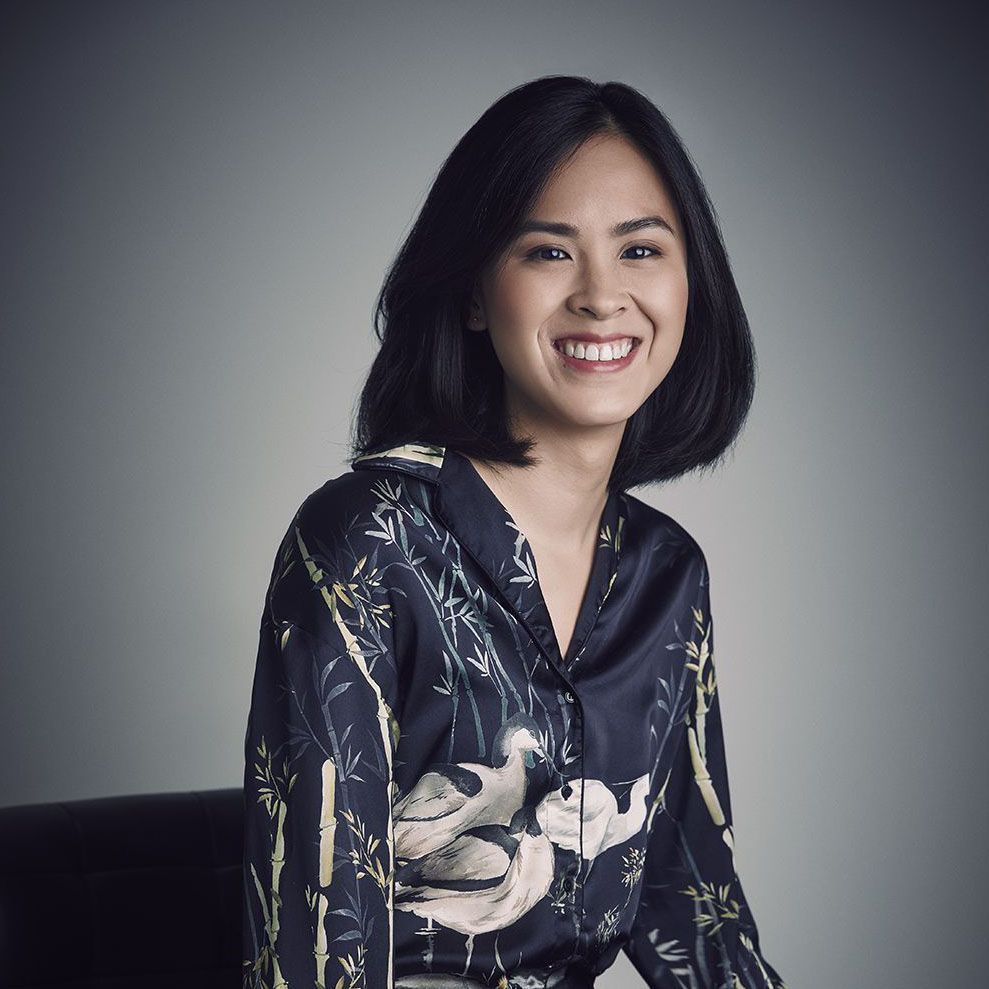
Chong Seow Wei is a regional senior editor covering business, innovation, impact and people. Based in Singapore, she oversees content for Gen.T, Tatler’s platform for promising entrepreneurs and new-generation leaders, and its Power & Purpose vertical.





