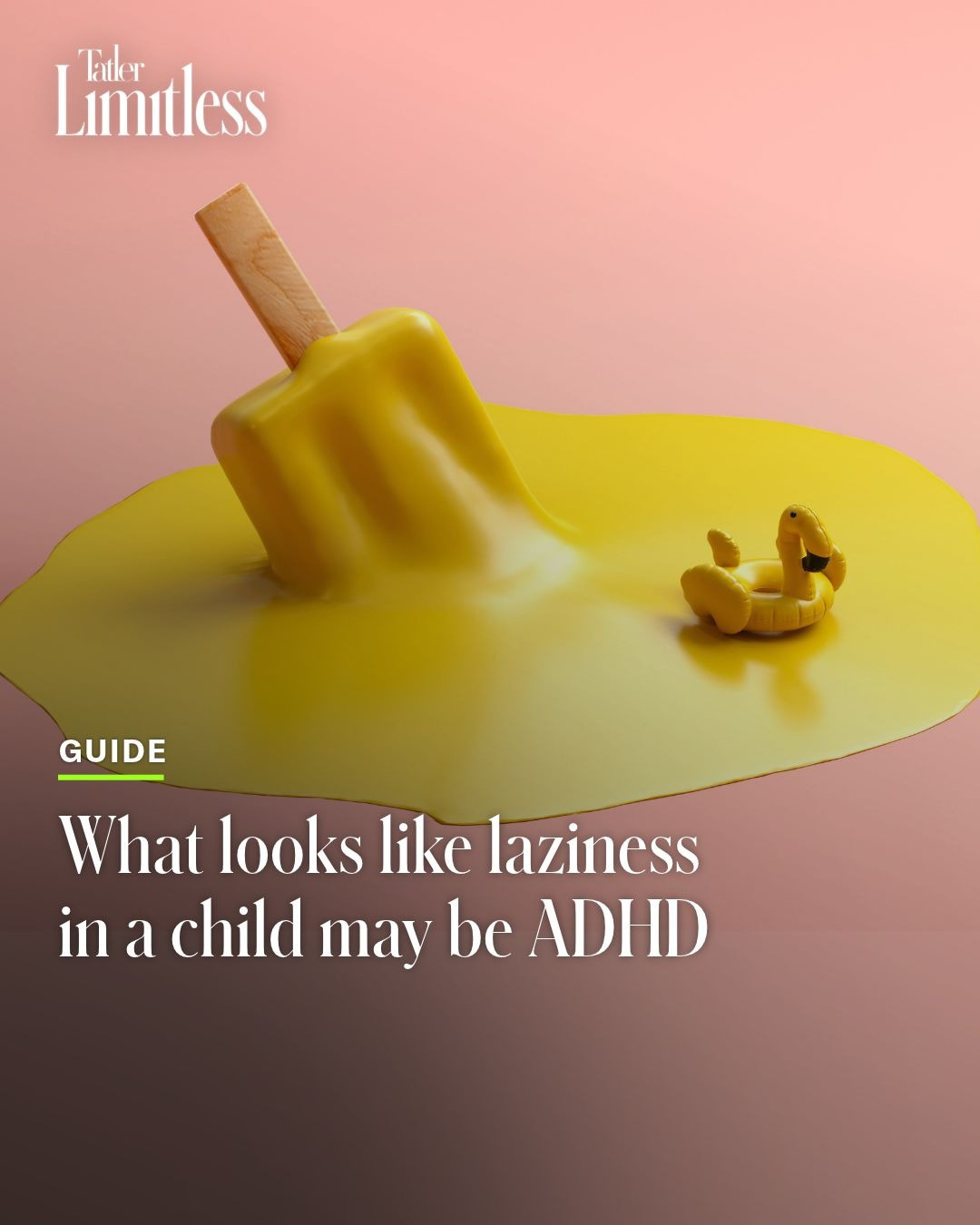

Cover Attention deficit hyperactivity disorder (ADHD) can be hard to diagnose in children. Not all symptoms are related to school performance (Photo: Getty Images)
Attention deficit hyperactivity disorder (ADHD) can be hard to diagnose in children. Not all symptoms are related to school performance (Photo: Getty Images)
1 / 1
Telling ordinary childhood behaviour from attention deficit hyperactivity disorder (ADHD) can be difficult for families. Clinicians and a parent who founded a neurodiversity awareness foundation explain what to look for and why assessments are often delayed
For Mary Schaus, recognising her son’s neurodivergence had nothing to do with school reports or classroom discipline. It began in moments of sudden, physical danger.
“For my son, we found that some of his greatest safety challenges came from impulsivity, such as running into the road or climbing dangerously,” recalls Schaus, who went on to found Talos Foundation, dedicated to awareness raising of neurodiversity, following her son’s diagnosis of attention deficit hyperactivity disorder (ADHD) and autism.
As Shaus shares, looking beneath those behaviours required patience. Close observation. A fundamental shift in perspective, moving away from correction and toward “understanding what is behind a child’s behavior and helping them feel safe, supported, and good about themselves.”
“In the early years, support starts with awareness: spending time observing your child, listening when they can express what they are experiencing, and discussing challenges with a qualified professional so you can understand what support is appropriate for their age,” Schaus says.


Above Sometimes the first signs of ADHD are not related to school performance (Photo: Getty Images)
Sometimes the first signs of ADHD are not related to school performance (Photo: Getty Images)
1 / 1
As Schaus notes, learning to support unexpected neurodivergent traits also meant navigating safety concerns alongside the exhaustion of explaining misunderstood behaviours. “My advice is to ‘find your tribe’: surround yourself with people who listen, understand, and offer practical support, including other parents with similar experiences,” she says. “We can become so focused on what our children need that we overlook our own need for support and reassurance.”
First, though, comes recognition. How do families read the early signs and spot where typical childhood ends and neurodivergence begins?
In case you missed it: What neurodivergence actually means in adult life
How does childhood ADHD actually show up?
According to Clinical Psychologist Maddysen Chen who specialises in neurodevelopmental evaluations, distinguishing between natural childhood restlessness and being an ADHD child can be difficult, especially in high-pressure school systems where children are required to conform to classroom standards in the early primary years.
“All children experience difficulties with attention, impulse control, and managing their behaviour from time to time, so it can be difficult for parents to know what is typical for their child's age.”
Chen states that ADHD can present in three ways: predominantly inattentive, predominantly hyperactive-impulsive, or combined, and some children may be noticeably restless or impulsive, while others may appear easily distracted, forgetful, or have difficulty sustaining attention, following multi-step instructions, organising their belongings, or completing tasks independently.
According to Chen, “what distinguishes ADHD from typical development is when these difficulties are persistent, more pronounced than expected for a child's age, and affect their learning, relationships, or everyday functioning across different settings.”

Above ADHD can present itself in three different ways. Distinguishing typical development from actual neurodivergence means understanding how it is affecting their learning and everyday functioning (Photo: Getty Images)
ADHD can present itself in three different ways. Distinguishing typical development from actual neurodivergence means understanding how it is affecting their learning and everyday functioning (Photo: Getty Images)
1 / 1
Chen notes that in high-achieving settings, ADHD can be harder to spot, particularly in girls whose difficulties may not match the more disruptive stereotype:
“ADHD can present differently in females, who may experience less noticeable difficulties with attention and executive functioning rather than more externalised behaviours. Some girls develop compensatory strategies to manage their difficulties, which may contribute to their needs being overlooked, particularly when they are performing well academically. Anxiety may also co-occur, further complicating recognition and assessment.”
What happens when fear delays a diagnosis?
Jared Dubbs, a Counsellor and Psychotherapist specialising in neurodivergence, notes that hesitation over a diagnostic evaluation often starts inside the household itself, a phenomenon researchers call “affiliate stigma.” As Dubbs explains, relatives may internalise public judgment and blame parents for a child’s behaviour, whether it is a grandparent insisting the child simply needs stricter discipline, a spouse in denial, or a parent who delays an assessment for fear of a label and what relatives will think. “Fear of the label can cost more than the label itself,” he says.
Dubbs also points to a stark financial divide. As he explains, private assessments, reports, and medication carry no government subsidy and routinely cost tens of thousands of dollars. Public pathways do exist through the Department of Health’s Child Assessment Service, the Student Health Service, and school-based educational psychologists at a fraction of the price, though Dubbs notes that “waiting times still decide who gets support early.”
Read more: “You don’t look autistic”: Why neurodivergent women have been sidelined
Emily Kwan, Clinical Director of Kids Connect and Founder and Chairwoman of the NeuroDiversity Association Hong Kong, has also observed the hesitation for parents to seek a diagnosis, “Yet many parents still hesitate until a trigger, such as an academic challenge or a behavioral meltdown, pushes them toward formal evaluation.” As Kwan notes, parents also wrestle with whether a diagnosis will help or harm, particularly when ADHD behaviours look vastly different from one environment to the next.
Ultimately, Kwan stresses that the outcome of an evaluation should never be viewed as a deficit: “Yet an evaluation is best understood as a gateway to understanding, support, and appropriate accommodation, rather than a label.” Understanding how a child’s brain works is only the first step; timing that insight early can reshape their entire developmental trajectory.
Why an early diagnosis is a critical intervention
Specialist in Psychiatry Dr Chan Po Ling Jenifer explains why a proper evaluation in childhood matters. “It's important to have a proper evaluation in childhood as the brain is developing and neuronal cells are making connections that are important in the intellectual, emotional and social development of the child. ADHD being a neurodevelopmental condition, affects the way the person is motivated typically, resulting in a wide range of symptoms, not necessarily limited to what people often think of as “day dreamy” or kids that “bounce off the wall”.
“As such, it can lead to symptoms which may be misinterpreted as being “lazy”, “stupid” or “bad”, consequently causing a spiral of negative self-esteem. Diagnosing ADHD, through a clinical assessment usually supported by an educational psychometric assessment, provides an important opportunity to intervene in a timely manner, in order to reduce the risk of negative consequences both in the short and long term (e.g. academic failure, severe family conflict, substance misuse, employment difficulties, and chronic relationship struggles as an adult).”
Once an evaluation clarifies a young person's neurotype, practical support at home begins with reshaping how parents interpret day-to-day challenges.
Address the “laziness lie” and what actually works at home

Above Children with ADHD typically have trouble with executive function tasks and are mistaken for being lazy (Photo: Getty Images)
Children with ADHD typically have trouble with executive function tasks and are mistaken for being lazy (Photo: Getty Images)
1 / 1
Dubbs highlights that significant emotional harm can come from misinterpreting executive function hurdles as flaws of character or will. The “laziness” lie may be the most damaging myth. Children with ADHD are rarely unwilling. They are struggling with executive function, the skills involved in starting tasks, planning, switching between activities and following through. A child who sits in front of homework for an hour without starting is usually not choosing to avoid it. For them, starting is the hard part. When we call a child lazy, they believe us, and a child who believes they are lazy eventually stops trying.
Effort that looks invisible from the outside is often exhausting from the inside. The more useful question is “what’s getting in the way, and how can we make starting easier?””
From there, Kwan and Dubbs recommend shifting from willpower to practical, everyday scaffolds:
- Offer specific praise over constant correction. Dubbs notes that ADHD children often hear an estimated “15 to 20 words and acts of criticism to 1 act of praise.” He advises criticising the behaviour rather than the child, aiming for praise to outnumber corrections, and keeping it specific, such as noticing the exact moment they start homework unprompted.
- Build external memory cues. Instead of expecting a child to simply remember, Dubbs recommends building external prompts by chaining new habits onto existing routines (i.e. packing a bag immediately after brushing teeth), leaving visual cues by the door or fridge, and stacking alarms.
- Match specific strategies to specific friction points. Kwan encourages using targeted supports, such as visual checklists for forgotten gear, calm-down plans for meltdowns, and rehearsed responses for tricky social situations, until children internalise those skills themselves.
- Prioritise sleep, exercise, and nutrition. Kwan notes that “the most basic yet key factors of sleep, exercise, diet, and overall well-being are foundational, as they directly affect and shape the system of self-regulation.” The association between nutrition and childhood ADHD has been investigated, with some studies identifying protective effects from higher intakes of iron and fatty acids, and adverse effects from higher intakes of food colourings, preservatives, and sugar (Del-Ponte et al, 2019).
- Approach medication decisions with professional care. Dubbs advises that parents “bring questions to their doctor, understand the evidence, and know that medication is one option among several, not a requirement and not something to feel ashamed of,” he says. “Medication decisions belong to the family and their doctor.”
- Protect parental wellbeing. “Raising a child with ADHD is demanding. Research on Chinese families in Hong Kong found high parenting stress, with mothers’ stress higher than fathers’,” Dubbs highlights. “Looking after yourself is part of supporting your child.”
Both Kwan and Dubbs also emphasise adapting how parents support children as they grow. In the early years, Kwan advises focusing on co-regulation by staying calm during meltdowns, naming feelings, and noticing effort in real time, while Dubbs recommends predictable schedules, short instructions, and visual cues.
By primary school, Dubbs suggests treating teachers as allies and agreeing on one or two classroom adjustments, such as strategic seating, movement breaks, chunked assignments, or a brief daily check-in. Finally, in adolescence, Kwan notes that parenting “becomes partnership, offering perspective rather than directives so teens gradually take ownership of their support, self-advocacy, and identity,” an approach Dubbs echoes by advising parents to offer choices rather than orders when building study systems.
Choosing connection over correction
Supporting an ADHD child is not about correction. It is about human connection.
As Kwan notes, genuine inclusion means reshaping surroundings rather than asking children to carry the entire load alone: “Rather than asking only how a child can adapt, we should also ask how environments, physically and culturally, can accommodate so that children are supported not just to cope, but to thrive.”
For Mary Schaus, that shift captures her deepest hope for Hong Kong: “I would welcome more open conversations about neurodivergence in Hong Kong—conversations that acknowledge the challenges while also recognizing the strengths, perspectives, and contributions of neurodivergent people. My hope is that greater understanding will reduce shame and judgement, making it easier for families to seek support and for children to grow up feeling accepted and valued. A society that welcomes different ways of thinking and doing things is stronger for it.”
Mary Foxworth is the founder of Foxworth Institute, delivering research-backed education for human connection across all age groups and neurotypes. A Board-Certified Sexologist holding degrees in law, criminology and political science, she combines multidisciplinary expertise with neurodivergent lived experience to design resources that protect, empower, and connect.
NOW READ
Home-A-Genius on local vs cloud-based smart homes: choosing the right system for Singapore homes
Face summer with a smile using the right skincare
This AI fintech company has deployed US$6 billion to support SMEs in cross-border e-commerce
Curated for you
The stories, profiles, and cultural moments featured on our Instagram feed