1 / 1
Ditch your impression of Switzerland as a staid, sleepy destination and step into a country aglow with cool hotels and cutting-edge architecture
Oases With Oomph
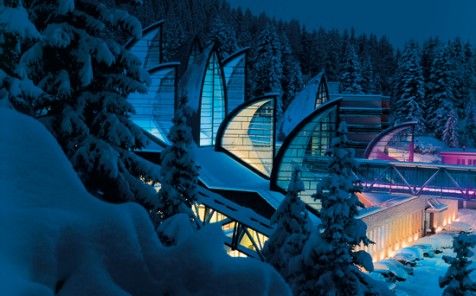
There’s nothing much you can teach the Swiss about water-based wellness. They have a 2,000-year history of tapping the country’s abundant thermal springs but never stopped reinventing the idea. Among the most sumptuous spas are those of Hotel Therme in Vals (+41 81 926 8961, therme-vals.ch), an austere-glam grotto carved into the rock by Peter Zumthor, the Swiss architect behind this year’s Serpentine Pavilion in Hyde Park, and Tschuggen Bergoase (+41 81 378 9999, tschuggen.ch) in Arosa, whose spooky glass spinnakers shooting from the mountainside flood the space with light. New kid on the block is the huge spa at the Eden Roc (+41 91 785 7171, edenroc.ch) in Ascona, whose mosaic- and stone-covered walls in shades of blue and grey reflect the colours of Lake Maggiore, a loofah’s throw away.

Tschuggen Bergoase in Arosa
Zermatt Rebooted
This Matterhorn-cuddling meta-village has such a standing among skiers and mountain climbers that it could have rested on its laurels until the end of time. But Zermatt has added a cool, contemporary edge to its chocolate-box charms with the new Backstage Hotel (+41 27 966 6970, backstagehotel.ch), a boutique inn with rich-kitsch suites designed to within an inch of their lives – beds are on transparent boxes in the centre of the rooms. It has a super-stylish little cinema (with chandeliers) and bar, and the spa is themed on the Christian story of creation. All over town, luxury designer chalets – fronted with glass and chrome rather than pine and cutesy balconies – are springing up, while the traditional Hotel Europe (+41 27 966 2700, europe-zermatt.ch) has unveiled an airy modern wing, complete with a bijou spa. Come dinner time at the resort, head to Restaurant Heimberg (+41 27 967 8484, heimberg-zermatt.ch), a menu-free high-end restaurant where supermodel-esque staff interview guests about their tastes before serving personalised multiple-course feasts. Or opt for the Michelin-starred restaurant of mountain chalet Chez Vrony (+41 27 967 2552, chezvrony.ch), which is reputed to serve Europe’s best burgers.

Kitsch-hip interiors at Backstage Hotel
Fresh Basel
The oldest and most important contemporary art fair in the world, Art Basel (artbasel.com, June 13-17, 2012) is the tip of the iceberg in Switzerland’s third-largest city. The permanent collection at Fondation Beyeler (fondationbeyeler.ch) bristles with Giacomettis, Picassos, Monets and Bacons, while the Kunstmuseum (kunstmuseumbasel.ch) houses the world’s oldest public art collection, and its largest collection of Holbeins. A 30-minute bus ride takes you across the German border to Riehen and the Frank Gehry-designed Vitra Design Museum (design-museum.de), also home to buildings by Zaha Hadid and Tadao Ando; or take a tram to the Gotheanum (goetheanum.org) in neighbouring Dornach. The centre of Rudolph Steiner’s anthroposophy movement, this vast, visionary 1928 structure in cast concrete is built without a single right angle and boasts sculptural forms, murals and stained glass.

The Vitra Design Museum
La Dolce Helvetia
Switzerland’s Italian-speaking region is its sunniest, and the cantons that border Lake Maggiore in the south-east boast balmy climes, lush sub-tropical flora and a laid-back riviera lifestyle fuelled by Italia-tinged cuisine. Home to lotus blossoms and giant sequoias, the stunning botanical garden on San Pancrazio, one of the lake’s two Brissago Islands (isolebrissago.ch) is a must-see, as is the vibrant city of Lugano (lugano-tourism.ch). And while no self-respecting adrenalinista would miss the chance to recreate 007’s Goldeneye bungee jump at the Verzasca dam, the tranquil, hamlet-studded and largely hotel-free valleys of Verzasca (verzasca.ch) and Maggia (vallemaggia.ch) are the real finds here. There is just a sprinkling of unpretentious, basic lodgings in villages such as Brione and Gerra – you may just be the only visitors in the valley.

Tranquillity rules in the valleys of Verzasca and Maggia
Master Strokes
You’re never more than 20km from a lake or river in Switzerland, and the Swiss keep their H2O extraordinarily clean, so even in the centre of its busiest cities, pretty much any river or lake is ripe for the dipping. Zurich tops the lido tables, with 18 outdoor bathing areas (zuerich.com), many of which morph into funky, artsy bars by night, but Geneva also has its posh pontoons, complete with sauna and hammams, in the form of Bains des Paquis (bains-des-paquis.ch). And both Basel’s Rhine and Bern’s Aare rivers throng with paddling punters in summer, with some even commuting to work this way.

A dip in pristine rivers
Ski Crowd-free
If you like your pistes crowd-free and your powder plentiful, the undercelebrated resorts of Adelboden (adelboden.ch), Andermatt (andermatt.ch) and Val D’Anniviers (sierre-anniviers.ch) are where you should point your ski tips. Quaint weathered chalets and barns are the norm here, rather than shiny hotels and busy bars, and while the marked runs are mainly in the intermediate range, there’s a wealth of off-piste action in trees, powder fields and long, north-facing valleys which hold their snow beautifully. Andermatt – where Elvis learned to ski, fact fans – recently caught the eye of Egyptian tycoon Samih Sawiris. He has very commercial plans for its future, so don’t delay – get there while it’s, er, cold.

Pristine ski slopes abound in Switzerland’s mountains, including Andermatt
Arty Architecture
For all their yodelling, alpenhorns and cowbells, the Swiss are no slouches when it comes to pushing the boundaries of design and architecture. Barely a year passes without some ultramodern landmark building springing up – whether on an idyllic mountainside, as in the case of Mario Botta’s tiny but striking 1996 Church of San Giovanni Battista in Mogno, or in the heart of a city, such as Frank Gehry’s Novartis Campus building, which opened in Basel in 2009, and Renzo Piano’s seductive Zentrum Paul Klee (paulkleezentrum.ch) of 2005 in Bern. Most recently, the Rolex Learning Centre (rolexlearningcenter.ch) in Lausanne, a spaceship of a building by Japanese architects SANAA, won a magazine’s Best New Public Building award.

The Church of San Giovanni Battista
Take It Easy
While tour operators such as Black Tomato (blacktomato.co.uk) and Swiss Safari (swisssafari.com) offer sports cars to rent if you want to cruise some great driving roads in millionaire style, those who prefer their transport low-carbon also qualify for superstar treatment. SwitzerlandMobility (schweizmobil.ch), an organisation promoting non-motorised traffic, has created local, regional and national networks of signposted routes for hikers, cyclists, mountain bikers, roller skaters and canoeists. Many routes are integrated with public transport so you can cover plenty of ground, there are options for bike rental, overnight accommodation and transport of luggage, and you can plan your next move on the go with an iPhone app.

Hire a car for a self-drive
Express Yourself
“Sorry I’m late – my train was delayed” is a not an excuse you tend to hear in Switzerland. And apart from being the centrepiece of the country’s mind-bogglingly efficient integrated transport system, the Swiss rail network includes some of the most dazzling routes on the planet. Linking Chur with Tirano, just over the border in Italy, and fitted with panoramic windows, the Bernina Express (rhb.ch/Bernina-Express) rises on an old stone viaduct to pass forests, plunging cliffs and the Morteratsch glacier, taking in 55 tunnels, 196 bridges and a peak altitude of 2,253 metres. It’s only the third railway route in the world to have Unesco world heritage status.

The best way to appreciate Switzerland’s natural wonders is to take a train
Diamond Digs
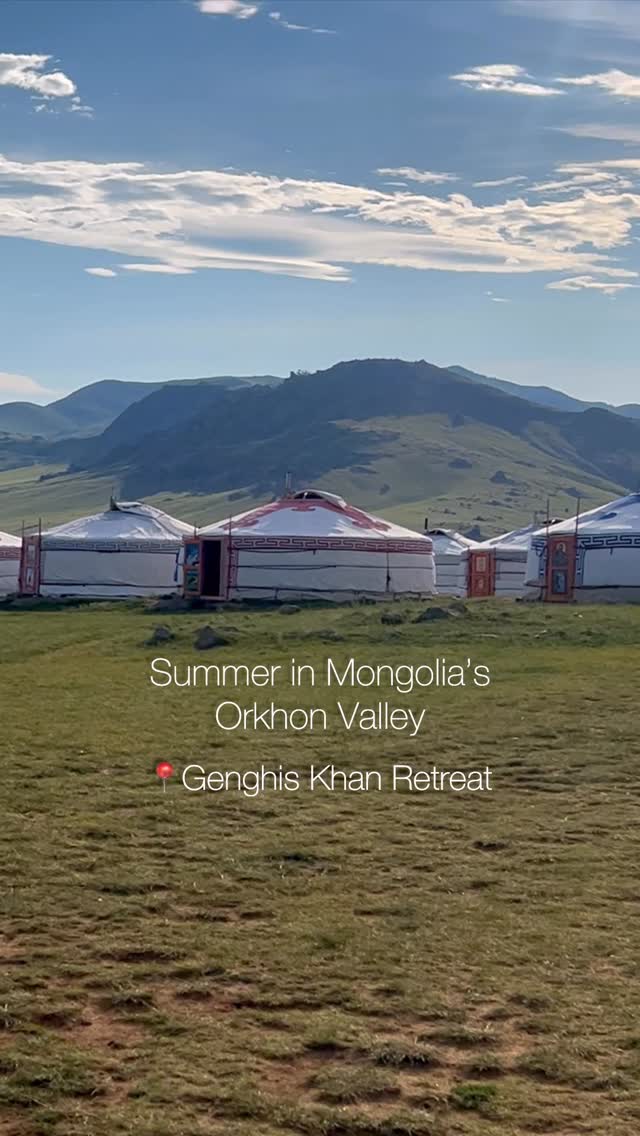
Switzerland’s diversity is reflected as much in the range of accommodation as anywhere else. Where do you fancy hanging your hat? In Lausanne’s 19th-century Château d’Ouchy (+41 21 331 3232, chateaudouchy.ch), in a Mongolian yurt high above Lake Geneva on the edge of Rochers de Naye (goldenpass.ch) 2,000m above sea level, or in the unique La Claustra, (+41 91 880 5055, schau-mal.com), a luxury hotel in a converted artillery bunker bored deep into the San Gottardo mountain. At the other end of the scale, and a comfort to those fearing the all-slaying power of today’s Swiss franc, the country’s hostels are among the world’s best – take a bow Grindelwald (youthhostel.ch), recently voted the world’s cleanest. And stays in the haylofts of working farms (bauernhof-ferien.ch), starting at as little as less than 10 francs a night, are proof that for all its banking muscle and corporate polish, Switzerland is still more than happy to share its rustic roots.
Curated for you
The stories, profiles, and cultural moments featured on our Instagram feed