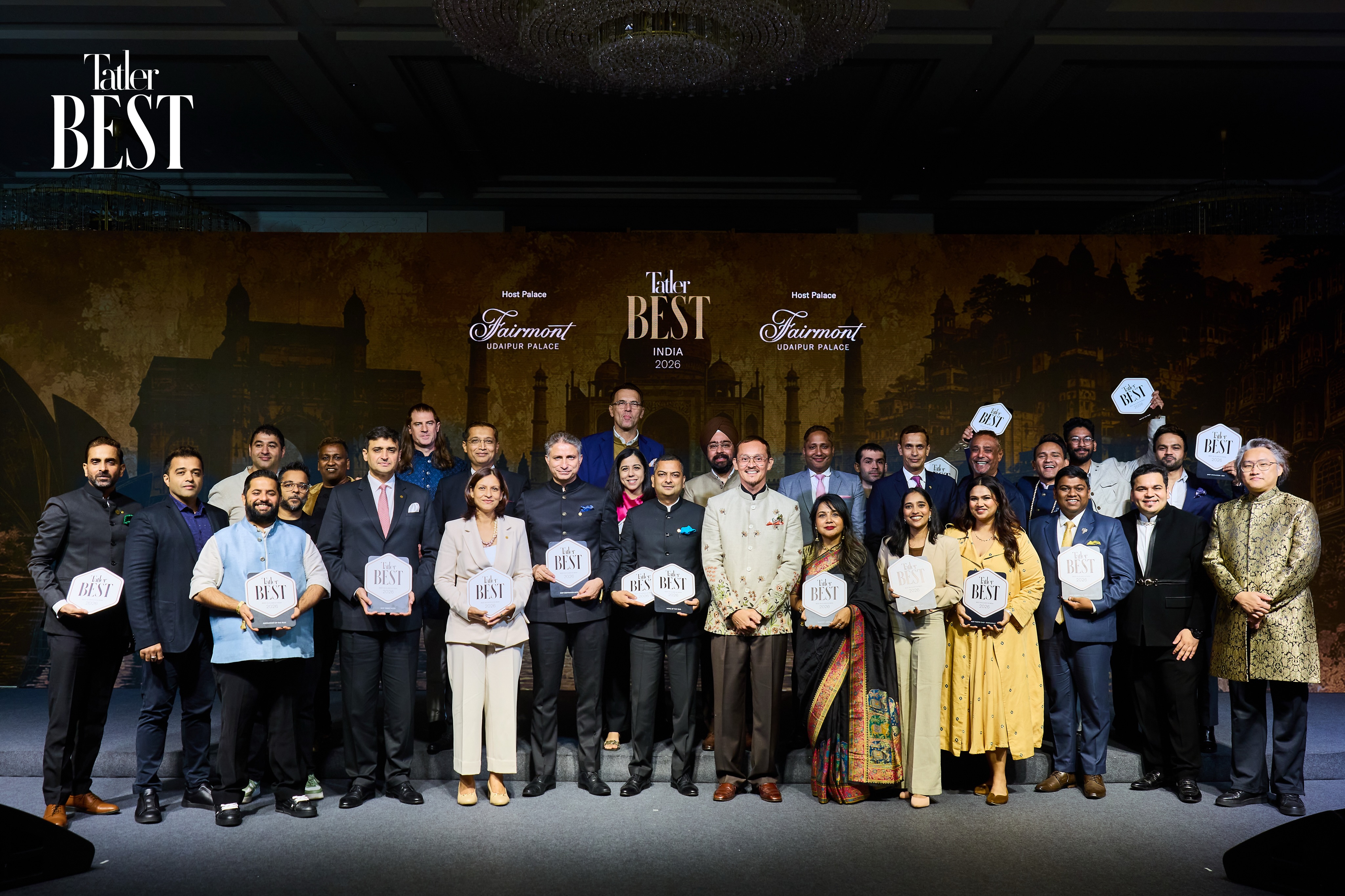
Cover The Best-in-Class restaurant winners of the inaugural Tatler Best India 2026 awards (Photo: The Sarvato Jaipur)
The Best-in-Class restaurant winners of the inaugural Tatler Best India 2026 awards (Photo: The Sarvato Jaipur)
1 / 1
Discover the most outstanding restaurant in India, celebrated at the inaugural Tatler Best Awards
In its inaugural year, Tatler Best India turns its focus to the chefs, teams and dining rooms setting the standard for exceptional eating across the subcontinent.
India’s culinary landscape has never been more dynamic. From the Himalayas to the coast, regional traditions are being honoured and reimagined, indigenous ingredients are taking centre stage, and a new generation of talent is redefining what Indian dining can be.
This year’s winners range from guardians of culinary heritage to bold innovators pushing the craft forward. Together, these restaurants tell the story of a country eating better than ever before.
Best Design: The Sarvato Jaipur


Above The Sarvato occupies a historic pavilion within Jaipur's City Palace, where Rajputana grandeur meets contemporary dining
The Sarvato occupies a historic pavilion within Jaipur's City Palace, where Rajputana grandeur meets contemporary dining
1 / 1
The Sarvato occupies a pavilion within Jaipur’s City Palace that once served as a private audience hall. The restaurant sits on a raised terrace overlooking the Pink City, with stonework and arches that reflect centuries of Rajputana craftsmanship. The design team has left the architecture intact, adding only what is necessary for a contemporary dining room. Intricate lattice work, hand-carved details and the natural patina of aged stone are allowed to stand on their own. Lighting is subtle and the terrace opens to the sky, making the most of the desert light at sunset. The result is a space that feels both historic and current, where the building’s past is present but not overpowering. This is design that enhances the experience rather than competing with it, a rare balance that makes the meal feel like an extension of the setting.
Best Service: Papa’s

Above Twelve seats wrap around the open kitchen at Papa’s, where service is intuitive, warm and deeply personal
Twelve seats wrap around the open kitchen at Papa’s, where service is intuitive, warm and deeply personal
1 / 1
Papa’s has twelve seats wrapped around an open kitchen. Chef Hussain Shahzad cooks in full view, and the service team operates in the same tight space with precision and warmth. There are no white tablecloths and no unnecessary formality. The tasting menu draws on Indian street food traditions, turning kothu parotta and nihari into composed plates, but the service stays grounded. Staff know the menu inside out and can describe each dish with clarity and enthusiasm. They anticipate needs without hovering, and the energy in the room is lively without being frantic. What distinguishes Papa’s is the sense that everyone in the room, kitchen and front of house alike, is working toward the same goal: making sure the meal feels personal. The service is intuitive, generous and deeply human, the kind that turns a dinner into a memory.
Rising Star: Johnson Ebenezer, Farmlore

Above Johnson Ebenezer makes great use of the 33-acre organic farm outside Bengaluru on Farmlore’s menu
Johnson Ebenezer makes great use of the 33-acre organic farm outside Bengaluru on Farmlore’s menu
1 / 1
Johnson Ebenezer’s kitchen at Farmlore sits on a 33-acre organic farm outside Bengaluru, where he manages tropical fruit orchards, hydroponic beds and a herd of native cows. The menu changes weekly, driven by what is ready to harvest rather than a fixed plan. Ebenezer trained in top international kitchens, but he brought back more than technique. He returned with a conviction that cooking should be tied to the land. Treating ingredients with the seriousness they deserve, Ebenezer’s work at Farmlore represents a career defined by patience, discipline and a clear philosophy. For a chef who has spent years refining his craft, this is a chef whose influence is poised to extend far beyond his own kitchen, with an approach to ingredient-led cooking that offers a compelling model for the future of Indian dining.
Best Sommelier: Kevin Rodrigues, Indian Accent Mumbai

Above Kevin Rodrigues brings encyclopedic wine knowledge and intuitive pairings to Indian Accent Mumbai
Kevin Rodrigues brings encyclopedic wine knowledge and intuitive pairings to Indian Accent Mumbai
1 / 1
At Indian Accent Mumbai, the food moves between tradition and reinvention, and Kevin Rodrigues matches that ambition with a wine list that balances depth with accessibility. His pairings are not academic exercises. They are thoughtful choices that enhance the overall dining experience. What distinguishes him is his ability to translate the language of wine into something genuinely useful for the table. In a restaurant where the food demands attention, Rodrigues ensures that the wines are never an afterthought. His skill lies not just in what he knows but in how he shares that knowledge, making every guest feel like they are in capable hands.
Best Pastry Chef: Pooja Dhingra, Le15 Patisserie

Above Pooja Dhingra leads a patisserie that blends French technique with Indian soul
Pooja Dhingra leads a patisserie that blends French technique with Indian soul
1 / 1
Pooja Dhingra introduced the French macaron to India at age twenty-three. She now runs a group of patisserie venues, but the scale has not diluted the quality. Her work combines French technique with local flavours, and the execution remains consistently precise. Behind the widespread recognition lies genuine technical discipline and an unyielding commitment to quality. She has trained her teams well and maintains high standards across multiple outlets. Her influence on Indian pastry is significant, and her longevity in a fickle industry speaks to her dedication. She has built something lasting on the foundation of genuine talent, proving that pastry can be both accessible and exacting.
Best Innovation: Naar

Above Prateek Sadhu brings the Himalayan landscape to the plate at Naar
Prateek Sadhu brings the Himalayan landscape to the plate at Naar
1 / 1
Naar sits in the Himalayan foothills near Kasauli, and the landscape shapes everything on the plate. Chef-founder Prateek Sadhu sources many of his ingredients from the surrounding forest, foraging wild cherries, tree sap, bamboo shoots and fiddlehead ferns. The rest come from the restaurant’s own garden. The menu changes with each of the region’s six seasons, and the cooking is contemporary without being fussy, influenced by global technique but rooted in Himalayan tradition. Sadhu treats the mountain’s bounty with respect, letting the ingredients speak rather than burying them in flourishes. There is no spectacle or theatre here. Just a chef and his team working honestly with what the land provides, and that honest work has fundamentally shifted our understanding of what Indian dining can be.
Best New Restaurant: Kaspers

Above Kaspers defies easy labels, blending Basque, French, Italian and Bengali influences
Kaspers defies easy labels, blending Basque, French, Italian and Bengali influences
1 / 1
Behind a green door in Mumbai, Kaspers runs a kitchen that refuses to pick a lane. The menu reads like a chef’s diary, drawing on Basque pintxos bars, French bistro traditions, Italian osterias and the flavours of Bengali staff meals. Cherubs watch from painted ceilings, crayons wait on every table, and the room buzzes with a warmth that feels earned. The cooking is serious. Veal chop Cordon Bleu sits alongside mud crab gratin with lamb brain and Bengali dijonnaise. A French onion soup appears on the same menu as a Kashmiri pear salad. What makes Kaspers work is the execution. The kitchen balances technique with a sense of play, and the service matches the room’s energy. In a city where many restaurants play it safe, Kaspers stands out by doing exactly what it wants, with the skill to back it up.
Restaurant of the Year: Masque

Above Masque offers a tasting menu that celebrates indigenous Indian ingredients with precision and restraint
Masque offers a tasting menu that celebrates indigenous Indian ingredients with precision and restraint
1 / 1
Masque works directly with farmers and foragers across the country, sourcing indigenous ingredients that rarely appear on fine-dining menus. Wild turmeric, heirloom grains and foraged greens are treated with a precision that never veers into fussiness. The ten-course menu shifts with the seasons, not for novelty but because the kitchen respects the rhythm of the land. The Masque Lab functions as a working test kitchen where new techniques and ingredients are explored before they reach the dining room. What distinguishes Masque is its refusal to perform for an audience. Instead, it lets the food and the ingredients it is made with do most of the talking. The dining room mirrors this ethos, warm and unadorned. This is a restaurant that has spent years refining its vision, and the consistency shows in every plate.
Curated for you
The stories, profiles, and cultural moments featured on our Instagram feed