Cover Contrôle Officiel Suisse des Chronomètres, or COSC, is an independent quality control body that tests Swiss movements
Contrôle Officiel Suisse des Chronomètres, or COSC, is an independent quality control body that tests Swiss movements
1 / 1
When a watch comes with a five-figure price tag, it is understandable that there would be demands for a guarantee of its quality, reliability, and pedigree
COSC (Official Swiss Chronometer Testing Institute) is a prestigious Swiss industry quality standard for luxury watches. As an independent guardian of precision, COSC has certified millions of movements in the last 50 years, thus establishing Switzerland as a global benchmark for horological excellence. A watch marked with a COSC seal is a certified chronometer that has passed rigorous testing and meets a high standard of accuracy with an average daily rate of at least -4 and +6 seconds per day.
But the industry has advanced tremendously technologically, and consumers are increasingly discerning. As a response to these changing circumstances, COSC has added another layer of certification—the Excellence Chronometer Certified. It is not a replacement for its current certification, but an additional level of testing that covers the entire watch, not just the movement.
Here’s how it works: after the movement has been chronometer-certified, it returns to the manufacture for casing. Then COSC will put the watch through another series of tests for four days or more. It simulates daily wrist wear, and the average daily rate must fall between -2 and +4 seconds per day. It is also tested for magnetic resistance of 200 Gauss. Next, it is checked to confirm its power reserve according to the manufacture’s specifications.
COSC is expected to roll out the first Excellence Chronometer Certified watches from October 2026 onwards.
Read more: Why Chopard made sustainable luxury its top priority


Above COSC tests the entire watch for the Excellent Chronometer Certificate
COSC tests the entire watch for the Excellent Chronometer Certificate
1 / 1
These four Swiss brands have also gone the extra mile to introduce their very own hallmarks of quality, with even more stringent requirements than COSC.
The Patek Philippe Seal
True to the spirit of its tagline, “You never actually own a Patek Philippe. You merely look after it for the next generation”, Patek Philippe made good on its promise of lifetime service with the Patek Philippe Seal, established in 2009., replacing the Geneva Seal. The decision was made because the Geneva Seal’s primary focus was the movement and didn’t cover external elements like the case and the dial, which Patek Philippe felt were also important determining factors. (Geneva Seal would revise its requirements to include casing in 2011.)
As one of the most prestigious watch brands, it makes sense for Patek Philippe to take this holistic approach. Among its strict requirements is every movement tested in kinetic simulators to ensure a rate accuracy of -2 and +1 seconds per day. Finished movements are tested for at least 30 days; the final watches are given another spin on the simulators for another 20 days.
It also guarantees material quality, whether they are metal alloys or precious stones. The finishing on the movement must not compromise mechanical integrity, while the finishings on the exterior, like the case, meet the highest aesthetic standards.
As an irrefutable sign of Patek Philippe's commitment to excellence, the double 'P' symbol of the seal has appeared on every movement since 2009.
Also see: Inside the refreshed Patek Philippe Service Centre in Singapore

Above The Patek Philippe Seal is a lifetime guarantee of quality
The Patek Philippe Seal is a lifetime guarantee of quality
1 / 1
The Omega Master Chronometer
Magnetism compromises watch precision, which is why watchmakers spend an immeasurable amount of time looking for ways to minimise its effect. At Omega, it involves the use of non-ferrous materials such as Nivagauss alloy and silicon. For instance, the balance spring, which is the heartbeat of the movement, is made of silicon to maintain superior precision.
And to prove that it walks the talk, Omega partners with the Swiss Federal Institute of Metrology (METAS) to test its movements' resistance against a whopping 15,000 gauss of magnetism to qualify for the Master Chronometer certification. METAS has set up an office in Omega’s Bienne manufacture specifically for this purpose.
The movement is tested in two different positions while being subjected to magnetic exposure, undergoing the same test again after the movement is cased. For the watch to pass both tests, it must have an accuracy rate of at least 0 and +5 seconds per day.
Read more: How the Omega Seamaster went from a dress watch to a James Bond classic

Above The Omega Master Chronometer is notable for its guarantee against magnetism
The Omega Master Chronometer is notable for its guarantee against magnetism
1 / 1
Chopard's Fleurier Quality Foundation
This body was actually founded in 2001 by three independent companies: Chopard, Parmigiani Fleurier and Bovet. In addition to the COSC certification, this quality control measure requires that the watch be 100 per cent Swiss made (excluding the bracelet and strap), pass the tests of water, shock and magnetic resistance, and have an accuracy rate of 0 and +5 seconds per day.
It also sets a high standard for aesthetics, requiring the watches to comply with “numerous and very specific criteria including the choice of materials, decorative techniques and finishes.” Plastic, for instance, is an absolute no. A Chopard watch with the “Qualite Fleurier” label on the dial is thus assured to be absolutely superlative.
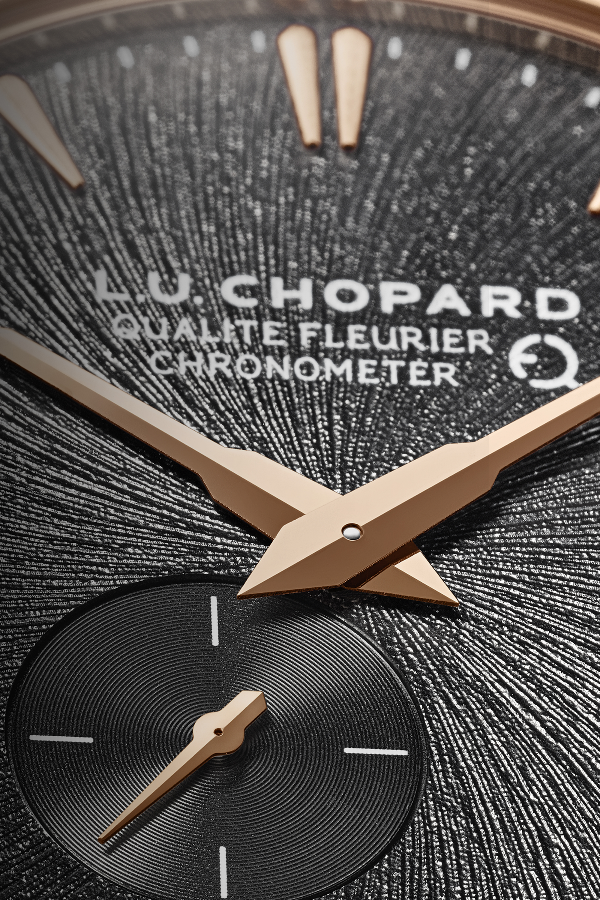
Above Chopard’s Qualite Fleurier is a coveted label for superlative watches
Chopard’s Qualite Fleurier is a coveted label for superlative watches
1 / 1
Montblanc’s Laboratory Test 500
Montblanc boasts a dedicated lab where every single timepiece undergoes a battery of tests to ensure the highest level of quality. The ‘500’ in its name refers to the 500 hours of testing—such is its exacting requirements.
Four hours are used to check winding and assembly integrity (essentially to ensure that the nuts and bolts are screwed on tight), two hours for water resistance test, 80 hours for mechanical precision, and an equal amount of time for general performance in different temperature conditions.
A whopping 336 hours is devoted to functional control in simulated real-life conditions. In addition, every function of the watch, from the power reserve to the chronograph, is individually tested.
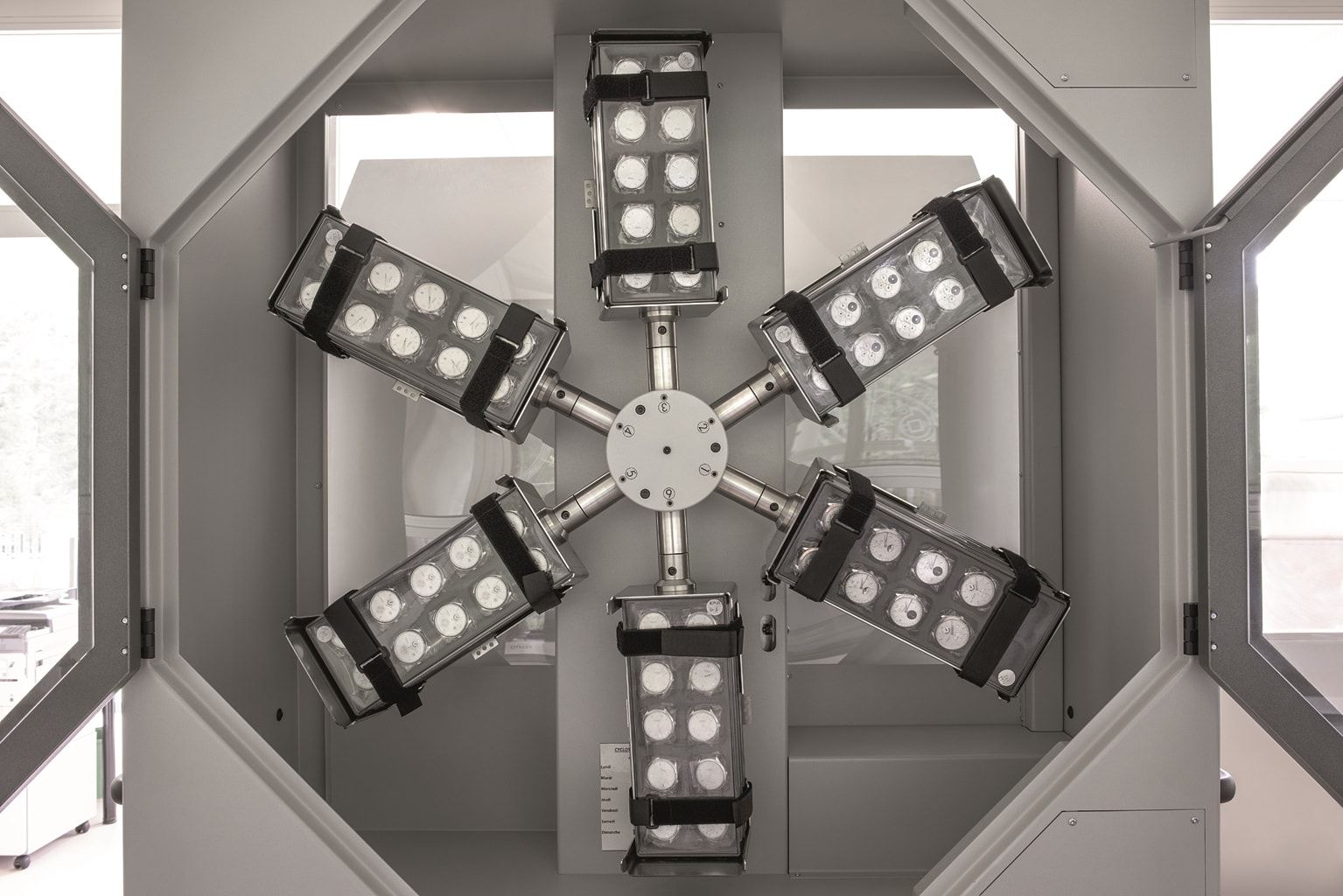
Above Montblanc puts its watches through 500 hours of testing
Montblanc puts its watches through 500 hours of testing
1 / 1
Topics

Brian Cheong leads the watch (Tatler GMT) and jewellery content at Tatler Malaysia, combining sharp editorial insight with years of luxury lifestyle experience. A seasoned journalist in luxury watches based in Kuala Lumpur, Brian had previously helmed World of Watches, Men's Folio and Prestige Malaysia.

Curated for you
The stories, profiles, and cultural moments featured on our Instagram feed