

Cover Photo: Vacheron Constantin
Photo: Vacheron Constantin
1 / 1
The latest from Roger Dubuis and Vacheron Constantin are veritable works of art
A watch is a functional tool, that's a given. Sometimes, though, it serves as an artistic canvas to showcase a particular skill, from engraving to marquetry. The results are often so breathtaking they are akin to mini works of art. And like art, they are to be admired over and over again; after all, they may surprise you with details you may have missed before.
Here are five new watches (four from Vacheron Constantin's metier d'art workshop alone) guaranteed to make the right kind of statement.
See also: Blancpain’s Metier D’Art: The Four Great Beauties Of China
Vacheron Constantin Métiers d’Art Tribute to Great Civilisations

1 / 1
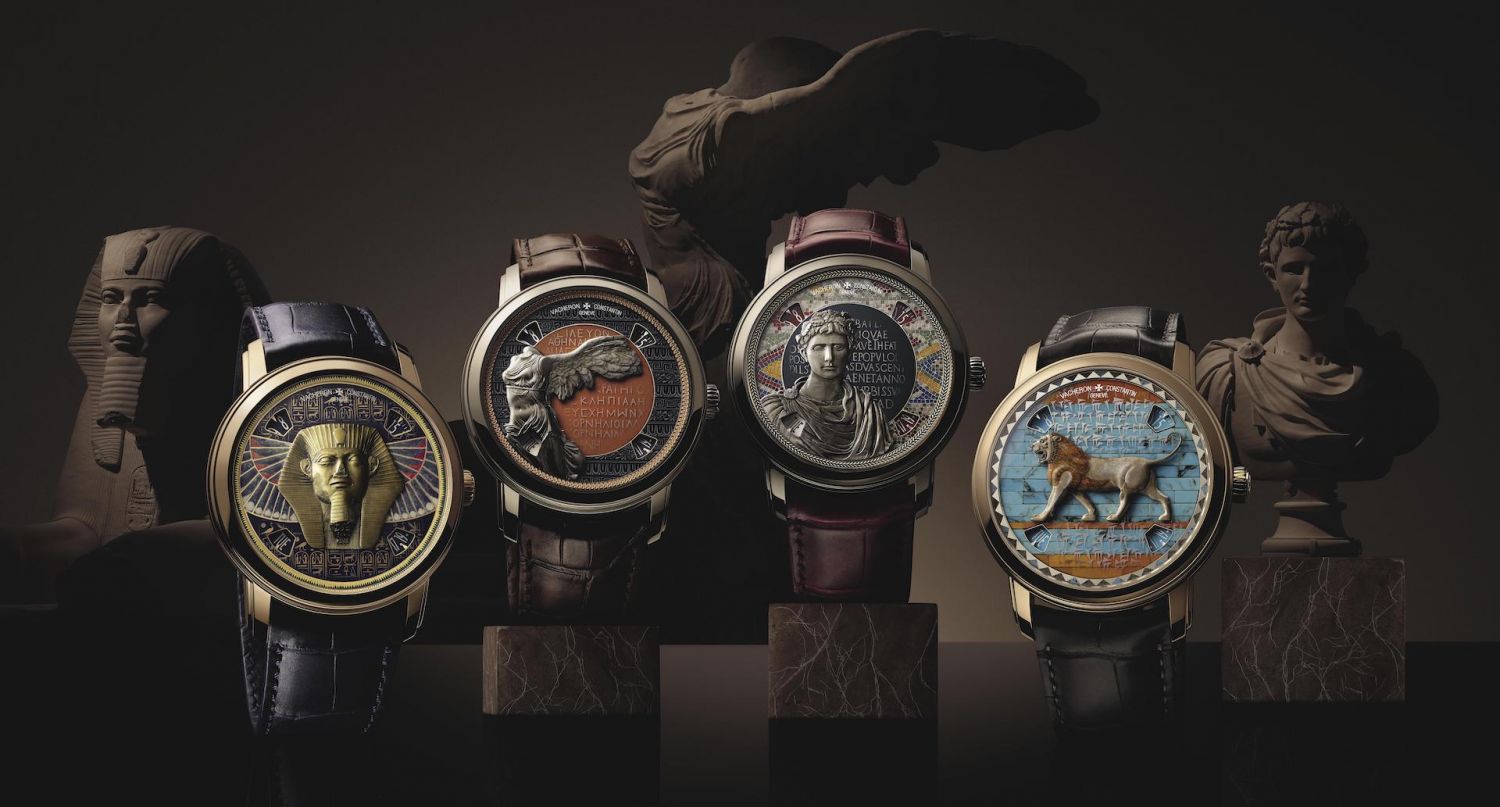
In collaboration with the Louvre, Vacheron Constantin has created four watches that pay tribute to great civilisations of antiquity. They are the Persian Empire of Darius the Great, the Ancient Egypt, the Hellenistic Period of ancient Greece, and the Rise of Augustus, the first Roman Emperor.
See also: Vacheron Constantin's Faithful Recreation of a 100-Year-Old Watch
The master artisans at the oldest Swiss manufacture worked closely with the museum to produce as accurate a likeness as the artworks that represent each of the chosen era, a challenge made all the more complicated when the canvas is a 40mm dial. Each of these watches is a limited numbered series of five.
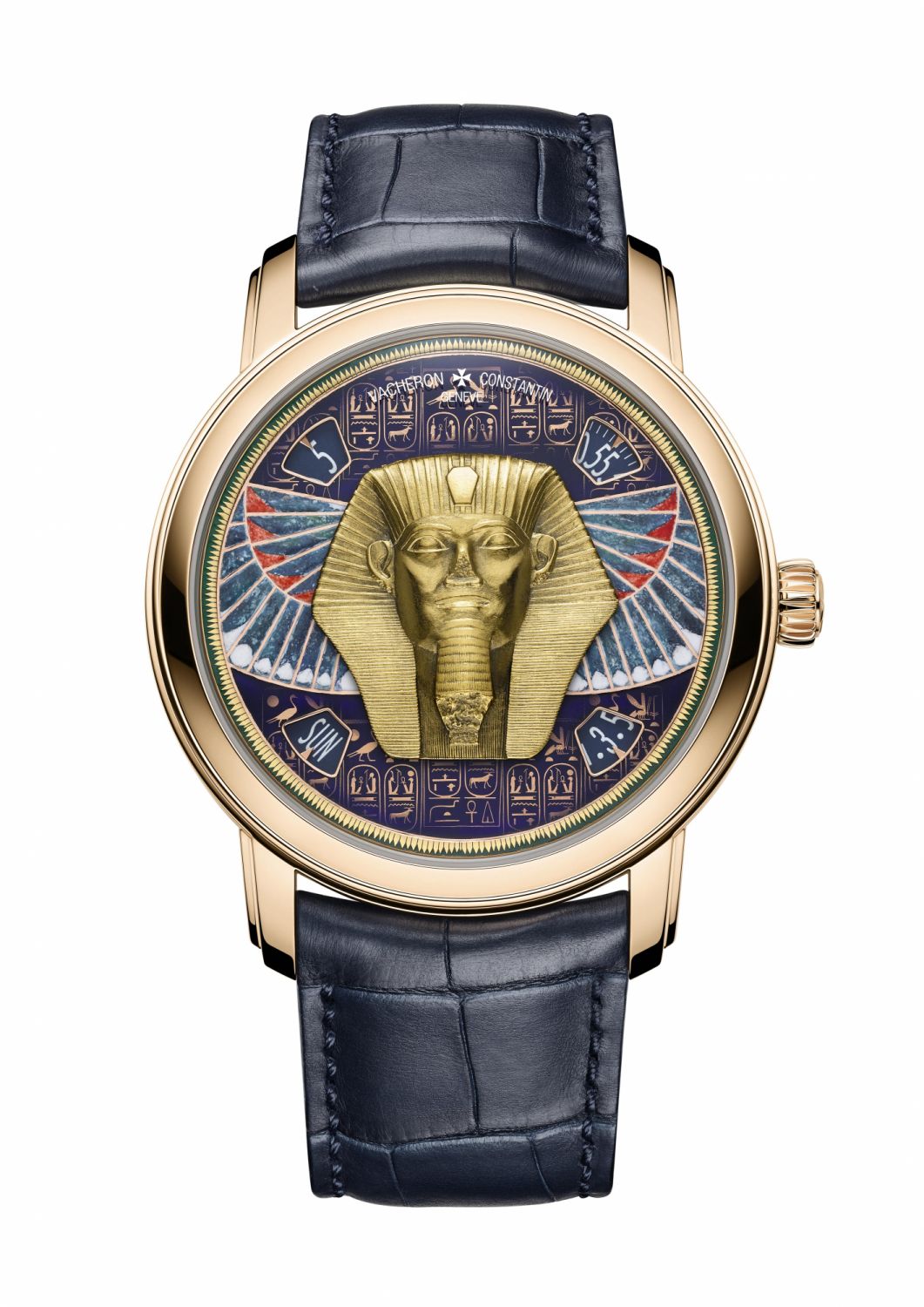
Grand Sphinx de Tanis
The head of the Sphinx is meticulously carved in gold on an enamel dial in black and blue. The decorative elements are inspired by the necklace depicted on the coffin of Nakht-khnosou-irou, complete with elements in champleve enamel and engraving by metallisation of hieroglyphic inscriptions from the cartouche of the sphinx of Tanis.
Above Grand Sphinx de Tanis
Grand Sphinx de Tanis
1 / 1
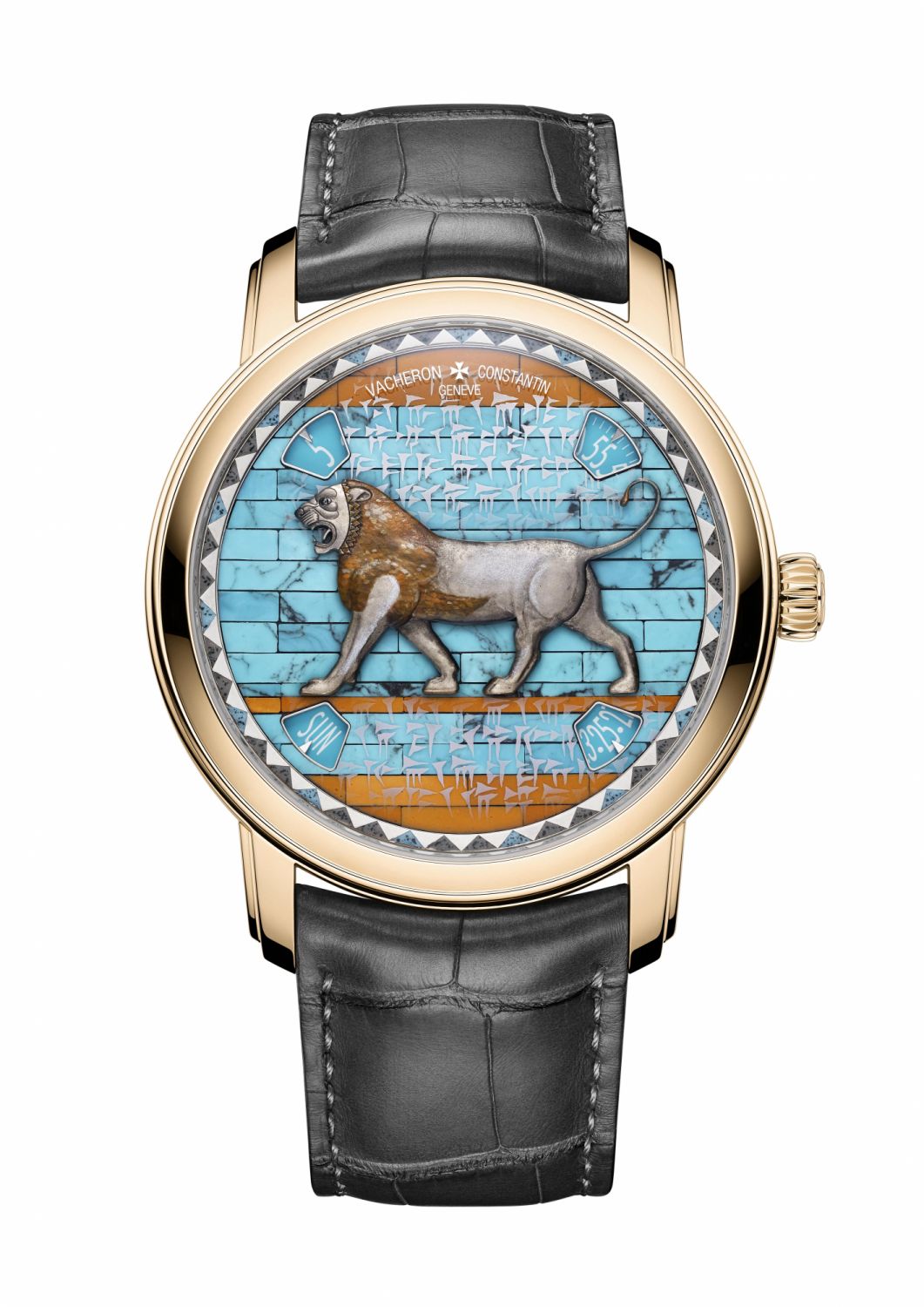
Lion de Darius
The majestic beast was an important part of the iconography of Persian palaces. It's interpreted on this watch in gold, carefully engraved mimic the ancient style right down to the muscles and fur. Stone marquetry is employed to evoke the glazed bricks backdrop. The frieze framing the dial is made of engraved metal and champleve enamel with ageing inclusion while the writing on the sapphire crystal are taken from tablet inscribed in Old Persian.
Above Lion de Darius
Lion de Darius
1 / 1
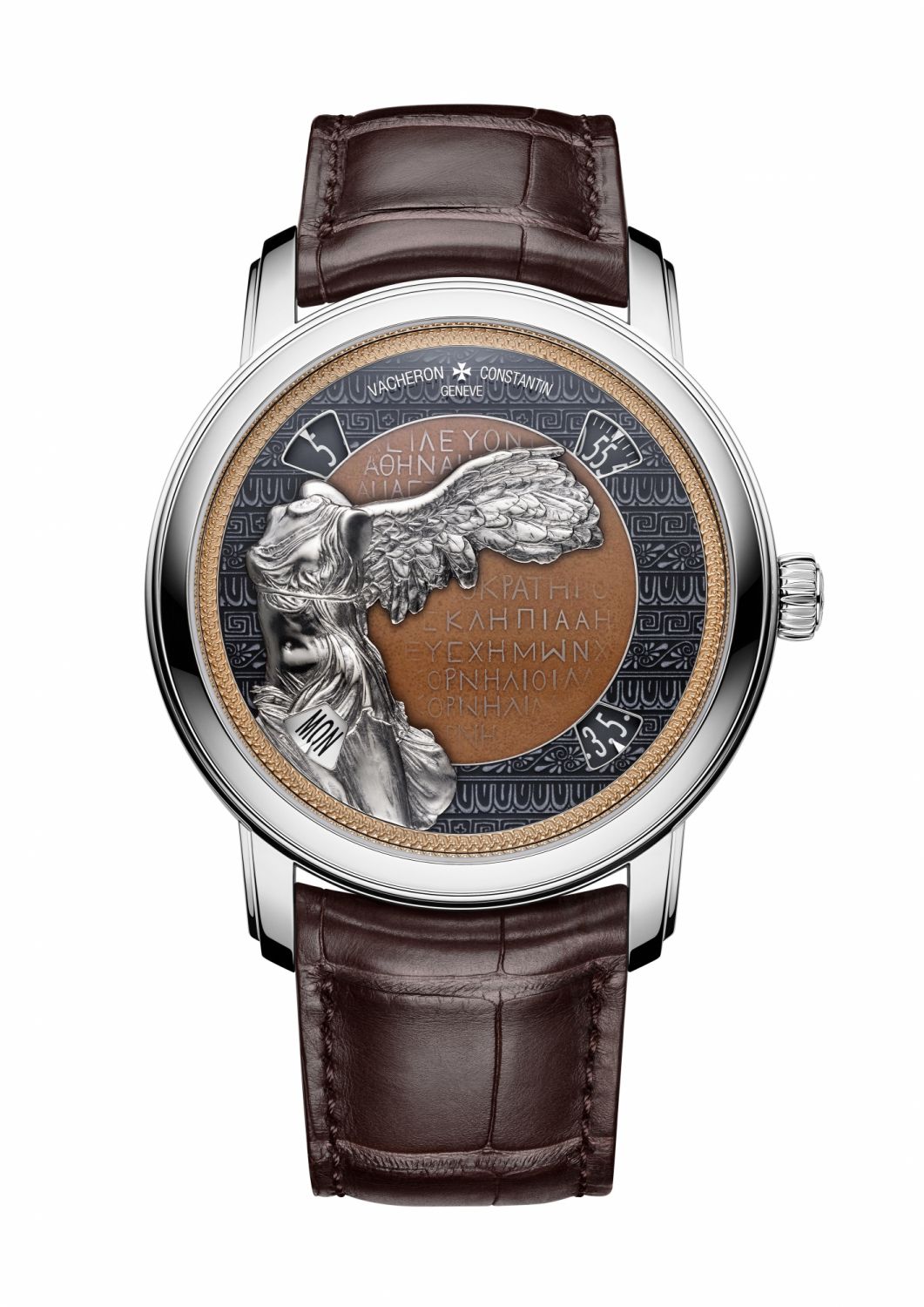
Victoire de Samothrace
This Hellenistic sculpture of a goddess standing on the bow of a ship is faithfully reproduced on this watch in gold. The main dial is in brown enamel, a challenging colour to achieve requiring a mixture of rare enamels and six firings in the kilm. The outer dial features decorative friezes, taken from two Greek vases, in grisaille enamelling. The ancient Greek script is taken from a second AD votive stele discovered in Samothrace.
Above Victoire de Samothrace
Victoire de Samothrace
1 / 1
Buste d'Auguste
Carved in gold, the bust of Augustus in an oak headdress is paired with a blue and green enamel dial. It is surrounded by stone micro-mosaic composed of seven different types of stones: quartzite, cacholong, dumortierite, mochaite, red jasper, grossular and red aventurine. The Latin script are drawn from a dedication addressed to the Genius (divine protector) of the city of Rusicada to commemorate its installation by a local dignitary who opens his invocation with a tribute to Augustus.
See also: Ulysse Nardin Unveils The Art Of Silicium Marquetry
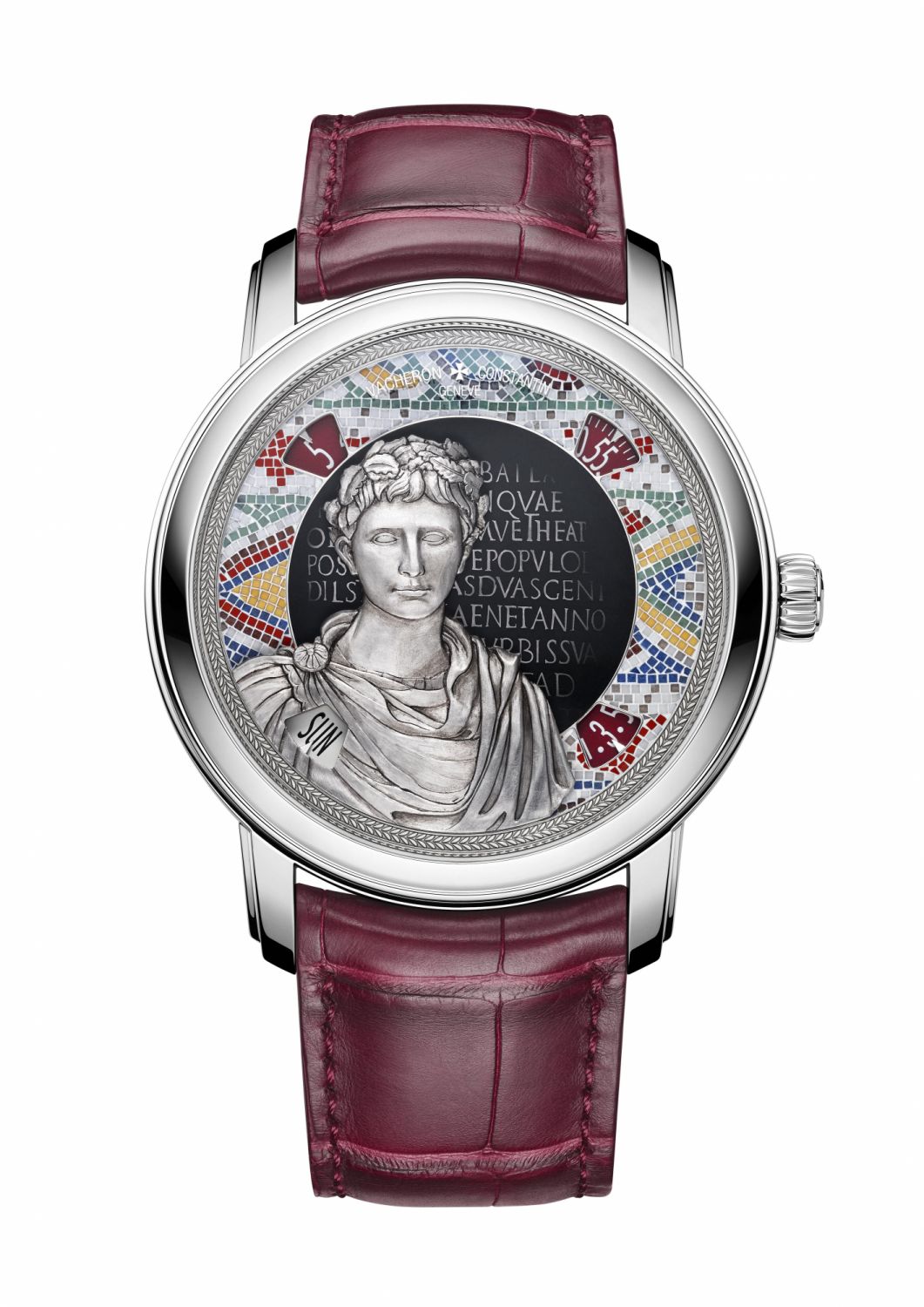
Above Buste d'Auguste
Buste d'Auguste
1 / 1
Roger Dubuis Knights of the Round Table
Meanwhile, Roger Dubuis has levelled up its game when it comes to one of its most beloved collections: Knights of the Round Table. Bolder and more exquisite than ever, King Arthur's 12 knights—doubling as hour markers—are brought to life in 18k pink gold. What's amazing are the expressiveness of their fight-ready postures, a skill that took the artisans more than a year to master. They are set against a transparent blood red flange of Murano glass, lending a striking contrast against broken black pieces on the dial. Limited to 28 pieces.


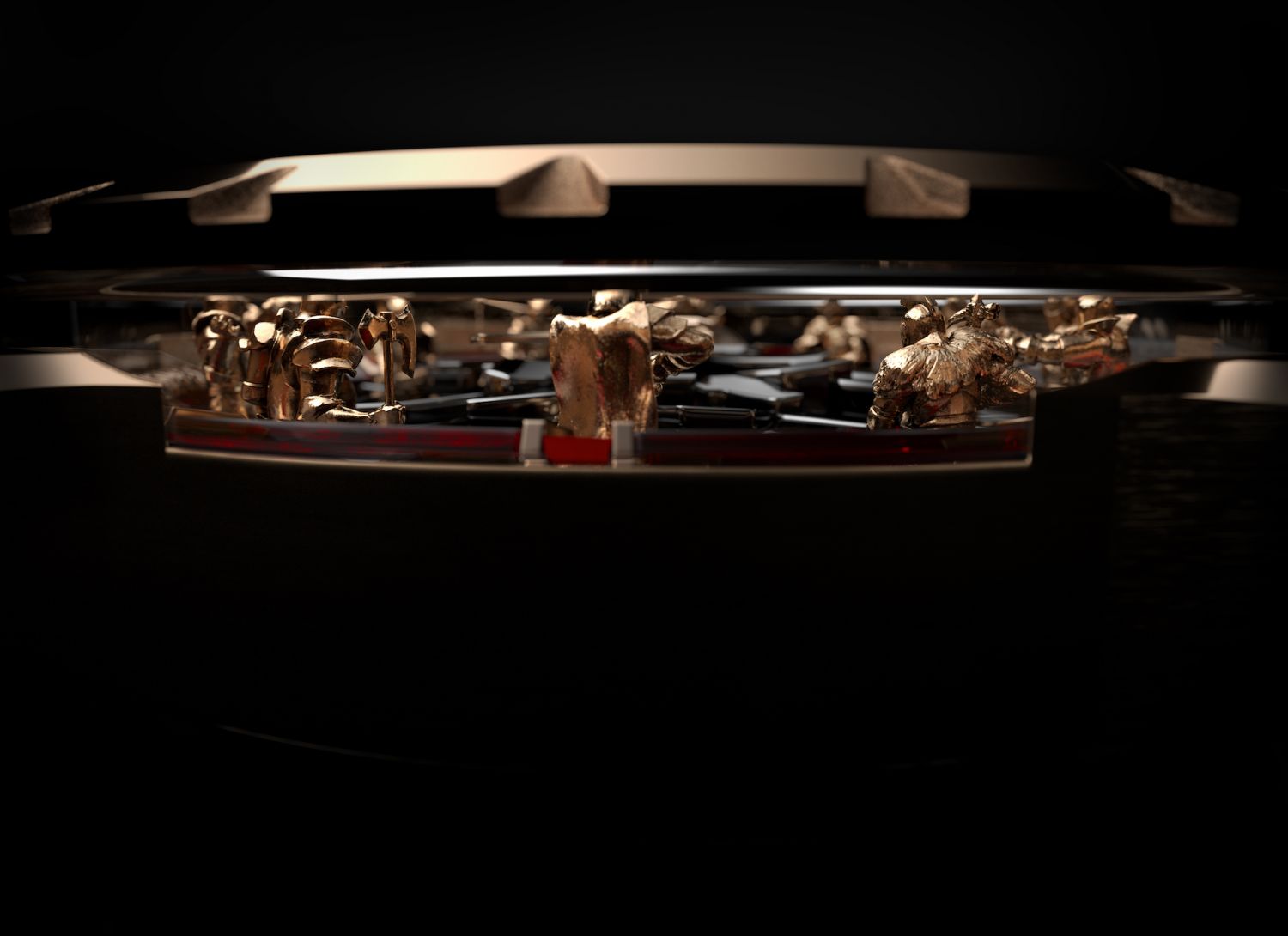
1 / 3
Topics

Brian Cheong leads the watch (Tatler GMT) and jewellery content at Tatler Malaysia, combining sharp editorial insight with years of luxury lifestyle experience. A seasoned journalist in luxury watches based in Kuala Lumpur, Brian had previously helmed World of Watches, Men's Folio and Prestige Malaysia.





