Cover Van Cleef & Arpels Zip Antique Plume de Paon necklace
Van Cleef & Arpels Zip Antique Plume de Paon necklace
1 / 1
From articulated gold to concealed mechanisms, movement has long been a considered aspect of high jewellery design. Across different houses and eras, it reflects a shared interest in how precious creations rest on and respond to the body, and how they adapt to contemporary ways of wearing
Movement in high jewellery is rarely dramatic. More often, it appears subtly—think a necklace that follows the line of the neck without resistance, stones that shift slightly with the wearer’s pace, and a bracelet that flexes rather than holds its shape rigidly. These details are easy to overlook, yet they are the result of deliberate design and technical decisions that not only serve as visual effects, but also offer wearability and comfort. Even when at rest, some of the most exquisite pieces appear alert to motion, almost as if they were part of the body.
Across history, jewellers have explored the idea of movement in different ways. Some have relied on articulation and flexible construction; others on mechanisms that allow a piece to transform or adjust. In more restrained expressions, movement is introduced through vibration or controlled instability, visible only when the piece is worn.
In case you missed it: Van Cleef & Arpels unveils 12 new Ballet Précieux creations


Above Van Cleef & Arpels Zip Antique Plume de Paon necklace
Van Cleef & Arpels Zip Antique Plume de Paon necklace
1 / 1
At Boucheron, this consideration is central to how high jewellery is conceived. For the maison’s creative director Claire Choisne, movement begins with the wearer rather than the object. “Physically, movement in high jewellery allows us to live without restrictions. The jewel does not become a constraint but accompanies our body, our intention, our movement,” she explains. “It’s very important for me [that] my pieces come out of the safe and are worn.” This informs even the most intricate designs—cue a pair of diamond-paved pendant earrings in the 2025 Histoire de Style – Untamed Nature collection, where each side weighs just 19g, allowing it to move freely and sit lightly on the ear.
Boucheron’s long-standing interest in movement is perhaps most clearly expressed through the Question Mark necklace. Created in 1879 by brand founder Frédéric Boucheron, it was the first clasp-free necklace in high jewellery. Its asymmetrical form curves around the neck in a single gesture, secured by a hidden spring blade that provides flexibility while remaining invisible. “At a time when their bodies were still being confined by jewellery and garments, Boucheron gave women the freedom to put on this clasp-free necklace without assistance—a piece that could be slipped around the neck in a simple movement,” says Choisne. Its flexibility came from “an assemblage of many small parts”, creating a suppleness unprecedented at the time. More than a century later, the Question Mark continues to be reinterpreted, with new materials, reversibility and transformability, while preserving the essence of the original.

Above Japanese singer and Boucheron ambassador Mina wearing the Histoire de Style – Untamed Nature Rosier pendant earrings and Rosier Question Mark necklace
Japanese singer and Boucheron ambassador Mina wearing the Histoire de Style – Untamed Nature Rosier pendant earrings and Rosier Question Mark necklace
1 / 1
The Art of Transformation
At Van Cleef & Arpels, movement has been approached as both a technical and an aesthetic concern since the maison’s founding. “Movement has indeed always occupied a specific place in Van Cleef & Arpels’s creations,” says Alexandrine Maviel-Sonet, director of patrimony and exhibitions. “Their compositions, the use of asymmetry, the three-dimensional designs and the choice of motifs come together to produce a sense of motion infused with wonder and poetry.”
One of the most recognisable expressions of this philosophy is the innovative Zip necklace. Conceived in the 1930s and realised in 1950, the design adapts a functional object—the zip—into a piece of precious and transformable jewellery. As Maviel‑Sonet explains: “The Zip’s ingenious design enables transformation between necklace and bracelet. As a necklace, it features three distinct parts connected by clasps: an upper extension (this goes around the back of the neck), a central unzipped section and a tassel finish.”

Above A 1954 Van Cleef & Arpels Zip necklace
A 1954 Van Cleef & Arpels Zip necklace
1 / 1
The technical challenges involved were considerable. The maison first filed a patent to adapt the zip for jewellery in 1938, but the Second World War, along with the complexity of the design, delayed its realisation. When it was finally introduced, the Zip necklace reflected post-war shifts in fashion and lifestyle, the former of which “were marked by a return to elegance and magnified femininity”, shares Maviel-Sonet, adding that “the Zip necklace, [which] fits closely on the wrist and the neck of the wearer, is very feminine and was part of that trend”. A second patent for the zip mechanism was filed in 1951, refining the invention for a piece that could move seamlessly between forms.
Its technical ingenuity also aligned with the broader pursuit of progress in fashion during the 1950s, shaped by new materials and manufacturing technologies. While early Zip creations were typically executed in yellow gold, the decade’s growing preference for white metal jewellery led to variations of the design, including a unique interpretation crafted in platinum and set with diamonds.
“The Zip continues to captivate audiences more than 70 years after its debut thanks to its ingenious mechanism and unique design,” Maviel-Sonet notes. “The emotion also comes from its history—the fact that it took more than 12 years to be fully developed shows [our] technical prowess. We look at a Zip necklace in the very same way we admire a piece of art.” Within the Van Cleef & Arpels archives, the piece continues to stand as a defining example of the maison’s approach to transformable jewellery.

Above Bvlgari Tubogas earrings and necklace
Bvlgari Tubogas earrings and necklace
1 / 1
Twist and Turn
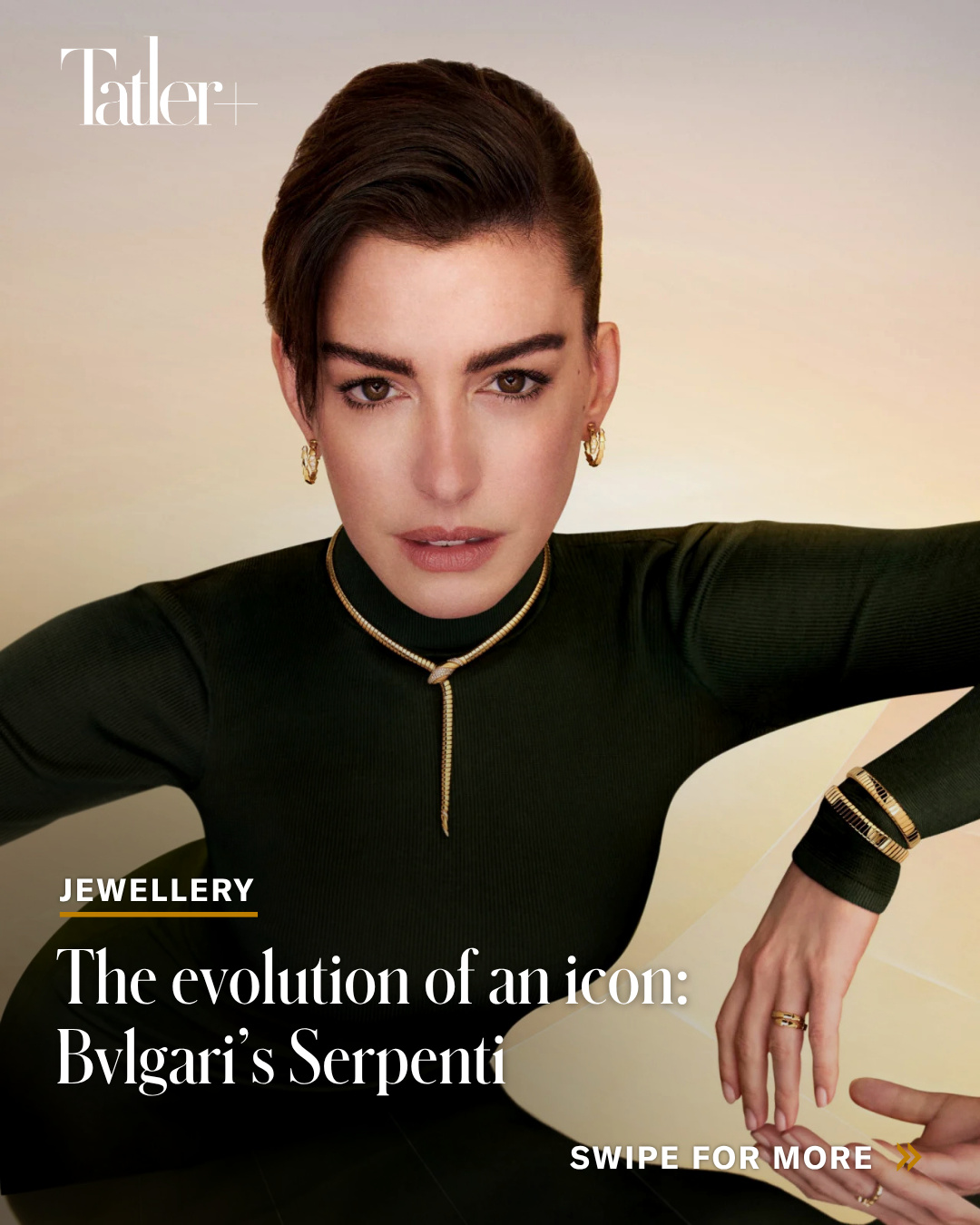
While the Zip exemplifies movement through transformation, other jewellery houses have explored flexibility in different ways. At Bvlgari, movement is achieved through structure. The Roman jeweller’s Tubogas technique approaches motion as an inherent property of material and form, allowing gold to coil, flex and adapt to the body without relying on hinges or clasps.
Developed in the late 1940s and refined over subsequent decades, the technique takes its name from the corrugated gas pipes that inspired its construction. Interlocking gold strips are assembled without soldering, creating a supple mesh that bends naturally with the wearer. The result is jewellery that maintains a strong architectural presence while remaining comfortable for its wearer.
Although developed years earlier, the Tubogas technique came into its own only in the 1970s, as jewellery aesthetics shifted away from formality towards bolder, more expressive design. It aligned naturally with Bvlgari’s preference for yellow gold at a time when high jewellery remained dominated by platinum and white metals. The warmth of gold, combined with the fluidity of the Tubogas construction, spoke to a growing appetite for jewellery that felt confident, modern and comfortable.

Above An artisan applying the “trembling” setting to the Cartier Ballon Bleu Serti Vibrant high jewellery watch
An artisan applying the “trembling” setting to the Cartier Ballon Bleu Serti Vibrant high jewellery watch
1 / 1
Its rise also reflected changing lifestyles. Jewellery was increasingly expected to move with the wearer, adapting to more relaxed dressing and fluid transitions between occasions. Without hinges or soldered joints, Tubogas pieces settle intuitively on the body, offering a sense of ease that is felt rather than noticed. Inspired by utilitarian gas pipes, the technique also echoed the decade’s interest in industrial forms, translating functional construction into a distinctly expressive and personal language.
Good Vibrations
For Cartier, movement takes a more precise form. Rather than relying on overt articulation, the maison explores motion at the level of the stone, where even the smallest shift by the wearer alters the effect. Employed in jewellery since the late 19th century, the en tremblant gem-setting technique exemplifies this philosophy, enhancing brilliance without increasing size or weight by allowing diamonds to quiver subtly in response to movement.
Showcasing this while exemplifying Cartier’s renowned synthesis of jewellery and watchmaking is the Ballon Bleu Serti Vibrant high jewellery watch. Artisans used the en tremblant setting, allowing 123 mobile diamonds across the dial to quiver freely. The resulting shimmer appears only when the piece is worn, offering a subtle display for the wearer and those close enough to notice it.

Above Chopard Happy Diamonds Icons cuffs
Chopard Happy Diamonds Icons cuffs
1 / 1
In a similar fashion, Chopard interprets movement in jewellery as a playful experience—speaking to the brand’s joie de vivre. Introduced in 1976, the dancing diamonds technique allows diamonds individually set in gold bezels with a bevelled base to spin freely between two sapphire crystals. The effect is intuitive, responsive to the wearer’s gestures, and central to the Happy Diamonds Icons collection of rings, earrings, necklaces, cuffs and bracelets. While whimsical, the design requires careful technical control: the diamonds must remain free to move while protected from impact and wear.
Across houses and eras, movement in jewellery reflects how the pieces we choose to wear interact with daily life. “Movement and transformability will undoubtedly be key elements in the evolution of the industry,” says Choisne. “Today’s women are looking for jewellery that evolves with them, that can adapt to their outfits, moods and surroundings. High jewellery should no longer be viewed as a static piece, but as a true companion in daily life, one that transforms and adjusts.”

Annabel Tan is the Editor of Watches and Jewellery at Tatler Singapore, where she covers all things luxury timepieces and fine jewellery across both print and digital platforms. She is also the Editor of Tatler GMT Singapore, a role that deepens her fascination with the ever-evolving world of watchmaking. Outside of work, she’s usually on the hunt for her next favourite watch that she can’t afford, planning her next beach getaway, or catching up on the latest Formula 1 race.
Curated for you
The stories, profiles, and cultural moments featured on our Instagram feed