

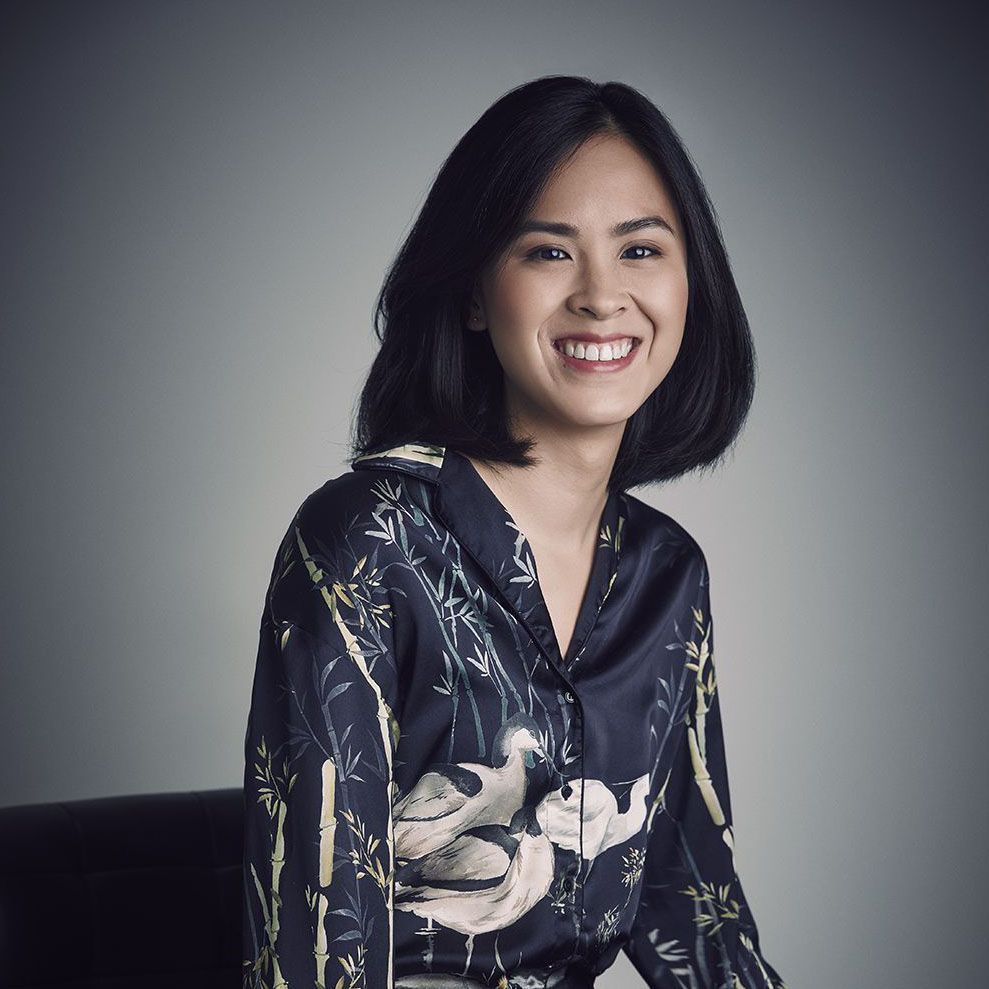
Cover Desiree Ong is a Singaporean visual development artist based in Oregon, who’s worked on critically acclaimed films such as Guillermo del Toro’s ‘Pinocchio’ (Photo: Desiree Ong)
Desiree Ong is a Singaporean visual development artist based in Oregon, who’s worked on critically acclaimed films such as Guillermo del Toro’s ‘Pinocchio’ (Photo: Desiree Ong)
1 / 1
From a young student with a camera to helping shape Hollywood’s most imaginative worlds, Desiree Ong shares her journey into the world of animation and why she saw a therapist after working on Guillermo del Toro’s ‘Pinocchio’
The first time Desiree Ong held a camera, she didn’t know she was setting the stage for a career that would bring complex worlds to life. “Whenever there was an event at school, I would walk around freely and snap photos with my camera, as a way of telling other people’s stories,” says the visual development artist of her days as a student on Tatler Gen.T’s Crazy Smart Asia podcast.
What began as a school photography club adventure would later transform into a journey through the intricate realm of animation, where she would work alongside some of the most visionary directors in the film industry.
Growing up in Singapore, Ong initially thought about learning to become a chef after graduating from secondary school. This was not a reflection of her interest in the craft, but rather a consequence of social stereotypes that made her believe it was one of only a few routes available to a student in the Normal (Academic) stream.
Read more: The enduring brushstrokes: Remembering Lim Tze Peng, one of the nation’s most celebrated artists
Around that time as well, her father came across a listing by the Institute of Technical Education (ITE) in the local national newspaper The Straits Times. The school had opened up three positions for ITE students in its first-ever animation course.
Ong’s father nudged her to apply, although her mother favoured more conventional majors such as law and medicine. The pivot proved to be well-timed. Singapore was investing heavily in the animation industry, attracting global studios such as Lucasfilm.
For a curious student who had been captivated by visual storytelling, it was the perfect entry point.
From art school to Hollywood
In 2009, Ong moved to San Francisco to study at the Academy of Art University. There, she sharpened her drawing skills at workshops thrice a week and worked towards her dream of becoming a visual development artist who decided the look of specific scenes in a film.
Fast forward to today, she’s worked on critically acclaimed animated films like Kubo and the Two Strings, Missing Link and Guillermo del Toro’s Oscar-winning Pinocchio. Each project was a learning experience, pushing the boundaries of visual storytelling.


Above Guillermo del Toro, Alexander Bulkley, Gary Ungar and Mark Gustafson after receiving the Best Animated Feature award for ‘Pinocchio' at the 95th Annual Academy Awards in 2023 (Photo: Rodin Eckenroth/Getty Image)
Guillermo del Toro, Alexander Bulkley, Gary Ungar and Mark Gustafson after receiving the Best Animated Feature award for ‘Pinocchio' at the 95th Annual Academy Awards in 2023 (Photo: Rodin Eckenroth/Getty Image)
1 / 1
On Pinocchio, for instance, Ong discovered the beauty of collaborative creativity. “Guillermo del Toro trusted his team and allowed us to channel our creativity,” she explains. Unlike other productions where artists might feel like “a cog in a wheel”, the experience was liberating.
She landed the job after a producer friend contacted her. Ong had just been fired from her previous assignment when the call came. “I was like, ‘Oh. I really like The Shape of Water. So I said yeah, definitely, please, please, please.’”
After completing the film, however, she shares that she started seeing a therapist due to burnout. “But it’s good, it’s good,” she quickly adds. “I think film as a medium is a way to sort of process how far we’ve come with certain narratives and where we want to go from here, right?”
Their work isn’t just about creating beautiful images—it’s about translating complex narratives into visual language. “There’s a lot of science in animation and art,” Ong explains. She speaks about how understanding molecular diffusion influences how fog is depicted, or how fractal compositions can create depth in animation.
Read more: Visual artist Kumari Nahappan is behind some of Singapore’s most recognisable public sculptures
Spotlighting important narratives through animation
Looking ahead, Ong is developing a project called Root, focusing on illustrating the direct impacts of climate change and biodiversity on human life. Her goal is to use animation to make these complex scientific concepts accessible. “Animation can bring ideas to people who are landlocked and let them see beauty they might not otherwise have access to,” she says.
This stems from her deep belief in animation’s transformative potential; that It’s not just entertainment, but a medium for education, empathy and exploration.
Read more: No jump scares, no problem: this horror filmmaker can terrify you without the shocks
Quick take
To get to know Ong beyond her professional achievements, she answers a round of rapid-fire questions:
The film that sparked your animation dreams?
Desiree Ong (DO): Coraline. It was one of the first cartoon animation with a female lead character and it was so whimsical because it was stop motion. I was so curious to know how it was made and how I could work in this industry.
Your current favourite animated show?
DO: Scavengers Reign. The scenes and narratives are so beautiful, and the illustrations are so visceral.
Who’s a director you want to work with?
DO: I want to say James Cameron, but I was at a concept artist talk at the LightBox Expo and all of his concept artists were men. So I’m not sure he’ll hire me. That being said, I’m putting this out there.
Read more: Meet Tanaka Daisuke, the Japanese designer infusing anime culture into romantic garments
If you could have dinner with anyone, who would it be?
DO: [Marine biologist] Dr Sylvia Earle. She comes from such an amazing generation, where she helped push forth science for ocean-related matters so much. It would be amazing to sit in front of her at dinner and ask her questions.
What’s one advice you would give to anyone who wants to break into the animation industry?
DO: Focus on expressing your story and build that into a film. That’s going to be your calling card. There are a lot of free and affordable software and platforms like Blender and Procreate. You also have your phone, which has a powerful camera, so you can make any film you want right now.
You can exercise your creativity. It’s more of a question of what's stopping you? Why don’t you try it and give it a shot? It’s going to be really fun.
Discover more young artists from Asia on the Gen.T Leaders of Tomorrow list.
NOW READ
Jemimah Wei on the story behind her debut novel and what it means to be a writer in Southeast Asia
Wendy Ong is the Singaporean power player behind some of music’s biggest stars
‘Good Cop/Bad Cop’ star Grace Chow is writing her own script on the way to international acclaim
Topics
Chong Seow Wei is a regional senior editor covering business, innovation, impact and people. Based in Singapore, she oversees content for Gen.T, Tatler’s platform for promising entrepreneurs and new-generation leaders, and its Power & Purpose vertical.





