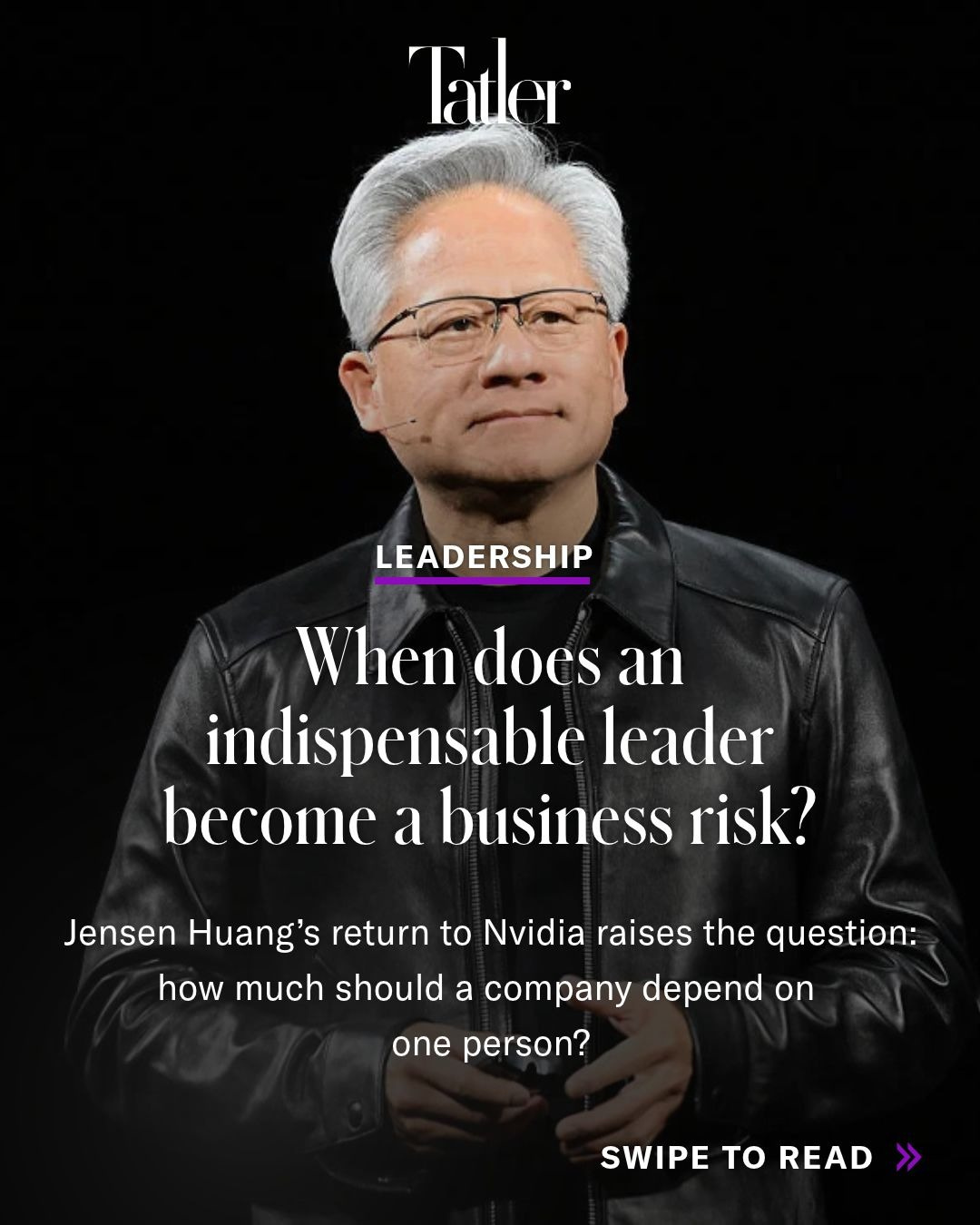

Cover Jensen Huang is facing a reckoning over his private conduct (Photo: courtesy of Getty Images)
Jensen Huang is facing a reckoning over his private conduct (Photo: courtesy of Getty Images)
1 / 1
Sixteen months after the Coldplay kiss-cam scandal, Nvidia CEO Jensen Huang’s infidelity sets him up for a far larger reckoning over his private conduct
Sixteen months after Astronomer CEO Andy Byron was caught on camera at a Coldplay concert embracing a woman other than his wife, Nvidia CEO Jensen Huang admitted that he had had an affair. Beyond the infidelity, there is the added layer of the relationship being with a Chinese AI executive whom US officials suspect of gathering intelligence for the Chinese government.
In case you missed it, allow me to recap the drama: during Coldplay’s traditional “kiss cam” segment in July 2025, the jumbotron landed on Byron, CEO of data platform company Astronomer, embracing a blonde woman later identified as his chief people officer, Kristin Cabot. The moment, captured and shared widely on social media, sparked widespread speculation about an extramarital affair. Byron resigned just days later, prompting serious questions about the intersection of personal conduct and professional leadership.
Now, Jensen Huang is facing a far larger reckoning over his private conduct. Huang admitted in a memo to staff this month that he had been unfaithful to his wife, and had been in a relationship with a Chinese AI executive whom US officials suspect of gathering intelligence for Beijing. Nvidia’s board has opened an independent investigation.
Andy Byron and Jensen Huang. Two CEOs, two affairs, vastly different stakes, and the same question: what happens to trust when leaders’ personal lives collide with their professional authority? Does personal integrity predict professional trustworthiness? And if leaders cannot honour the most intimate commitments in their private lives, what assurance do employees have that professional promises will be kept?
Trust forms the bedrock of effective leadership. Employees invest not merely their working hours but also their career trajectories, financial security and professional aspirations in the organisations they choose. This investment requires faith that leaders will act with consistency, transparency and integrity. When that very faith is shaken—whether through financial impropriety, ethical lapses or personal indiscretions—the ripple effects extend far beyond the individual.

Above Jensen Huang is at the centre of a scandal (Photo: courtesy of Getty Images)
Jensen Huang is at the centre of a scandal (Photo: courtesy of Getty Images)
1 / 1
Above Source: CTV News Canada
The Byron incident during the Coldplay concert is a good example of how modern technology has collapsed the boundaries between public and private lives. Today’s leaders operate in an environment where personal conduct can become corporate liability within hours. Yet this scrutiny isn’t merely about public relations damage control—it reflects a deeper expectation that leadership integrity should be indivisible.
Research consistently demonstrates that trust in leadership directly correlates with employee engagement, retention and performance. When staff question whether their CEO possesses the moral compass to navigate complex decisions, it creates what organisational psychologists term “moral uncertainty”—a state where employees second-guess leadership motives and become increasingly risk-averse in their own decision-making.
Consider the specific dynamics at play when infidelity involves senior colleagues. Beyond the personal betrayal, such situations often involve abuse of power dynamics, potential conflicts of interest and the creation of toxic workplace cultures where professional advancement may appear contingent on personal relationships rather than merit.
The parallel between marital faithfulness and corporate loyalty isn’t merely philosophical—it’s practical. When leaders demonstrate an inability to maintain these standards in their personal lives, it raises legitimate concerns about their capacity to do so professionally.
This doesn’t suggest that personal relationships should be subject to corporate oversight, nor that private struggles should automatically disqualify someone from leadership. Rather, it acknowledges that patterns of behaviour—particularly those involving deception, broken commitments or abuse of power—tend to manifest consistently across different contexts.

Above Today’s leaders operate in an environment where personal conduct can become corporate liability within hours (Pictured: Andy Byron at the Coldplay concert)
Today’s leaders operate in an environment where personal conduct can become corporate liability within hours (Pictured: Andy Byron at the Coldplay concert)
1 / 1
Moving Forward
There’s no doubt that the digital age has made leadership more transparent. But it’s also made it more challenging. Tomorrow’s leaders must recognise that their personal conduct will inevitably intersect with their professional reputation.
For employees choosing where to invest their careers, these incidents offer insight into the leaders they're considering following. True leadership isn't merely about achieving targets or driving growth—it's about embodying the integrity and trustworthiness that inspire others to commit their professional futures to a shared cause or vision.
The question isn’t whether leaders are perfect—no one is. It’s whether they demonstrate the character, accountability and consistency that justify the extraordinary trust their positions demand. In an era where talent retention and corporate culture increasingly drive competitive advantage, this may be the most critical competency of all.

As Content Director at Tatler Hong Kong, Tara shapes the brand's editorial vision across social, digital and print. She also drives the planning and execution of Tatler's flagship IPs. In her dual role as Head of VIP, she reports on Asia's most influential figures — from CEOs and leaders across business, style and the arts — curates star-studded events, and builds the relationships and communities that define the brand. Born and raised in the Middle East, she honed her craft in Dubai, building communication strategies for luxury brands across the Gulf. Follow her on Instagram @tarasobti.


Curated for you
The stories, profiles, and cultural moments featured on our Instagram feed