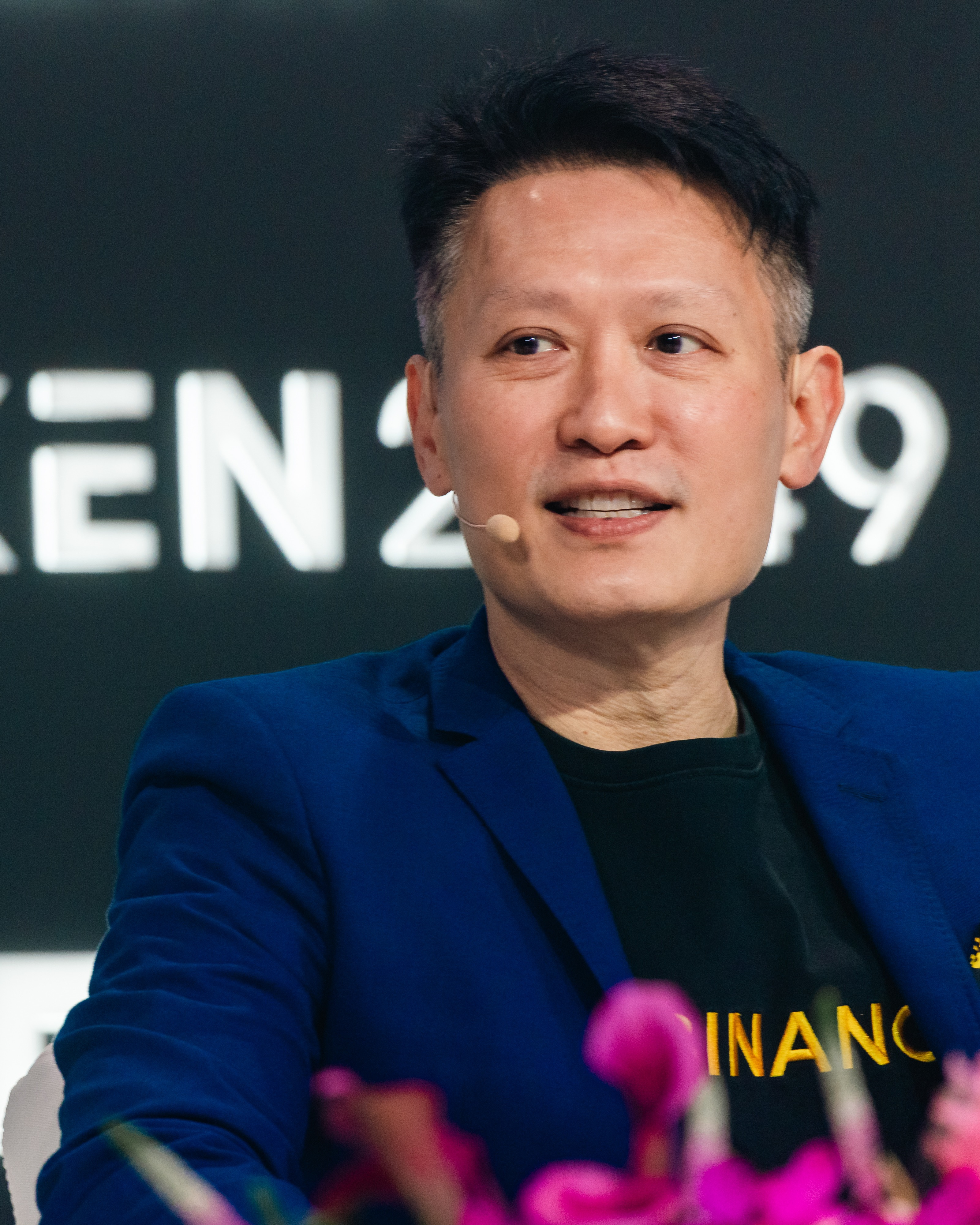
Cover Zachary Young, founder of Web3 platform Atlantis Labs
Zachary Young, founder of Web3 platform Atlantis Labs
1 / 1
The founder of Web3 platform Atlantis Labs joined CryptoKnight Academy as chief executive in October 2024 and eventually concluded that better tools, not more lessons, were what his learners actually needed—and that he would have to build them himself
Zachary Young does not fit the archetype of the crypto founder. He did not come up through trading floors or DeFi protocols. He came up through venture, spending years in the startup ecosystem backing founders, watching industries form and re-form, and developing a framework for how technological change actually happens. From dot-coms to social media to artificial intelligence, he observed the same pattern: early chaos, widespread dismissal, then—eventually—the infrastructure and understanding that allow a technology to become something lasting. He believes crypto is in that same arc. Whether he is right remains to be seen. But it is the conviction that led him to build Atlantis Labs and eventually became the chief executive of CryptoKnight Academy in October 2024.
Read more: Token2049 Singapore is set to transform the Lion City into a crypto hub


Above Young launched Atlantis Labs in January 2026 as a unified, non-custodial Web3 access hub that consolidates key actions into a single interface
Young launched Atlantis Labs in January 2026 as a unified, non-custodial Web3 access hub that consolidates key actions into a single interface
1 / 1
CryptoKnight Academy started as an education play. The premise was straightforward: crypto was widely misunderstood, the quality of information available to retail investors was poor, and there was a real need for structured, risk-aware teaching. Young led the academy in Singapore through various highs and lows in the crypto market, eventually educating more than 40,000 students, investors and entrepreneurs on how to navigate digital assets. The focus was consistent throughout: structured strategies, risk awareness, and self-custody—the principle that users should retain control of their own assets rather than hand them to a third party.
What nine years of teaching produced was not just a community. It was a detailed picture of where people actually go wrong in crypto—and it was not where Young had expected. “Most people do not lose money in crypto because they are careless or reckless,” he says. “They lose money because the tools are fragmented, confusing, and easy to get wrong.”
Across surveys, coaching sessions and live classes, the same patterns kept emerging: users juggling multiple wallet interfaces, exchanges, portfolio trackers and analytics tools, struggling to see a clear picture of their own holdings, and making avoidable errors simply because each platform felt unfamiliar. In crypto, those errors can be costly and difficult to reverse.
Gigi Pang, a Hong Kong-based founder and social entrepreneur, is one example of what Young observed across the academy’s learner base. She came to CryptoKnight with limited crypto experience and, through structured lessons, homework and real-time practice trades within the community, progressed to executing options trades independently. Her trajectory illustrates the gap Young kept seeing: education could build understanding, but once a learner stepped into the actual Web3 ecosystem, they were on their own—navigating a fragmented set of tools with little margin for error.
That gap is what Young says Atlantis is designed to address. Launched in January 2026, Atlantis is a unified, non-custodial Web3 access hub that consolidates key actions—tracking holdings across chains, researching tokens, sending funds, swapping and bridging assets—into a single interface. The platform's stated position is that it centralises the interface, not the assets: users remain in control of their own wallets throughout, and Atlantis does not hold funds, request private keys or seed phrases, or act as a trading counterparty. "We centralise the interface, not the assets," Young says, "so users can rely on one clear control panel for Web3 while their funds stay in their own wallets and on decentralised protocols, where they belong."
Whether a simpler interface is sufficient to address the deeper trust and safety challenges that have dogged retail crypto participation is a question the market will answer. What Young is clear about is the principle guiding the build: in a space where users are already cautious, innovation should lower risk rather than add to it. Singapore's regulatory environment—often characterised as restrictive by those in the industry—is, in his view, a useful pressure. "In environments where users are increasingly cautious, innovation has to lower risk rather than add to it," he says. He sees the cautious stance not as a ceiling but as a standard: credibility in crypto has to be earned through education, simpler design and user control, not assumed.
The roadmap ahead includes broader chain and protocol support, a smoother mobile experience, and smarter insights layered onto existing tools—each phase, Atlantis Labs says, guided by the same principle that shaped the launch version: reducing complexity, minimising user risk, and making Web3 more intuitive for mainstream users. How the platform performs against those goals, and whether it finds the audience it is designed for, will define the next chapter of Young's evolution from educator to builder.
Learn more about Zachary Young's work and the platform he built at enteratlantis.com.
Curated for you
The stories, profiles, and cultural moments featured on our Instagram feed