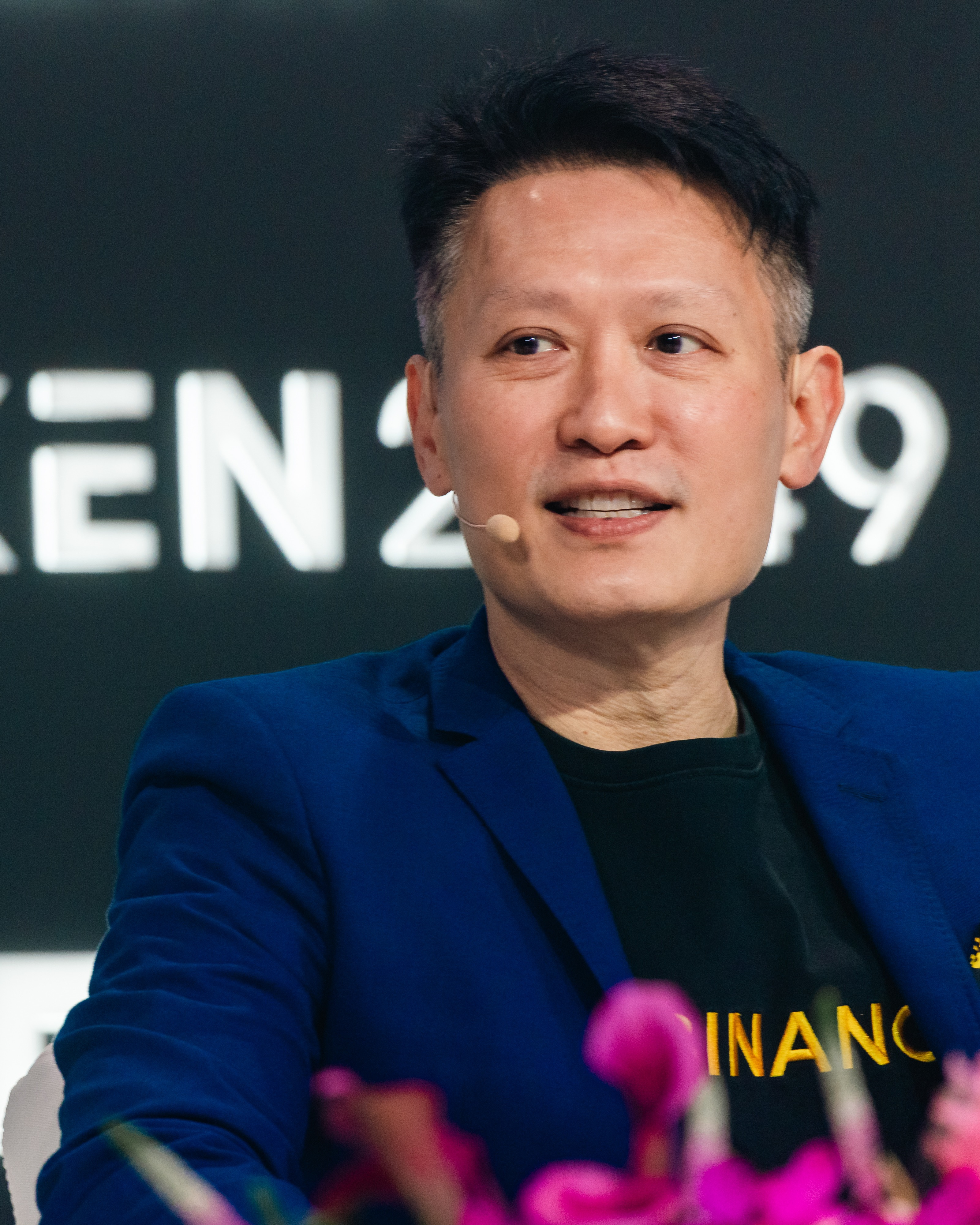
Cover Stefano Domenicali has steered Formula One as president and CEO since 2021
Stefano Domenicali has steered Formula One as president and CEO since 2021
1 / 1
Formula One chief executive Stefano Domenicali reveals the winning formula behind one of the greatest corporate and cultural pivots in modern sports—transforming an insular racing series into a groundbreaking model that rival leagues around the world are desperate to replicate
“You know, I love being behind the scenes and pushing this sport at the top level,” says Stefano Domenicali, the amiable Italian who has steered Formula One as president and CEO since 2021. “This isn’t any kind of egomaniac project—I just want to make sure our sport and our voice will be at the top, because the sport deserves it and all the stakeholders deserve it, and it’s my duty to push it to the top in all the things we do.”
Now in his early sixties, Domenicali has been passionate about motor cars since childhood, when he spent weekends at the Autodromo Enzo e Dino Ferrari racing circuit in Imola, a city that lies at the edge of Italy’s “motor valley”, and home to such illustrious names as Ducati, Ferrari, Lamborghini, Maserati and Pagani. After graduating from the University of Bologna in the early 1990s, he almost immediately took a job at Ferrari, where he rose through the ranks to become principal of the F1 team in 2008, a role he held until 2014. A stint at the Volkswagen group followed, first with Audi and, two years later, taking the lead of its Lamborghini subsidiary as CEO, where he stayed for five years before being lured back to motorsport to succeed Chase Carey at the helm of Formula One.
Read more: Louis Vuitton and Formula 1 renew official partnership for the 2026 Grand Prix season


Above Stefano Domenicali on the November 2026 cover of Tatler Singapore
Stefano Domenicali on the November 2026 cover of Tatler Singapore
1 / 1
During his lifetime, Domenicali has seen vast changes to the sport he loves, from an increased awareness of and attention to safety, and an exponential expansion of the annual racing calendar, to the adoption of hybrid petrol‑electric power units, the latter in response to growing concerns about F1’s carbon footprint. Impactful though all these have been, few are as transformational as those undertaken in his five-year tenure.
When US-based Liberty Media, owner of the Formula One Group, acquired the racing series’ commercial rights in 2017, it found a sport that was not realising its potential. Ticket sales were down, the sport had little in the way of digital presence, and viewer numbers had dropped from around 600 million in 2008 to almost half that in 2017. During Liberty’s first year of ownership, matters deteriorated further, with teams suffering from declining revenues and prize money.
“There were moments in our long history—and not so many years ago—when a lot of people thought our platform was almost dead,” says Domenicali. “It was just for super-avid fans. The vast majority were at least my age and mostly male.”
Something needed to change, and change drastically.

Above Domenicali wears a Louis Vuitton LV Trunk Edition jumper, trousers and Escale Worldtime Automatic 40mm watch in platinum
Domenicali wears a Louis Vuitton LV Trunk Edition jumper, trousers and Escale Worldtime Automatic 40mm watch in platinum
1 / 1
“We thought that in order to boost what we think is one of the best platforms in the world, we had to move the focus: keep the racing at the centre, while moving the focus in other dimensions,” says Domenicali. “We wanted to capture attention for our sport in areas that previously we couldn’t get in touch with.
“We felt the need to survive, to be alive again, with a product that had great potential but was in danger of disappearing.” In other words, reach hitherto untapped markets and demographics through digital media, storytelling and personalities, an approach exemplified by Drive to Survive, Netflix’s fly-on-the-pit-wall documentary series first screened in 2019.
“In a way, the big step change was at the time of Covid, which could have been a disaster, because the sport is international,” Domenicali admits. “Drive to Survive was the first step in this new way of engaging with the fans: we were able to talk about our sport in a new way, revealing the drivers behind the scenes without the helmets and the gloves, and changing the narrative completely.” Crucially, the series kept eyes and interest focused on the sport at a time when viewers were confined to their homes.
Domenicali took up his post at the height of the pandemic, the moment at which he says he began to understand F1’s evolution into the phenomenon it is today. “Covid could have been the sliding door for us, sort of a game over. Instead, it became the spring that pushed us into a new and different dimension. I’d just started [with the Formula One Group] and it was a very difficult moment to say, ‘Listen, if you’re able to apply this strategy it will take us to another level.’ But I realised Covid could be an opportunity. As always in life, problems have to become opportunities, and I think that really was when we understood that and pushed in the direction we took.”
Beyond the grid

Above Domenicali wears a Louis Vuitton LV Trunk Edition shirt, jacket, trousers and Escale Worldtime Automatic 40mm watch in platinum
Domenicali wears a Louis Vuitton LV Trunk Edition shirt, jacket, trousers and Escale Worldtime Automatic 40mm watch in platinum
1 / 1
What was once drifting toward a niche sporting interest transformed into a worldwide cultural and lifestyle phenomenon that other sporting leagues are looking to duplicate. F1 is a multi-billion-dollar operation, and its revenues in the first quarter of 2026 rose 53 per cent year on year to almost US$620 million.
“If you want to be effective you need to be relevant, and relevancy means you have to be present,” Domenicali grins knowingly. “[Maybe not] on a daily basis, but we have to make sure that the attention and the focus on our sport are always there.”
To that end, digital and marketing teams were brought in alongside Drive to Survive, and a goal of establishing the drivers as personalities was born. Lewis Hamilton, who made his debut in 2007 and had already begun to bridge motorsport and fashion, was the forerunner. When he first raced, Max Verstappen and Charles Leclerc were nine years old and Lando Norris was seven. Kimi Antonelli, the newest arrival, was not yet a year. These younger drivers reached the grid already at ease with social media and public attention, and gave the teams’ behind-the-scenes content a personal face, bringing in new audiences—among them women.
“We were the first to believe in the female dimension and invested in that directly,” Domenicali says. “You may wonder why, because some people said we should focus on our core business, Formula One. [But alongside] the FIA [Federation Internationale de l’Automobile, the sport’s governing body], we manage a pyramid of growth … and in the female dimension there was nothing. So we created the F1 Academy [an all-female racing series] under the leadership of [former driver] Susie Wolff.
“We want to attract women as engineers, mechanics and managers, so this has created a big push not only in developing drivers, who are the iconic faces of the world of motorsport, but also in other dimensions. We’re aiming for a diverse world that embraces all the values of Formula One.”
Domenicali admits that the women’s sporting side will take time to build the momentum required to achieve growth, but notes that there is great commercial potential. Women now account for around 42 per cent of the sport’s fan base, estimated at around 830 million, while three out of four new viewers are also women.

Above Domenicali wears a Louis Vuitton shirt, jacket, trousers and Escale Worldtime Automatic 40mm watch in platinum
Domenicali wears a Louis Vuitton shirt, jacket, trousers and Escale Worldtime Automatic 40mm watch in platinum
1 / 1
This is not the only direction in which Domenicali intends to expand. The 2026 calendar began in March, ends in December and spans five continents. Every grand prix in the first half of the season sold out. Yet there are regions where the CEO sees as having room for growth. Following his interview with Tatler, Formula One announced a ten-year agreement to host the African Grand Prix in Rwanda, on a circuit close to the capital, Kigali.
Expanding in Asia, however, means navigating an uneven track record. While Japan’s Suzuka circuit has anchored the calendar since the late 1980s with an established domestic fanbase, and Singapore’s Marina Bay street circuit proved that a downtown night race could double as a high-margin tourism driver, earlier ventures into South Korea and India collapsed after only a few editions—undone by poor transport links, weak ticket sales, and mounting financial disputes.
Domenicali is determined not to repeat those missteps. “In Asia, we are establishing the commercial groundwork for an additional event, but our approach today is far more deliberate,” he explains. “Before we enter any market, we have to ensure there is an economic model that guarantees long-term sustainability. We want to generate genuine sporting passion and community integration that will anchor us there for decades. The runway for growth remains immense—and this will happen.”

Above Domenicali wears a Louis Vuitton T-shirt, jacket, trousers and Escale Worldtime Automatic 40mm watch in platinum
Domenicali wears a Louis Vuitton T-shirt, jacket, trousers and Escale Worldtime Automatic 40mm watch in platinum
1 / 1
Recognising the sport’s soaring global footprint and diverse audience, LVMH—the undisputed titan of luxury—entered a landmark ten-year partnership in 2025, valued at US150 million annually. This massive crossover is the ultimate proof of F1’s growth, says Domenicali, demonstrating that the series has transcended sport to become a premier cultural phenomenon at the nexus of lifestyle and fashion.
“You’re talking to an Italian who knows that this ‘lifestyle dimension’ … is very important, and is attracting people who aren’t experts in racing, but who represent another cluster of fans,” he says. “Today, we’re not talking only about racing cars, but a model that’s being seen and copied around the world. That’s why all the big fashion and luxury groups have embraced our journey—and it’s once again proof that we’re attracting a new audience for a sport that’s becoming something much more.”
The gear shift
Operating a global roadshow, however, exposes the sport to events beyond its control. Covid-19 disrupted the 2020 season, and conflicts in Ukraine and the Middle East have affected where it can race. Sustainability remains a constant imperative, one that is becoming more pressing on a fast-warming planet.
“The level of complexity of Formula One … no one else has it,” says Domenicali. “No other sport, no other business, no other logistical operation—in terms of being able to move tonnes and tonnes of materials and thousands of people from one country to another in one day—so we need to be as flexible as we can. We know certain areas of our championship are affected by what’s happening around the world, so we monitor and collect all the information before making the right decisions with the information we have. The complexity is fascinating. When they understand it, people say, ‘My God, how is this possible?’ But that’s our business, it’s unique—no one can be like us.
“We’re a worldwide championship and we need to travel, so we’re focusing on sustainable aviation fuel and low-carbon logistics, which are key to our ESG targets,” says Domenicali. He adds that evolving responsibly does not mean sacrificing how top-tier racing is meant to be experienced. With the sport already running on sustainable fuels and the FIA exploring lighter, louder V8 architectures for 2030 to safeguard the championship’s acoustic character, his philosophy remains clear: pure speed must be felt. “We’re working in an emotional world, and if you don’t have the five senses all activated, you’re going to lose it,” he says. “Therefore, sound is part of what we need to produce.”
As a lifelong fan and as the man directly shaping the sport, Domenicali says that F1’s current evolution is what he envisioned. “That is what I wanted. If you’re not relevant culturally today, you don’t have the space to grow,” he says as a parting shot. “Sport is part of the cultural phenomenon, for sure—it’s at the centre of what we’re doing, but that alone won’t allow us to grow and do what we’re doing today. If you just focus on one dimension, you’re going to disappear.”
Credits
Photography: Darren Gabriel Leow
Styling: Adriel Chiun
Art Direction: Jeremy Ang
Production: Dana Koh and Hashirin Nurin Hashimi
Stylist's Assistant: Angelle Sun
Location: Club Lounge at The Ritz-Carlton, Millenia Singapore
Grooming: Cheryl Ow
Topics
Curated for you
The stories, profiles, and cultural moments featured on our Instagram feed