

Cover Models wearing Kaddadía clothes (Photo stylised by Ryan Kabigting)
Models wearing Kaddadía clothes (Photo stylised by Ryan Kabigting)
1 / 1

Sabina Yulo, founder of inclusive clothing brand Kaddadía and body acceptance community Hi Smithy! shares her insights on choosing clothes that celebrate our unique bodies
“Growing up, I didn’t think fashion was for me,” says Sabina Yulo. “I thought I had to be a certain size to ‘deserve’ dressing up, so I avoided it altogether.” Her journey to founding the inclusive clothing brand Kaddadía and the body acceptance community Hi Smithy! did not happen overnight. For years, Yulo struggled to accept how her body looked—especially as her weight fluctuated over time.
“I grew up in a very body-conscious environment,” she recalls. “Everyone was constantly talking about diets and weight loss, equating fat with ugliness. On top of that, I was a chubby kid compared to those around me, which made things harder.” As she went through puberty, Yulo felt trapped in the pursuit of weight loss. “It affected how I saw myself and how I allowed people to treat me,” she says. “I believed that if I could just lose weight, I would finally be beautiful and deserving of love and respect.”
In case you missed it: Why you should never let a romantic relationship overshadow female friendships and sisterhood


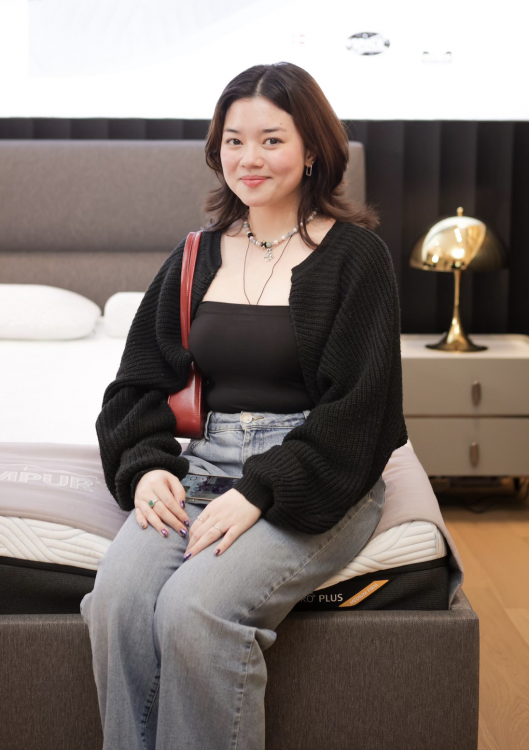
Above Sabina Yulo, founder of Kaddadía clothing brand and Hi Smithy! body acceptance community
Sabina Yulo, founder of Kaddadía clothing brand and Hi Smithy! body acceptance community
1 / 1
When the pandemic started, spending time indoors meant Yulo had more time to reflect on her beliefs about her body. She started posting about her experiences on her Instagram Stories. To her surprise, many people resonated with her struggles. “Social media often shows people’s best angles, so it’s easy to forget that it’s normal for your body to change throughout your life. We’re not meant to be the same weight forever,” she says.
This realisation became the basis for Yulo’s clothing brand, Kaddadìa, and the accompanying body acceptance community Hi Smithy!. Along the way, she’s gained valuable insights on designing a wardrobe—and life—that celebrates your unique personality and how your weight fluctuates over time.
Examine your current beliefs about what bodies and styles are ‘acceptable’
Clothing is not neutral—what we wear reflects what society values, and what is considered ‘flattering’ usually equates to ‘small’ and ‘form-fitting.’ While there’s nothing wrong with clothes that accentuate certain parts of your body, it’s important to examine whether you’re choosing them out of comfort or if you feel pressured to do so.
Growing up in Filipino culture, Yulo shared her experiences with ‘biases against fatness’ through comments from older family members and authority figures. An important part of navigating her body acceptance journey was challenging those beliefs. “Question why weight is tied to respect, why gaining a little fat is treated like failure, why ‘you lost weight’ is the highest compliment,” she says.
Before, Yulo would find herself ‘hiding’ in her clothes. “My baseline was wearing all-black, avoiding any colours, and steering clear of any silhouettes that drew attention to my body,” she recalls. “I dressed in a way that minimised my presence, focusing on looking ‘smaller’ instead of expressing myself.”
Approach your style journey with curiosity and grace
For Yulo, things started to change when she saw dressing up as a form of self-expression instead of a way to hide or manipulate how her body looked. “I began experimenting, playing with different styles, colours and shapes, dressing in ways that matched mood rather than an idea of what looked ‘flattering’,” she says. “I stopped treating my clothes as a tool to highlight my ‘thinner’ parts and used it as an outlet for my creativity.”
This has also made her more experimental in her style journey. “If there’s something you’ve been told you can’t ‘pull off’ because of your body, then you should ignore it,” she says. “The only opinion that matters is yours. For example, I have a short torso, and some style rules say I can only wear low-rise pants. But I don’t feel comfortable in them, so I wear high-waisted ones anyway because they make me feel good.”
Hold space for the feelings that arise along the way

Above Sabina Yulo hosting a Hi Smithy! community event
Sabina Yulo hosting a Hi Smithy! community event
1 / 1
Becoming more open-minded was a process that she cultivated every day. Yulo’s advice is to start by examining the way that you speak to yourself. “When I started paying attention to my internal dialogue, I realised how harsh I was on myself,” she says. “But I would never speak to my loved ones in that way. So, the moment you catch yourself doing the same, try responding as you would to a friend who said that to themselves. How would you help them reframe what they said to be kinder? It can help to direct that kindness to yourself.”
Even as Yulo was deeply immersed in concrete steps to accept her body, she had to constantly work on her mindset. “I’ve accepted that a part of me may always wish I was thinner or looked a certain way, but no matter what weight I’m at, I know I’m so much more than my waistline or clothing size,” she shares. “I used to believe I had to love myself 100 per cent of the time, but I’ve experienced decades of conditioning that might not disappear entirely. Now, I focus on how my love for myself as a person will never change.”
More from Tatler: How can I stay positive about my body image both during and after pregnancy and avoid feeling pressured to ‘bounce back’?
Opt for more adjustable pieces and looser silhouettes

Above The Kaddadía community
The Kaddadía community
1 / 1
An important step in Yulo’s journey was letting go of ‘goal weight’ clothing. “Keeping pieces for a future, thinner version of yourself only reinforces the idea that your current body isn’t enough,” she says. It’s important to focus on the present moment. Look for pieces that highlight comfort and flexibility, complementing how your weight naturally changes even in small moments, like between meals. For the Kaddadía team, elements like stretchy fabrics, elastic waistbands, wrap details and adjustable straps ensure that each item easily adapts to weight fluctuations.
Another key to building a wardrobe is intentionality and patience. It’s more important to develop an intuitive understanding of the pieces that reflect your personality. Sometimes, that aligns with current trends. However, feeling forced to ‘pull off’ a trend and fit a certain style can inhibit the process.
“At the end of the day, confidence comes from feeling at home in your clothes,” says Yulo. “If you’re constantly adjusting an outfit and checking yourself in the mirror the entire time, then it doesn’t matter how flattering the outfit is supposed to be.”
Find inspiration in community and literature

Above The Kaddadía community
The Kaddadía community
1 / 1
For Yulo, cultivating communities through Kaddadía and Hi Smithy! has kept her going. “A strong community creates space where you feel safe to experiment, make fashion mistakes and grow into your personal style without fear of judgment,” she shares. “When they cheer you on, even the days that you struggle or feel unsure are easier to bear.”
It can also be helpful to find resources that engage in discussions around self-acceptance. For Yulo, the booksmThe Body Is Not An Apology: The Power of Radical Self-Love by Sonia Renee Taylor and Beauty Sick: How the Cultural Obsession with Appearance Hurts Girls and Women were instrumental in clarifying her purpose. “Now, I want to encourage people to push beyond aesthetics and traditional beauty ideals to feel at home in their bodies. I want them to not only look good but feel good as well.”
This story is part of Front & Female’s series She Speaks, through which we aim to drive open, inclusive and unfiltered conversations tackling the sensitive topics that impact women.
NOW READ
These trailblazing women in science are encouraging young girls to dream big
About
Celine first read Charlotte’s Web at the age of five–and she hasn’t stopped turning pages since. Her favourite authors are Mona Awad and Nat Cassidy. Besides writing for Tatler, she listens to BTS and spends time with her family.
Work
Celine took up secondary education with a major in English, graduating from De La Salle University in 2023. She advocates for female empowerment through creative expression by writing for Tatler Homes.
For story leads or inquiries, you may reach out to her via celine.dabao@tatlerasia.com.





