

Cover (Photo: Unsplash)
(Photo: Unsplash)
1 / 1

Centuries after the Spanish colonisation, and decades after the Philippines' affair with the United States and Japan, how have we come to understand the meaning of "morena"?
Morena: what a lovely word. It flows through the ear gently, suggesting the idealised image of a Maria Clara-esque Filipina woman. So how is it that for generations past, it had been used as an affront—sometimes taken as an underhanded compliment?
Read more: 5 Beauty Brands with a Cause Worth Supporting
Morena is no insult, and neither should it be. But for a time, that was the way society had interpreted it, callously disregarding the natural look of a woman and turning her into mere semiotics. For centuries now, there's been a pervasive insistence that the standard of beauty is white. The industry itself is a billion-dollar one, facing revenues of up to US$8.6 billion (globally) in 2020. Everywhere from India to China, and right here in the Philippines, skin-whitening, brightening, and lightening equates to big bucks. But the implication of this is much more deep-rooted than people realise. There's an entire web of history and culture behind it.

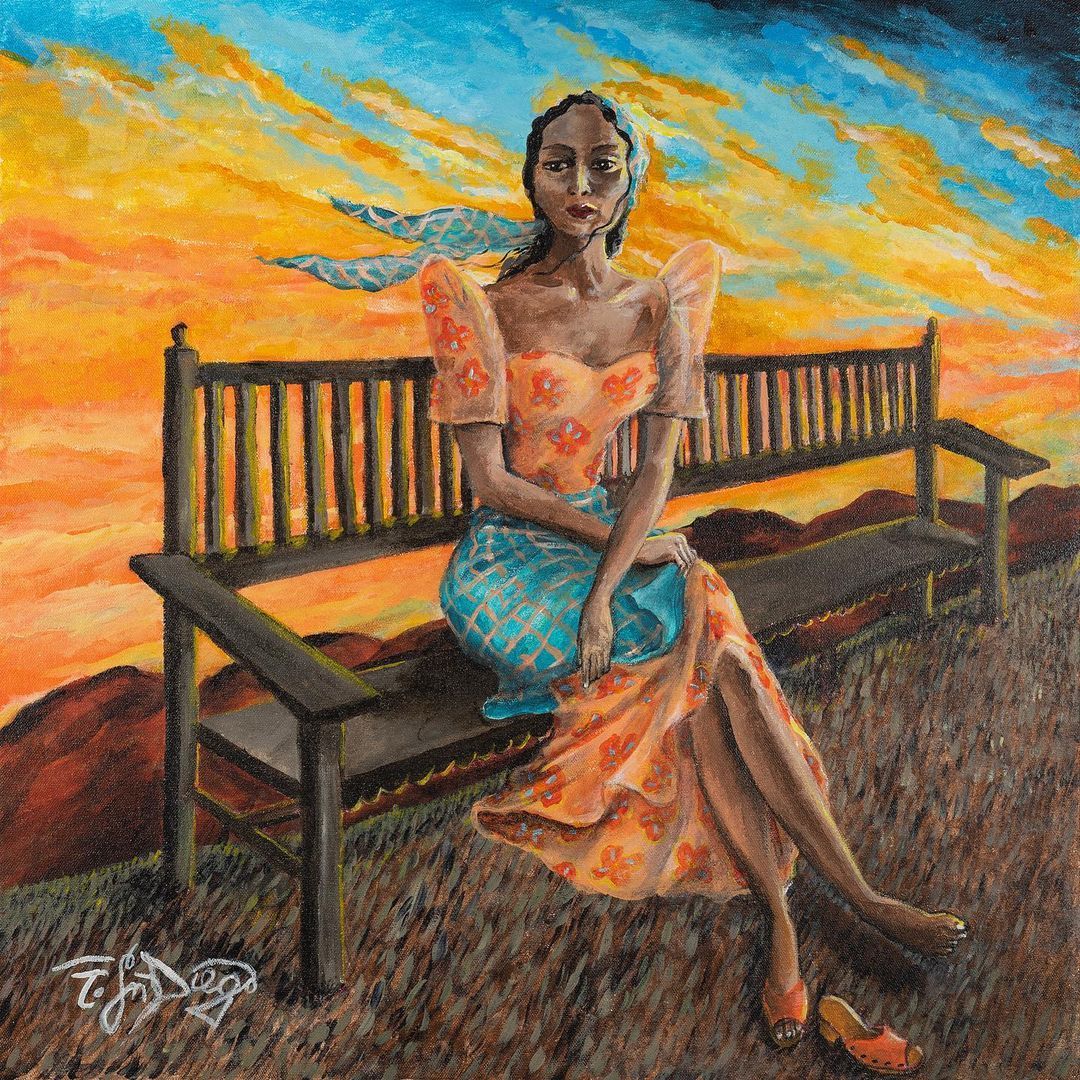
Above (Photo: @barbzsandiego / Instagram)
(Photo: @barbzsandiego / Instagram)
1 / 1
The Beauty Revolution
The Philippines has encountered more than her fair share of colonisers. There were the Spanish, the Americans, the Japanese, and briefly, the British. Through the classist policies first brought on by the Spaniards, Filipinos had learned to prioritise fairer-skinned people. For the longest time (here and in other parts of the word), dark skin had been associated with working in the fields, and in connection to that, rural poverty. Meanwhile, pale skin was associated with a more comfortable life indoors and out of the sun. In that way, skin colour became a symbol of social class.
Fortunately, these days, there seems to be a growing awareness for people to love the skin they're in. Beauty has become more diversified than ever. In 2019, a handful of major beauty queens were dark-skinned women—Miss Jamaica for Miss World, Miss South Africa for Miss Universe, and African-American Cheslie Kryst for Miss USA. In the Philippines, women were also becoming more and more empowered to celebrate their natural skin tone.
Perhaps one of the pioneers of such a movement is homegrown brand, Happy Skin. Founded in 2013, it was among the first to introduce a line of skincare and make-up specifically formulated for Filipinas. Rissa Mananquil-Trillo, one of its co-founders, shares: "The beauty of the Filipina cannot be boxed. I wanted all of us, from those who are fair-skinned with either yellow or pink undertones, or morenas like myself to feel like [Happy Skin] understood them and represented them.
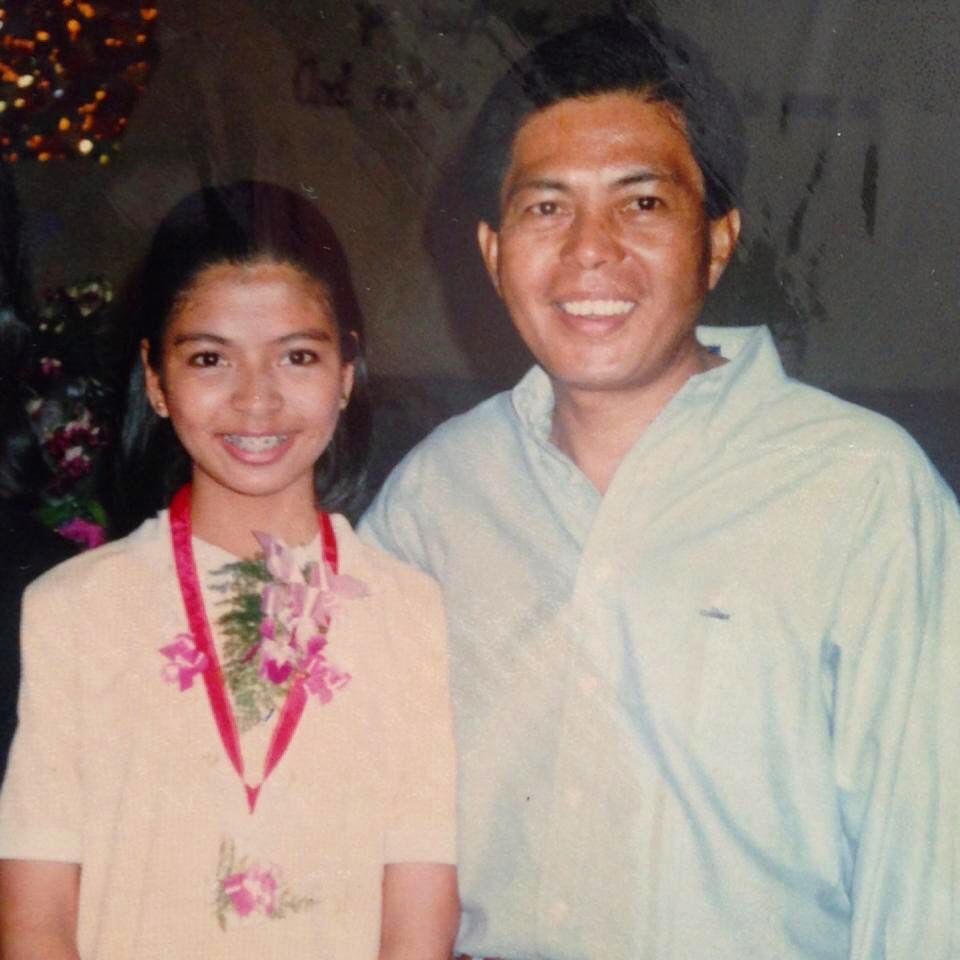
Above Rissa Mananquil-Trillo with her father (Photo: @rissamananquiltrillo / Instagram)
Rissa Mananquil-Trillo with her father (Photo: @rissamananquiltrillo / Instagram)
1 / 1
More For The Morenas
As a seasoned model and beauty columnist, Mananquil-Trillo understands the evolution of beauty more than most. She's been open of her journey: from being bullied and teased for her skin colour to eventually helping to found an empire that would encourage others to embrace their own. "I refused to feel ashamed about being dark-skinned," she says. "Morena was not a dirty word to me, but an expression of beauty that I welcomed. As a young model, I turned down opportunities to endorse whitening products and services, even if accepting them meant earning more money. I was, and I continue to be, very proud to be brown and I want women to embrace—not change—their natural colour."
Miss Universe Philippines 2021 candidate, Sam Santamaria, shares: "Today, I proudly walk on the stage carrying my skin colour as part of my story. Being morena is more than just being 'dark', it is about being proud of your heritage and thriving in the face of adversity. I've become the confident, empowered woman I am today because I was born a morena."
See also: Which Country Has The Most Beauty Pageant Winners?
While nothing is perfect or even set in stone, the movement towards empowerment and inclusivity seems to be a promising one. Mananquil-Trillo shares that perspectives are changing and for the better. "When I was younger, there was a more 'fixed' definition of what it meant to be a beautiful Filipina," notes Mananquil-Trillo. "[But] beauty comes in all colors and sizes, and because women are becoming more empowered to embrace this, I think that in this sense, we are all widening our perspective on beauty."
Yet, Santamaria notes that other issues have also come to light amid a new wave of ideology. "Somebody once commented on my post that I was 'black fishing' and that really shocked me until I realised that it wasn't the first time I was compared to black actresses, having people tell me I look like Tessa Thompson and Antonia Gentry," recalls Santamaria. I was born a morena with dark curly hair, and all of a sudden I was told I was doing everything in my power to appear black. Ultimately, what I think people need is to be educated and compassionate; understanding and allowing each other to present themselves in whatever way they like, because at the end of the day, we're all humans and there's beauty in our differences."
Changing Definitions
Yet the word itself—beauty—seems so abstract. And even for those like Mananquil-Trillo and Santamaria, who make beauty their business, the concept seems less about the physical and more about the personal. "Beautiful people are the ones who do good, are brilliant or talented, have integrity and their values in place, and are kind," asserts Mananquil-Trillo. "The most beautiful people I know have a sense of confidence that doesn’t stem from how they look, but from what they know they are capable of."
Santamaria, who represented her city of Parañaque at the Miss Universe Philippines 2021 competition, adds: "When you're passionate about something, I think that's when you're most beautiful. It allows you to give your entire being to something greater than yourself and that's what true beauty is to me."
While beauty is incredibly subjective, it also takes plenty of its cues from cultural norms and standards—and these can be toxic or unfair depending on how beliefs originate. There's an obvious narrative about what beauty is and while it's encouraging to note that inclusivity has become more and more the norm, it also gives people a chance to reflect on what they think is beautiful and why they do so. Beyond that, beauty isn't the ultimate criteria for success, or even happiness. And the world hopefully progresses into more a welcoming, more thoughtful society, it's important to realise that something as simple as skin colour can never determine one's beauty, and much less one's worth.
NOW READ
Could Chia Seeds Be The Latest Anti-Aging Beauty Ally?
Skincare Secrets: Expecting Mum Stephanie Kienle Gonzalez Shares Her Beauty Routine
Beauty Trends: Why Gen Z Shoppers Look To Skincare Before Makeup
A resource for women to become their best selves, Front & Female celebrates trailblazers and tackles timely, provocative issues through inspiring content and events. Join the community by subscribing to our newsletter and following #frontandfemale





