1 / 1
“Earth, Sea and Sky all seemed wrapped in a soft and sensuous repose.” These words by 19th-century British explorer Richard Burton still rings true for Zanzibar today. Hashirin Nurin Hashimi visits the island off the coast of Tanzania, and discovers a treasure trove of multicultural history and natural respite.

Welcome to paradise,” came the deep baritone of our porter Marco, as we arrive at the golden gates of The Residence Zanzibar resort. The grandiose gates, with a leafy motif reminiscent of the Tanglin Gate of the Singapore Botanic Gardens, open, and we drive through elegantly manicured tropical gardens.
Seconds later, the sapphire waters of the resort’s infinity pool and turquoise horizon of the Indian Ocean come into view, flanked by coconut palm trees swaying in the gentle breeze. Any of the travel weariness we felt from a near 18-hour journey from Singapore — thank God for Qatar Airways’ warm hospitality, though followed by almost an hour ride on rural road from Zanzibar International Airport — start to melt away.
We are in Zanzibar (as Unguja, the main island of the Zanzibar archipelago, is informally referred to), off the coast of Tanzania, extolled by British explorer Richard Burton for its beauty when he first landed on the territory in 1856. Perhaps this is why many travellers today head here to soak in the beauty of East Africa after visiting some of Tanzania’s more popular sites. (These include exhilarating game viewing at the world’s largest intact volcanic caldera in the Ngorongoro Conservation Area and the Serengeti; conquering Africa’s highest mountain, the majestic snow-capped Mount Kilimanjaro; and birdwatching and fishing in Africa’s largest Lake Victoria.)

With its aquamarine waters, pristine beaches, lush forests and rich multicultural history, Zanzibar is a destination well worth a stop in its own right, among its big name Tanzanian counterparts.
Through the centuries, its location in the Indian Ocean provided easy access for traders, adventurers and explorers plying between India, Arabia and Africa; it became a centre of the spice, ivory and slave trades, which flourished in the 19th century. It was a colony of both Western and Middle Eastern powers: first a Portuguese empire, then an Omani sultanate, and later a British protectorate.
African, Arabian, Indian and European influences remain in the Zanzibari lifestyle in everything from food to architecture, and are especially apparent in the streets of its old quarter and cultural heart, Stone Town, which is a Unesco World Heritage Site.
“Every one of them brought something to Zanzibar,” says storyteller Farid Himid Abdallah in a post-dinner session on our first evening at The Residence Zanzibar. As we sit on large floor cushions under a tree on a cliff, with the stunning coastline as a backdrop and ocean waves as a soundtrack, the affable self-professed “organic historian” regales us with tatler_tatler_stories of local culture, history and tradition. Kanga textiles, we learn, convey messages in their colours, prints and woven texts, such as the marital status of a woman wearer. The carved Zanzibari wooden doors also hold significance — larger, more elaborate doors indicate the houseowner’s wealth and status, while the carvings tell of his trade as well as other personal information.
Spice Of Life

The next morning, we find ourselves exploring the Big Body with Tatata Spice Farm in Kizimbani in Zanzibar’s central district, one of the many spice plantations on the island. Once the world’s largest producer of cloves, the Zanzibar archipelago lives up to its moniker as the Spice Islands, as just about any spice can be grown here — from pepper and cinnamon, to lemongrass and vanilla.
The farmhands climb trees, cut off various barks and dig out specific roots and seeds, and we get to see, touch and taste the various spices. Our guide Mohammad exalts the uses and curative properties of each spice (for example, cloves are a remedy for asthma; lemongrass is a natural insect repellent; nutmeg is a natural aphrodisiac), punctuating each explanation with a matter-of-fact “spices always keep the doctor away”, drawing much laughter from our group.
A rambutan doppelganger catches my eye. Called “lipstick fruit”, its small seeds when popped produce a neon red stain, and it performs triple duty as a spice that turns curries a dark red, lip colour and industrial dye. We leave with gifts of woven coconut leaf crowns, necklaces, bracelets, rings and baskets that our farm hosts had deftly woven. The fertile land also bears the sweetest local fruits such as mango, banana and pineapple that we feast on, washed down with the juices from a young coconut.

Agriculture and fishing are the main sources of income for the locals, while tourism has been an economic booster and job creator now that more and more visitors descend upon Zanzibar each year. One tourist hotspot is the exclusive The Rock restaurant, located in front of the Michanvi Pingwe beach on the island’s southeast coast, which is open for lunch and dinner.
In the short time since it opened in 2012, the restaurant has been on the itinerary of every holidaymaker to Zanzibar, simply because of its unique perch on a coral rock (hence the name) in the Indian Ocean. Once a fisherman’s post, the casual-dining eatery offers seafood specialities caught in the surrounding ocean, served with a side of stunning views of the turquoise sea and the coast.
We have the pasta seafood salad of queen prawns, squid and octopus with green pepper, tomato, mango and olive slices to share, before feasting on The Rock Special that comprises treasures of the sea such as lobster, cigal, jumbo prawn, fish fillet and calamari on the grill — all pretty decent, considering that the allure here is the spectacular view. While the restaurant can be reached on foot at low tide, diners have to take a boat ride when the tide comes in.
Creature Comforts

Having uncovered what the sea had to offer, we set about do the same on dry land at the Jozani Chakwa Bay National Park, Zanzibar’s only national park on its central east region. The Jozani Forest Reserve, which is lined with majestic eucalyptus and mahogany trees, is also one of the last remaining sanctuaries of the endangered red colobus monkey, endemic to Zanzibar.
We set off on the nature trail with our guide Mohammad to find these rare beauties, which are identified by their rich, rusty coat and black face, framed with long white hair. While keeping our eyes peeled for these tree-dwellers, we have to make sure not to trip over coral rags, which are common since the forest sits on a fossil coral bed. It did not take long for us to spot these primates as they move in groups of about 30 to 50 and Mohammad had a “monkey GPS” (otherwise known as an assistant who alerted him to the monkeys’ location via mobile phone).

While these are wild monkeys, you can get as close to them as you dare — two arms’ lengths away for me, thank you very much — to get Instagram-worthy photos, as they go about their business without a second glance at their enthralled audience.
Also home to a large mangrove swamp, the reserve offers diverse natural habitats for flora and fauna including unique species such as the Sykes monkeys, hyraxes, bush babies, duikers and over 100 species of butterflies, alongside brightly coloured sunbirds and beautiful tropical flowers.
This notion of being one with nature continues at The Residence Zanzibar, which is owned and managed by Cenizaro Hotels & Resorts, the hospitality arm of Singapore-listed Bonvests Holdings. Situated on the island’s southwest, near the quaint fishing village of Kizimkazi, the resort is ensconced within 32ha of verdant tropical gardens and fronted by a kilometre-stretch of powdered beach — the perfect spot for an island retreat.

My Prestige Ocean Front Pool Villa — one of the resort’s 66 villas with one- or two-bedroom permutations — is a stone’s throw from the beach, giving me a front-row view of the sun dipping into the horizon from my private terrace and plunge pool. I bask in its afterglow from my standalone bathtub as I get ready for dinner.
There are two main restaurants that alternate between a set menu and buffet spread, with special themed nights including Harvests from the Sea, Arabian Nights and Out of Africa. The Dining Room offers European favourites with a hint of Zanzibari spice, while The Pavilion serves Middle Eastern and Mediterranean cuisine, accompanied by live entertainment that can include traditional music such as the taarab, which blends Swahili poetry with Arabic, Indian and Western influences. Private dining under the stars on the beach or by the poolside can be arranged. Dishes are dependent on the produce that is available at the market and some of the meats we sample include game meats such as ostrich and impala.
Out at Sea

Dolphin spotting is a popular activity and Kizimkazi, which falls within the Menai Bay Conservation Area, is famous for its dolphin safaris, where both the bottlenose and humpback dolphins are most commonly sighted.
We set out early one morning on a speedboat from the resort’s private jetty to seek out the dolphins and barely 20min later, our paths cross with a pod of bottlenoses.
What an experience it was to spot these dolphins in their natural habitat; we wait in anticipation for the next ones to surface and squeal with delight when they do. A few more sightings later and we are off to explore the bay. Menai Bay is also well known for its extensive areas of coral reefs of varying sizes and shapes, making it the perfect spot for snorkelling. In the crystal-clear emerald waters of the Indian Ocean, you’ll swim alongside tropical fishes like zebra fish and spot other sea creatures such as sea urchin.

The morning’s excitement has left us hungry, and we land on a secluded seabank — one of the few scattered on the Menai Bay that reveal themselves at low tide — where a sumptous picnic awaits. Parasols, tables and safari chairs have been set up and a spead of luscious Mediterranean salads with hints of African spice fills the table. Two butlers are on hand with napkins and bottles of chilled wines, champagne and soda, as a private chef works the grill with lobsters, tuna, jumbo prawns and vegetable skewers — all these meticulously prepared and ferried from the resort, an hour away.
Tummies filled, we soak in the aquamarine waters and admire seagulls and starfishes that land on the shores, willing time to pass by slowly as we do not want to leave. Marco and Burton were right: This is paradise. While it felt somewhat surreal, this turned out to be one of the highlights of my trip and was really one for the books.
Heritage Town

What remained to be discovered on ou five-day journey through Zanzibar was the labyrinth that is Stone Town. We are joined by one of Africa’s leading photographers, Paul Joynson-Hicks, who has lived and worked in East Adfrica for over 20 years. Our mission: to capture the sights and sounds of the Unesco World Heritage Site, once the capital of Zanzibar and the centre of the spice trade.
One simply has to take a walk around the maze of narrow streets and alleyways and bustling bazaars in the old quarter to spot a charming mixof architecture — from white-washed Arab palaces and Indian merchants’ homes with courtyards and balconies to Portuguese chapels — that fuses together disparate elements of the African, Arabian, Indian and European cultures.

Many of these remarkable buildings still stand today and among them are the Old Arab Fort and the House of Wonders, which is Stone Town's oldest existing building. It dates back to the end of the 17th century, during the Omani rule, and was one of the first buildings in East Africa to have electricity and a lift.
Behind the beauty lies a dark past. Stone Town was also home to East Africa’s slave market run by Arab traders until the British shut it down in 1873, after a campaign by Scottish explorer and missionary David Livingstone. The site of this Old Slave Market is where the Anglican Cathedral Church of Christ stands today, and behind the altar is the spot where the formet whipping post used to stand.
We leave this grim history behind and continued our walk through Stone Town where we engaged in a game of door spotting. The door is usually the first part to be erected when a house is being built in Zanzibar. Each door’s elaborate carvings speak of the house owner's wealth, status and trade. Most are studded with brass spikes, inspired by the Indian practice to prevent them from being battered by elephants.
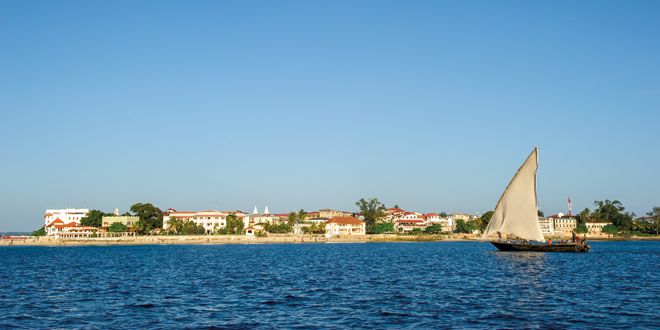
“The best views of Stone Town are taken from out at sea,” enthuses Paul, who has been dispensing tips on the best angles to capture the sights. So we head out on a sunset cruise on the traditional dhow sailing boat with its distinctive triangular lateen sails, the same vessels used by merchants sailing in and out of the trading port.
The stunning scenery of coastal seascape and storied old town drifts by. Mesmerising, and exactly how Burton described it: “Earth, sea and sky, all seemed wrapped in a soft and sensuous repose.” And that perfectly rounds up my trip to the Spice Island that is Zanzibar.

Topics


As Senior Editor of Tatler Singapore, Hashirin champions and refines the storytelling across platforms—curating and crafting compelling profiles, cover stories and features that spotlight visionaries shaping culture, business and impact. Driven by curiosity, she draws inspiration from the artists, changemakers and trailblazers she encounters through her work. Beyond the pages of Tatler, she is an avid supporter of local theatre and delights in seeking out art in every city she visits.
Curated for you
The stories, profiles, and cultural moments featured on our Instagram feed