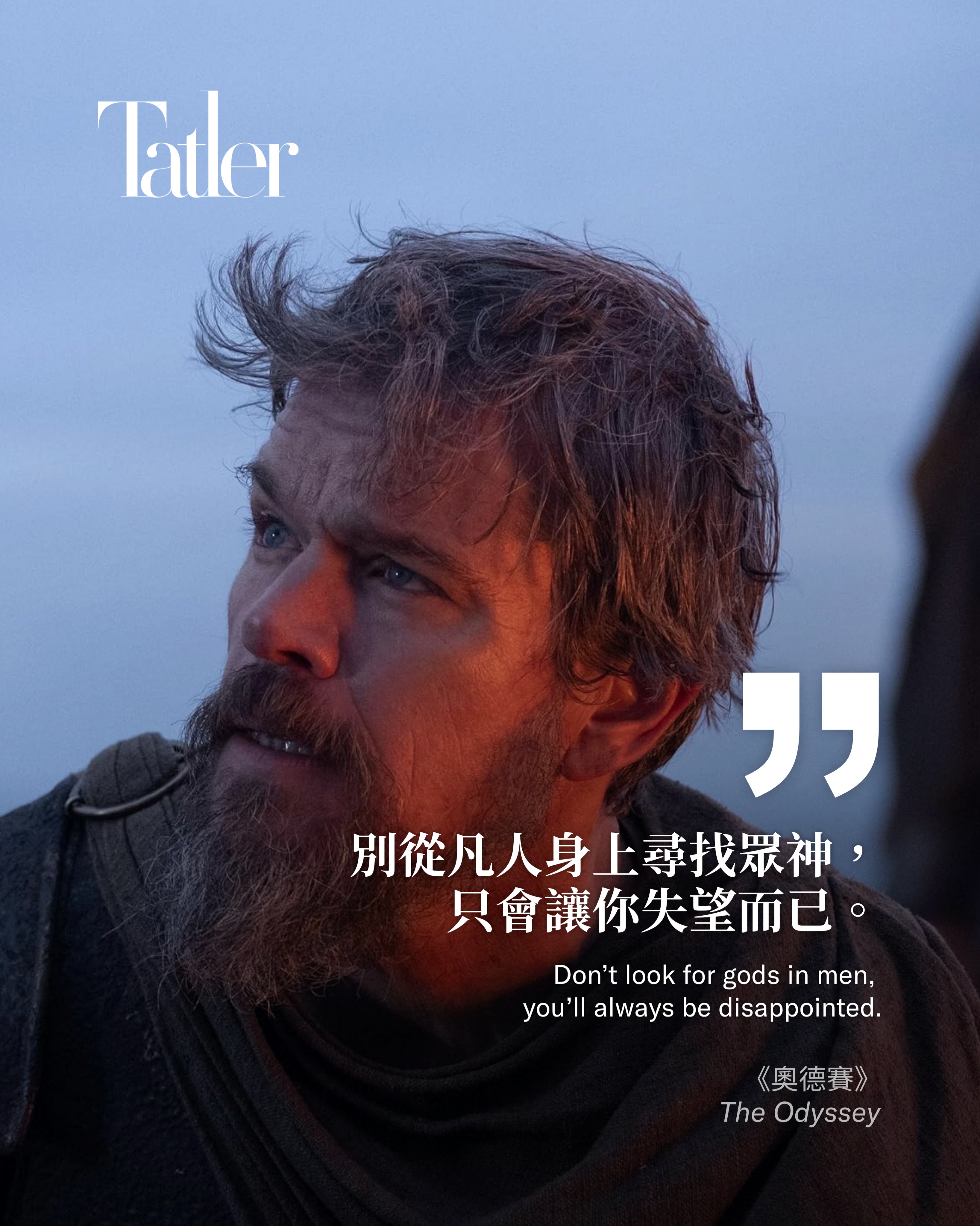
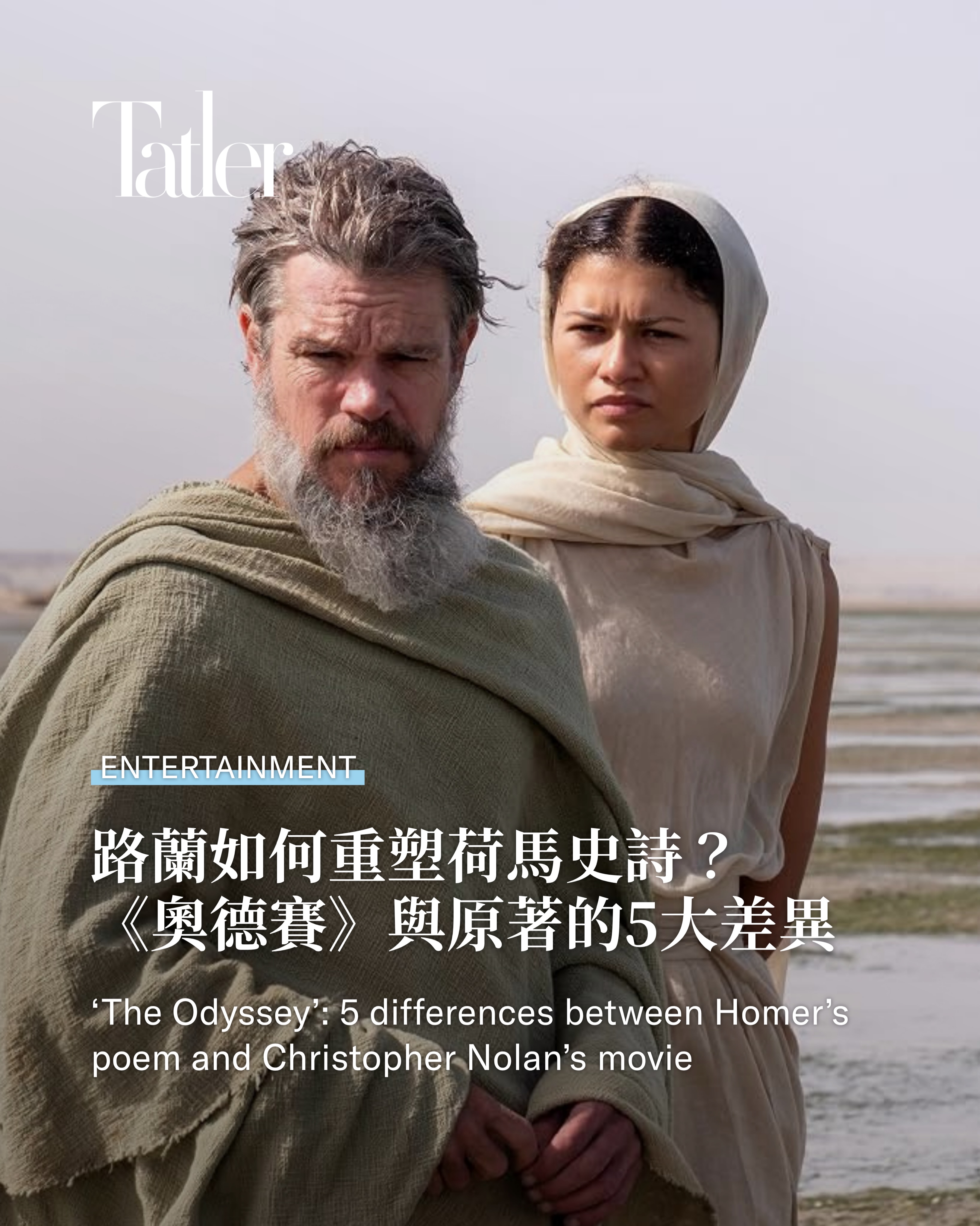
Cover Matt Damon as Odysseus in Christopher Nolan’s ‘The Odyssey’ (Image: IMDB)
Matt Damon as Odysseus in Christopher Nolan’s ‘The Odyssey’ (Image: IMDB)
1 / 1
Christopher Nolan’s ‘The Odyssey’ tells a different story from Homer’s epic poem. From the absence of sex scenes to Achilles being replaced by Sinon, here are five elements that shape the film adaptation into an outstanding story in its own right
The film world has been dominated by discussion surrounding Christopher Nolan’s most expensive blockbuster to date, The Odyssey, an adaptation of Homer’s epic poem charting the Greek warrior Odysseus’s treacherous journey home following his victory in the Trojan War.
Starring Matt Damon as Odysseus, the film features an ensemble cast: Anne Hathaway as Penelope, the loyal wife who endures greedy suitors exploiting her hospitality; Tom Holland as Telemachus, the son who sets out to find his father; Zendaya as Athena, who aids Odysseus in times of desperation; Robert Pattinson as Antinous, the primary antagonist scheming to marry Penelope to claim the throne; and Charlize Theron as the nymph Calypso.
Rather than delivering a literal rendition of the Greek myth, the British director’s 172-minute feature incorporates distinct departures from the source material to craft a contemporary story with modern resonance.
Here are five key differences between the original poem and Nolan’s cinematic vision.
Don’t miss: Review: Christopher Nolan’s ‘The Odyssey’ strips away the gods and tells an epic tale of an everyman
1. Achilles is replaced by Sinon


Above Elliot Page as Sinon in Christopher Nolan’s ‘The Odyssey’ (Image: IMDB)
Elliot Page as Sinon in Christopher Nolan’s ‘The Odyssey’ (Image: IMDB)
1 / 1
In the latter portion of the film, Nolan presents a chilling sequence in which Odysseus and his surviving soldiers journey into the underworld to seek guidance from dead souls for their journey home. He speaks first with Agamemnon, the king of Mycenae, and subsequently with Sinon (played by Elliot Page), the Greek soldier who tricked the Trojans into believing the wooden horse was a peace offering.
In Homer’s original text, Sinon is never mentioned in this context; his story appears instead in Virgil’s Aeneid, which chronicles Aeneas, a Trojan who fled the fall of Troy and travelled to Italy. In Homer’s The Odyssey, Odysseus speaks with Agamemnon and the legendary warrior Achilles. While Odysseus envies Achilles’ strength and eternal glory, Achilles admits he envies the living, remarking that he would rather be a slave to the poorest peasant on Earth than rule over all the dead in Elysium.
Nolan’s inclusion of Sinon shifts the story’s focus from Odysseus’s yearning for glory to his sympathy for his loyal soldier who loses his life for him—and the burden of recognising the loss of innocent lives.
2. The lotus flowers aren’t consumed by Odysseus but his soldiers

Above Charlize Theron as Calypso in Christopher Nolan’s ‘The Odyssey’ (Image: IMDB)
Charlize Theron as Calypso in Christopher Nolan’s ‘The Odyssey’ (Image: IMDB)
1 / 1
In Nolan’s film, Odysseus struggles with the burden of memory, attempting to escape reality by consuming lotus flowers offered on Calypso’s island to gain blissful forgetfulness.
In Homer’s version, it is his crew who are invited by the Lotus-Eaters to taste the plant. Odysseus remains unaffected and must forcibly drag his men—who have forgotten their homeland and duties—back to the ships, chaining them to the rowing benches.
Nolan’s adaptation highlights that Odysseus is not an infallible hero, suggesting that the greatness of a leader isn’t physical strength, but the mental fortitude required to confront painful realities.
3. The Cyclops is tricked by Odysseus who says he’s “nobody”

Above The Cyclops in Christopher Nolan’s ‘The Odyssey’ (Image: Instagram/@modernnotoriety)
The Cyclops in Christopher Nolan’s ‘The Odyssey’ (Image: Instagram/@modernnotoriety)
1 / 1
In Nolan’s feature, the man-eating Cyclops remains silent until Odysseus and his men blind him, at which point he calls out to his father, Poseidon, for vengeance.
In Homer’s epic, Odysseus demonstrates his famed cunning during the encounter. After devising the wooden horse strategy, he tricks the Cyclops by claiming his name is “Nobody”. When Odysseus and his men drive a burning olive-wood stake into the giant’s eye, the Cyclops screams to his kin for help. When asked who is harming him, he replies that it is “Nobody”, leading the other Cyclopes to assume he is unhurt and leave him to his fate.
In an interview on The Daily Show, Nolan explained that he omitted this sequence because the original ancient Greek play on words was difficult to translate effectively to the screen.
Don’t miss: Before Matt Damon in ‘The Odyssey’: 7 great depictions of Odysseus on screen
4. The stranded wooden horse

Above The wooden horse being dragged by Trojans into Troy in Christopher Nolan’s ‘The Odyssey’ (Image: IMDB)
The wooden horse being dragged by Trojans into Troy in Christopher Nolan’s ‘The Odyssey’ (Image: IMDB)
1 / 1
The famous wooden horse constructed by the Greeks to infiltrate Troy receives only brief mention in Homer’s The Odyssey, which takes place primarily after the city’s fall.
Nolan reimagines the wooden horse visually, depicting it half-stranded in the surf along the shoreline. This detail renders the ruse more plausible, making it believable that the skeptical Trojans would view it as an abandoned offering rather than a wheeled siege engine ready to be rolled into their city.
While classical texts offer limited detail regarding the conditions inside the hollow structure, Nolan captures the ordeal endured by the soldiers hidden within—showing them enduring physical confinement, incoming tides, and harsh conditions in total silence, even when a Trojan guard pierces the wood with a sword to check for hidden troops.
5. The removal of eroticism in favour of moral growth

Above Charlize Theron as Calypso and Matt Damon as Odysseus in Christopher Nolan’s ‘The Odyssey’ (Image: IMDB)
Charlize Theron as Calypso and Matt Damon as Odysseus in Christopher Nolan’s ‘The Odyssey’ (Image: IMDB)
1 / 1
Classical Greek mythology is filled with themes of incest, polygamy and divine intermarriage, with eroticism and fertility serving as an elemental drive—a reality reflected in Homer’s original work. The epic opens in media res with Odysseus weeping on Ogygia, the island of the nymph Calypso, where he is held captive. Homer depicts Odysseus being forced into a sexual relationship with Calypso nightly for seven years, a union that yields no children and underscores his lack of freedom and legacy.
In Nolan’s cinematic adaptation, explicit sexual dynamics and nudity are entirely absent. Penelope gracefully turns away her suitors, while Calypso acts not as a captor, but as a figure who helps Odysseus restore his lost memories. Seduction is removed as a primary narrative driver, shifting the focus to the moral choices of the characters. While legacy remains a key theme through Telemachus’s eventual ascension, the film frames the protagonist's growth and understanding of human nature as the central catalyst for his journey.

Zabrina is the Senior Editor, Arts and Culture of Tatler Hong Kong. She specialises in performing arts, visual art and film. Her wanderlust was first fuelled by the Mighty Rovers Antarctica Expedition 2010. Over the years, she has interviewed A-list artists and filmmakers, including Oscar winners Chlóe Zhao and Tim Yip, Golden Horse winner Sylvia Chang, In the Mood for Love cinematographer Christopher Doyle, Pachinko author Min Jin Lee, and Coachella’s first Chinese solo singer Jackson Wang. She won gold at the WAN-IFRA Asian Media Awards for her 2021 feature on the waves of hate crimes targeting Asian Americans.
Curated for you
The stories, profiles, and cultural moments featured on our Instagram feed