

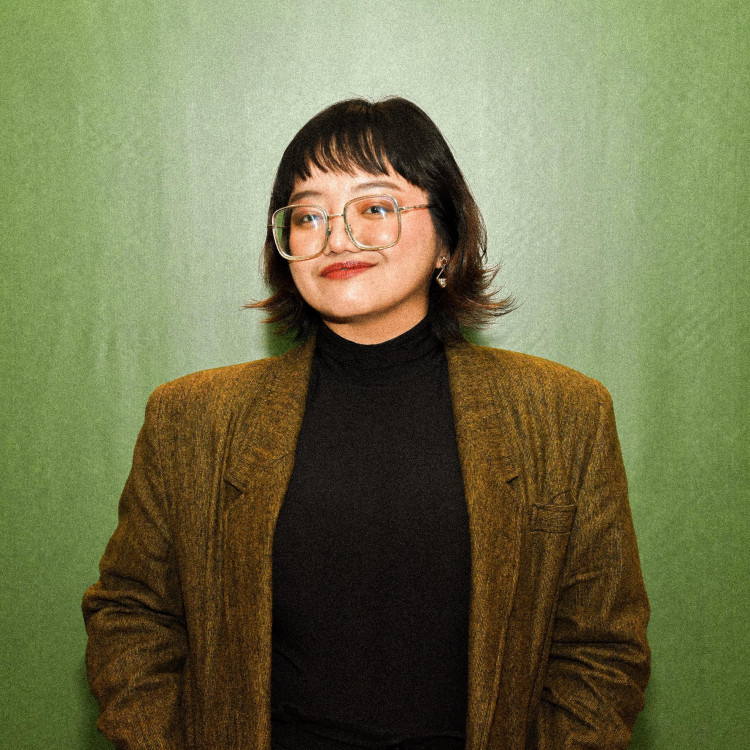
Cover Gabby Padilla on homecomings, leaps of faith and the beauty of discomfort (Photo: Belg Belgica)
Gabby Padilla on homecomings, leaps of faith and the beauty of discomfort (Photo: Belg Belgica)
1 / 1
Inside Gabby Padilla’s process, from vocal warm-ups to navigating emotionally charged roles
Her intensity as a performer is rooted in discipline, honesty and a deep respect for the craft. Trained in theatre arts and media education, Gabby Padilla moved from Iloilo to Manila to pursue performance seriously. “The only thing that I was very passionate about was performing,” she says. Though now known for her work on screen, Padilla considers her return to musical theatre in I Love You, You’re Perfect, Now Change a turning point. “It was a leap of faith... I didn’t know that I would be ready or capable [to go back to theatre] after so long,” she shares. “It felt like a homecoming, a kind of healing experience.”
Her breakout film role in Billie and Emma remains pivotal. “I never imagined that I would be part of a film in that way... it’s one of the most important stories I’ve ever told as an actor.” Guided by mentors like Ana Valdes Lim and Menchu Lauchengco-Yulo, she embraces vulnerability and discomfort as essential tools for growth. “Ms Ana used to say, you have to embrace the discomfort that comes with being vulnerable. If you’re not at all uncomfortable while you’re acting, then there’s something wrong.”
Still exploring yet grounded, Padilla sums it up best: “I’m just trying to be deliberate and mindful... as a person and as an artist.”
Discover more about her in the interview below.
More from Tatler: How Lea Salonga found her voice—and made space for her son’s
How did your journey into acting in general begin?
I love to perform during family gatherings. That was all very informal, but I suppose my formal foundation really began when I studied in college... When I graduated from high school, it was very clear to me that the only thing I was truly passionate about was performing. I thought I would go into musical theatre—that was the path I imagined for myself.
Was there a production or role that you consider your breakthrough moment, and what made it special?
I feel like every production is special in different ways, both personally and professionally. But I would say I Love You, You’re Perfect, Now Change, the last musical I did, was particularly special because it came after the pandemic.
I was also coming from a few years of thinking I wouldn’t be doing much theatre anymore—I’m mainly in film now. So when I was invited to audition, it felt like a leap of faith. I didn’t know if I would be ready or capable of doing musical theatre after so long. The kind of repertoire that show demands is almost like a sport—you need to build stamina and sustain rehearsals and nearly a month of shows.
A lot of us in that production didn’t think we’d be doing theatre again, and I think that’s part of what made it so meaningful. It felt like a homecoming, a healing experience for all of us.
What have been some of the most challenging moments you’ve faced on stage or on screen?
On stage, it would be my first lead role in a musical. I was very young then, in a time of my life where I was just saying yes to everything. In the process, I bit off more than I could chew.
That production taught me a lot about my instrument, how the industry works and the level of commitment needed for a production at that scale. It was a big learning experience—really trial by fire. I think we all need those moments, and that was definitely a turning point for me.
Read also: Much-anticipated Filipino production of Stephen Sondheim’s ‘Into the Woods’—is it worth the hype?
How do you prepare mentally and physically for a role? Can you give us an example?
For musical theatre, my top priority—especially after being away from it for a while—is making sure my voice is in the right condition to do a run. When I got the role for I Love You, You’re Perfect, Now Change, I took voice lessons two to three times a week, well before rehearsals started. That’s just how I work. I needed to feel assured that I could meet everyone at the same level from day one.
Physically, it’s about stamina—training so I can sustain the demands of the show. Mentally, what helps me is knowing I’ve done my homework: knowing my lines, songs and music beforehand. That way, I can arrive ready to explore and be receptive to what my co-actors, director or musical director bring, instead of trying to catch up.
How do you navigate vulnerability in a performance, especially when tackling emotionally intense scenes?
I think the only way to navigate vulnerability is to embrace it—because that’s where the magic happens. Of course, it’s easier said than done, and it takes a lot of trust in yourself and in your team to reach that point.
For me, as long as I’ve done the prep beforehand—so I’m not thinking about lines but about who my character is—I’m better set up for success. Being in the right headspace and in a safe environment also makes it easier to explore that vulnerability. Miss Ana also taught me that you should feel uncomfortable when acting. If you’re not uncomfortable, you might not be doing it right.
With growing competition in the local acting scene, how do you stay grounded and focused on your craft?
I think it’s helpful to look at competition with a sense of abundance. There’s room for everyone in the industry. Another person’s win doesn’t take away from mine. It’s better to celebrate each other—that’s how we grow as a community.
What keeps me grounded is being surrounded by people who remind me of my values and who I am, and also not taking things too seriously. Your art is important, but it’s still just one facet of life. Your wellness and your relationships come first.


Above Gabby Padilla (Photo: Belg Belgica)
Gabby Padilla (Photo: Belg Belgica)
1 / 1
Do you still have a dream role or production you’d love to do?
Oh, yes—many. Before he passed away, I really wanted to work with Sir Floy Quintos. I think he was one of the best writers, and I’m lucky to have lived in the same lifetime to see his work. I’d also love to work with Sir Ricky Lee. Every time I see him, I’m starstruck.
I’ve also always wanted to play a role based on a real person—not necessarily historical, but someone who actually lived. The idea of fully researching someone’s life, from mannerisms to history, is very exciting to me. I think it would be a great challenge.
How do you keep your performances fresh with each project?
In theatre, having a live audience makes all the difference; no show is ever the same. Their energy changes everything, and you have to roll with it.
In film, I love creating characters inspired by different people I’ve met—not just myself. I think that helps humanise the roles and makes them more interesting to play.
What advice would you give to aspiring actors who are just starting out?
When you’re starting, it’s easy to get in your head about where you “should” be in a certain amount of time. That limits how you see your career and yourself. I’d say: be open to whatever comes your way—as long as it’s safe and ethical—and trust yourself and your abilities. And don’t forget to have fun. If you’re not having fun, then what’s the point?
NOW READ
‘Weapons’ blends the structure of ‘Magnolia’ with supernatural terror
Angela Nicole Regis Guiral is a digital editor at Tatler Philippines. She studied journalism and has since written features that look closely at how culture, lifestyle and social impact converge, while occasionally wandering into the worlds of style and travel.





