Cover Sandy Lam and Faye Wong at the height of their 1990s reign. (Photo: courtesy of Hong Kong press archives)
Sandy Lam and Faye Wong at the height of their 1990s reign. (Photo: courtesy of Hong Kong press archives)
1 / 1
As The Weeknd’s “Hong Kong” song sparks interest in Canto-pop’s golden era, we pay homage to six female vocalists who debuted in the 1980s and ’90s and whose influence remain palpable today
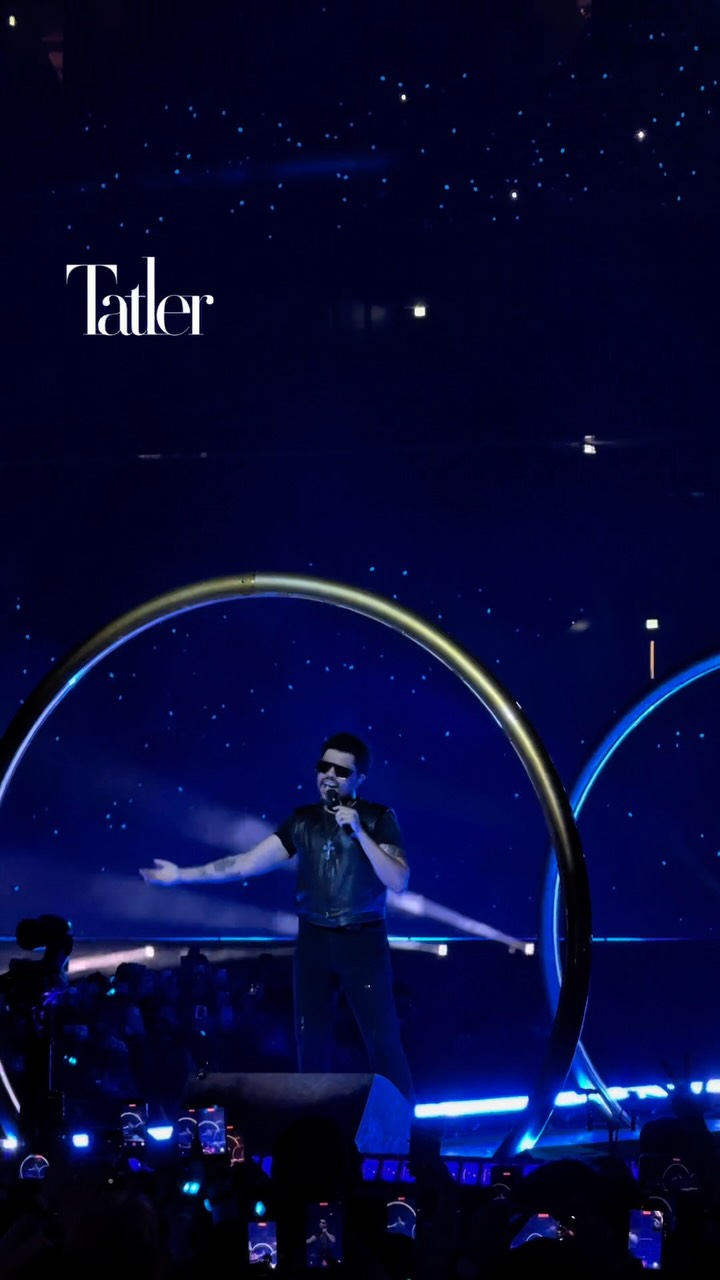
When Canadian pop phenomenon The Weeknd took the stage at Hong Kong’s Kai Tak Stadium and unveiled his new track dedicated to the city, the dark synth-bass was quintessentially him, but the melancholic vocal hook driving the record belonged to Faye Wong. The Blinding Lights singer’s three-and-a-half-minute track sampled Wong’s 1993 Cantonese ballad Monsoon—itself an adaptation of Taiwanese composer Chen Hsiao-hsia’s One Day I Will. The moment has sparked global curiosity about an artist who has long held legendary status across Asia.
It was a reminder of an era when Hong Kong was the cultural epicentre of Chinese-language pop. While the “Four Heavenly Kings”—Andy Lau, Jacky Cheung, Leon Lai and Aaron Kwok—shared top spots on the commercial charts with their female counterparts, the latter were arguably bolder and more risqué in their sonic and visual choices. They imported UK dream-pop, pioneered local R&B, wore European runway collections, and challenged expectations for Asian starlets.
Here are six Hong Kong divas from that era who played a major part in shaping Canto-pop’s sound, aesthetic and attitude.
Faye Wong


Above Wong wears Vivienne Westwood autumn-winter 1992/93. (Photo: courtesy of TVB)

Above Wong at the 1993 Ultimate Song Chart Awards Presentation wearing a transparent plastic dress and a Betty Boop hairdo. (Photo: courtesy of TVB)
Wong wears Vivienne Westwood autumn-winter 1992/93. (Photo: courtesy of TVB)
1 / 2
Wong went against Hong Kong’s pageant-gown conventions in favour of detached, avant-garde minimalism. Through an iconic stage wardrobe that spanned everything from sheer slips over boy shorts to gravity-defying headpieces, she championed designs by Maison Martin Margiela, Ann Demeulemeester and Jil Sander—then largely unknown to Asian audiences.
Her musical evolution reached a milestone with 1993’s No Regrets—the album on which Monsoon appears. Stepping away from formulaic Canto-pop melodrama, the record showcased her increasingly intimate, crystalline vocal delivery and marked the first time she took creative control by penning the Mandarin title track.
Her creative summit came three years later with 1996’s Fuzao, which landed Wong on the cover of Time magazine. Recorded alongside Beijing multi-instrumentalist Zhang Yadong and her then-husband, rocker Dou Wei, the 10-track album featured original compositions written specifically for her by Scottish rock band Cocteau Twins’ Robin Guthrie and Simon Raymonde.
Anita Mui
Above Styled by Eddie Lau for her 1985 tour-de-force “Bad Girl”, Mui broke the mould of the demure pop star
Dubbed the “Madonna of the East”, Anita Mui demolished the demure archetype expected of female performers of her time. In collaboration with designer Eddie Lau, Mui pioneered a daring, gender-fluid aesthetic, alternating between broad-shouldered power suits, fedoras and sunglasses, and studded leather bustiers and dramatic haute-couture capes.
With her commanding contralto and magnetic stagecraft, she popularised disco, synth-pop and theatrical cabaret among Hong Kong music lovers. Her 1985 album Bad Girl broke local sales records despite being banned from radio for its provocative lyrics, while 1987’s Flaming Red Lips cemented her stature as both a chart-topping powerhouse and an arthouse cinema icon.
Sandy Lam
Above Lam during the release era of her critically acclaimed “City Project” trilogy
Sandy Lam’s Cantonese discography provided the soundtrack to Hong Kong’s financial boom, capturing the essence of an independent woman in a modern city. Her visual identity favoured clean tailoring and monochrome palettes—a refined, late-night sophistication that stood in stark contrast to the theatrical camp of her friend Mui.

Above Lam performing in Shanghai in October 2026, on her widely acclaimed “Resonance” tour. (Photo: courtesy of Sandy Lam via Weibo)
Lam performing in Shanghai in October 2026, on her widely acclaimed “Resonance” tour. (Photo: courtesy of Sandy Lam via Weibo)
1 / 1
Lam steered Canto-pop away from conventional melodramatic ballads by introducing R&B, pop-soul and Japanese city pop sounds. Her vocal precision shone across her City Project concept trilogy (1988–1990) and 1991’s Wildflower—the record’s organic percussion and jazz harmonies remain a high-water mark of studio production.
Read more: Major concerts coming to Hong Kong in late 2026: The Weeknd, Bigbang, Joji
Shirley Kwan

Above Kwan’s brooding, avant-garde persona set her apart from commercial contemporaries. (Photo: courtesy of Universal Music Hong Kong)
Kwan’s brooding, avant-garde persona set her apart from commercial contemporaries. (Photo: courtesy of Universal Music Hong Kong)
1 / 1
The ultimate anti-idol of 1990s Canto-pop, Shirley Kwan had a shadowy, androgynous presence that wasn’t always favoured commercially. Sporting cropped buzz cuts, sheer fabrics and heavy eyeliner, she maintained an aloof public posture that placed artistic control above industry expectations.
Above Kwan performing “Lost in the Night” in 1990, a defining moment that marked her adventurous foray into dance R&B
Her breathy, reverb-drenched head voice lent itself naturally to nocturnal trip-hop and psychedelic electronic arrangements. Kwan’s masterstroke was 1995’s Ex All Time Favourites, which deconstructed classics by Teresa Teng and Leslie Cheung into brooding downtempo tracks. Her hypnotic version of Forget Him became an international cult staple after featuring in Wong Kar-wai’s Fallen Angels (1995).
Though she has since stepped away from the music industry, her cult status was reignited on the global stage in 2022, when Saint Laurent featured a reimagined remix of her 1989 hit Happy Are Those in Love on its Paris runway.
Sally Yeh
Above Yeh performing “Blessing” in 1993
Raised in Vancouver, this pop legend famously learnt her Cantonese lyrics and film scripts phonetically through romanised pinyin. Onstage, she radiated an athletic, unpretentious glamour, pairing tailored evening wear with a larger-than-life stage presence.
Yeh brought western-style vocal projection to Hong Kong, echoing the muscular belting of Barbra Streisand and Whitney Houston. She dominated the charts to win the Jade Solid Gold Most Popular Female Artist award for four consecutive years, from 1990 to 1993. Her 1988 anthem Blessing swept the industry’s grand prizes, while 1994’s A Woman’s Weakness showcased her gift for turning foreign melodies into Canto-pop staples.
Sammi Cheng
Above Cheng sporting the iconic, Zing-designed “Nike eyebrow” during her 1996 concert series
Dubbed the “Queen of Canto-pop”, Sammi Cheng ushered the industry into the late-1990s club era through rapid reinvention. Her collaboration with make-up artist Zing on the angular “Nike eyebrow” for 1996’s Sammi X Live 96 sparked a city-wide craze, while her wardrobe embraced archival pieces from Thierry Mugler, Jean Paul Gaultier and John Galliano’s Dior.
Cheng propelled Canto-pop into the realm of upbeat Eurodance and techno-pop, supported by relentless, precision choreography. Her back-to-back albums Passion (1996) and Our Theme Song (1997) struck a perfect balance between euphoric dance tracks and cinematic ballads like Tacit Agreement, which defined the rhythm of Millennial Hong Kong.

Cyril Ip drives digital strategy and produces in-depth features across print and online platforms. Specialising in contemporary culture, lifestyle and music, he leverages audience analytics to inform incisive storytelling while spearheading branded content collaborations with luxury houses and major cultural institutions.
Shaped by years in Britain, Hong Kong and mainland China, Cyril brings a multifaceted background spanning media, music and publicity. His career includes four years covering culture and diplomacy at the South China Morning Post, as well as leading international campaigns for Chinese singer Tia Ray.


Curated for you
The stories, profiles, and cultural moments featured on our Instagram feed