

Cover JANUARY 01: Photo of Abba (Photo by Michael Ochs Archives/Getty Images)
JANUARY 01: Photo of Abba (Photo by Michael Ochs Archives/Getty Images)
1 / 1
It's been forty years since ABBA's last studio album drop. Fortunately, everyone's favourite Swedish pop group has made an exciting, though somewhat surprising, comeback
ABBA's music has become an undeniable cult favourite. Originally popular in the '70s and '80s, their songs have transcended over to the 21st century as a staple in films, clubs, and the occasional Spotify playlist. In fact, you'd be hard-pressed to find anyone who hasn't heard of at least one of their hits. From Mamma Mia! to Dancing Queen and Super Trouper, ABBA has proven their timelessness to listeners around the globe.
Recently, the Swedish pop group had also announced the upcoming release of their latest album, Voyage, set to come out in November 2021. So far two out of ten tracks have already been made public: I Still Have Faith In You and Don't Shut Me Down.
Read more: 5 Alternative Music Streaming Apps To Spotify: YT Music, Soundcloud
1. The group had to gain rights to use the name "ABBA"


Above Abba 1975 during Abba File Photos in London, United Kingdom. (Photo by Chris Walter/WireImage)
Abba 1975 during Abba File Photos in London, United Kingdom. (Photo by Chris Walter/WireImage)
1 / 1
Most fans might know ABBA as an acronym that combines all the members' first names (Agnetha Fältskog, Björn Ulvaeus, Benny Andersson, and Anni-Frid Lyngstad) into one. But did you know that the group also had to go through legal negotiations with a seafood company to use the acronym? Abba Seafood company is a Swedish herring company that was originally founded in the 1800s. Since they were the first company to use "Abba", the group ABBA had to negotiate with executives on the use of the name.
2. ABBA promoted baby food at one point

Above Agnetha Faltskog of ABBA and daughter Linda with ex-husband Bjorn Ulvaeus of ABBA, New York City, late 1970s (Photo by Tom Wargacki/WireImage)
Agnetha Faltskog of ABBA and daughter Linda with ex-husband Bjorn Ulvaeus of ABBA, New York City, late 1970s (Photo by Tom Wargacki/WireImage)
1 / 1
Two of the members of ABBA, Agnetha Fältskog and Björn Ulvaeus, gave birth to a daughter named Linda in 1973. Around the same time, they also signed a deal with a baby food company, Semper. Linda eventually followed in her parents' footsteps and became a singer-songwriter herself.
3. They were known for their flamboyant outfits, which were tax deductible
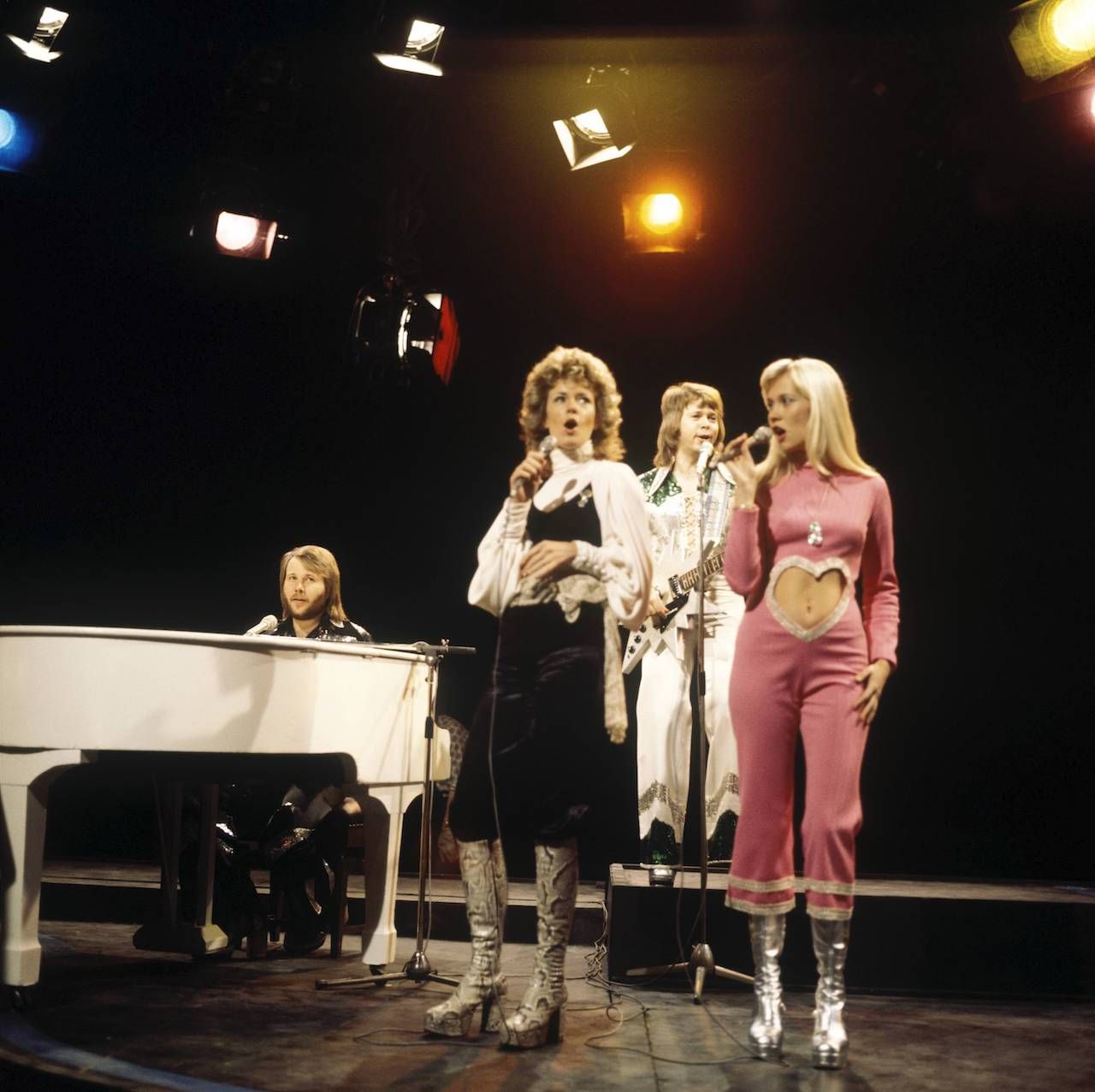
Above UNITED KINGDOM - MAY 01: TOP OF THE POPS Photo of ABBA, L-R: Benny Andersson, Anni-Frid Lyngstad, Bjorn Ulvaeus, Agnetha Faltskog performing 'Waterloo' on Top Of The Pops TV Show (Photo by David Redfern/Redferns)
UNITED KINGDOM - MAY 01: TOP OF THE POPS Photo of ABBA, L-R: Benny Andersson, Anni-Frid Lyngstad, Bjorn Ulvaeus, Agnetha Faltskog performing 'Waterloo' on Top Of The Pops TV Show (Photo by David Redfern/Redferns)
1 / 1
Of course, it was the '70s so flamboyant outfits at the disco were only to be expected. But did you know that part of the reason ABBA chose their ostentatious outfits was because of a Swedish law that ensured performative outfits were tax-deductible? So long as clothes were used for performance, and not for daily wear, the Swedish government allowed artists to reduce their taxes.
4. Madonna had to "beg" ABBA to sample their tunes

Above Swedish pop group ABBA give the thumbs up after winning the Eurovision Song Contest with their song 'Waterloo', Brighton, 7th April 1974. Left to right: Bjorn Ulvaeus, Agnetha Faltskog, Anni-Frid Lyngstad and Benny Andersson.(Photo by Steve Wood/Daily Express/Hulton Archive/Getty Images)
Swedish pop group ABBA give the thumbs up after winning the Eurovision Song Contest with their song 'Waterloo', Brighton, 7th April 1974. Left to right: Bjorn Ulvaeus, Agnetha Faltskog, Anni-Frid Lyngstad and Benny Andersson.(Photo by Steve Wood/Daily Express/Hulton Archive/Getty Images)
1 / 1
Yes, Madonna, the Madonna had famously been quoted saying she had to "beg" and "implore" ABBA to sample their music. She used the song Gimme, Gimme, Gimme (A Man After Midnight) on her single Hung Up.
ABBA is famous for being incredibly protective of their music and very rarely give anyone rights to sample their songs. In an interview with Attitude magazine, Madonna was quoted saying: "I had to send my emissary to Stockholm with a letter and the record begging them and imploring them and telling them how much I worship their music, telling them it was a homage to them, which is all true."
ABBA has only given rights to two artistes: Madonna and The Fugees.
5. ABBA once accepted royalties not in money, but in oil
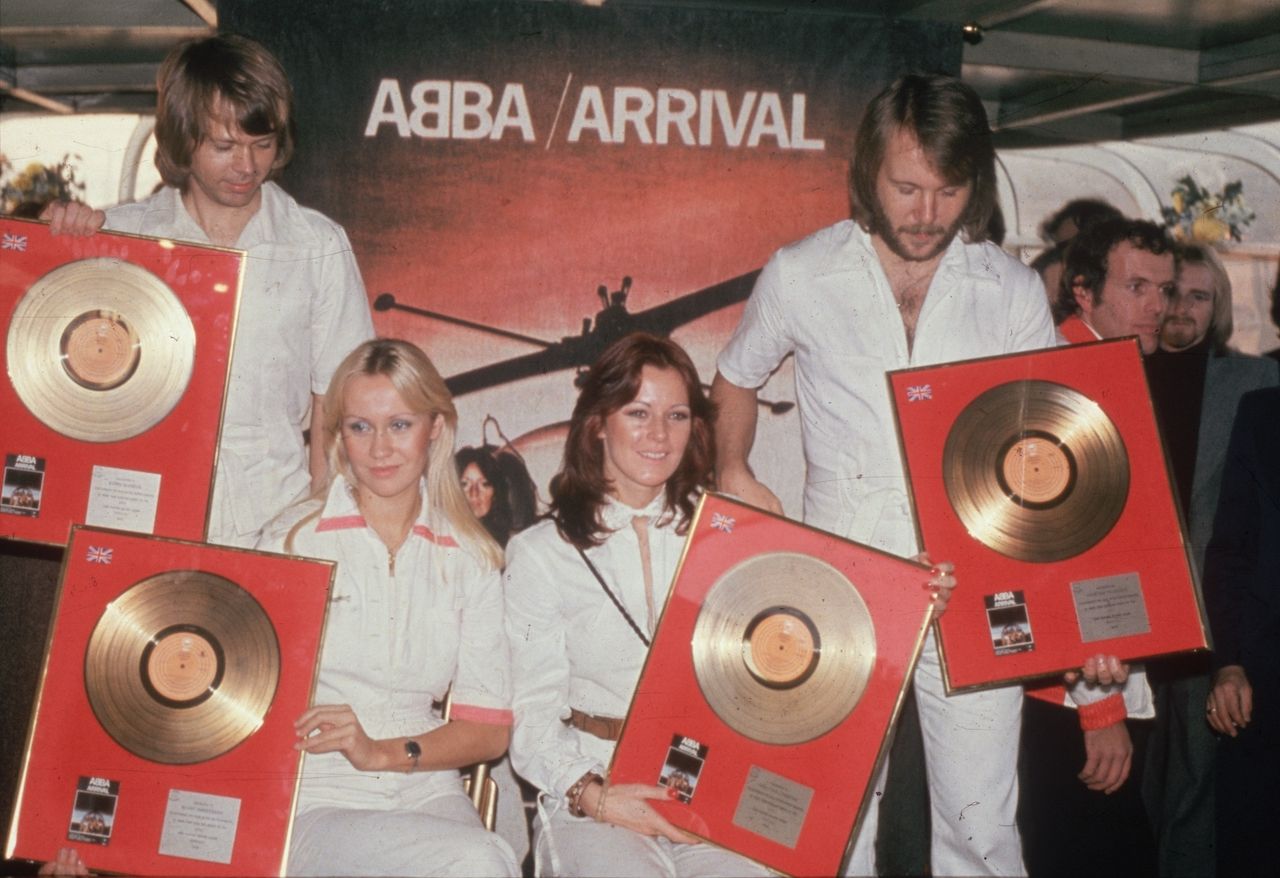
Above 1976: Pop group Abba holding their golden discs. From l to r; Benny Andersson, Agnetha Faltskog, Anni-Frid Lyngstad and Bjorn Ulvaeus. A Swedish group except for Anni-Frid (Frida) who is Norwegian. (Photo by Hulton Archive/Getty Images)
1976: Pop group Abba holding their golden discs. From l to r; Benny Andersson, Agnetha Faltskog, Anni-Frid Lyngstad and Bjorn Ulvaeus. A Swedish group except for Anni-Frid (Frida) who is Norwegian. (Photo by Hulton Archive/Getty Images)
1 / 1
During the Cold War in the '70s, ABBA became immensely popular around the world. In fact, they were considered to be Sweden's top export, second only to the car manufacturer, Volvo. Even in Soviet states, ABBA found a large following. However, the ruble was then embargoed and so could not be used as payment for royalties. So instead, ABBA received its royalties through oil commodities.
Read more: Ask The Expert: Mikhail Schemm on Music





