

Cover Themed around the concept of "Filipino by Design', the first edition of the Tatler Homes Design Awards 2022 was held at the newly renovated Ayala Museum in Makati
Themed around the concept of "Filipino by Design', the first edition of the Tatler Homes Design Awards 2022 was held at the newly renovated Ayala Museum in Makati
1 / 1
For the first time ever, the Tatler Homes Design Awards honours exceptional Filipino talent and artistry. Here are the winners of its first Philippine iteration
There is no question that the Philippines possesses a wealth of talent and creativity. From our ingenious and highly skilled traditional craftsmen, our wealth has evolved to include today’s brilliant minds in the fields of architecture and design.
For the first edition of the Tatler Homes Design Awards, we have put together an illustrious panel composed of assistant professor Johannes Vincent Chua, programme director at the UP College of Architecture; the iconic Kenneth Cobonpue; multi-awarded Hong Kong-based interior designer JJ Acuña; co-founder of Art Fair Philippines, Trickie Lopa; and international sensation and champion of sustainability, Bill Bensley.
This year's awards are sponsored by Furnitalia, BPI, Draco Builders, Scavolini, and SMDC.
Along with our editorial team, we narrowed down a strong list and selected these winners for their exceptional embodiment of each category.
Best Architectural Concept: Viewpoint House / Jim Caumeron Design


Above Photo: Bien Alvarez
Photo: Bien Alvarez
1 / 1
A simple architectural concept can sometimes be the hardest to translate and execute. Jim Caumeron’s Viewpoint House is a masterful example of how architecture can shape what we see. The architect gives primary importance to visual connections, both inside and outside. He does this in consideration of the residents’ privacy, security, awareness and wellbeing. The house consists of clean consistent lines and calculated protrusions of geometric volumes with solid white walls. Trapezoidal planes provide visual control of both the exterior surroundings and glimpses of the interior happenings. The playful placements of large picture windows display vignettes of the sky and nature from outside, provide interior views between rooms, and allow natural daylight to bounce off the mostly white interior walls. The interiors are warm despite the contrast in materials, with bright plain painted and unpainted concrete, and warm wood finishes. We sometimes fill our houses with nice furniture, with art and trinkets to enliven our spaces. By using viewpoints, Jim Caumeron shows us how to appreciate the crown of the tree, the volume of spaces, and the comfort of our family.
Best Sustainable Design: MLR Polo Pavilion / Sangay Architects
Above Photo: Marc Go
Photo: Marc Go
1 / 1
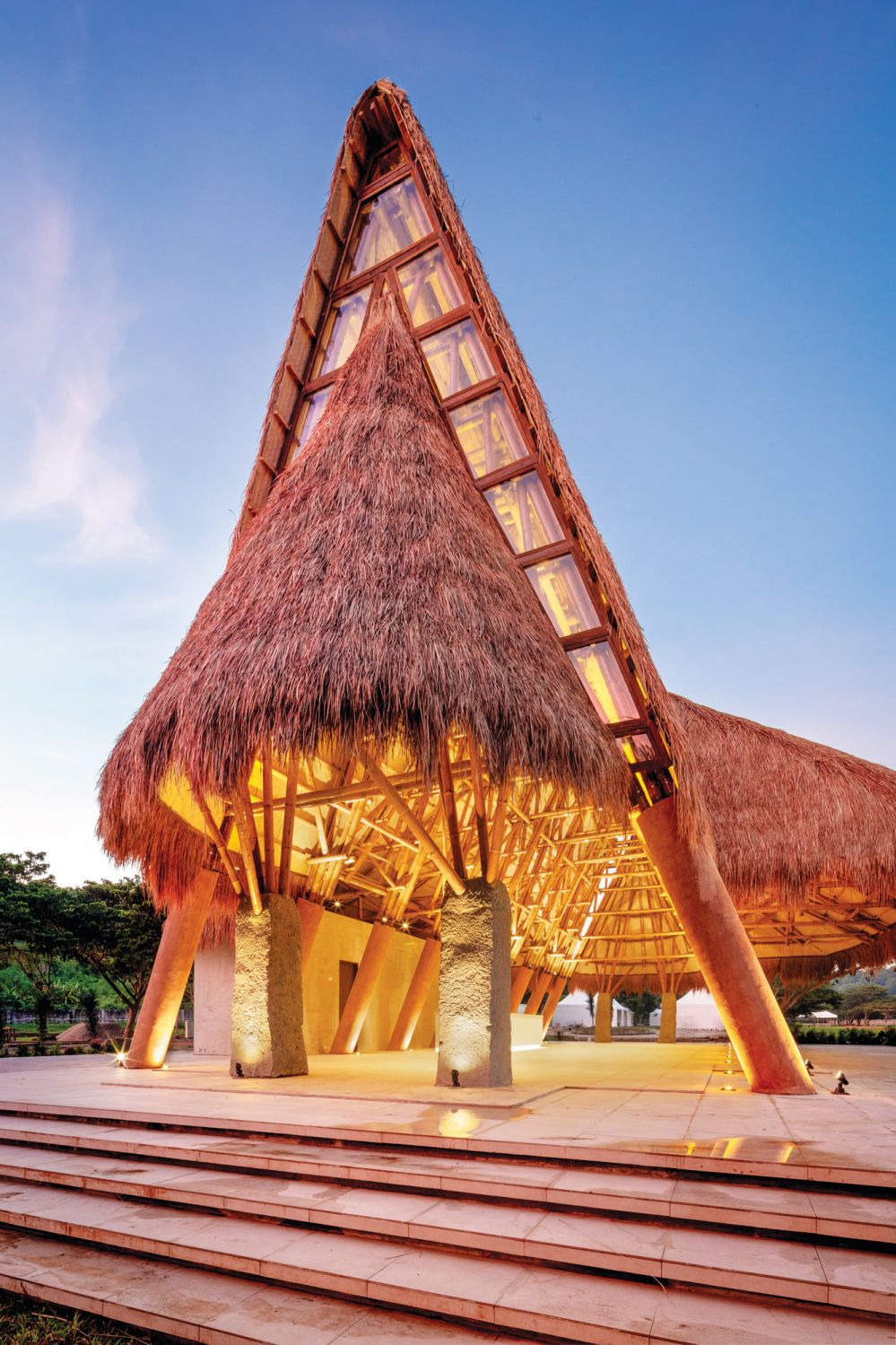
Sangay Architects have long proven themselves as masters of bamboo, and the MLR Polo Pavilion is a compelling testament to their peerless expertise. Given just four months to design the structure, harvest the bamboo, treat the materials, and train the team in time for the 2019 Southeast Asian Games Polo event in Calatagan, Batangas, the 375-square-metre pavilion was no minor task. Yet, Sangay Architects elegantly demonstrate the merits of utilising the indigenous resource in contemporary applications.
The marriage of humble, sustainable elements like bamboo, thatch and stucco with the pavilion’s grand structure further emphasises the potential of these undervalued materials. Though bamboo might be associated with temporary structures, Sangay Architects proves its longevity when handled skilfully. “Bamboo is a green gold,” declares principal architect Christian Salandanan.
The patterns that repeat throughout the frame serve both structural and aesthetic purposes. Sustainable, modern and proudly Filipino, the MLR Polo Pavilion is a spectacular portrayal of what’s to come with greater investment in greener practice. “It is a model of sustainable architecture because it uses bamboo, one of the most eco-friendly building materials on the planet,” says industrial designer and THDA panel member, Kenneth Cobonpue.
Cobonpue explains further that the commercial production of concrete directly triggers climate change and bamboo is a greener alternative because it is a renewable natural material that helps reduce the carbon content in our air. “The most amazing thing [in this project] would have to be the client’s confidence and courage to use bamboo as a primary building material in our sometimes harsh and unforgiving tropical climate,” he says.
Best Living Space: Carol Karthe
Above Photo: Francisco "Paco" Guerrero
Photo: Francisco "Paco" Guerrero
1 / 1
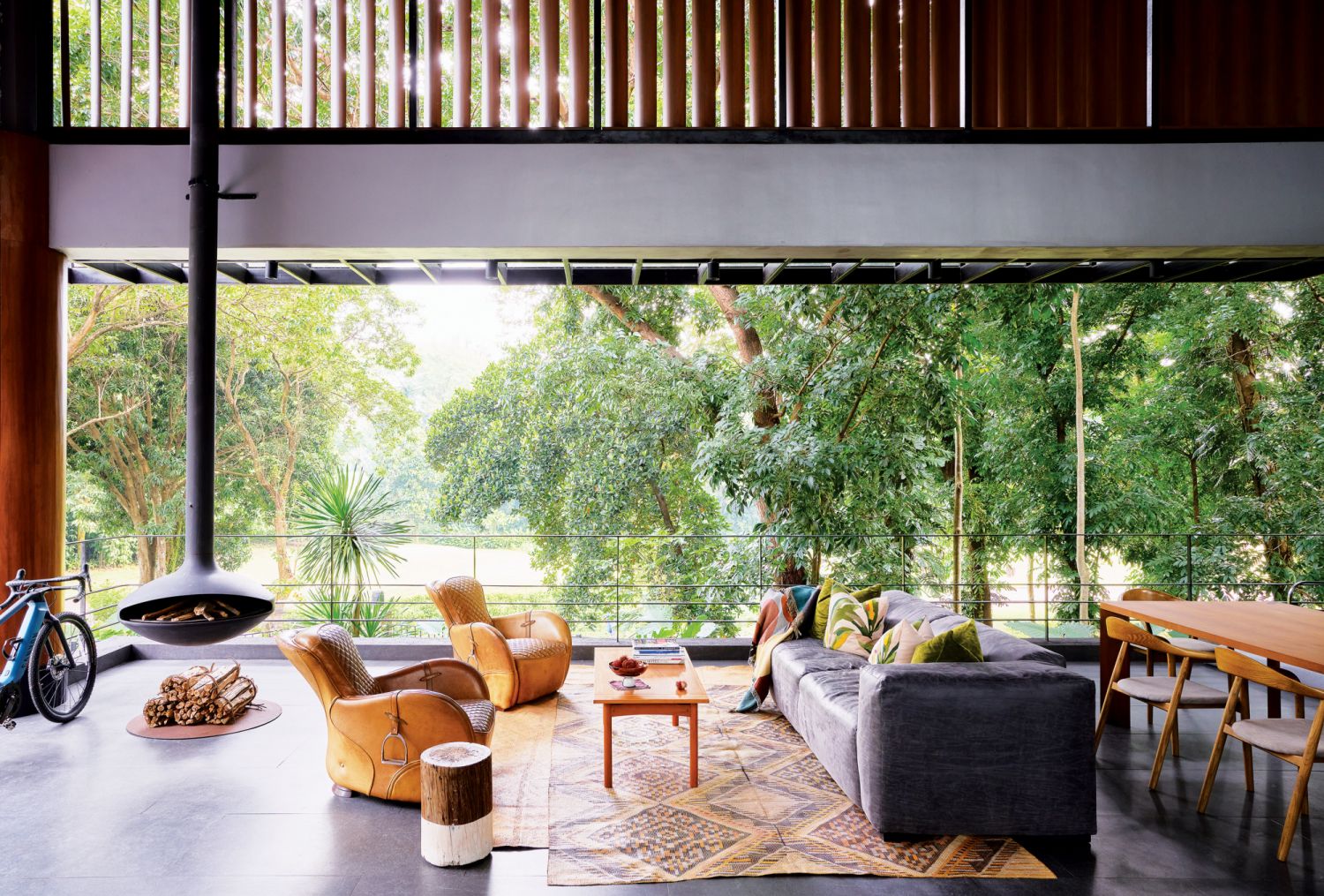
Bordered by breathtaking surroundings and inspired by her spontaneous lifestyle, the home of designer Carol Karthe exudes a perfect symbiosis between functional structure and nature. With the assistance of the architect Roberto “Bobby” Ocampo who helped her realise her vision for this home, the biker and sailor created a sanctuary that does not disturb the natural ecosystem around it; instead, taking advantage of the spectacular views of the lush flora and the sprawling golf course nearby, as well as natural light and cross ventilation, through tall picture windows, high ceilings and an open-plan layout.
Inside the living space is a treasure trove of iconic midcentury furniture pieces, art and photographs by legendary Filipino photographers and artists like Francisco “Paco” Guerrero, Regine David and Wawie Navarroza. The living room seamlessly flows into the kitchen and the lanai, two of the most used spaces in this well-planned abode. An inviting black-striped pool that naturally absorbs heat and an al fresco barbecue area echo the extrovert’s character. Like a playground for Karthe, the basement is where the wine cellar, workshop, library, and garage are located. A six-seater sauna is in place, overlooking the picturesque golf course.
To the right of the living room is the cosy master bedroom with moss green walls; adjacent is Karthe’s favourite spot: the open-layout master bathroom that harmoniously blends with the verdant vistas peeking through floor-to-ceiling glass windows.
Karthe also ensures that the home design is sustainable with the use of recycled wood where applicable, and of solar panels for energy conservation. The result is a living space with a strong connection to nature...a sanctuary that has all things the owner needs and loves.
Read also: Home Tour: Carol Karthe's Sta Rosa Abode Echoes a Perfect Symbiosis of Nature and Structure
Best Use of Art: Miguel Rodriguez
Above Photo: Sonny Thakur
Photo: Sonny Thakur
1 / 1
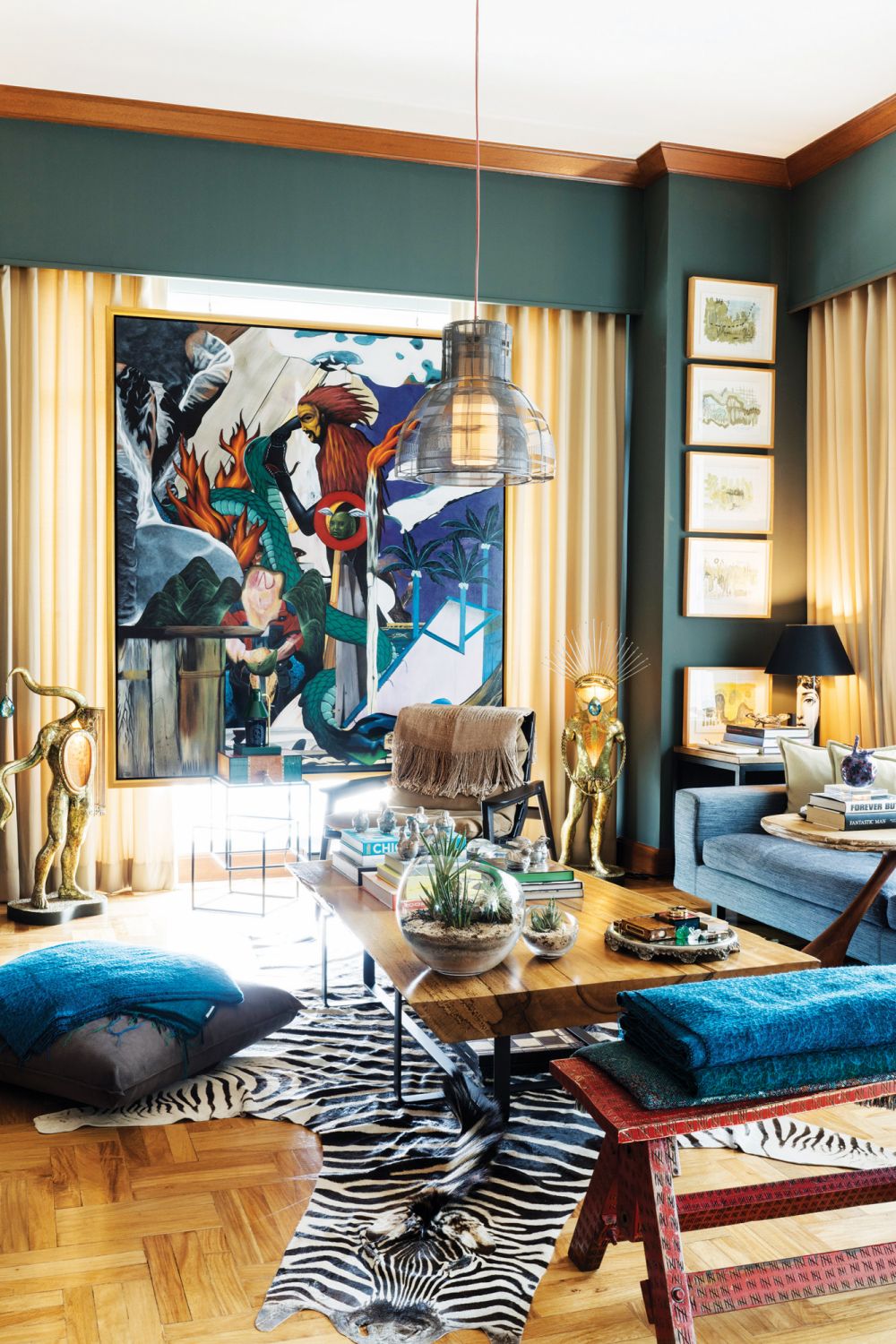
In putting together this home, situated atop a high-rise with views of Makati’s skyline, Miguel Que Rodriguez conveys both the passion and the audacity that drive the art acquisitions of its stylish residents, while allowing for their penchant for hosting a myriad circle of family and friends.
The art collection leans toward the unexpected, artists recognised critically rather than for their market popularity, works that showcase a variety of media beyond that of oil on canvas. At the foyer, Adelaide-based Mark Valenzuela’s drawings on ceramics set the tone, leading visitors into the living and dining areas. A Kawayan de Guia assemblage serves as the backdrop for the well-stocked bar. It faces a wall that showcases one of Nona Garcia’s x-ray lightboxes, a vibrant pattern in black and white. Raffy Napay’s exquisite, embroidered work leans casually behind a trolley of decorative decanters. Towering by the glass doors that open to the terrace, Miguel Aquilizan’s humanoid form stands guard. It draws the eyes upward, towards Alfredo and Isabel Aquilizan’s Left Wing Project, an important piece imbued with contrasts. The graceful bird’s wing fabricated from hand-forged steel sickles portrays lightness and danger, freedom and force. Rodriguez hangs this on the ceiling, a singular surprising touch to an already stunning space.
Best Innovative Design: Philippine Pavilion / Venice Biennale 2021
Above Photo: Andrea Altoe
Photo: Andrea Altoe
1 / 1
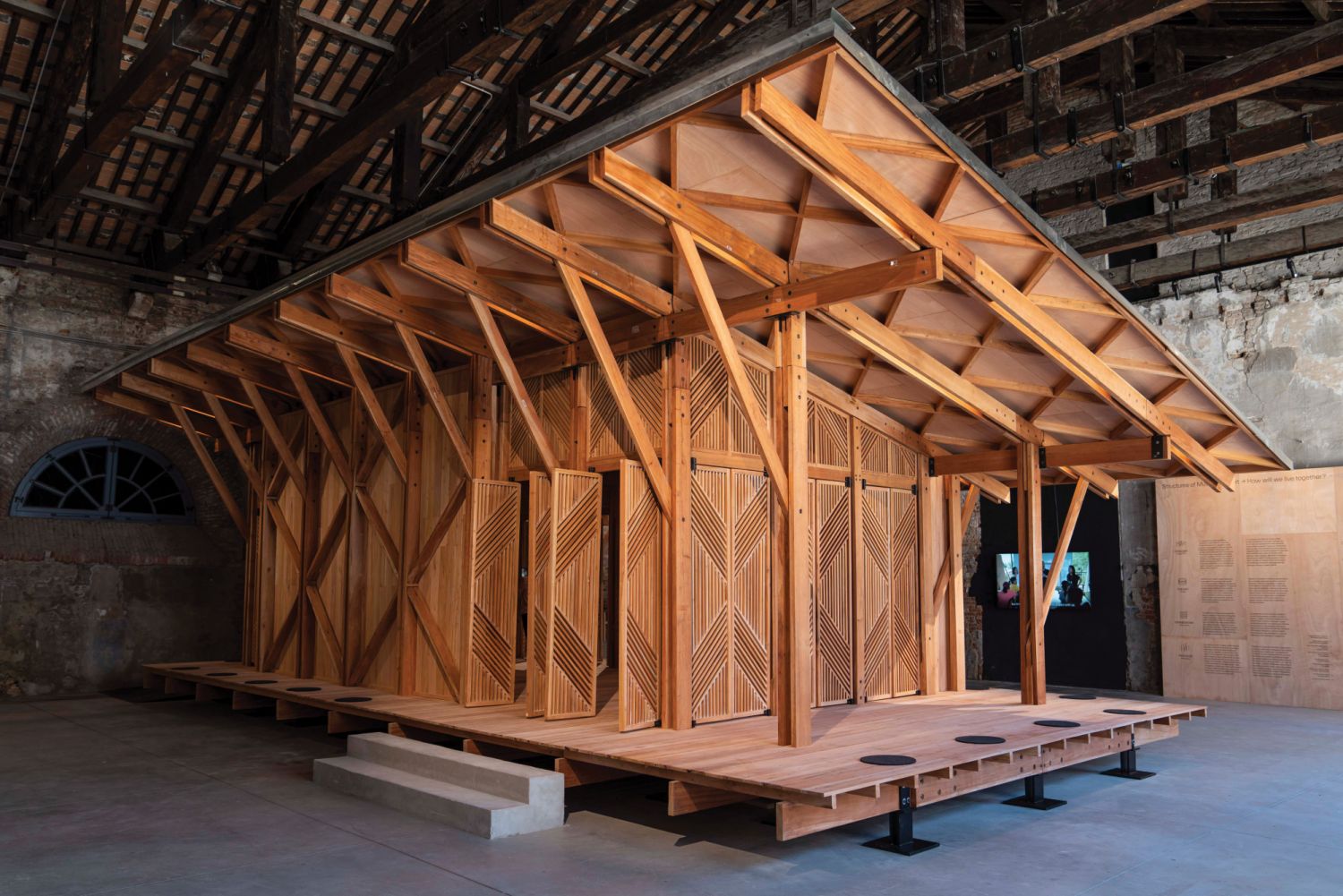
The work of architects Sudarshan Khadka Jr and Alexander Eriksson Furunes has been in the spotlight since their projects for Haiyan Typhoon-struck Tacloban. Their method of design, especially for the lower income communities in the Philippines, involves engaging with the end users for their input on the drawing board. The design of the Emergency Services Facilities and Study Centers in Tacloban is successful because affected families were involved in every step until the last brick was put in place.
These two architects collaborated once more, together with the social entrepreneur, GK Enchanted Farm, to showcase this community-led approach, which in Tagalog is called bayanihan, to design. This is rooted in a long Filipino tradition of neighbours looking out for one another, helping build homes for each other and being each other’s form of security. Within a bayanihan, the home does not begin and end with one’s individual shelter but is an integral part of a whole.
The winning project titled Structures of Mutual Support at the Philippine Pavilion of the 17th International Exhibition of La Biennale Di Venezia is a big sign to the world that Philippine design must not be ignored. It showcases the positive take-aways from how Filipinos have always built using the bayanihan system, especially in the pre-colonial era. Architects and end users working side by side together in a community for the community is very relevant today. Especially in a time where one’s personality tends to trump community, the bayanihan method of building is an important model and could be the key to saving the planet
Read also: The Philippines Bags Its First Biennal Architettura Award With 'Structures of Mutual Support'
Best Use of Colour: Louis Vuitton Boutique by Philux in Greenbelt 3
Above Image courtesy of Philux
Image courtesy of Philux
1 / 1
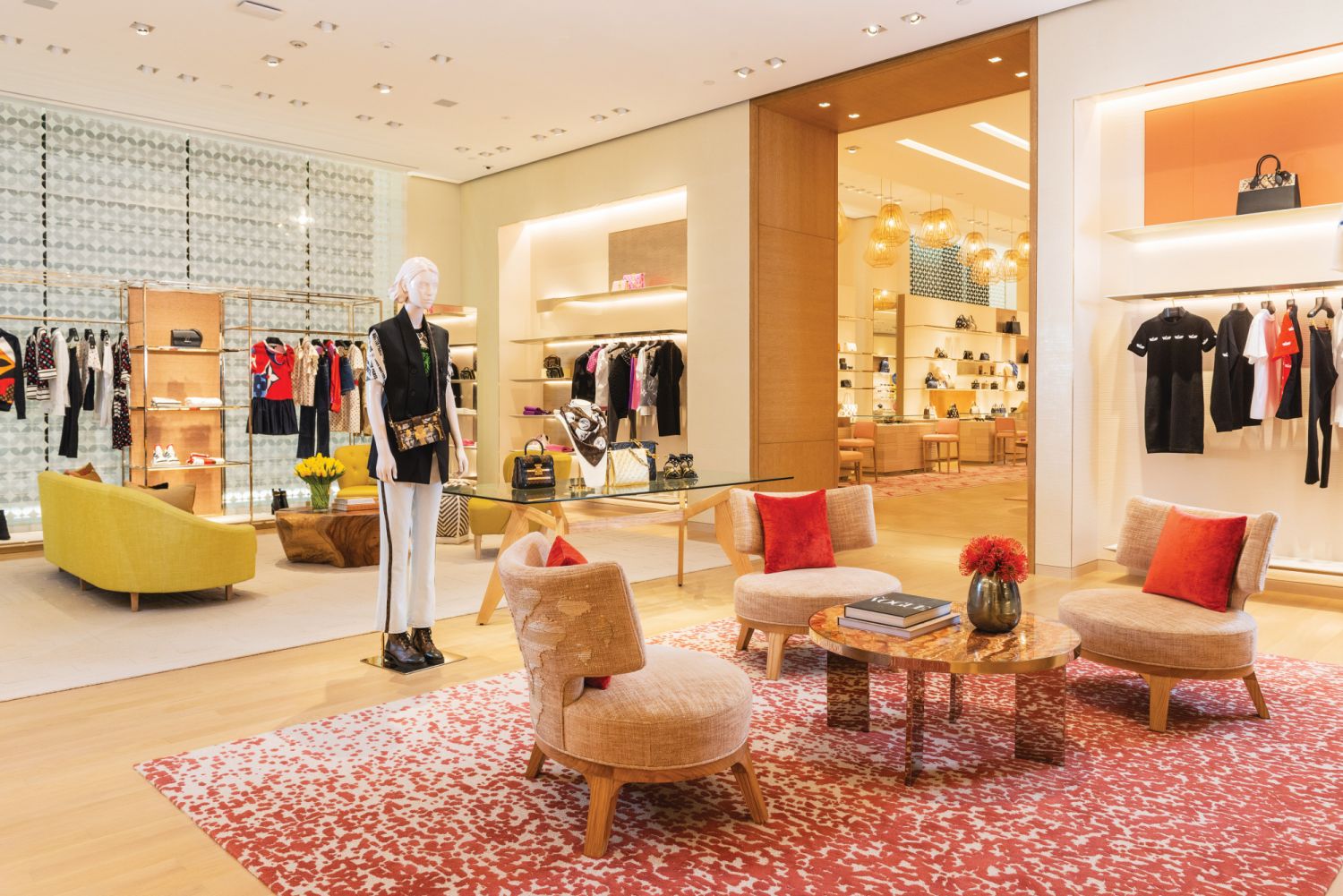
Louis Vuitton’s 665-metre space within Makati’s glamorous Greenbelt 3 mall is a masterclass in fusing French elegance and savoir-faire with Filipino craftsmanship and artistry. Set against warmly lit interiors and ceiling panels made of the textiles raffia and saguran from the fibre of local leaves, each corner of the Maison boasts distinctly vibrant furniture, art and décor to accentuate its polished, neutral look.
Bringing the theme of “woven heritage” to magnanimous life, Swiss-Filipina tastemakers Stephanie Kienle Gonzalez and Jessica Kienle Maxwell of the homegrown furniture label Philux collaborated with four world-class artists to adorn the boutique with mesmeric tributes to Filipino culture. Sprawling rugs by the New York City-based Iñigo Elizalde sport eclectic designs inspired by his Filipino roots, from tribal tattoo patterns found in the southern part of the country to the hand-carved rice terraces in the north.
Meanwhile, artist Monica Delgado creatively interprets the Philippines’ unparalleled oceans and sunsets in Bliss, an alluring teal-coloured artwork created with strips of acrylic paint that were individually squeezed, dried and layered. In a similar way, the French-Filipina Olivia d’Aboville takes inspiration from landscapes in her travels, capturing the hues of orange, teal and brown in Fields of Colour (Circular), in which she pleated 12 metres of abaca polyester fabric handwoven from Cebu. Lastly, renowned jewellery and fashion designers and sisters Bea and Marga Valdes play an ode to Philippine textile arts in Hibla – O2, helmed from chu pink tones.
Further evincing the Kienle sisters’ signature touch, prevalent wooden elements such as Philux’s remarkable furniture, bamboo teardrop lamps and capiz shell-inspired sliding doors, simultaneously add warmth and textural contrast to the space while highlighting the prowess of local artisans. With this, the store truly gets to flourish the diverse beauty of Filipino design in irradiant splendour.
Read also: 20 New Luxury Stores to Visit at Greenbelt 3
Tastemaker Award
Above Photo: Artu Nepomuceno
Photo: Artu Nepomuceno
1 / 1
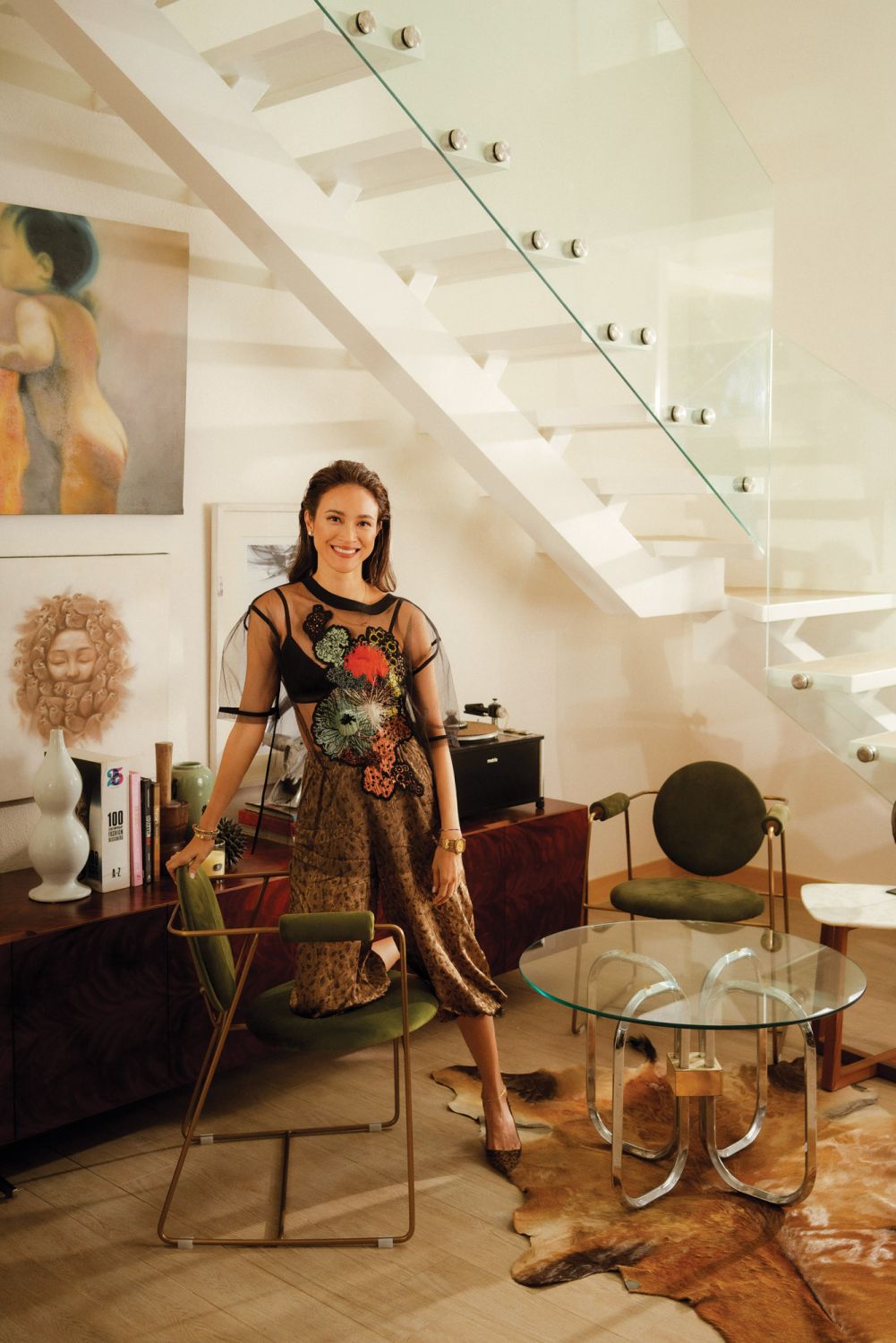
A natural creative with a nonchalant penchant for style, the multi-talented content creator, editor and stylist extraordinaire effortlessly translates her affinity for fashion to interior design. Eclectic but cohesive, her stunning home is a clear testament to her talents as an interior stylist—a curated amalgam of retro accents, Filipino flair and contemporary pieces that come together with ease, creating a vibrant space full of personality that makes their space distinctively theirs.
Here, the pairing of a hard but rounded red armchair across a velvety, dark teal couch feels not juxtaposed but married in perfect harmony. A colourful tropical wallpaper plastered alongside checkered bathroom tiles of yellow and white proves that funky never has to be kitsch. The artworks on display are just as diverse, from an industrial neon light installation by Gregory Emvy to sincere, monochrome portraits of The Last Tattooed Women of Kalinga by Jake Verzosa and a colourful tactile piece by painter Jigger Cruz.
Read also: The Last Tattooed Women of Kalinga: Jake Versoza on His World-Renowned Photography Series
Yet, Prieto manages to perfect the balance between aesthetics, functionality and sentimentality, attesting that homes are meant to make you feel comfortable, not restricted. Never dictated by financial value or clout, her style is informed by a simple yet all-important question, “Do I love it?”. Beyond her home, her exceptional and unique taste in design and decor has been realised through exhibits and even collaborations with H&M Home, and more recently, Victor Consunji Development Corporation (VCDC). Styled by Prieto, the main clubhouse at VCDC’s newest project Vie at Southern Place is fresh, timeless and artful—attributes we’ve come to expect from such a creative visionary like herself.
NOW READ
Home Tour: A Cosy Tropical Home in Singapore With Handmade Details
Meet Ikigai, a Japanese-Inspired Luxury Residence Honouring the Joys of Mindful Living
How This Artist Created a World of Imaginary 3D Architecture and Sold it as NFTs





