
1 / 1
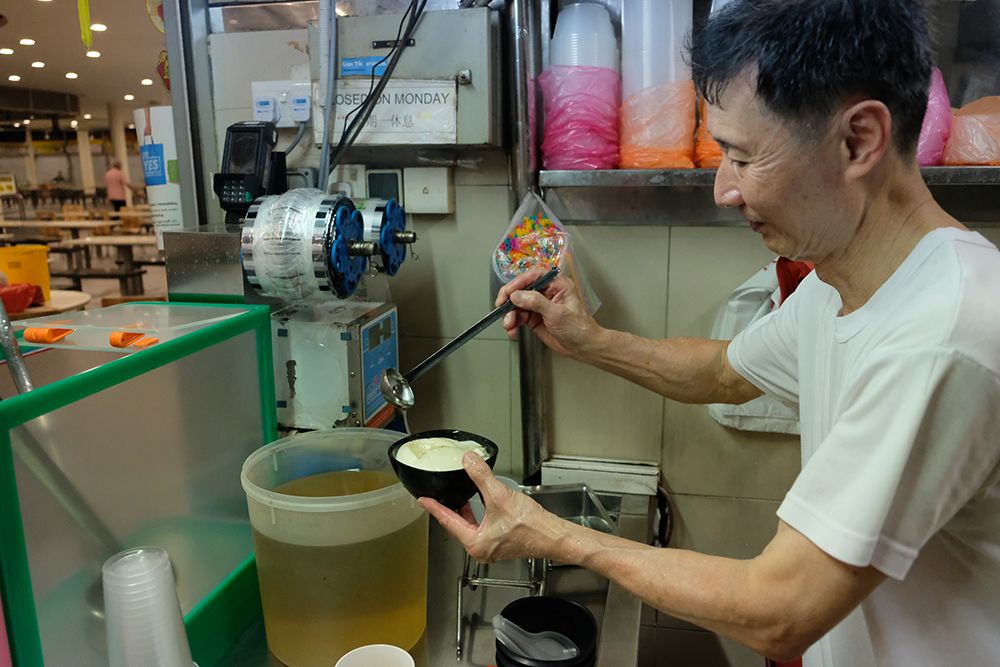
The second-generation hawker offers a glimpse into the time-honored method of creating pure soya bean milk and bean curd from scratch
At 11pm, when most people are winding down for the night, Loh Teck Seng is just getting started with his day. He spends the next six hours over a hot stove, grinding and cooking soya beans to make buckets of the delicious bean curd dessert and soya bean milk that his customers will be expecting in the morning.
This is the nightly routine for Loh, and one that he has been doing for 36 years now.
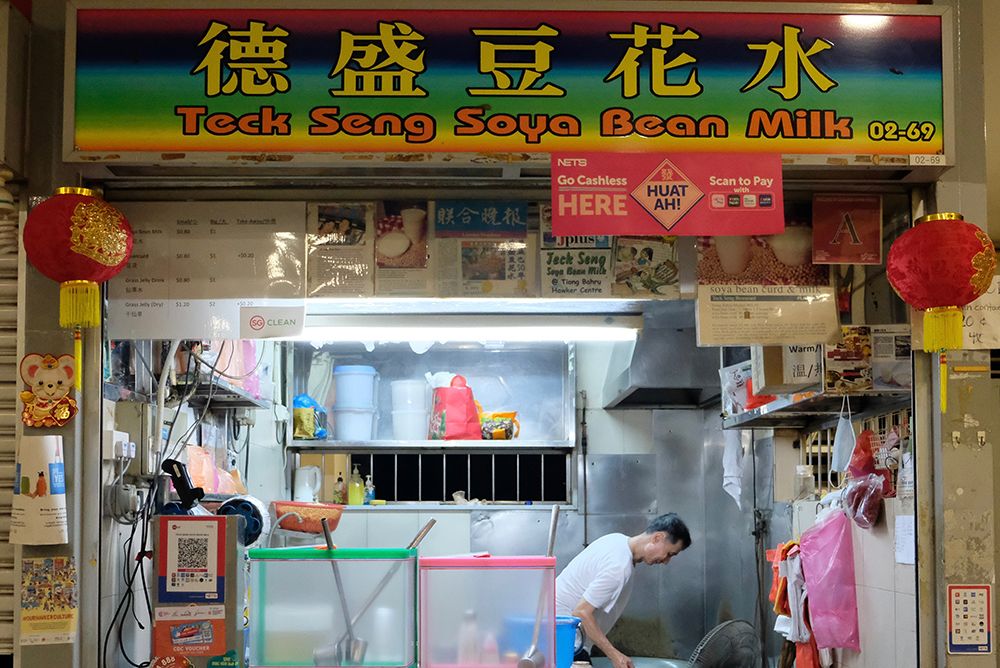
He is the proud owner of Teck Seng Soya Bean Milk, located at Tiong Bahru Hawker Centre. Loh is a second-generation hawker who took over the soya bean business from his father in 1985. He first started learning the ropes as a teenager, helping his father out at the stall during the school holidays and the weekends. However, it was only when the financial crisis hit in the eighties and Loh was retrenched from his job did he start working at the stall full time.
Soya bean curd, or “tau huay” as it is more colloquially known, is a popular dessert dish and one that can be found at almost any hawker centre in Singapore. Aficionados of this dessert would know though, that not all soya bean curds are made equal. Unlike most bean curd stalls where the process of making bean curd is automated and produced in mass at a factory, Loh still makes his bean curd by hand on-site at his stall. It is a laborious process and one that has taken him many years to perfect.
See also: Hawker Food in Singapore: How Young Chefs are Ensuring its Survival

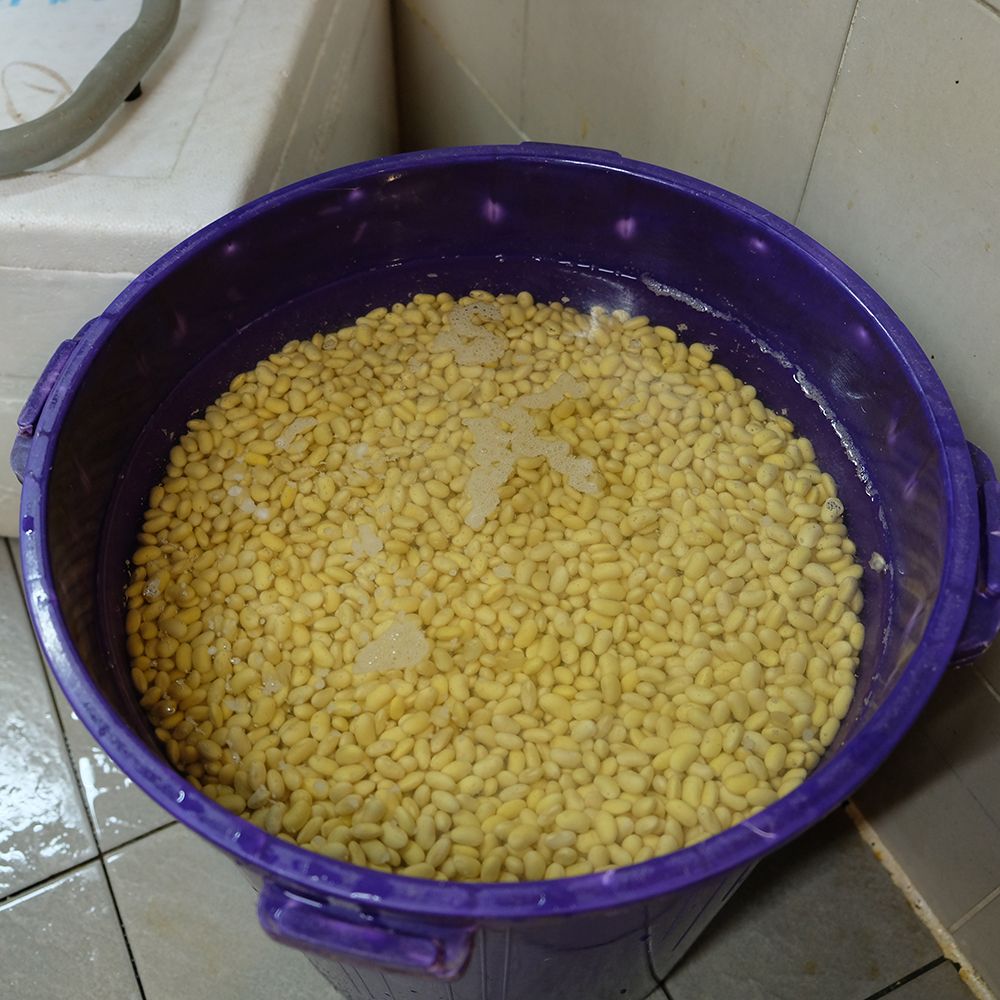
Above Raw soya beans have to be soaked for at lease four hours before grinding
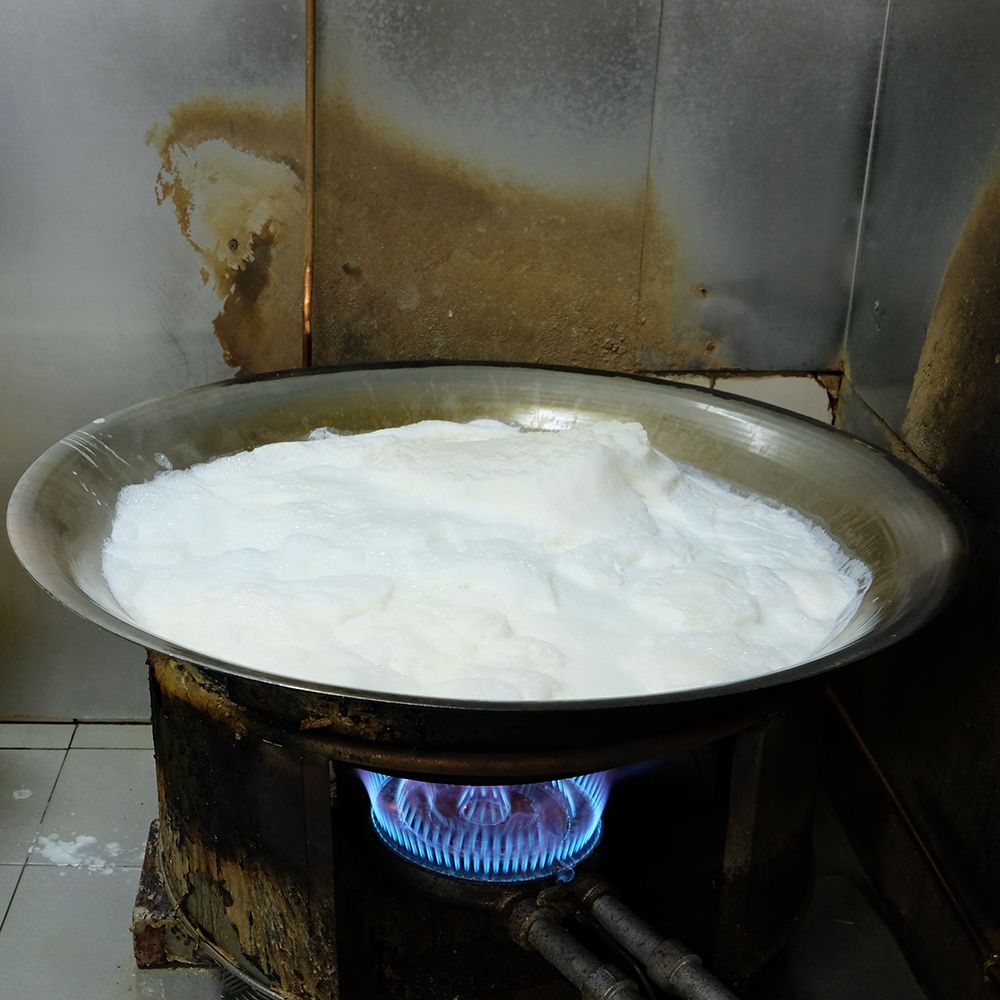
Above The ground soya beans have to be immediately cooked and stirred to prevent the mixture from burning
Raw soya beans have to be soaked for at lease four hours before grinding
1 / 2
First, the raw soya beans need to be soaked for a minimum of four hours to ensure the beans are pliable enough to grind. Once ground, the beans have to be immediately cooked so as to maintain optimum freshness. Loh slow cooks the beans in a large cast-iron wok, employing the same methods passed down by his father.
Cooking the soya beans is as much an art as it is a science. Loh keeps a close eye on the soya bean milk as it boils, stirring the mixture frequently to ensure nothing burns. It is a testament to Loh’s skill that he does not use any measuring cups nor thermometers when cooking. Instead, it is through “years of experience” that Loh is able to gauge when the soya bean milk has reached its peak flavour. Once the soya bean milk is cooked, it is then transferred to thermal containers. For the bean curd, a coagulant is added to the soya milk before allowing it to set.
What is most impressive is that Loh is able to gauge how many containers of soya bean milk the wok holds just by eyeballing the mixture. “I cook enough for two containers in each batch,” he tells Tatler Dining. True to form, each time he pours out the soya bean milk, it fills up two containers exactly.
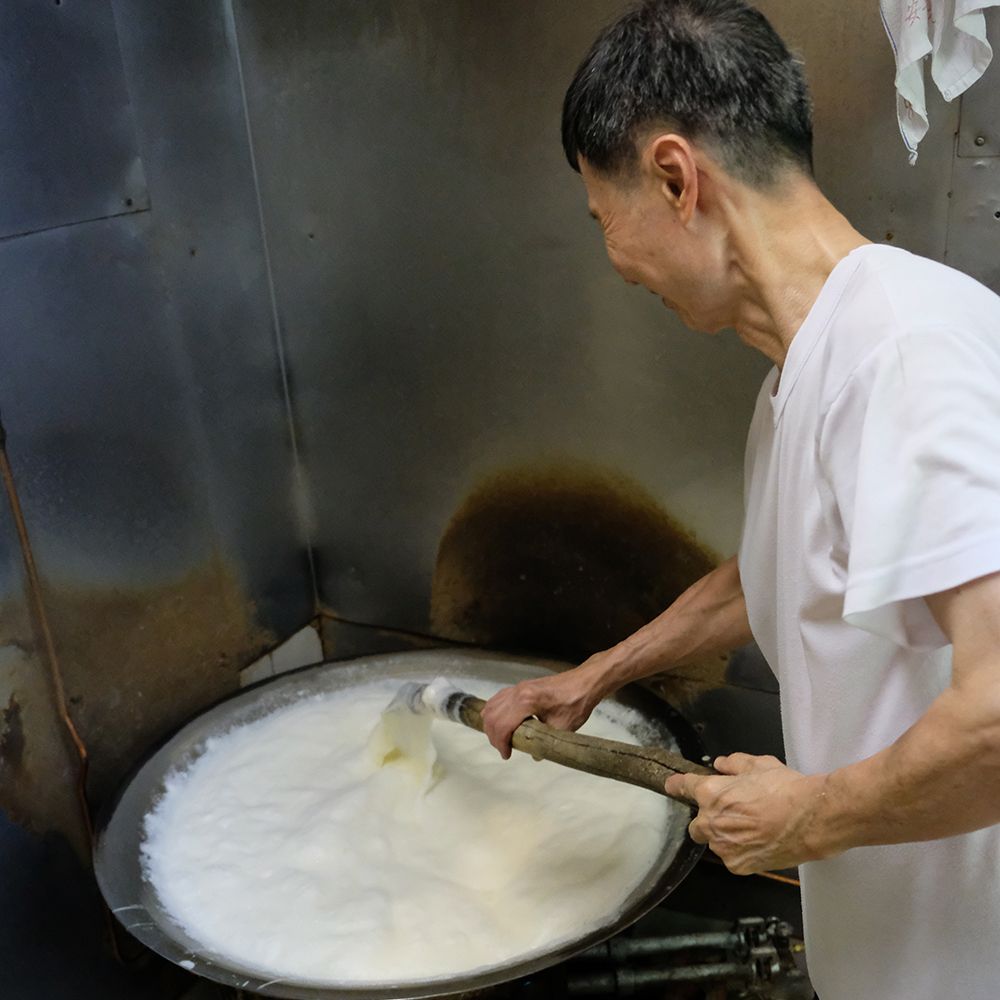
Above Loh took over the stall from his father in the 80s
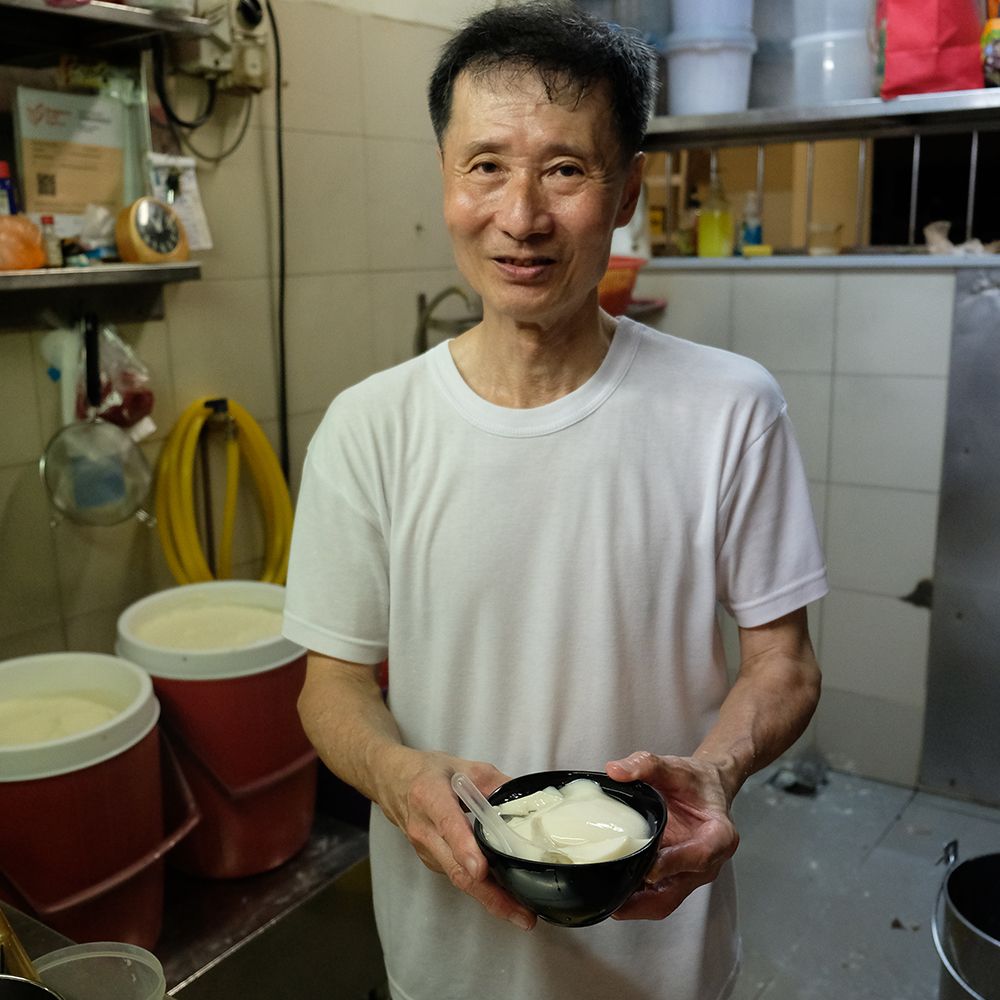
Above Loh is one of the few hawkers who prepares the bean curd from scratch
Loh took over the stall from his father in the 80s
1 / 2
Loh goes through 60kg of soya beans every night, typically making 12 containers of soya bean milk and four containers of bean curd. It’s a laborious process—the soya bean mixture has to be filtered multiple times with a muslin cloth to remove any impurities. This ensures that the resulting bean curd has that silky texture that Loh is so well known for. In addition, the wok also must be washed after each batch of soya beans is cooked, to prevent any overheating and from the next batch of soya beans from being burnt.
Loh shares that the trick to achieving the perfect bowl of soya bean curd is all in its balance. While the dessert appears deceptively simple to make, consisting of just three ingredients—water, soya beans and a coagulant, the proportions have to be just right. It took Loh years of hands-on experience adapting and experimenting with his recipe to achieve that perfect mouthfeel. He says cheekily, “In fact, my bean curd is now smoother and silkier than what my father previously made.” To this day, Loh still tastes and adjusts his recipe as needed, since every batch of soya bean is different.
Yet, making the bean curd and soya bean milk is only the half of it. Once everything is prepared, Loh still has to do the washing up and ensure the stall is ready for the start of business. As a one-man operation, Loh is literally on his feet the whole night, only getting a brief respite when his wife and daughter arrive to relieve him at 4.30am. Loh heads home for a quick shower and rest, before heading back to the stall by 7am to help just as the morning rush arrives.
Despite the immense effort required, Loh is a true artisan who insists on making this dessert the traditional way. He still only serves his bean curd hot, just like how it was done in the olden days. “Hand cooking the soya bean milk brings out the aroma of the soya bean that a machine just cannot replicate,” says Loh.
Judging from the long lines that form every morning, his customers definitely agree.
Japanese expat Takamatsu Tsukasa who lives in the neighbourhood has been visiting Loh’s stall regularly for two years now. He loves Loh’s soya bean milk because of its “intense taste”. “Except for Mondays when he’s closed, I come for breakfast every day. You can taste the real flavour of the soya bean,” he shares.
Teri Tan is another fan of Loh’s and particularly enjoys his soya bean curd because of how smooth and comforting it is. She makes it a point to patronise his stall every time she visits the market. Shares Tan: “ I’ve always loved tau huay, especially when it’s freshly scooped and hot. Something about Teck Seng’s bean curd just feels nostalgic. There’s usually a line but I’m willing to wait because I love it.”
The saying the early bird gets the worm certainly holds true for Loh’s soya bean curd and soya milk. Loh opens at 5am to cater to workers coming off the night shift and early risers looking to get a head start to their day. By 7am, the queues are constant and it is not unusual to see a line of up to 20 people. “It never stops,” laughs Loh. “Just as you think the crowd is thinning out, more people start coming and the queue forms again.”
For those wanting to get a taste, it pays to arrive early. Such is the demand for Loh’s fare that he usually sells out before 10am. Regulars in the know have even taken to placing orders the night before and guarantee themselves a bowl. It is not uncommon to see orders coming through in the double digits, as customers often order for their friends and families. Word of mouth has even brought loyal customers from beyond Singapore’s shores. Pre-pandemic, a good portion of Loh’s customers were tourists who would make it a point to visit his stall when they were in town. Loh has even been featured in a Japanese newspaper previously.
1 / 1
In spite of his popularity, Loh has remained very much grounded. His prices are a reflection of that. A large bowl of soya bean curd and a cup of soya milk still costs only a dollar each—an absolute bargain by today’s economic standards, especially when you consider the amount of effort that has gone into making the product. Even with other stalls pricing their bean curd at an average of 20 to 50 per cent higher, Loh is still hesitant to increase his prices.
“It just doesn’t feel right,” explains Loh. “The economy isn’t doing very well now, and with the Covid-19 situation and people losing their jobs, I feel very lucky just to be able to do what I enjoy. As long as I see customers happy and enjoying my soya bean milk, the sense of fulfilment I get is enough for me.”
While Loh has no plans to retire, he is 66 this year and one does wonder what the future holds for Teck Seng Soya Bean Milk. Loh has hopes that his son, who currently works in the cafe business, will eventually take his place since the foundations have already been set up for him to succeed. However, he maintains that “there first must be interest and the willingness to learn, otherwise the quality will suffer.”
In today’s climate, where profits and efficiency are the name of the game, traditional cooking methods like the one Loh employs are slowly ceasing to exist. Yet if the long line of customers is anything to go by, it is that there is still an appreciation for quality products, and hopefully, such traditions can be preserved for the next generation to enjoy.
See also: Hawker Stories: Ong Jun Ru of Long House Soon Kee Boneless Braised Duck
Credits
Images: Kerri Teo





