

Cover The winner of the Redress Design Award 2022 was announced this week, kicking off the oncoming month of sustainability-focused fashion events
The winner of the Redress Design Award 2022 was announced this week, kicking off the oncoming month of sustainability-focused fashion events
1 / 1
See the winning design of 2022, and find out how you can get involved in sustainable activities during this Get Redressed Month
Federico Badini Confalonieri was named as the winner of the Redress Design Award 2022 at the grand final presentation event on August 7 in Hong Kong. The young designer, who studied fashion in London, said he was “humbled” after he won for his garments which integrated a layer of Guppyfriend filter fabric, a material designed to reduce micro-plastic release from synthetic clothing.
The designer from Italy won the opportunity to join the Timberland team to collaborate on a special sustainable design project alongside a HK$50,000 (US$6,400) “development fund”.
“This prize is about more than winning a competition,” said Confalonieri at the ceremony. “It will give me even more energy and determination to work towards building a more sustainable fashion industry ... It is just a new beginning into a sector where you never stop learning and that I am immensely passionate about.”

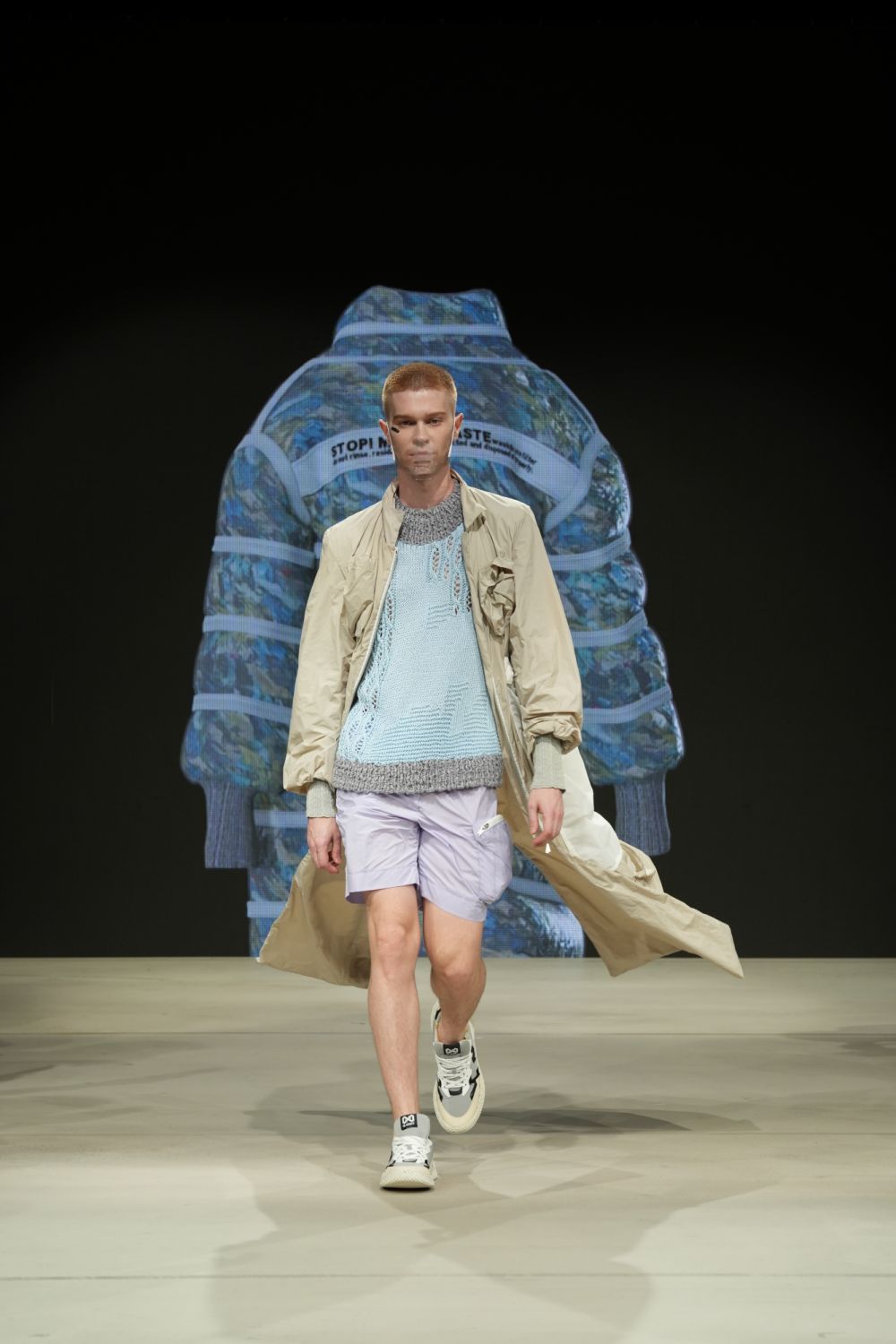
Above Federico Badini Confalonieri's designs won him this year's Redress Design Award

Above Confalonieri's collection uses upcycled textiles along with synthetic fabrics that have an incorporated filter fabric to retain pollution during washing
Federico Badini Confalonieri's designs won him this year's Redress Design Award
1 / 2
Every year, for the past 12 years, the Redress Design Award has championed young designers and promoted sustainable clothing manufacture. The contest requires all collections to be created using waste materials. On top of this, they are tasked to integrate circular design techniques, like low-impact processes, zero-waste patterning and designing for recyclability once they cannot be worn anymore. This year, Redress added extra digital dimensions to test designers’ tech skills.
In case you missed: 7 Female Sustainability Influencers to Follow in Hong Kong
In addition to the Redress Design Award, the Redress team also coordinates an annual consumer campaign called Get Redressed Month, which last year celebrated record-breaking numbers, including collecting 20.5 tonnes of clothing in one month alone and partnering with 136 companies, schools and retailers. This October, fashionistas in the city can participate in a “sort-a-thon” volunteer event, attend lunches and talks with the Redress team, and sign up their workplaces to a clothing donation drive, helping promote preloved fashion and circularity. For more information, see redress.com.hk.
Here, Redress and The R Collective founder and CEO Christina Dean reflects on this year’s competition and explains how finalists took innovation one step further this year.

Above Redress founder and CEO Christina Dean
Redress founder and CEO Christina Dean
1 / 1
What are some interesting sustainable techniques or technologies that this year’s batch of designers used that you hadn’t seen in previous years?
This cycle, we challenged the finalists to create one virtual creation for their final collections, requiring them to get to grips with digital design techniques, which are becoming even more important as fashion tries to drive technology into supply chains, especially in the post-covid world where designers can’t easily travel to factories so where 3D digital design is therefore even more important.
In terms of new types of materials, finalist Federico Badini Confalonieri integrated a layer of Guppyfriend filter fabric, which is a material designed to reduce micro-plastic release from synthetic clothing. And Micaela Clubourg created a cool way of recycling containers of dulce de leche, or milk jam, into buttons and trims.

Above Finalist Micaela Clubourg created this outfit. Her zero-waste approach sees her source textiles from industry, colour them with natural dyes from food waste then incorporate recycled plastic buttons and trims

Above A look by finalist Nawoda Bandara. Her collection is unisex, multi-seasonal, biodegradable, and recyclable, and is made with upcycled textiles, such as sampling yardage and damaged deadstock
Finalist Micaela Clubourg created this outfit. Her zero-waste approach sees her source textiles from industry, colour them with natural dyes from food waste then incorporate recycled plastic buttons and trims
1 / 2
Why were AR filter employed this year?
This year, our guests could virtually ’try on’ the finalists’ outfits with AR filters on Snapchat, offering a fun dimension of engaging with the pieces and sharing them on social media.
We wanted to bring technology and virtual clothing to consumers, so they can engage with fashion in new ways. We’re seeing fashion consumption and production rise around the world, and this is influenced by social media’s quick trend cycle and a culture of only wearing something once for a photo. So bringing technology advancements to fashion consumers via these AR filters is one way Redress can educate consumers to consume fashion digitally as a way to replace physical, real clothing shopping for social media purposes.
Are there any challenges that have emerged or developed in the realm of sustainable fashion globally over the last year?
One of the many million dollar questions for sustainable fashion is how to recycle textile waste. People are continuing to buy too many clothes and not wear them for long enough, so we have a textile waste crisis. The big challenge is recycling these materials back into lovely yarns and fabrics. There is a lot of R&D into recycling, but this work is still pre-industrial in scale. We don’t have time for this; we have to unlock and scale up textile recycling urgently.
Covid is another huge factor for fashion, that brought about transitions within the fashion industry and beyond almost overnight. On the waste side, we are still seeing the impacts of Covid in terms of increased textile waste. We’re now also seeing waste being revalued as a resource, which is music to our ears. Businesses, cash strapped and facing larger costs for raw materials and shipping, are now looking at their waste as a resource, which is a wonderful catalyst for change.
On the social side, it was fascinating to see in real time the impact that happens when consumers stopped shopping: we saw that some of the most marginalised communities of garment workers lost their jobs to disastrous effect. This shows us that we need fashion production to continue to provide jobs. But, obviously, we need to do this in more sustainable and ethical ways.
NOW READ
The Weigh-In: Is Overseas Travel Ever Ethically Sound?
5 Sustainable Swaps For A Luxury Lifestyle That Doesn't Damage The Environment





