Cover US President Donald Trump announcing additional tariffs targeting goods imported to the US (Photo: Getty Images)
US President Donald Trump announcing additional tariffs targeting goods imported to the US (Photo: Getty Images)
1 / 1
As the US–China trade war escalates under Trump’s second term, Maybank Group Wealth Management’s Eddy Loh speaks to us about why investors shouldn’t panic, where the opportunities lie, and how Asean could emerge stronger
What does one do when the global economic rulebook is torn up in real-time? For Eddy Loh, chief investment officer of Maybank Group Wealth Management, the answer lies somewhere between composure and calculated optimism.
Since Donald Trump returned to office and raised tariffs on Chinese goods to a historic 245 per cent, investor sentiment across Asean has grown jittery. Loh, however, doesn’t see a repeat of the 2020-style panic.
“This time, it’s more of an equity-led selloff,” he says, contrasting it with the pandemic-induced turmoil when everything—bonds included—was caught in the crossfire. “Some investors are even asking if this might be a good time to buy.”
Read more: Malaysia: the unexpected darling of China’s ultra-rich property hunters?


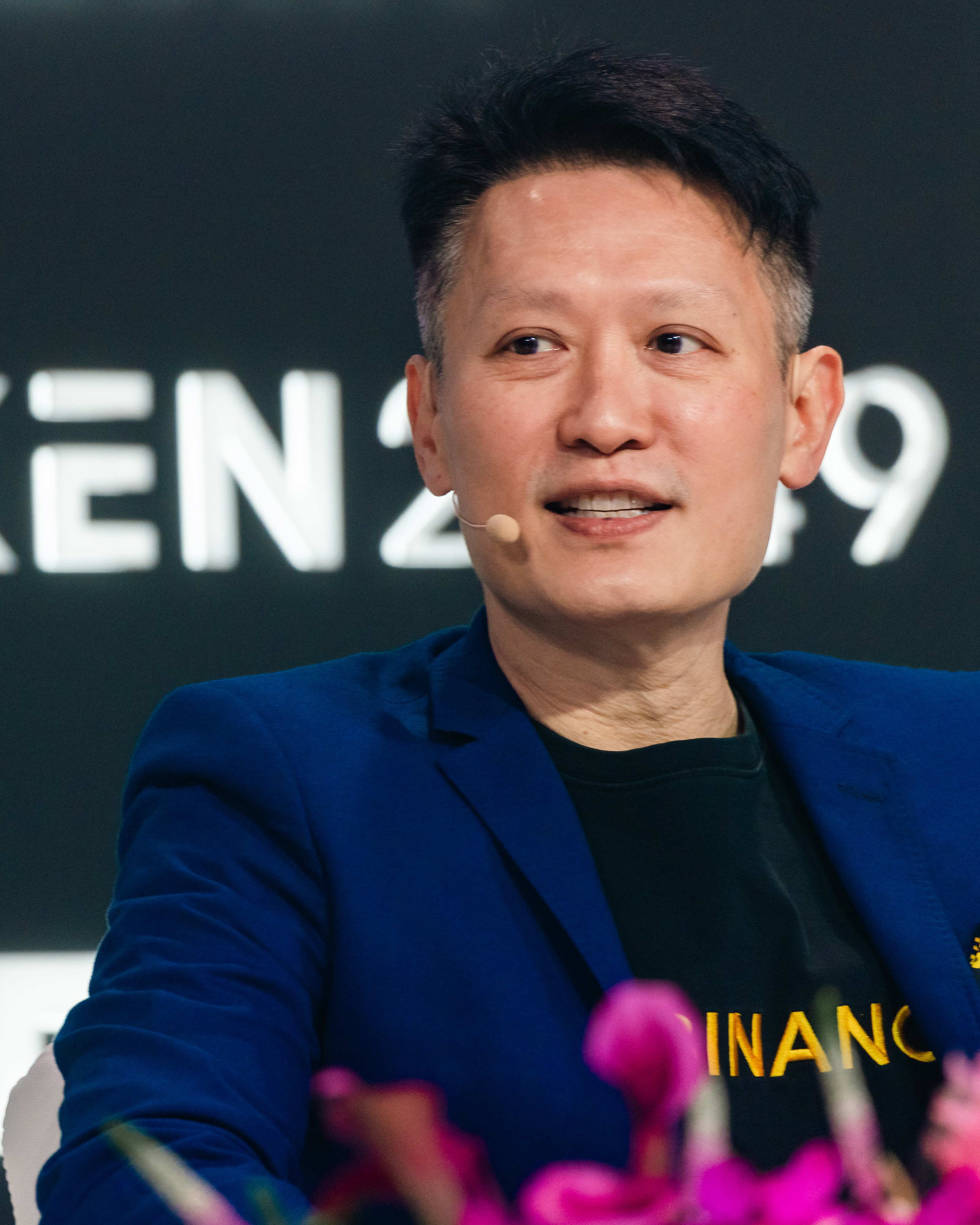
Above Eddy Loh, chief investment officer of Maybank Group Wealth Management
Eddy Loh, chief investment officer of Maybank Group Wealth Management
1 / 1
It’s a perspective grounded in experience. While acknowledging the uncertainty—particularly Trump’s unpredictable rhetoric—Loh advises against knee-jerk reactions. “Don’t overreact to every piece of news flow because you can take Trump seriously but you don’t take him literally because his words change by the minute,” he quips.
That sentiment of watchful pragmatism threads through Loh’s assessment of sector vulnerabilities. Export-driven industries, especially semiconductors and banks, are feeling the squeeze. Yet, in the same breath, he points to resilience in China’s domestic economy, which is bolstered by government stimulus. “We’re adopting a barbell approach where on one end we have these growing tech and gaming stocks but on the other, some of the yield plays on state owned enterprises like the telco players could be a good defensive area to look for steady dividend income as well. And these are very domestic oriented,” Loh explains.

Above Export-driven sectors across Asean, including semiconductors and manufacturing, remain vulnerable as global trade tensions escalate (Photo: Pixabay)
Export-driven sectors across Asean, including semiconductors and manufacturing, remain vulnerable as global trade tensions escalate (Photo: Pixabay)
1 / 1
When asked whether the 90-day tariff reprieve signals meaningful recalibration, Loh is measured. “We think that the pause has obviously provided some relief to investors and markets but judging by Trump's words subsequently, when he said no one is off the hook, especially China, and then they were talking about sectoral tariffs on semiconductors and then pharmaceuticals, I think we are still going to see more drama hit,” he says.
Still, volatility has its upsides for those with the appetite as Loh says that would be a good opportunity to pick up some interesting investments for clients with appetite.
That mindset is perhaps most useful when looking at rare earths and the future of supply chains. China’s threat to restrict exports may rattle nerves, but Loh notes Asean has its own resources—and a growing appeal. The old “China+1” strategy isn’t new, but Loh sees renewed interest in the region, even as the US tries to close loopholes in its tariff enforcement.
“We do anticipate at least some partial roll down of tariffs. For example the 46 per cent on Vietnam, likely to be rolled down but don’t know when but Trump was saying that they started negotiation with Vietnam, right? So if that were to roll down, then at least Asean would still benefit. Because I think on a relative basis the tariffs that are being posed in some of these other countries are still lower versus what China is facing. But having said that, you know China itself, I also can’t imagine the current 245 per cent tariffs to stay on track. Essentially anything above 100 per cent in practice is not meaningful. That’s basically no trade,” says Loh.
See also: How the rise of HNWIs is shaping Malaysia’s luxury property boom

Above Equity markets responded swiftly to tariff developments—prompting investors to weigh short-term noise against long-term (Photo: Pixabay)
Equity markets responded swiftly to tariff developments—prompting investors to weigh short-term noise against long-term (Photo: Pixabay)
1 / 1
So where are investors turning? Gold remains the archetypal safe haven. Surprisingly, the Japanese yen and Swiss franc are also used. Treasuries? Less so—thanks to recent market dislocations and hedge fund margin calls. Loh recommends broadening exposure across markets and assets with a strategic tilt toward stability.
“The traditional status of US Treasuries, I think that was put into question when we saw 10-year yields spike within a few days. I would say that it is premature to say that everybody is dumping US Treasuries. There are various reasons as to why the 10 year Treasury yields have spiked. It could be due to temporary financial market dislocation because of the volatility in the equity market which affected risk sentiment and then it triggered some margin calls especially for hedge funds that were taking very leveraged positions in the Treasury related trades,” he notes.
“But I would say that what we are suggesting, even before all this tariff situation, was to not put all your eggs into one US basket. If you look at what is happening, there is definitely downside risk to growth in the US and the global economy. Nevertheless, we do see markets such as China, which presents pretty interesting risk reward and with the ability to self help to mitigate against these characters. So, I would say that within equities please spread your bets across markets,’ Loh adds.
Don’t miss: Ruoning Yin wins Maybank Championship as Malaysia’s Mirabel Ting soars to career best finish
Loh also adds that from a business standpoint, the problem with this trade uncertainty is that it makes it very difficult for businesses to make decisions, especially on expansion plans.
“I think a lot of them will stay put, wait and see what happens. And that is definitely going to have a negative impact on growth. So we think that while there is still a chance for an early truce, we think that there is more likely to see kind of a stagnant growth. There's an increasing probability of stagnation in the US economy and that will also affect the Asean investment landscape as well,” he says.
Bit in terms of silver linings, Loh notes that Asean is actually attracting quite a fair bit of interest from value investors with a longer term horizon especially on Singapore banks and regional REITs like in Malaysia and Singapore.
“Because of the slowing growth, there are expectations that central banks will actually be more willing to ease their rates. There is an increasing chance that they could potentially cut rates to support growth if necessary,” Loh says.

Above While old trade frameworks are strained, new regional alliances may emerge, reshaping the future of globalisation (Photo: Pixabay)
While old trade frameworks are strained, new regional alliances may emerge, reshaping the future of globalisation (Photo: Pixabay)
1 / 1
But is this just another chapter in the boom-bust cycle, or are we seeing a more permanent retreat from globalisation? Loh leans toward the latter.
“Trump in some ways have torn the rulebook where existing trade agreements may not be followed. The negative of course is that businesses may be scrambling to look for alternative locations to set up operations which may not be the most cost competitive and that could potentially lead to higher costs in the long run as well as also put upward pressure on inflation,” Loh says.
But Trump’s very extreme actions is also somewhat leading other countries to collaborate and work more together. “China’s visit to this region is one case in point. There have been talks about China, South Korea and Japan signing a free trade agreement. So, while old trade agreements may no longer exist or be replaced, we could see the emergence of new partnerships for economic alliances,” Loh quips.

Sim Wie Boon is the general manager of Tatler Malaysia. Previously the print and digital editor, Sim hails from the land of the hornbills, Sarawak. Sim is now based in Kuala Lumpur and brings more than a decade of experience in the media industry as a journalist and broadcast producer.
As a self-proclaimed geriatric millennial, he appreciates the finer things in life, from savouring a sip of single malt whisky to relishing in the deliciousness of char siew. While reminiscing about the indie-sleaze era, Sim now finds solace in the soothing tunes of ambient music, staying active through running and occasionally succumbing to the addictive world of doom scrolling.
Follow him on Instagram or Threads at @simwb


Curated for you
The stories, profiles, and cultural moments featured on our Instagram feed