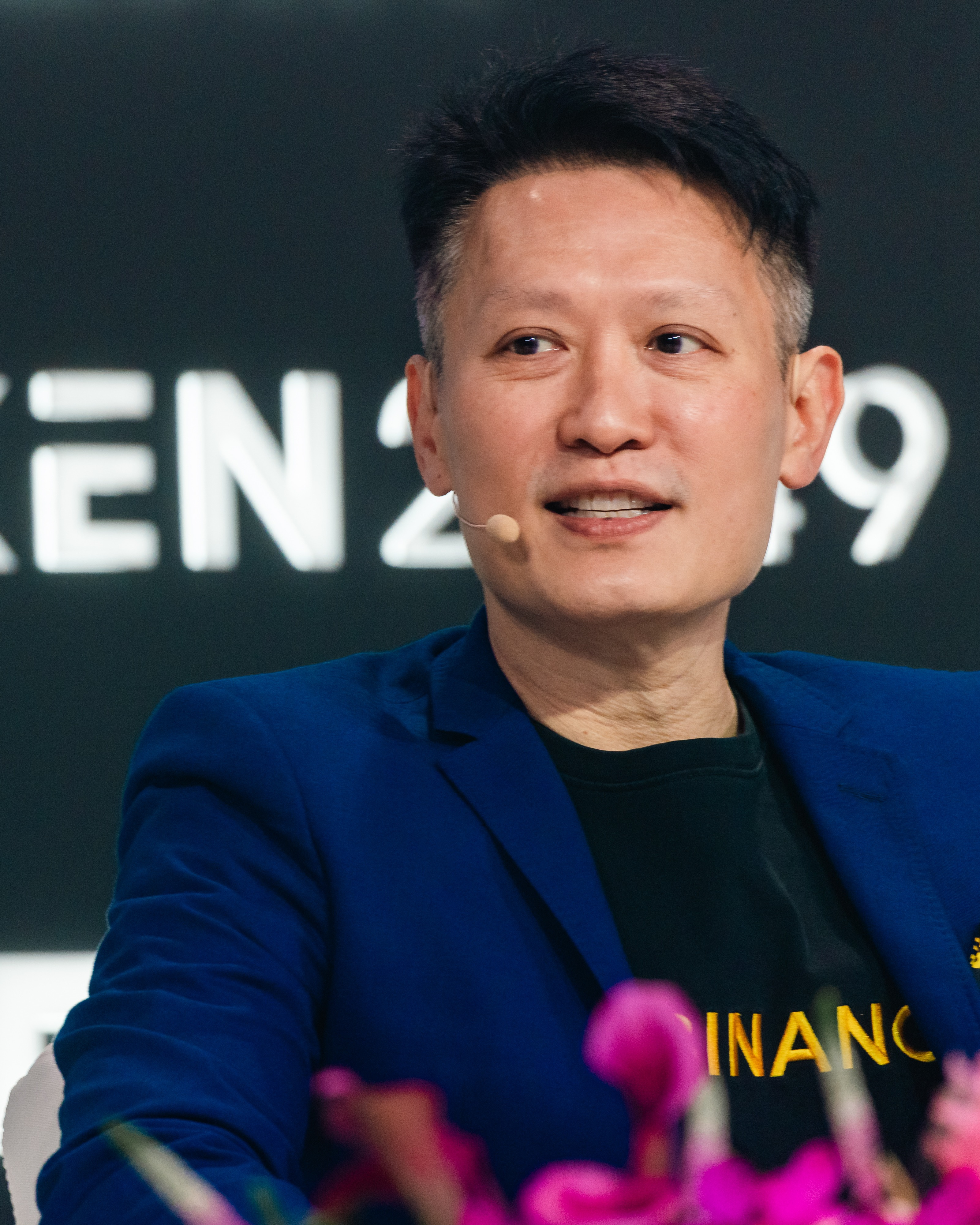

Cover Chi Man Kwan, founder and group CEO of Raffles Family Office (Photo: Zed Leets)
Chi Man Kwan, founder and group CEO of Raffles Family Office (Photo: Zed Leets)
1 / 1
Amid the handover of trillions within Asia’s wealthiest families, Raffles Family Office founder and group CEO Chi Man Kwan reflects on the firm’s first decade—and what younger generations need to keep in mind
At the very start of his journey as a founder, when Chi Man Kwan told people he was setting up a family office, he was often met with blank stares.
“In 2015, when I told people ‘I’m working in a family office’,” Kwan recalls with a wry smile, “they actually asked me, do you mean: you only work at home, or do you mean you only hire families?”
Even by 2020, when policy speeches addressing family offices came into the limelight, people in Hong Kong still weren’t aware of what family offices really were. The city’s big push came in October 2022, when Chief Executive John Lee set a target of attracting 200 family offices by the end of 2025. Officials said in September of last year that the mark had been passed early.


Above Chi Man Kwan (Photo: Zed Leets)
Chi Man Kwan (Photo: Zed Leets)
1 / 1
That rapid growth has drawn scrutiny, though. In 2025, a Hong Kong legislator asked the government about reports of “fake family offices”, and officials reiterated that offices providing wealth management services to clients beyond a single family need a Securities and Futures Commission licence, multi-family offices included.
But at least people now understand what Kwan means—particularly the high-net-worth individuals and their families who are Kwan’s clientele. As founder and group CEO of Raffles Family Office (RFO), a leading multi-family office dually headquartered in Hong Kong and Singapore, Kwan is positioned at the epicentre of a historic wealth handover. In a report published in May, UBS estimated billionaires worldwide will pass trillions over to their children over the next 15 years; of this amount, an estimated US$11 trillion in private wealth will change hands across Asia-Pacific. Kwan, who turned 45 this year, sees his firm as a bridge between old-world capital accumulation and a new era of digital assets, alongside family governance and a push for social responsibility and impact.

Above Chi Man Kwan (Photo: Zed Leets)
Chi Man Kwan (Photo: Zed Leets)
1 / 1
Born in Macau and raised between Hong Kong and Singapore, Kwan built his early career at a British international bank and a European private bank. Around 2012, while working in private banking, he watched a frantic wave of Chinese entrepreneurs rush for major IPOs in Hong Kong and the US—and people who were “rich on paper” then realising their wealth. Watching these fortunes turn into cash exposed a flaw, he says. A bank earns its living by selling products, setting its earnings targets against a client’s long-term interests. But newly wealthy clients may struggle to protect what they have.
“My experience in banking planted the seed. I wanted to sit on the family’s side of the table, helping them navigate their options and work with their banking partners,” Kwan says.

Above Chi Man Kwan (Photo: Zed Leets)
Chi Man Kwan (Photo: Zed Leets)
1 / 1
A buy-side pitch invites an obvious question: how does RFO make its money? RFO declined to share its fee model and current assets under management, but said it serves more than 200 families. In 2020, the South China Morning Post reported that the firm managed more than US$2 billion; RFO says it offers access to research from roughly 50 banks and to products from more than 50 institutions and has portfolio teams across eight asset classes, including equities, fixed income, private equity, real estate, and digital assets, as well as multi-asset solutions and structured investment solutions.
For Kwan, RFO’s first decade was a crucible of survival and persuasion—his main goal was “bringing up awareness about the industry”. Now demand is growing: Deloitte’s 2024 survey of 89 single-family offices found 48 per cent in Asia-Pacific planned to rely more on outsourcing, compared with a global average of 34 per cent.
Read more: From collectible to investable: the rise of Pokémon trading cards as Asia’s newest asset class
Clients are also in transition. Patriarchs and matriarchs of the first generation—broadly referring to founders who came of age from the 1950s to 1970s—followed a predictable playbook. “In the first gen, traditionally you talk about the equity market, fixed income, a lot of real estate,” Kwan says, and these classes probably take up “80 to 90 per cent” of a portfolio. Their anchor was a 60/40 allocation between equity and fixed income, which he calls the “golden rule”.
Their children are less bound by rules. “Today, the newer generation, they’re not that interested in this very old-school asset class anymore,” Kwan says. “[They say,] ‘Why do I have to be defined by the stock market, the exchange?’ They like to look at private companies.” For example, they may spread money across 100 or even 1,000 independent holdings, he says, rather than relying on public-market correlations.
Kwan sees the shift at his own dinner table, sharing anecdotally, “I have three kids. My oldest is 12 years old—he will take Pokémon cards, maybe a bit of Bitcoin, over equity, over [listed] shares,” he says, laughing.
Where does passion end and investment begin? Kwan offers an example. “If I have HK$100 million, and I spend HK$2,000 on a Pokémon card, it’s definitely a passion. But if I’m spending HK$50 million to buy a Pokémon card, then it becomes an investment.”

Above Chi Man Kwan (Photo: Zed Leets)
Chi Man Kwan (Photo: Zed Leets)
1 / 1
The “second” generation in general is also more concerned about the impact of their money beyond their family. A survey by the Centre for Asian Philanthropy and Society (CAPS) of Greater China published earlier in 2026 found that 49 per cent of respondents with at least US$30 million in family wealth engaged in ESG investing, and 34 per cent in impact investing. Kwan describes a family whose business raised concerns among younger generations over its environmental impact—older generations, he says, focus on the financial return, while “the second generation always talks about what is the real impact that you create for society as a whole.”
Despite the trillions involved, succession planning is rarer than it should be: UBS found that only 53 per cent of the family offices it surveyed globally had a formal succession plan. Kwan applies the lesson at the office, where RFO is drafting its own corporate constitution so that its culture and values outlast its founders. “Planning the succession is really a lot more important than we think ... that’s why we invest a lot in the next generation.”
Read more: Inside the Female Entrepreneurs Worldwide Family Office Forum
Age, he believes, is on the firm’s side. Most of RFO’s management, he says, are in their early to mid-40s. “We are kind of in the sweet spot ... not old enough to be the first gen, yet ... more senior than the second gen. We become the best bridge of communication between the two generations.”
Asked for his advice to an heir, Kwan chooses one word. “It’s really about responsibility,” he says. “[Younger heirs] need to understand the responsibility behind it ... to the parents, to the family name, and to society, maybe to the country, and to the world.”

Above Chi Man Kwan (Photo: Zed Leets)
Chi Man Kwan (Photo: Zed Leets)
1 / 1
His ambition is larger than any one firm. “Ultimately, Asia deserves its own wealth manager—that really puts our priority at the front of it—and it has to be built by Asians for Asians.” Where RFO once had to explain what it was, Kwan now has a name people know, and wants to create a legacy, and a sense of responsibility of his own.
“I really hope that we become one of those companies that our next generation feels proud of,” he says. With the same pride some might share in saying their parents work at prestigious brands, he hopes to hear that same pride when his kids say, “‘Well, my dad is working at Raffles.’”
Topics

Cat Wang is an editor at Tatler Asia based in Hong Kong, where she covers business, wealth, innovation, and impact. Previously, she was a Forbes Asia reporter and assistant editor of the Forbes Asia 100 to Watch list, spotlighting startups and small companies on the rise across the Asia-Pacific. She began her career as a trainee reporter at the South China Morning Post, Hong Kong’s newspaper of record. Born in New York City, she graduated from the University of California, Los Angeles, with a B.A. in political science.
Curated for you
The stories, profiles, and cultural moments featured on our Instagram feed