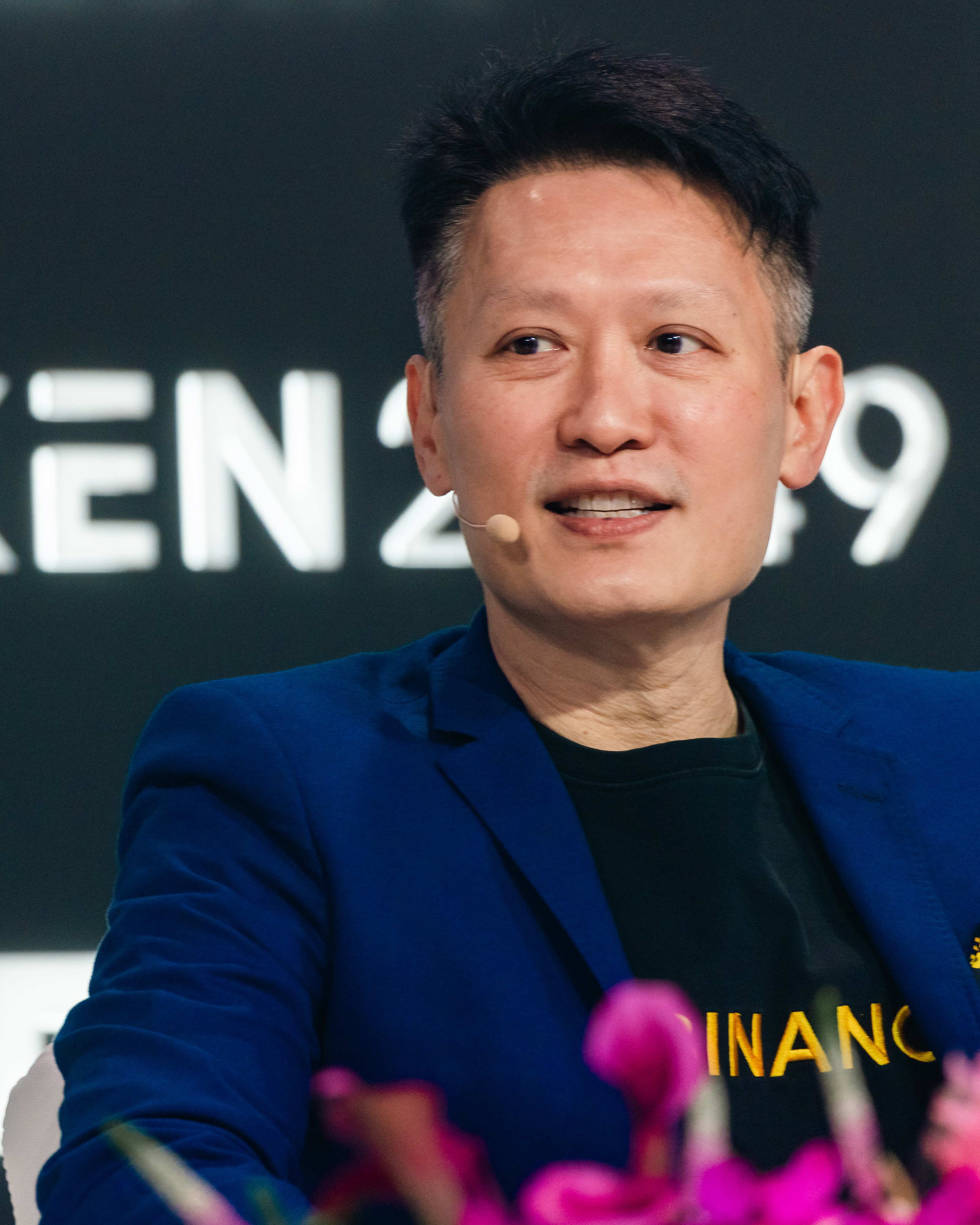
Cover TPC Chairman Frederick Tsao and NO.17 Foundation Chair Tai Sook Yee at the At One Impact Week 2025. They convene leaders once again this week to champion how Asia’s family offices can turn "love as infrastructure" into an operational reality
TPC Chairman Frederick Tsao and NO.17 Foundation Chair Tai Sook Yee at the At One Impact Week 2025. They convene leaders once again this week to champion how Asia’s family offices can turn "love as infrastructure" into an operational reality
1 / 1
Ahead of At One Impact Week in Singapore, Tatler speaks exclusively with NO.17 Foundation Chair Tai Sook Yee on why Asia’s family offices are putting empathy and trust at the heart of long-term capital allocation.
With business leaders, family office principals, and institutional investors gathering in Singapore for At One Impact Week 2026 this month, the premise driving boardroom discussions is an unusual one: love as infrastructure.
The summit proposes a direct argument. Empathy and trust belong inside balance sheets, corporate governance, and capital allocation models. For enterprises seeking lasting resilience, these human values must become structural.
In exclusive insights shared with Tatler Asia, Tai Sook Yee, chair of NO.17 Foundation and a core architect of the summit alongside TPC (Tsao Pao Chee) outlines how this off-beat thesis gives ultra-high-net-worth leaders a clear roadmap to safeguard both wealth and societal health. The gathering runs concurrently with At One – All is Well 2026 in Singapore this week.
Read more: Chavalit Frederick Tsao on how family businesses can promote sustainability and philanthropy
The fragility of personal goodwill
"Empathy that lives only in a person is fragile," Tai says. "It moves with mood, tenure, market cycle. Infrastructure is what keeps working when goodwill runs out."
For a century, global business separated strategy and efficiency from care and community. Capital allocation sat in boardroom discussions, while social responsibility was handed off to external departments or philanthropic foundations. Tai sees present systemic imbalances as design flaws born from optimising purely for single-variable, short-term returns.
"Love, in our vocabulary, moves through three stages," Tai explains. "It begins as intention, the wish for others to be well. It is expressed through action, how we lead and decide. And it must be built into systems, so it can scale, endure, and outlast any individual."
The shift is moving from asking 'what do I own?' to asking 'what am I here to enable?'
Funding Asia's connective tissue
A central ambition of Impact Week is confronting a persistent gap in regional impact deployment. Asia holds abundant capital and promising sustainability initiatives. The chronic shortage is early-stage connective tissue—the shared platforms, cross-sector partnerships, and patient risk capital required to make complex, multi-stakeholder solutions investable at scale.
Private equity and venture capital operate on quarterly metrics and rapid exit horizons. Family offices hold a different advantage: intergenerational time horizons.
"What is chronically underfunded is the connective tissue between individual projects," Tai says. "The world has sufficient resources and capacity to solve its problems. What we have not yet built is the collaboration to deploy them together. That layer is where family offices are structurally strongest. Their capital is intergenerational by nature, able to hold the horizons landscape restoration or energy transitions actually require."
Read more: 3 questions every next-gen philanthropist should ask to secure their legacy, according to the man who advised the world’s 1%
From ownership to stewardship
To demonstrate how love functions as a practical investment strategy, the summit points to active deployment models like TPC’s Restore Nature initiative in Indonesia.
In this framework, philanthropic capital funds the high-risk discovery phase—early trust-building, scientific research, and model development. Once the economic model proves self-sustaining, commercial markets take over to scale it, freeing philanthropic capital to recycle into new systemic challenges.
The ambition for Impact Week is to catalyse a shift across Asia’s wealthiest families: moving from simple capital accumulation to active systemic stewardship.
"The shift is moving from asking 'what do I own?' to asking 'what am I here to enable?'" Tai says. "Wealth measured in quarters is a scoreboard; wealth measured in generations is a responsibility. That is the most durable form of prosperity."
NOW READ
Topics


Karen Vera is the regional content director for Tatler Asia. Having led editorial strategy across Hong Kong, Singapore, Manila, Jakarta, and Shanghai throughout her career, she is a devoted culture vulture whose favorite party trick is naming every Oscar Best Picture winner from 1972 onwards. (Annie Hall won in 1977, by the way.)
Curated for you
The stories, profiles, and cultural moments featured on our Instagram feed