

1 / 1
A panel of active entrepreneurs and corporate executives looks at the future and share what they see with Tatler and AIA Philippines
They form a rich tapestry of diversity—in age and background, profession and persuasion. However, a common thread noticeably runs through them—taut, thick and bright. Optimism. Each of the participants in the Forum on the Future, hosted by Tatler Philippines and AIA Philippines at Shangri-La at the Fort, exuded an optimistic view of the future, based not so much on blind faith but on observations and deductions.
“It’s a very interesting time in the history of the Philippines because, for the first time that at least I can remember, having lived here for 15 years now, the Philippines is actually the first option in Southeast Asia for where people want to put their money in,” declares Franco Varona, managing partner of venture capital firm Foxmont Capital Partners.
The others around the table share the same spirit. Chit Juan, natural food and coffee advocate with an organic store called Echostore; Marilen Elizalde, wellness enthusiast and a yoga teacher; John Michael Hilton, president and CEO of food and beverage company Visum Ventures whose most notable brand is Koomi; Cyndi Fernandez-Beltran, a multi-disciplinary designer with a firm called Moss Manila Interior Design + Event Design; Tim Crisologo, chief agency officer of AIA Philippines; Ari Kader-Cu, COO of media entertainment company Kumu; Erica Concepcion-Reyes, jewellery designer; Princess Balingit, interim chief investment officer of AIA Philippines; and Franco Laurel, actor, singer, host.


Above Tim Crisologo

Above Princess Balingit
Tim Crisologo
1 / 2
“I like what I’m seeing. I like the fact that people are now going towards a green circular economy and all these efforts to go green and promote diversity,” echoes Juan. She adds that her dream is “to live long enough to see it”.
Juan’s wish for longevity is the advocacy of Elizalde. “In my field of wellness, I prefer to focus on longevity,” the advocate says. “Thinking about life span versus health span. And maybe try to help people focus on real wellness, which goes beyond the physical.” She looks back 20 years ago when people compartmentalised exercise into separate activities: yoga, tennis, gym, walking, etc. “Now, we are going toward wholistic wellness where physical activity shares the same focus as, for instance, sleep, the food we eat, detox from digital media, keeping quiet, looking at how to live longer naturally. All these contribute to our wellness,” she shares.
See also: Meet Sarina Bolden, the athlete whose goal made World Cup history for the Philippines
Full steam ahead

Above John-Michael Hilton & Franco Varona
John-Michael Hilton & Franco Varona
1 / 1
There is also a lot of optimism, particularly for Filipino cuisine, in the F&B industry. Reports Hilton, “In Melbourne, the food capital of Australia, a Filipino restaurant was named Best Restaurant for 2023. In Chicago, Sama has been awarded a Michelin star. It is an exciting time for Filipino cuisine. Even in the Philippines, restaurants and bars are earning international recognition.” Such confidence pushed the “proudly Australian-Filipino” to launch a multitude of restaurants and bars this year.
A major positive result of the pandemic is the hastening of digitisation in the Philippines. And the field of interior design is enjoying the blessings. “It used to be something that only the affluent can afford but interior design has become more accessible to everybody because of digitisation. This has lowered the costs as well so much so that interior design today is more affordable,” declares Beltran.
An events stylist as well, she sees only positive signs. “Events are back on track, more than ever as experiential marketing is gaining ground as the way to go for many brands.” Those signs are in the jewellery business, according to Reyes. “I see a good and promising future because people now look at jewellery more as an investment. Prices of gold and other precious metals have also gone up, so with that understanding, the future for the industry is quite good,” she explains.
See also: Martin Yu shares his plans to make e-commerce more accessible to Filipinos

Above Cyndi Fernandez-Beltran
Cyndi Fernandez-Beltran
1 / 1
The same is true for the media, Tatler’s Managing Director Irene Martel Francisco says. “When we started it was simply a client giving us a camera-ready artwork. Today, we have clients who come to us and say, ‘We have this idea, we want to launch this project, how do you propose to help us do this?’ With media marketing has become very inclusive. And at the core, it’s making your client your partner, not principally a customer to make money out of. Yes, the future in media looks rosy too.”
“I agree!” enthuses Laurel. “For us actors, the pandemic brought more opportunities because there are now more shows not just in theatres but on streaming platforms as well. There are now more avenues open for actors.”
Admittedly, the pandemic affected a lot of businesses and industries but there were some who did well, like the insurance industry. “We actually saw some uptick right when there was the pandemic,” says Balingit who’s been in the business for half her career. “Everyone was afraid; many were not financially prepared. Everyone wanted something that’s there when they need it.”
See also: These businesses champion inclusive workplaces for PWDs in the Philippines

Above Ari Kader-Cu
Ari Kader-Cu
1 / 1
Crisologo concurs that insurance, specifically life insurance, still suffers a stigma of being all about death. “But the pandemic caused a big bump-up in terms of the awareness of how important insurance is,” he says. The direction, he expounds, is toward a combination of both life insurance and health protection, with the latter increasing its appeal because of the pandemic. “We cover a full coverage in health protection. We start with the diagnostic, then the preventive, then finally the cure. We educate consumers right from the start.”
Cu, born and raised in the US, went home to the Philippines, her mum’s home country, to bide away the American recession and planned to just stay for one year. “But I realised there were so many opportunities for us to build within the country,” Cu shares, adding that her parents have also moved back from the US because they also saw the opportunities here. “I would like to be part of the next generation of leaders that will make a difference in the country.”
See also: Fuelling the creative boom: how Toff de Venecia enables the creatives industry to thrive

Above Erica Concepcion-Reyes

Above Franco Laurel
Erica Concepcion-Reyes
1 / 2
Sharing a similar vision is Varona. “As an investor who’s focusing on early stage entrepreneurs, I also want to invest in entrepreneurs who will make an impact in the Philippines, who are building businesses for the future, who are servicing what I say are Filipino solutions to Filipino problems,” he says.
Everyone—except for Juan who has no children and Hilton, who is still dreaming of having a family of his own—is planning for the future with their children top of mind. “I am a mother of three, with a very young baby, and I’m very much into not thinking of where they will be in the future,” says Beltran. Crisologo, a widower with two children, 22 and 23, says, “Right now, since I am the only one providing for them, I’m really focusing on what I can do to prepare them for my demise.” Cu, glowing in her fourth month of pregnancy with her second child, says, “Things are different for me too now that I have children.”
See also: Award-winning philanthropist Nanette Medved-Po on what an incredible force ‘good’ businesses can be

Above Cyndi Fernandez-Beltran & Ari Kader-Cu
Cyndi Fernandez-Beltran & Ari Kader-Cu
1 / 1
“I also have three kids, so to be practical, the future is really about being financially stable, to make sure that your kids and the generations after them are going to be able to face whatever challenges may come their way,” adds Reyes. Laurel follows the thread, “I’m a father of four; my children’s ages range from 5 to 32. My ideal future is really for my children, that I can give them a comfortable and worry-free life.” Balingit has two, aged 9 and 7. “I want, of course, a comfortable life with them. And I say ‘with’ because I want to be there. I want my family to be comfortable, but that I am not forgotten that I am part of the story.”
Varona admits that his goal in finding great entrepreneurs to help build the nation is to achieve intergenerational comfort. “This will ensure that my three girls will continue to be comfortable, that their children become comfortable as well,” he says

Above Chit Juan
Chit Juan
1 / 1
The concepts of slow food, farm-to-table, organic and natural food have crept into the F&B industry for three decades or so ago. But the pandemic has sharpened the focus on them with the realisation that eating healthy means living longer. Hilton sees this clearly. “It is really a focus on the story, going away from the commercial as everybody becomes more interested in knowing who the people are behind the brand, the food on their table. The story about the farmers creates an emotional connection now between the grower and the consumer.” Juan could not agree more. “I espouse knowing the farmer,” she adds but goes farther and says, “I really believe in growing our own food.”
See also: Sean Hepburn Ferrer remembers mum Audrey Hepburn: “She belongs to the people”
What to do, now

Above Marilen Elizalde
Marilen Elizalde
1 / 1
With their aspirations for the future in clear focus, the panel around the table shares what they have done towards making their dreams a reality. Laurel says he invested in things that will last, like real estate. Beltran says she has “dipped into a lot of opportunities—the stock market for which I had zero knowledge of; I put up my Airbnb; made my life pandemic-proof. I also already computed how much money I’d need for my kids to go on a masteral degree and have set that money set aside”.
Diversification is Hilton’s key to preparing for the future. “Businesswise, I am already diversified—food and beverage. But I am also investing in start-ups and distribution and recently, in the beauty industry,” he elaborates. Juan, who says she has a sister who is an insurance agent, has seen the wisdom in being insured. “I bought insurance when I was younger,” she says. “But how do we convince our young single children to invest?” Elizalde asks the panel.
Crisologo picks it up. “Interesting that you ask because my 24-year-old daughter early this year started to ask me about mutual funds as investment. So, I tried to make her understand that investment has a purpose, that protection, savings and investment are three different categories. But probably what excites them more right now are saving and investing, rather than protecting them in case of death. I suggest that you start talking about preparing for the future, or maybe even just something important to them now like a home, or a trip.”
See also: 6 non-fiction books to guide humans through the age of AI

1 / 1
Interestingly, Crisologo presents a newly launched offering of AIA called AIA A+ Signature. “It can cater to anyone from 23 or 50 or even 60. If I am 23, I will avail of this to save for a future big expense. Fast forward to 50. You’re probably on the lookout for something that will help you add on to your income stream when you retire in the next few years. This product will be able to help you with that as well. Depending on what life stage you’re in, and what you want to spend on later, AIA A+ signature ensures you will receive a guaranteed amount. In general, the appetite right now in the market is more on guaranteed returns. And the fun part of AIA A+ Signature is you get cash pay-outs every 2 years.”
Cu looks inward as she arms herself to face her ideal future. “Regardless of our ages around this table, the continuation of learning is very important. We don’t really know what AI would bring or do. I’ve begun to read a book a month. Or even listening to podcasts which are quite snack-able. But we must continue to teach ourselves and stay on top of what’s happening in the world.
“Secondly. Maintaining a positive outlook. There so many negative things happening in the world and unfortunately it is often shoved down your throat. So, you have to pull yourself out of that and see the positivity of what you can do in your own little space.
“Thirdly. Continuing to build a network. Personally, I reach out and be welcoming to others.”
See also: 8 inspiring Filipinas you probably haven’t met until now
The ultimate dream

Above Tim Crisologo and Princess Balingit
Tim Crisologo and Princess Balingit
1 / 1
Though everyone is still in the middle of the action, slowing down and eventually retirement is in the horizon.
Beltran comments, “Retirement for me does not mean I will not work; it just means that I don’t have to work for the money. I will only be working for passion. And it will also be that stage in life that I can afford to say no.”
Martel Francisco is thinking along this line as she says, “To me, the ultimate luxury is working at what you want and being able to look at something and say this is not for me. It can give back that much return but I’m not suited to it and it isn’t something I can add value to.”
Elizalde wants to continue giving wellness workshops as she works toward getting her new certification for being a health coach. “So that whatever I am talking about will have a science backing behind it,” she explains. But Cu’s suggestions really resonated with her and says that she will take reading a book a month seriously, something she had actually already started.
Varona wants to be able to look back in 20 years’ time “and see that some of the businesses that we invested in are the ones we speak about daily now. That the services that we’ve created become part of the daily vernacular”.
Crisologo has the clearest picture of where he will be. “During the pandemic, I discovered that I can cook!” So, he sees himself running a bar/coffee shop either on the beach or in the mountains. “In fact, I can already smell the coffee!” he gets excited. “But I can only do this because I prepared for it.”
NOW READ
In a league of her own: First Lady Louise “Liza” Araneta-Marcos
Celebrating Jane Birkin: The It Girl, actress, singer and activist
Credits
Photography: JV RABANO
Content Direction: ISABEL FRANCISCO
Topics
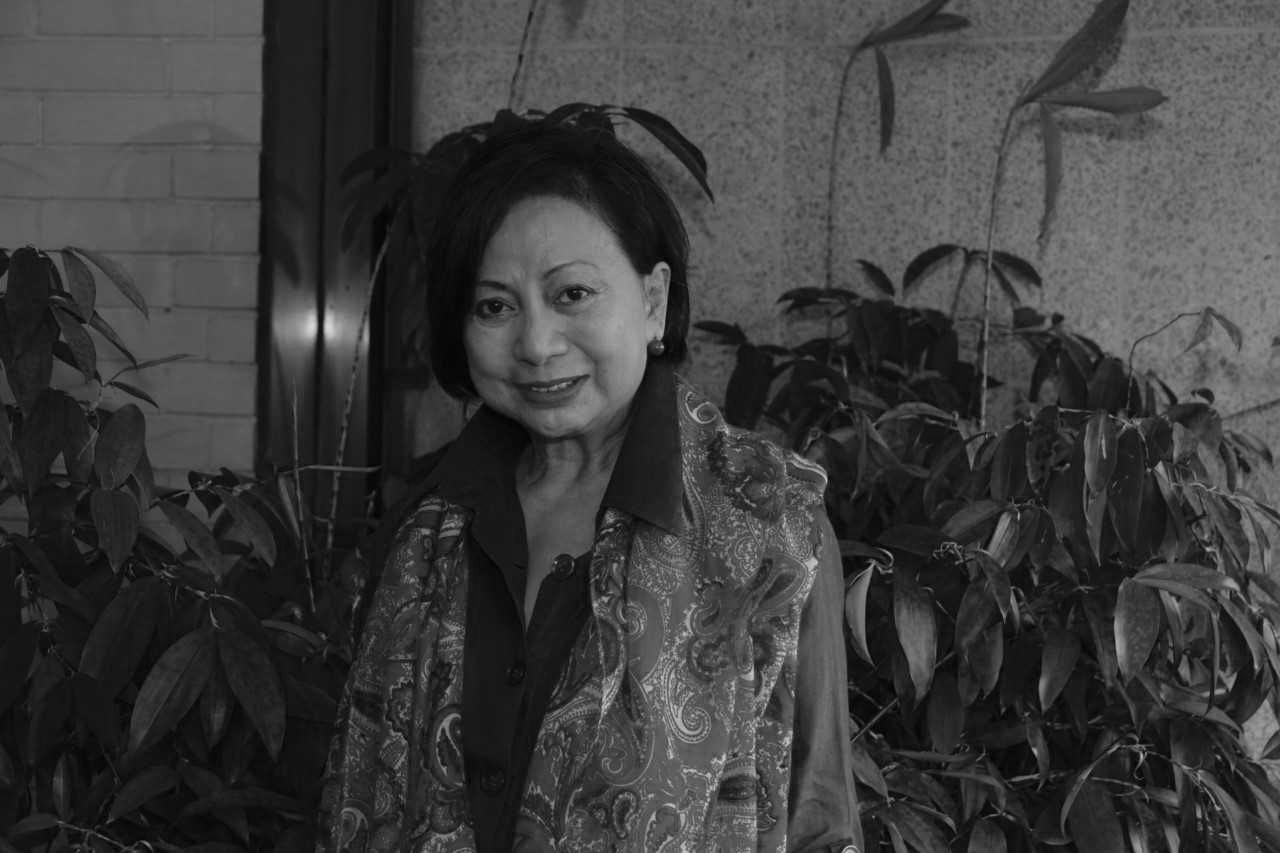
A journalist of more than 30 years, Chit has had varied exposures in this field, both in hard news as well as in soft news, and brings everything she has learnt to the production of the magazine. When not writing or editing, Chit is deeply involved in her chosen service organisation, Rotary International.





