Cover Earth with stars, digitally generated image, all graphics elements are my own design/photo.
Earth with stars, digitally generated image, all graphics elements are my own design/photo.
1 / 1
As we welcome 2023 and the pandemic cloud is slowly lifted, strong trends have emerged; but are they indicative of the future? We asked five respected leaders in their fields for their thoughts on the coming year
Even the appearance of new Covid recombinants XBB and XBC in the last quarter of the year could not stop the surge of business activities in the country. The Philippine economy is simply raring to get up and go and recover what it has lost during the two years of pandemic lockdowns and semi-lockdowns. But it may be easier said than done.
Economists, for instance, see a disconcerting picture. “The two major short-term problems we are facing now are inflation and economic growth,” says Solita “Winnie” Monsod, an economics professor at the University of the Philippines. “Unfortunately, these two are mutually exclusive. If you are going to put down inflation too much, you are going to contract the economy. That is why there must be a delicate balance between the two.”


Above Photo: Getty Images
Photo: Getty Images
1 / 1
However, Monsod will always pick economic growth over curtailing inflation at any time. “We must be more selective in spending, such as substituting lower priced goods for higher priced goods. At least, I hope, people will still have a choice.”
And yet again, the solution is more complex. Monsod says that “there are other foundational problems affecting economic growth”. She names these as poverty, corruption, and the rule of law. Then she adds, “It does not look promising.”
Take the case of poverty, Monsod elaborates. “Most of the poverty arises from agriculture and rural areas. And yet, we still do not have an Agriculture Secretary.” For the president of the Philippines to fill in the position is not ideal “because agriculture is a full-time jobs,” she adds.
See also: Let's Talk Business: 2022 Insights of Some of the Country's Business Leaders
The same is true with the problem of health. “We do not yet have a Health Secretary. You know what I mean?” Monsod stresses.
Other sectors, on the other hand, display more optimism. The health sector most disrupted by the pandemic finds a respite from the storm that just hit it. “Barring any new ‘super variants’, I think we will be ok,” says Dr Edsel Saldana, infectious disease expert and medical journalist.
“The healthcare utilisation remains low even after the August opening of classes and after the executive order which relaxed outdoor masking. For now, there is enough baseline vaccination plus boosting to keep severe cases low,” he explains.
Saldana believes that Covid-19 is on its way to endemicity. For him, the inflexion point was January 2022, “when we saw Omicron have more than twice the numbers of Delta in August 2021 but less than half of the deaths”.
Though he doubts there will be another surge on the level of Delta or BA.2 last January 2022, his strong advice is to continue protecting oneself, especially by getting the bivalent vaccine.
Unfortunately, the vaccine is not yet available locally.
Still, the words of a respected medical professional like Saldana give that much-longed-for reassurance that going out again and enjoying life is all right, which is precisely what’s happening, particularly in the restaurant world.
Nobody can predict the future. What you can only predict is change.
“People are going out to dine in restaurants, with a vengeance, because in the past two years, they have been cooped up like prisoners in their own homes. Just relying on take-outs,” observes Claude Tayag, Filipino cuisine advocate, artist and author. “But the restaurants were also not equipped [to meet the influx of customers] because, during the pandemic, many closed and downsized. Or their staff left for other jobs.”
Tayag sees a positive trend, however. “I would say that they are slowly getting back on their feet,” he says. Well, not just getting back on their feet but doing so, like their clientele, “with a vengeance”, adds Tayag. He mentions chef Sau del Rosario as an example.
“Sau partnered with a group of businessmen led by Julio Sy Jr, founder and president of Tao Corporation, who suddenly opened many outlets in the past six months. Sau opened Sau-Sau on Kalayaan Street in Makati in a building rented by the group to include other outlets, including a deli. At the same time, Sau opened a branch of his Angeles-based Café Fleur in Poblacion, Makati. I heard Jun also has plans to open a restaurant in Napa Valley, something like that.”
There is a brisk activity in the art and culture sector as well. Art historian Felice Sta Maria observes, “Contemporary art is moving up in museum interest, what with the new Metropolitan Museum of Manila venue at BGC. It parallels interest in art fairs such as the annual Art Fair Philippines that has experienced an increase in buyers, which is important”.
Sta Maria also mentions how cultural institutions, including art museums and rising artists, are continuing their international exposure and partnerships. The new chairman of the Cultural Center of the Philippines, Jaime Laya, agrees. “With today’s instant communication worldwide, our artists know what is going on elsewhere in the world, what other artists are doing not only in Europe and North America but also in Africa, Asia and Latin America.
Visual artists know and have begun participating in the Venice Biennale, ARCO Madrid and other exhibitions. Choral and dance groups join and win in international competitions, perform leading roles in opera houses and concert halls abroad.”

Above Photo: Getty Images
Photo: Getty Images
1 / 1
And concludes, “Inevitably, Filipino artists will be increasingly visible in the art world.”
To this end, Laya says the CCP “aims to further the trend” with assistance to artists in terms of “support in advanced training and fellowships, competitions and exhibitions here and abroad”. Furthermore, the country’s premier art institution is testing what Laya calls “unknown waters” by launching a competition among informal neighbourhood groups to create and perform their original composition using an indigenous musical instrument. It has also ventured into digitalisation through a competition among professional groups to develop computer games based on Philippine culture. Sta Maria also sees this trend towards the use of technology. “There seems to be a move to maximise online presence by many art museums and cultural institutions,” she says.
The CCP is bullish on furthering the arts. According to Laya, they plan to help through the enrichment of culture and arts teaching in schools, support for youth orchestras, chamber music groups, choirs, and bands, encouragement
of local cultural groups in the regions and among indigenous groups, to reach more places given the same resources by organising chamber music concerts and master classes for local musicians. They plan to collaborate with educational institutions such as De La Salle University’s College of St Benilde in launching an anime series based on selected Lola Basyang stories.
CCP will also focus on the millions of Filipino Overseas Workers and second-generation Filipinos and increase their exposure to Filipino arts and culture using traditional means such as exhibits and performing arts events, online access, and other innovations designed to attract and educate these groups.
Laya finally talks about “living a full life”. He says: “The thinking of many people seems to be that education and effort should be limited to what is necessary to earn a living.” This is probably why, he explains, there are courses like English for engineers or accountants, “but nothing in the curriculum about history or geography”. He also notices that schools combine music, health and PE under one teacher.
“A well-rounded life would have elements of work, yes, but also of health, cuisine, fashion, nature and the environment, history, the spiritual,” he states. And gives his reasons: “These forge friendships, good parenthood, work relationships, and help ease the trials of daily life.”
He promotes that over and above the appreciation of “human creativity produced not only by the likes of Beyonce and Lady Gaga”, are also those of Juan Luna, Nicanor Abelardo and Wilfredo Ma Guerrero, as well as of Leonardo da Vinci, Giuseppe Verdi and Shakespeare. Laya likewise wants to expand this exposure to art to the farmers, fishermen, office and blue-collar workers, salespeople and domestic workers because they are also “parents and human beings with their strengths, weaknesses and ambitions. They should more than exist. They also deserve to enjoy being alive”.
See also: 7 Filipino Businesses Building a Better Future
At best, these experts in their respective fields can see only the trends, not the future. There is no such thing as a crystal ball.
“There are so many unknowns,” Monsod declares. “And the big unknown is what’s going to happen around us.” She cites the extreme headwinds
around the globe. “You have the United States, whose growth forecast for next year has gone down. Likewise, with the growth of China. And both happen to be our biggest markets,” she says.
“Nobody can predict the future,” Tayag says, speaking for the food sector. “What you can only predict is change.”
Tayag’s words do seem to ring true across the landscape. There is change happening everywhere, and not stagnancy. Listen to the experts; take this as a good sign—maybe.
NOW READ
The 'Next Gen', A Rising NGO of Young Business Leaders
Why Values Matter in Building Brands and Businesses
Rakuten Viber Helps Small Businesses Through Pinoy Dream Negosyo
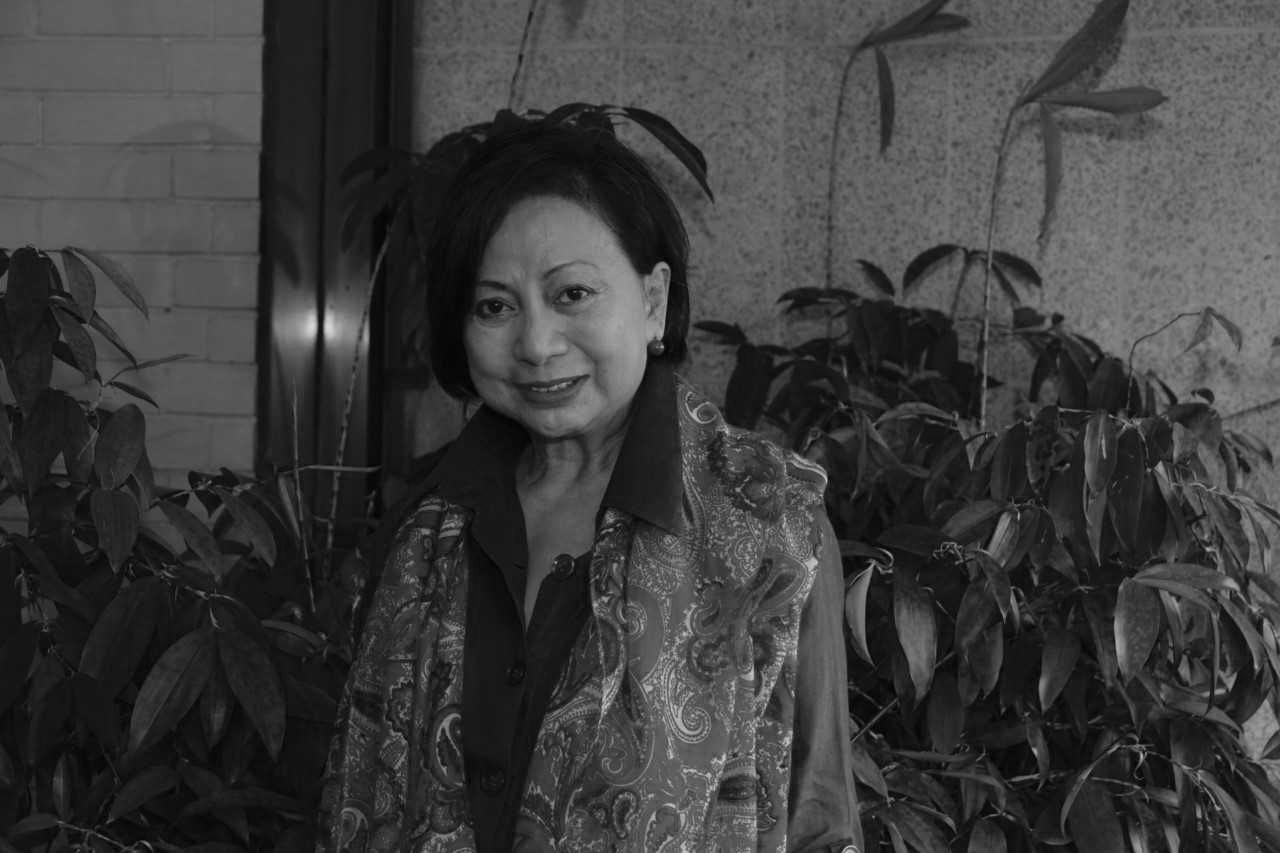
A journalist of more than 30 years, Chit has had varied exposures in this field, both in hard news as well as in soft news, and brings everything she has learnt to the production of the magazine. When not writing or editing, Chit is deeply involved in her chosen service organisation, Rotary International.
Curated for you
The stories, profiles, and cultural moments featured on our Instagram feed