
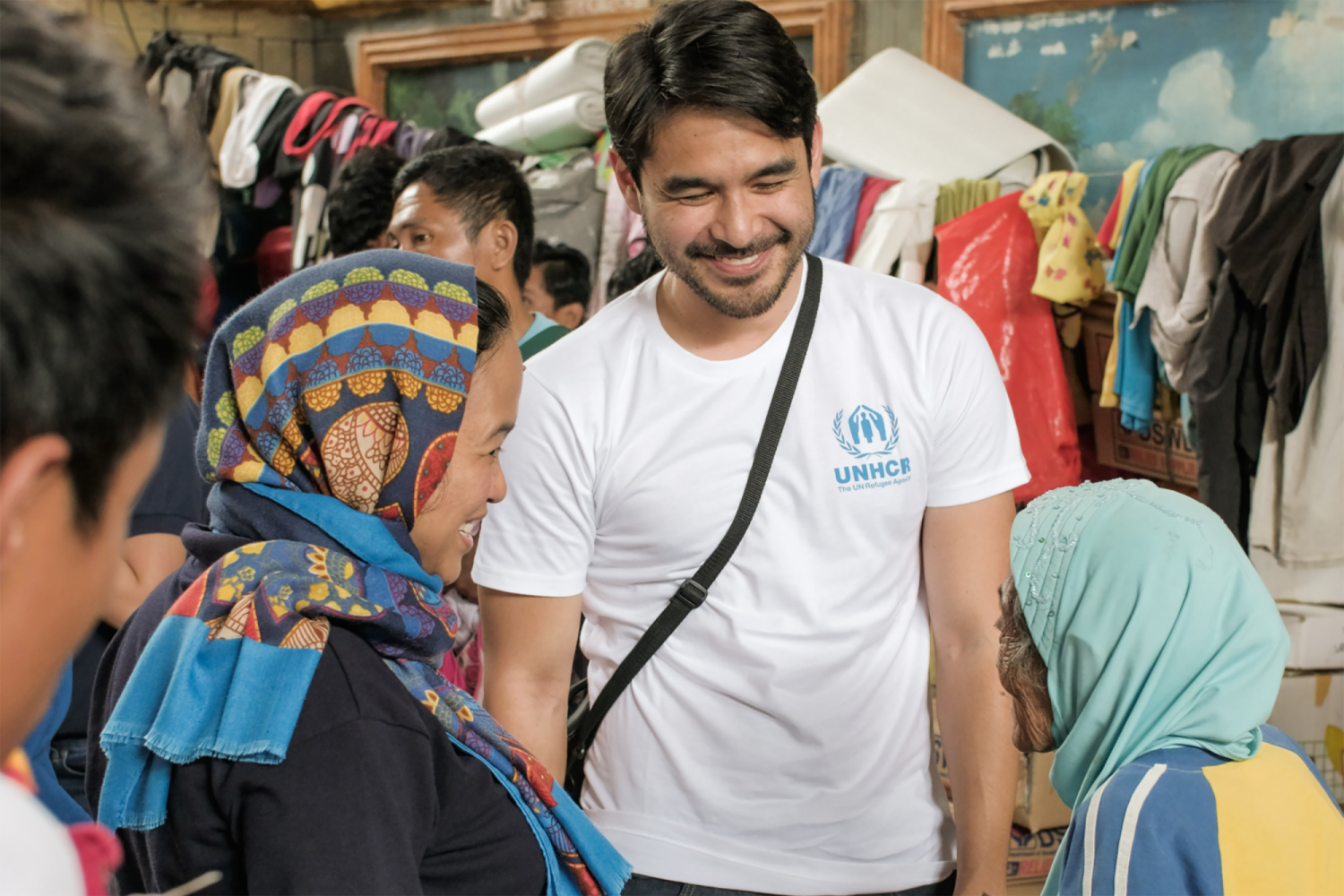
Cover Advocate Atom Araullo is accompanied by field staff to Marawi City, the site of a five-month long conflict that at its peak displaced over half a million people (Photo: Alecs Ongcal / UNHCR)
Advocate Atom Araullo is accompanied by field staff to Marawi City, the site of a five-month long conflict that at its peak displaced over half a million people (Photo: Alecs Ongcal / UNHCR)
1 / 1
In front of the camera, he is a documentarist. Behind, he goes beyond the call of duty. Acclaimed broadcast journalist Atom Araullo shares his story as a philanthropist
Whether journalists should put the microphone down and actively lend aid to people they are covering in moments of immense life risks is a question that has been disputed ever since. In the Society of Professional Journalists’ Code of Ethics, there isn’t a clear rule about this aside from being sensitive in communicating with subjects affected by the issue by showing compassion. Yet there are many stories of journalists either criticised or commended for helping citizens during coverage. An example is South African photojournalist Kevin Carter, who was vilified for his famous Pulitzer Prize-winning photo of a starving child and a vulture during the Sudanese famine. On the contrary, some people found the helping act of CNN reporter Ed Lavandera during his Hurricane Harvey 2017 coverage to be “self-aggrandising”.
This line that divides the roles of journalists and citizens for UNHCR Philippines’ Goodwill Ambassador Atom Araullo boils down to humanity. “Even though we have to adhere to specific traditions, ethics, and standards of practices in journalism, I’ve always believed that we’re never separated from the suffering of our subjects,” Araullo says. “Part of journalism is to inform people of what’s going on and spur them into action.” In pursuing his advocacy to protect refugees, call for their inclusion in society, and create durable solutions, Araullo finds no controversy. “The challenge is ever-growing. We approached a grim milestone just this year with a hundred million people displaced worldwide. That is one per cent of the global population. And that includes 106,496 people here in the Philippines forced to flee due to armed conflict and climate-related disasters.”
Read also: Nobel Peace Prize Winner Maria Ressa on Responsible Journalism, Democracy, Purpose, and Facebook

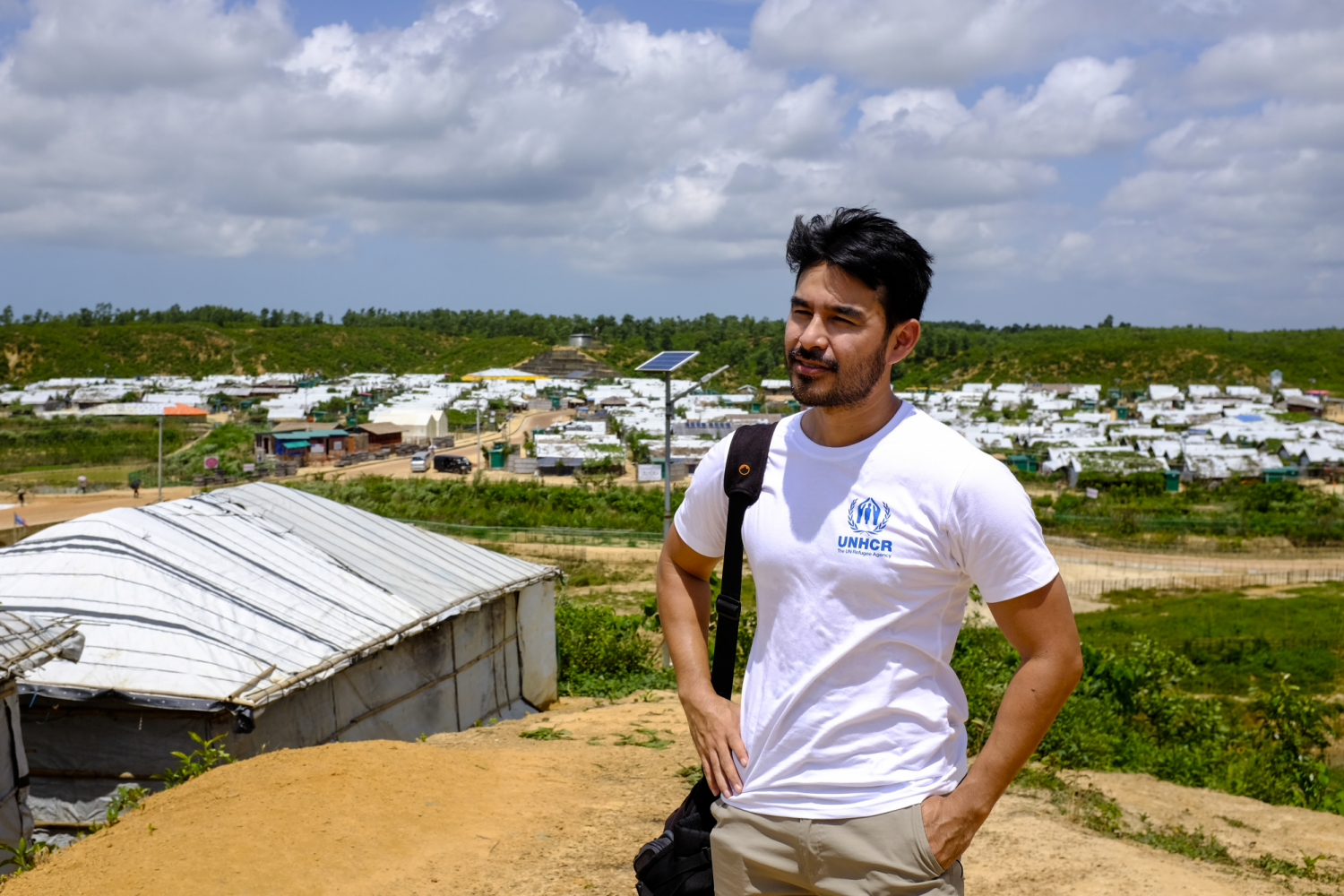
Above Cox's Bazar, Bangladesh. Atom Araullo poses for a photograph in Kutupalong refugee camp. (Photo: Joshua Paul Gilbert / UNHCR)
Cox's Bazar, Bangladesh. Atom Araullo poses for a photograph in Kutupalong refugee camp. (Photo: Joshua Paul Gilbert / UNHCR)
1 / 1
Filipinos are naturally empathetic, says Araullo. It is inherent in our culture to sympathise with people whose lives are altered because of circumstances beyond their power. As a Goodwill Ambassador, Araullo deems his role to be bridging the gap between empathy and action.
UNHCR, or the United Nations High Commissioner for Refugees, also known as the UN Refugee Agency, started in the Philippines in 1979 when refugees from Vietnam came to Philippine shores by boat. Forty years ago, during the presidency of the late Ferdinand E Marcos, an agreement was signed between former First Lady Imelda Marcos and a representative of the UNHCR to establish the refugee processing centre in Bataan and Palawan. But before this, the Philippines was already accepting refugees, making that a formality that had been a long time coming. The Philippines had nine waves of refugees tracing back to the 1920s.
UNHCR Philippines focused on refugee processing, especially for asylum seekers, until the late 2000s. The agency established its presence in Mindanao in 2010 at the request of the administration of former President Gloria Macapagal Arroyo to address the forced displacement issue on the island. The armed conflict in Mindanao and the rising number of natural disasters frequently hitting the area moved UNHCR Philippines to be more active in “saving lives, safeguarding rights, and building better futures” for internally displaced people.
The Philippines remains a model state in the region and beyond for its favourable and robust protection framework for persons of concern (POC). It continues its commitment and leadership in upholding relevant conventions, frameworks, and pledges to strengthen the protection environment for POC. In 2022, the Philippines made significant progress in enhancing the legal framework for POC through the issuance of Executive Order 163, signed this 2022, which provides for funding the accessible protection services for POC, accession to the 1961 Convention, approval of the judicial Rule on Facilitated Naturalisation, as well as the ratification of the Foundling Recognition and Protection Act by Congress, among others. It is anticipated that efforts to sustain the momentum of these developments will remain for 2023 and beyond.
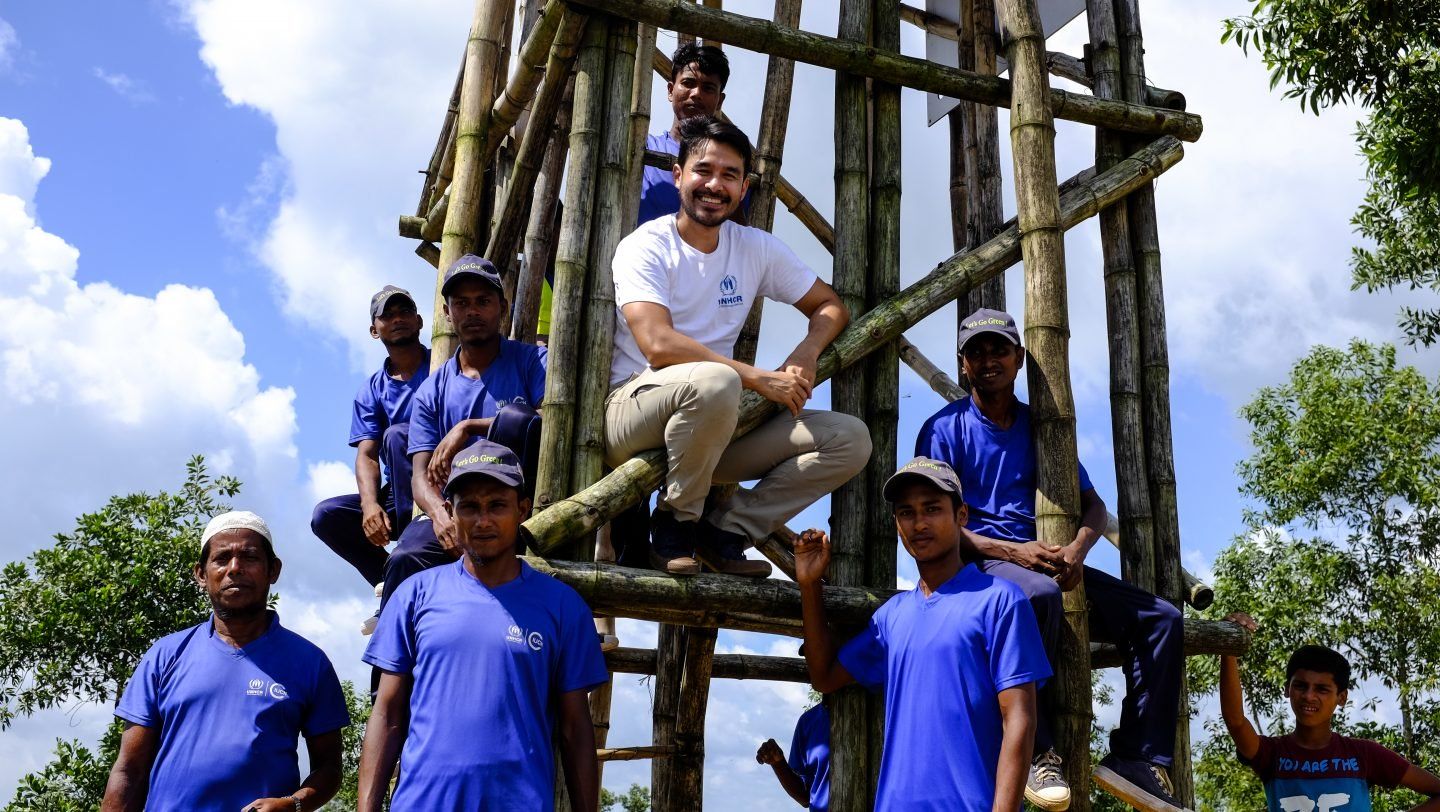
Above Atom Araullo in a UNHCR mission in Bangladesh last 2019 (Photo: Joshua Paul Gilbert / UNHCR)
Atom Araullo in a UNHCR mission in Bangladesh last 2019 (Photo: Joshua Paul Gilbert / UNHCR)
1 / 1
Araullo started becoming involved with UNHCR Philippines in 2017 when the Marawi conflict unfolded. Before that, he covered internally displaced persons due to armed conflicts and natural disasters as a broadcast journalist. A notable achievement of Araullo is his first documentary for I-Witness titled Rohingya Crisis: Silang Kinalimutan (Rohingya Crisis: Those Who Were Forgotten), which features the stateless ethnic group of Rohingya from Myanmar who are living in Bangladesh and other neighbouring countries due to brutal military attacks. It was this documentary that made him commit even more to the UNHCR.
“When UNHCR approached me, and they clarified the agency’s advocacy, I felt that it aligns with my responsibilities as a journalist,” recalls Araullo. “My job as a journalist is to amplify the voice of the voiceless and advocate for their inclusion and that they are not discriminated against. As journalists, we bring attention to their plight and advocate for their protection and security. It was a bit unconventional as it is one thing to report about and another to be actively part of an organisation. But in the first few months that we had engagements in Mindanao, I found it kind of a synergistic relationship, and it grew from there,” he continues. In 2019, Araullo was named Goodwill Ambassador of the UNHCR Philippines after being involved in several missions here and abroad.
Read also: A Virtual Roundtable With UN Environment Goodwill Ambassador Nadya Hutagalung
A Global Community
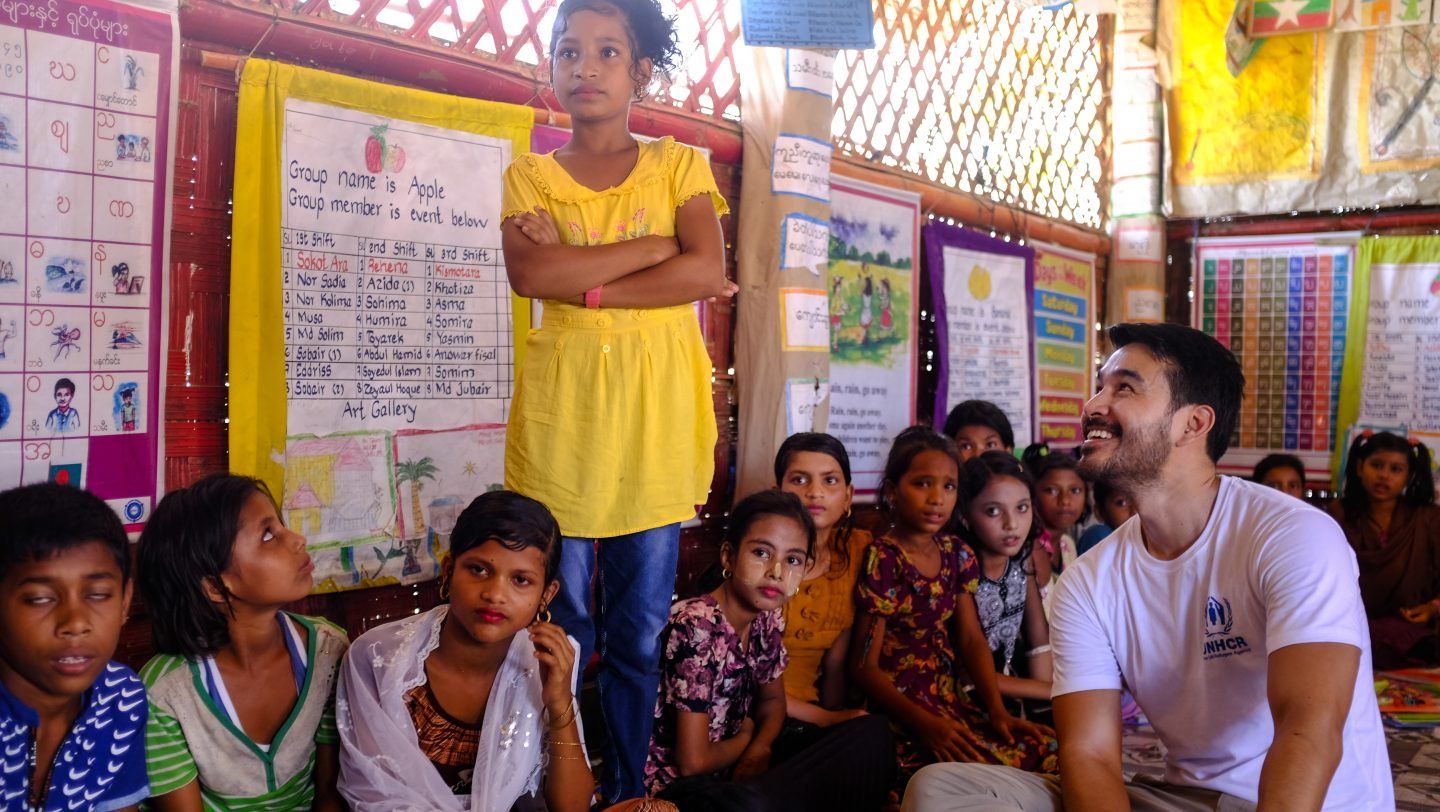
Above Across the Rohingya settlements in Bangladesh, majority of the population are children. Approximately 36% of Rohingya children between 3 and 14 years of age remain without access to primary education. In response, UNHCR and partner organisations have set up temporary learning spaces to provide the refugee children with access to learning. (Photo: Joshua Paul Gilbert / UNHCR)
Across the Rohingya settlements in Bangladesh, majority of the population are children. Approximately 36% of Rohingya children between 3 and 14 years of age remain without access to primary education. In response, UNHCR and partner organisations have set up temporary learning spaces to provide the refugee children with access to learning. (Photo: Joshua Paul Gilbert / UNHCR)
1 / 1
UNHCR works side-by-side with refugees, whether they are internally displaced, stateless, or asylum seekers, through every step of their so-called “refugee journey”, according to UNHCR’s head of private sector partnerships officer Marmie Liquigan, who joined Araullo in the conversation. Liquigan explains that they ensure refugees have life-saving assistance such as food, medicines, and cash at the point of displacement. When a disaster happens, they are given two weeks of non-food packs like blankets, hygiene kits, and more to ensure survival.
When people are displaced, it can last more than two weeks up to years. Some people live in the camps for a lifetime. From this point, UNHCR safeguards their lives by providing legal assistance, financial aid, psycho-social counselling, and more. Refugees may feel hopeless at this point but not idle, shares Liquigan. They are looking for more durable solutions, so the agency infuses training interventions to equip them with skills and psycho-social support to give them hope so that when they can go home or integrate into the community, they can resume their lives in dignity and safety. And that’s the last point—integration, resettlement, or return, or ending their statelessness. It is essential to ensure that there is no conflict between the host community and the refugee community and that the resources of the place are accessible to all.
When COVID-19 hit the country in 2020, the UNHCR was equipped to continue its operations. “UNHCR has dealt with these kinds of public health crises like the Ebola outbreak that hit refugee camps and settlements in the past. This presented numerous parallels we are witnessing with the COVID-19 pandemic. For example, weak surveillance systems and poor public health infrastructure contributed to the difficulty surrounding the containment of this outbreak. From there, we established protocols for addressing a public health crisis like the COVID-19 pandemic where national preparedness and response measures should include the most vulnerable population like refugees in the plan,” she says.
In support of the government-led responses, a network of partners, Liquigan shares, was essential to continue their operations despite the hard lockdowns. UNHCR was able to tap into several partners in areas they couldn’t reach due to quarantine restrictions in the last couple of years.
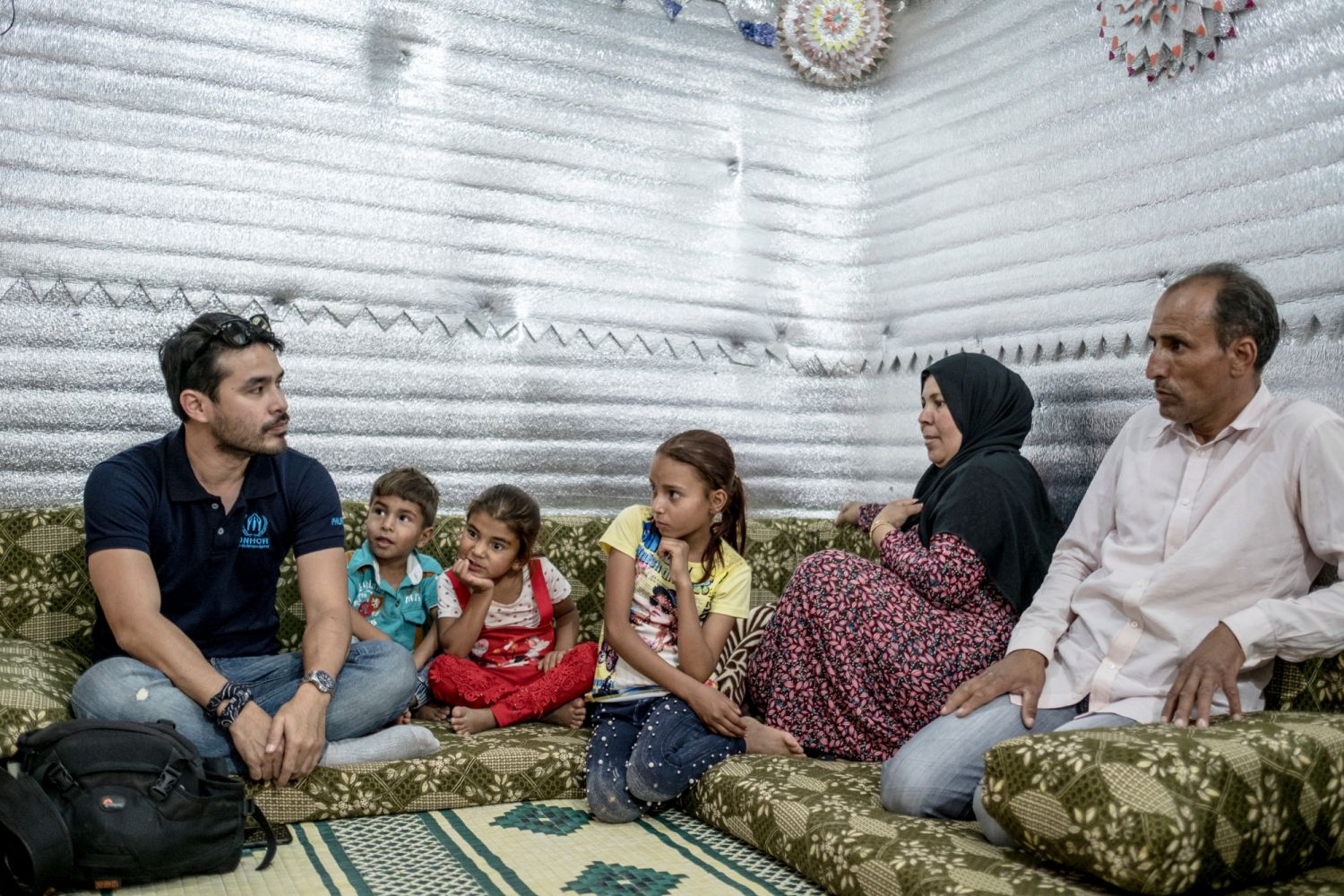
Above Atom Araullo, meets with Eid Al-ZLefan(father) and Um JIhan (mother) and their family who fled from Syria at the height of the conflict. Situtated at 90kms from the Syrian border, the Azraq camp houses over 35,000 refugees since it opened in 2014. There are over 700,000 refugees in Jordan as of June 2018 and only 20% of them live inside the three camps provided by the government. (Photo: Veejay Villafranca / UNHCR)
Atom Araullo, meets with Eid Al-ZLefan(father) and Um JIhan (mother) and their family who fled from Syria at the height of the conflict. Situtated at 90kms from the Syrian border, the Azraq camp houses over 35,000 refugees since it opened in 2014. There are over 700,000 refugees in Jordan as of June 2018 and only 20% of them live inside the three camps provided by the government. (Photo: Veejay Villafranca / UNHCR)
1 / 1
Meanwhile, in light of recent events in Ukraine, UNHCR has already been present in the Donbas region of the country for 14 years because of a different issue that precludes the current conflict. The Philippine government has also declared its openness to welcoming people fleeing Ukraine and strengthened refugee protection. “When the war broke out, the number of displaced persons ballooned tremendously, so we stepped up our operations as much as we could and mobilised our other offices surrounding Ukraine,” Liquigan says.
On the morning of June 22, about a week before this interview, a 5.9 magnitude earthquake struck Afghanistan. Hundreds of families were left homeless, adding to millions of internally displaced persons due to armed conflict. Core relief items, shelters, and non-food item kits were very much needed in the country, so UNHCR, which has been present for about four decades, called for more assistance.
Araullo, a member for about five years now, has participated in missions in Marawi and abroad, like in Jordan and Bangladesh, where refugee camps were already established. “I was able to observe the important work that humanitarian actors are doing there, specifically the UNHCR,” he says. About the events in Ukraine and Afghanistan, it is a continuing effort for Araullo to convince people to donate and be aware of what’s happening to our fellowmen. “There are many hotspots of conflicts worldwide, some not as well known as Ukraine. There is also something going on in Yemen, Sudan, and more,” he shares.
Read also: 5 Most Shocking Earthquakes in the Philippines Throughout the Years
Voice to the Voiceless
In the recent World Refugee Day, which the UNHCR annually commemorates to celebrate the resilience, strength, and fortitude of those who are forced to flee worldwide, Araullo led the reactivation of their virtual run event, which ended last July 15, using a GPS tracking app in registrants’ mobile devices. This August, the Goodwill Ambassador shares that they plan to do another field mission in Mindanao to visit the areas where they implemented their previous projects during the pandemic.
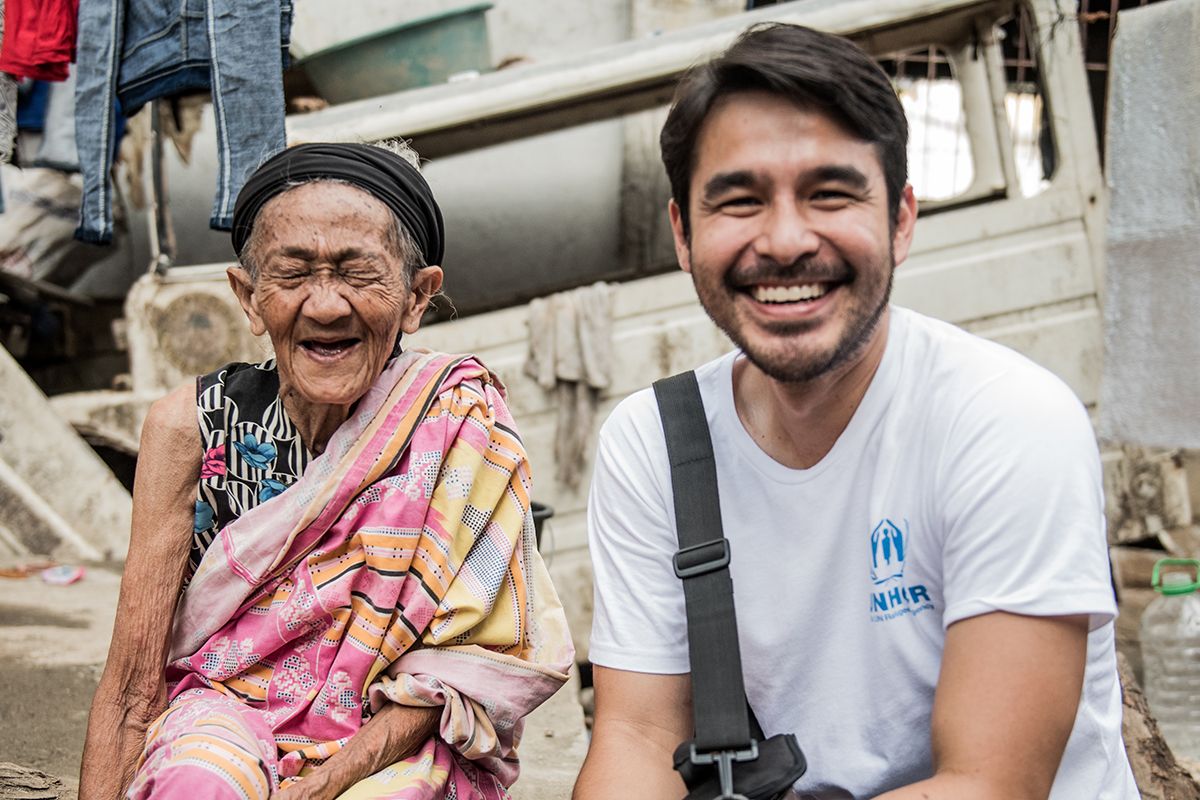
Above Moreg Sarakan, 100 years old, has lived and sought support in the Buru-un evacuation centre in Iligan City. She longs to return to her home in Marawi City but will also accept if this cannot be arranged because the Philippines' Department of Social Welfare and Development (DSWD) is taking good care of them. Over 200,000 people have been displaced from Marawi City because of the recent conflict between the military and members of the Maute group. (Photo: Alecs Ongcal / UNHCR)
Moreg Sarakan, 100 years old, has lived and sought support in the Buru-un evacuation centre in Iligan City. She longs to return to her home in Marawi City but will also accept if this cannot be arranged because the Philippines' Department of Social Welfare and Development (DSWD) is taking good care of them. Over 200,000 people have been displaced from Marawi City because of the recent conflict between the military and members of the Maute group. (Photo: Alecs Ongcal / UNHCR)
1 / 1
What do you aim for as UNHCR Philippines’ Goodwill Ambassador?
Atom Araullo (AA): Ultimately, my role is to keep the conversation going with the goal of making more Filipinos aware of not just the plight of the internally displaced but also refugees worldwide. Filipinos are quite receptive to hearing about these issues. Recently, I went to CCP for a shoot. One of the guards approached and told me he had watched the Rohingya documentary I made. It’s good to note that Filipinos, even ordinary citizens, are interested and willing to help others despite facing local social issues. Solidarity and support are important because what goes around comes around.
What inspires you to continue your work with UNHCR PH?
AA: The crises are growing. Refugees, internally displaced persons, stateless, and asylum seekers need our help more than ever. After the Second World War, countries came together to form the United Nations. One of the first things they did was to hold a convention to support refugees. Since then, people don’t know that conflicts do not go away but instead take another form. So many refugees are still trying to reach safety and flee persecution, conflict, or violence. I think it’s in my DNA as a journalist that I like to bring awareness to those issues. Sometimes, journalism takes a form where you can only share what is happening now. But we [journalists] should go beyond that and talk about how people are helping, the organisations taking action, the positive impact, and the good practices of governments and communities in supporting refugees. Those are some stories I like to continue doing, and I can do this more effectively as a Goodwill Ambassador of the UNHCR. I believe in solidarity, and Filipinos are no strangers to difficult times, conflicts, and climate-related disasters. We can be stronger together if we can link arms with refugees and highlight that they are assets to a community, not just people [who] need to be assisted. As a Goodwill Ambassador, I have learned how refugees can enrich the communities they join. I want to share that story, the positive impact the refugees can have, and catalyse action through these efforts.
Read also: CEO Jean-Christophe Babin on Bulgari’s Partnership with Save the Children
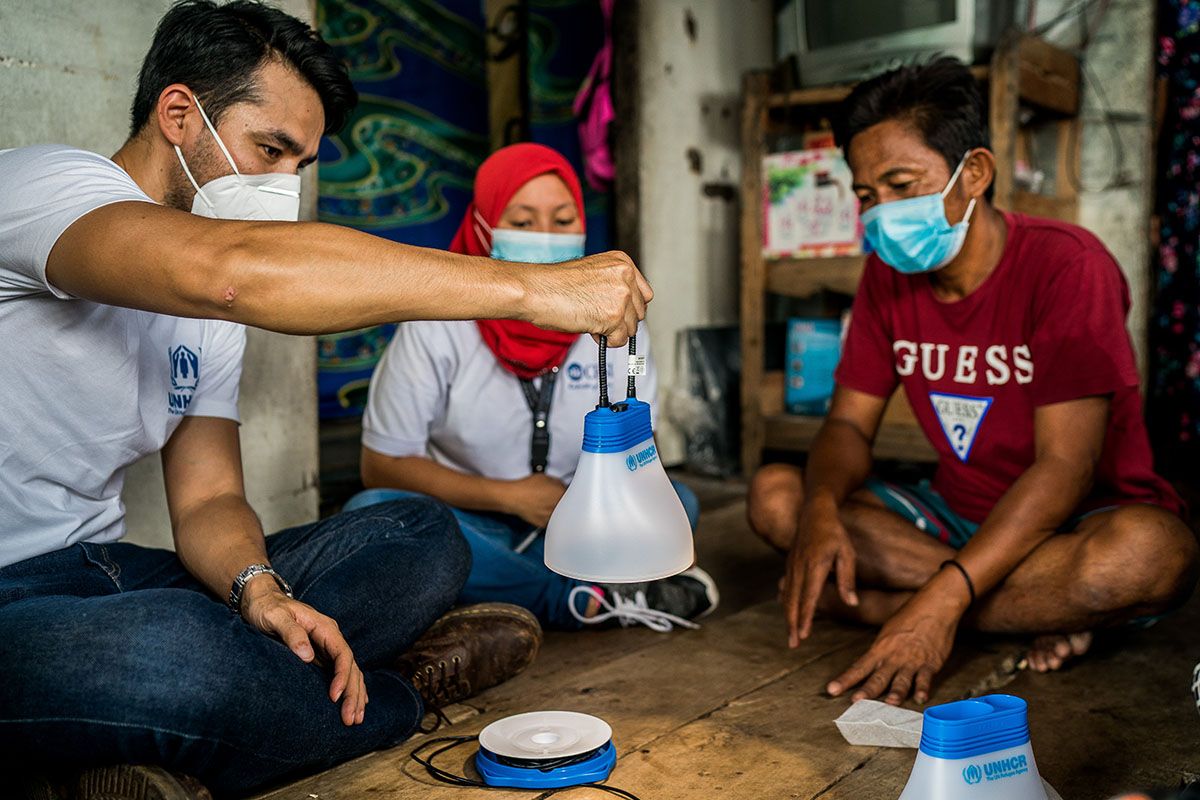
Above Atom Araullo visits Brgy. Butiren in the Municipality of Kabuntalan, in Maguindanao, Philippines, on Saturday, April 17, 2021. Araullo took part in the distribution of solar lamps to fisherfolk in the community without access to electricity. 280 households in total received solar lamps. (Photo: Martin San Diego / UNHCR)
Atom Araullo visits Brgy. Butiren in the Municipality of Kabuntalan, in Maguindanao, Philippines, on Saturday, April 17, 2021. Araullo took part in the distribution of solar lamps to fisherfolk in the community without access to electricity. 280 households in total received solar lamps. (Photo: Martin San Diego / UNHCR)
1 / 1
What success stories of refugees in the Philippines would you like to share?
AA: Oh, lots! The Maranaos, who consist of the bulk of internally displaced people in Marawi, are incredibly enterprising (chuckles). It’s a source of wonder and fascination and also inspiration. I’ve met people in the camp for internally displaced people with nothing to their names. Some loaned twenty pesos to buy bananas, then sold them as banana cues until they had their stores. Nobody wants to receive dole-outs, I believe. In Filipino, maging pabigat (be a burden to someone). They need a bit of support so that they can get back on their feet using their energies. That’s how refugees can assert their dignity.
When I returned to Bangladesh to visit the Rohingya refugees in 2019, I was appointed Goodwill Ambassador. I first went there as a journalist covering the geopolitical issues surrounding identity and the situation in Myanmar. But in coming back with the UNHCR, I looked around and saw what they had accomplished. They came there with absolutely nothing, but they organised themselves with small brigades for various community tasks. Some of them learned in make-shift education facilities in the Rohingya camp. These stories inspire me.
What about fellow volunteers?
AA: They are the unsung heroes. I engage as a Goodwill Ambassador, but humanitarians have come from worldwide. When I went to Dakka, Bangladesh, for the first time as a journalist, I met a Filipino ensuring the protection of the Rohingya people. A Filipino community organised a fundraising event for the Rohingya refugees, and they asked me to join them in transporting food, hygiene kits, and more to the camp at Cox’s Bazar. People from everywhere and from all walks of life are so dedicated to helping that sometimes they put themselves in dire situations and even harm’s way because it’s inevitable.
Read also: On the Ground: The Patriotism of PPCRV Volunteers
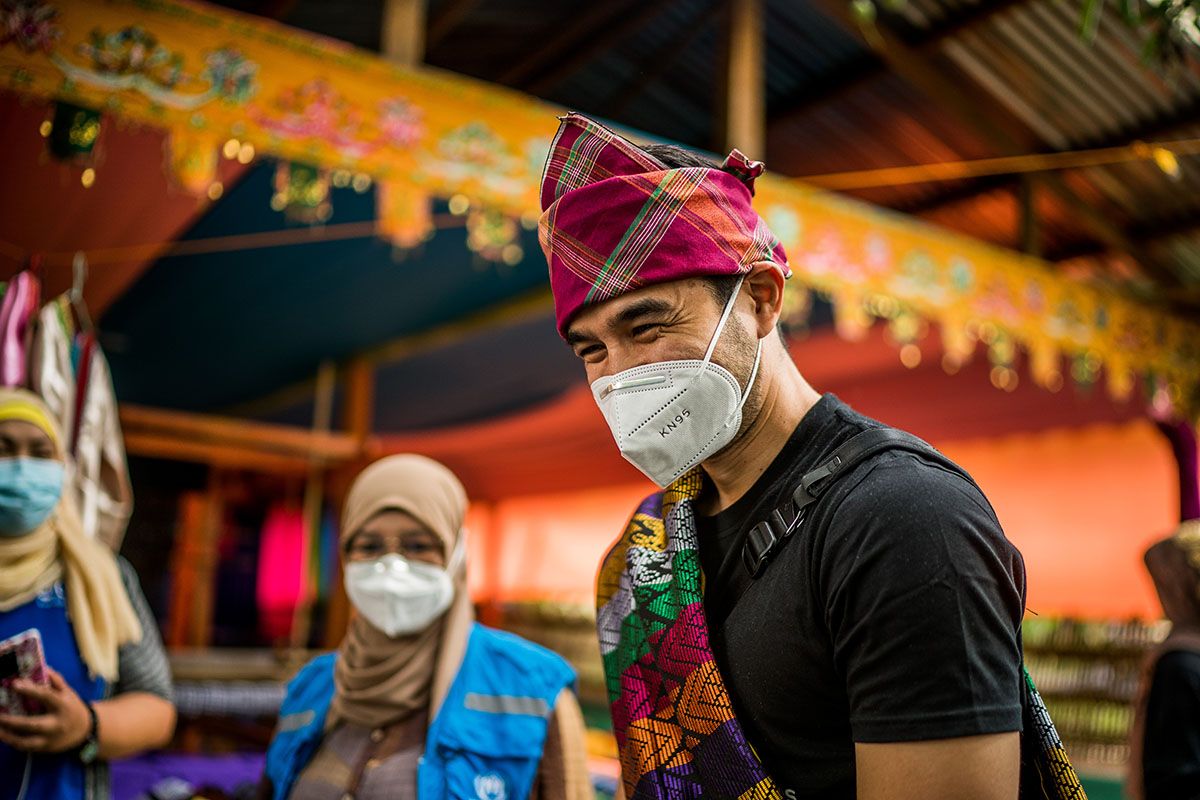
Above Atom Araullo visits Brgy. Sambulawan in Midsayap, Philippines, on Sunday, April 18, 2021. Araullo interacted with women leaders and weavers in the community. The community has experienced numerous displacements in the past and is also frequently affected by gradually rising flash floods. (Photo: Martin San Diego / UNHCR)
Atom Araullo visits Brgy. Sambulawan in Midsayap, Philippines, on Sunday, April 18, 2021. Araullo interacted with women leaders and weavers in the community. The community has experienced numerous displacements in the past and is also frequently affected by gradually rising flash floods. (Photo: Martin San Diego / UNHCR)
1 / 1
Racial discrimination has resurged in many parts of the world over the last decade. There is Asian Hate crime is one of its manifestations. What is your comment on this, and how can we gradually resolve it?
AA: Discrimination is unacceptable, and we are using our channels and resources to ensure that all people are protected equally. It’s important to condemn acts of discrimination and bias. Of course, it doesn’t just happen to refugees or internally displaced people. It’s important to remind people that everybody has the right to protection, whoever they are. That’s one of the messages of UNHCR that we centre on when we share stories about refugees and call the people to act. Everybody, regardless of their race, religion, or gender, they all deserve protection.
If you wish to donate to UNHCR, you may send your donations via credit card, GCash, GrabPay, bank deposits and Lazada vouchers. Visit this site for more details.
Help spread awareness about the situations here and abroad by following UNHCR on social media for updates: Facebook and YouTube: UNHCR Philippines, Twitter and Instagram: @unhcrph, LinkedIn and TikTok: UNHCRPH, or visit unhcr.org/ph
NOW READ
World Refugee Day: 3 Powerful Allies Helping Refugees Thrive in Asia
Billionaires Yuri and Julia Milner Launch Global Initiative “Tech for Refugees”
Activist Heidy Quah Reveals the Most Moving Untold Stories About Malaysia’s Refugee Community
Topics

Franz writes about the local cultural scene and rediscovering the country’s storied past and rich heritage. He earned his bachelor’s degree in Journalism from the University of Santo Tomas and is currently pursuing a master's degree in Art Studies at the University of the Philippines Diliman. Besides working on this luxury lifestyle magazine, Franz is an avid book reader, local traveller, museum-goer, chorister, and community theatre playwright. But above all this, this Aether main spends more time in Teyvat than anywhere else.





