

Cover Image: Delmaine Donson/Getty Images
Image: Delmaine Donson/Getty Images
1 / 1

Tatler celebrates body positivity and how a healthy mindset leads us to accept and embrace our perfect imperfections
How do I love thee, let me count the ways... the celebrated English poet Elizabeth Barrett Browning once wrote in a legendary poem about eternal love—a love with no boundaries, a love that flourishes even in the mundane. But how beautiful would it be if this same love we give others is equal to what we give ourselves, the same amount of care and mindfulness we offer our bodies?
Deeply rooted in self-love, body positivity asserts that everyone deserves to have an affirmative body image regardless of its shape, appearance, size, impairments and disabilities. “It is celebrating our body and what it does for us rather than just focusing on how it looks. The light, the shadows, the imperfections that make us perfectly unique,” says actor Iza Calzado, who co-founded She Talks Asia. This group launched the Body Love Revolution campaign in 2018, which aimed to rewrite the narratives of people struggling with body acceptance.
“Commenting on someone’s appearance, particularly their weight, is a ubiquitous greeting in Filipino culture. You’re either ‘getting too skinny’ or ‘too big’; rarely are you just right... [Then], we get stuck in a loop of always wanting to change something about ourselves instead of the meeting where we are”
But for many people, being optimistic about how they look is not that easy. In a world where body image standards are heavily prescribed by society, culture or media, many people fall into a well of insecurities that make them feel bad about themselves. Just by scrolling down Instagram feeds and seeing curated posts of individuals flaunting their supermodel-type physique and flawless bare faces with the hashtag #IWokeUpLikeThis, people tend to unknowingly compare themselves to these “standards”, leaving them feeling unattractive and insufficient.
Besides unrealistic ideals of body image, there is another culprit: the toxic culture of body-shaming. Fil-Am podcaster and host of Youtube series Breaking the Tabo, Sapphire Sandalo, explains: “Commenting on someone’s appearance, particularly their weight, is a ubiquitous greeting in Filipino culture. You’re either ‘getting too skinny’ or ‘too big’; rarely are you just right. In talking to my therapist, I realised that when family comments on our weight, that is their indirect way of checking in with us and our health. But even if the intention is not to cause harm, or if it’s ‘playful teasing’, it still hurts how we feel about ourselves. [Then], we get stuck in a loop of always wanting to change something about ourselves instead of the meeting where we are.”

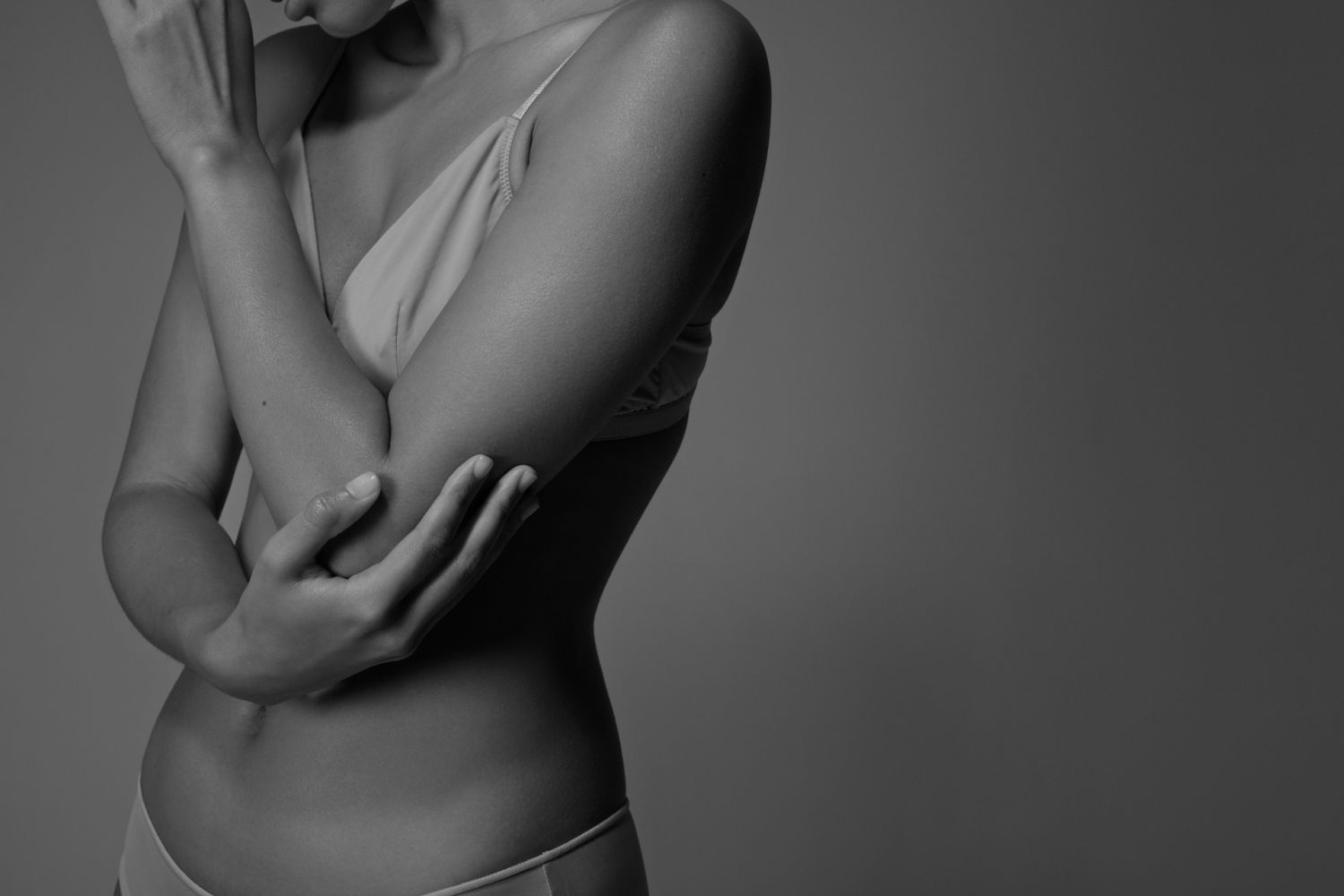
Above Young woman photographed on studio with coloured lights
Young woman photographed on studio with coloured lights
1 / 1
Our perception of our appearance is highly affected by external factors, such as in the experience of life coach Kimi Lu, who recalls being called “chubby”, “Pumba”, and “whale” in the past. “If they didn’t say those words, I would easily just live my life freely with no judgments in my mind,” she says. Thoughts like these elicit low self-esteem and entice us to overcompensate, do unhealthy things (such as extreme dieting and overexercising), and do things that are not sustainable (like living beyond our means or buying items that would help us feel and look better despite our limitations).
“So many of us have been conditioned to look or be perfect and so pressured to live up to unrealistic beauty standards. With awareness, work and time you can unlearn this programming, learn new and better ways of seeing yourself and others”
Yet, things have changed. Today, more people and groups are challenging society’s views on physical appearance, recognising that everyone is uniquely beautiful.
Growing up in a culture where body-positivity did not yet exist and worthiness could only be equated with thinness, the journey to self-love of contemporary figurative painter Elisa Valenti, whose works delight in the beauty and vigour of real, luscious bodies, began when she started painting bodies that looked like hers. Using arresting colours evocative of the Fauves and Cubist colour-blocking, Valenti adapts two iconic styles pioneered by men and flips the gaze inward. As well, she draws inspiration from her mother’s career as a lingerie sample-maker and master dressmaker, venerating the celestial mounds and valleys of the female form. Each brushstroke highlighting the curve of a hip or roll of flesh is an act of defiance–a celebration of radical worthiness.

Above Elisa Valenti's "The Calm in the Chaos | October Sunsets are my Favorite Color and August Rainbows are My Second". 36 x 48 inches. Acrylic on Canvas. 2021
Elisa Valenti's "The Calm in the Chaos | October Sunsets are my Favorite Color and August Rainbows are My Second". 36 x 48 inches. Acrylic on Canvas. 2021
1 / 1
“There’s no one mould for a human body. Our anatomy make-up is different for each one of us,” says Lu. Calzado concurs, realising in her early/mid-30s that “there must be another way to live—not obsessing about the weight, the scars, stretch marks or loose skin”. Sandalo, on the other hand, reiterates the importance of deciding for yourself in order to achieve happiness and having a harmonious relationship with your own body. “Your choices need to be for yourself because if you’re constantly trying to make other people happy, you will never win,” she says.
Being surrounded by optimistic people also plays a vital role in self-love. “Having loving and caring people around you can make a huge difference. They won’t let you fill your mind with junk. Instead, they’ll walk with you, dance with you, move with you,” Lu elucidates. Programmes like Atma Prema Wellness Group’s BodyLove can also be beneficial. “BodyLove teaches participants to nurture and honour the body, befriending it to understand how it communicates deeply. It can be your compass towards health and wellness. Still, more than that, it also calibrates your awareness and discernment for what aligns with you spiritually, emotionally and mentally,” expounds Atma Prema Wellbeing Group founding partner Lia Bernardo, who is also known as The Happiness Doctor. Bernardo emphasises that the most important thing here is eradicating guilt and shame from our belief systems first, our lifestyle, and then our bodies. “In that order,” she advises.
“Having loving and caring people around you can make a huge difference. They won’t let you fill your mind with junk. Instead, they’ll walk with you, dance with you, move with you”
However, having a positive outlook toward one’s size and shape may be misconstrued as encouraging obesity, a notion that Lu strongly disagrees with. “It is a very surface-level observation of what body positivity is,” she says, explaining that many factors contribute to how our bodies look. What may look like a healthy body for one person may not be the same for another. Health issues such as hormonal disorders and natural factors like age, genes and pregnancy may affect a person’s metabolism and cause changes in the body, and this is nothing to be ashamed of. It is also worth noting that when you start loving your body, you become more mindful of what you put into it. “Be sensitive enough to listen to the wisdom of your body. Because the body doesn’t lie when it is nurtured and cared for,” Bernardo adds.
Once overflowing with distorted beauty ideals, social media is now ironically being used as a platform for more body-positive content such as unedited, enhancement-free images of people of different shapes and sizes and individuals embracing their physical disabilities and irregularities. These images are often captioned with words that echo love and acceptance of one’s self.
“Be sensitive enough to listen to the wisdom of your body. Because the body doesn’t lie when it is nurtured and cared for”
“So many of us have been conditioned to look or be perfect and pressured to live up to unrealistic beauty standards. With awareness, work and time, you can unlearn this programming and learn new and better ways of seeing yourself and others. It is also an opportunity to get to the root of your ordeals which are often trauma or mental health-related issues that run deep and will need work from your end to process all of this, and, hopefully, you start accepting yourself and realise how you’ve always, always been enough,” concludes Calzado.
Drawing inspiration from the body positivity movement, look in the mirror now and ask yourself, “How do I love thee?” It is time to show and give your body the love it deserves. Like what Browning wrote, love your body “…to the depth and breadth and height [your] soul can reach”. Say I love it “…to the level of every day’s most quiet need, by sun and candlelight”.
NOW READ
Iza Calzado And Ben Wintle Open Up About Their Transformative Journey

Whether on assignment or not, Maritess is always on the lookout for off-the-beaten-path destinations as well as the yummiest finds in the Philippines and abroad. In 2020, she plunged into the black hole of Korean la la land. Follow her escapades at @matetreyes.





