Cover Australian American media tycoon Rupert Murdoch listens as US President Donald Trump speaks to reporters in the Oval Office of the White House on February 3, 2025 (Photo: Getty Images)
Australian American media tycoon Rupert Murdoch listens as US President Donald Trump speaks to reporters in the Oval Office of the White House on February 3, 2025 (Photo: Getty Images)
1 / 1
The bitter legal battle between Rupert Murdoch’s four oldest children for control over his media empire ended this week, with three of them being bought out and his eldest son, Lachlan, securing control
The family of Rupert Murdoch has reached a deal, ending nearly two years of legal dispute over control of the billionaire tycoon’s media empire.
The family announced on Monday that Lachlan Murdoch, the patriarch’s eldest son and his intended heir, will secure control over the family’s media conglomerate, which includes Fox News, The Wall Street Journal and New York Post. His opponents in the succession battle—older sisters, Prudence and Elisabeth, and younger brother James—will reportedly receive US$1.1 billion each for their shares in the business.
Prior to this, Prudence, Elisabeth and James took their father to court in Nevada when he tried to remove their voting power in the Murdoch family trust and give complete control to Lachlan, who currently runs his companies, Fox Corporation and News Corp. Last December, Nevada commissioner Edmund Gorman, who reviewed the case, ruled against Murdoch, stating that the elder billionaire and Lachlan had acted in “bad faith” in their attempts to amend the terms of an irrevocable trust, which gave his four oldest children equal shares and control over his holdings after his death.
Read more: Who is Warren Buffett’s successor at Berkshire Hathaway? 5 Things to know about Greg Abel


Above Murdoch and his sons, Lachlan (left) and James (right), arrive at St Bride's Church in London for a service to celebrate the tycoon’s marriage to his fourth wife, Jerry Hall, in 2016 (Photo: Getty Images)
Murdoch and his sons, Lachlan (left) and James (right), arrive at St Bride's Church in London for a service to celebrate the tycoon’s marriage to his fourth wife, Jerry Hall, in 2016 (Photo: Getty Images)
1 / 1
Under the agreement just announced, this old trust will be dissolved. It will be replaced by a new trust, which will have a controlling stake in both companies, with Lachlan in full control.
Lachlan has been the chairman of Fox Corporation and News Corp since 2023, after his father stepped down.
Murdoch’s younger daughters, Grace and Chloe, from his marriage to his third wife Wendi Deng, will join Lachlan in the trust, but have no voting control.
The succession battle has only further driven apart a family already divided by their political differences. While Lachlan seem to share similar conservative views with his father, his three siblings appear more left-leaning, with James as his father’s harshest critic. In an interview with The Atlantic published this past February, James called his father a “misogynist” and described a family dynamic reminiscent of HBO’s TV hit, Succession. Like the show’s wealthy patriarch, Logan Roy, James said Murdoch “was always trying to pull everyone into the company so that he could manipulate them against each other”.
Here are five other family dynasties that changed guards in recent years to varying degrees of drama.
Read more: The Arnault effect: how LVMH defines global luxury, indulgence and desire
Samsung Group (South Korea)

Above Lee Jae-yong, executive chairman of Samsung Electronics, at a press conference at the company’s headquarters in Seoul, South Korea, on May 6, 2020, where he apologised for his involvement in controversies related to his succession (Photo: Getty Images)
Lee Jae-yong, executive chairman of Samsung Electronics, at a press conference at the company’s headquarters in Seoul, South Korea, on May 6, 2020, where he apologised for his involvement in controversies related to his succession (Photo: Getty Images)
1 / 1
This past July, Samsung boss Lee Jae-yong was cleared by South Korea’s Supreme Court of fraud charges, ending a dramatic, decade-long legal battle over his role in a 2015 merger deal.
Lee, the grandson of Samsung’s founder, and several members of the company were acquitted by the top court of all 19 charges, including stock price manipulation and auditing violations, related to the merger of two Samsung subsidiaries, Samsung C&T and Cheil Industries. Prosecutors alleged that the deal, estimated to be worth US$8 billion, would have helped Lee secure his succession.
At the time, the “Crown Prince of Samsung” was already the de facto leader of the world’s largest electronics company after his father, Lee Kun-hee, suffered a heart attack in 2014.
Read more: The hospitality gene: 15 wealthy families behind Asia’s hotel empires

Above Lee arrives at the Seoul Central District Court on January 18, 2017. An arrest warrant was issued for him on charges of bribing South Korea’s then-President Park Geun-hye (Photo: Getty Images)
Lee arrives at the Seoul Central District Court on January 18, 2017. An arrest warrant was issued for him on charges of bribing South Korea’s then-President Park Geun-hye (Photo: Getty Images)
1 / 1
In 2017, he was sentenced to five years in prison for bribing former South Korean President Park Geun-hye and one of her close confidants to gain government support for the merger.
Over the next five years, he would have his prison term shortened, be sentenced to prison a second time and granted a presidential pardon. After being pardoned, he was appointed as the executive chairman of Samsung Electronics—a position left vacant after his father passed away in 2020.
In 2024, a district court cleared Lee of all charges related to the merger. He was cleared again after prosecutors appealed the case in the High Court.
Read more: This Chinese billionaire started with HK$20k, now she’s among the world’s richest women
Inditex (Spain)

Above Inditex chair Marta Ortega Pérez during the Spanish retail giant’s general shareholders’ meeting in 2023. Co-founded by her father, Inditex is behind brands such as Zara and Massimo Dutti (Photo: Getty Images)
Inditex chair Marta Ortega Pérez during the Spanish retail giant’s general shareholders’ meeting in 2023. Co-founded by her father, Inditex is behind brands such as Zara and Massimo Dutti (Photo: Getty Images)
1 / 1
Spanish fashion giant Inditex, which owns brands like Zara, Massimo Dutti and Oysho, announced in late 2021 that it would have a new chairwoman: Marta Ortega Pérez, the youngest child of founder Amancio Ortega.
According to the BBC, Inditex’s share price fell nearly 5 per cent after the announcement was made, as investors and analysts stated they were “nervous” about whether the new chair could fill her father’s big shoes. Since Ortega Pérez officially started as chairwoman in April 2022, Inditex shares have more than doubled in price.

Above Ortega Pérez and her father, Amancio (left) (Photo: Getty Images)
Ortega Pérez and her father, Amancio (left) (Photo: Getty Images)
1 / 1
Ortega Pérez had been with the company for 15 years by then, joining straight out of university. She started from the bottom, as an assistant at a Bershka store, before becoming part of Zara’s design and product development team for womenswear. More recently, she had been playing a key role in defining Zara’s brand and product strategy.
Today, she sits at the top position of her family’s retail behemoth, which has 5,563 stores in 214 markets and 162,000 employees. As it marks its 50th anniversary this year, the company boasts a market capitalisation of about US$170 billion—nearly 9 per cent of Spain’s Gross Domestic Product (GDP).
Her father continues to hold nearly 60 per cent stake in the company, while her older half sister Sandra Ortega Mera holds just over 5 per cent. Ortega Pérez herself holds just 0.0014 per cent.
Read more: Unscripted: Ong Tze Boon on defining a legacy beyond blueprints
LT Group (the Philippines)

Above Lucio Tan chairs LT Group, a diversified conglomerate that owns businesses including Philippine Airlines, Philippine National Bank, Asia Brewery and Fortune Tobacco

Above Lucio Tan III, the grandson of LT Group founder Lucio Tan, was named president of the conglomerate in 2023
Lucio Tan chairs LT Group, a diversified conglomerate that owns businesses including Philippine Airlines, Philippine National Bank, Asia Brewery and Fortune Tobacco
1 / 2
In May 2023, the Philippines’ LT Group named Lucio Tan III as its president. Tan was just 30 years old when he was identified to take over the reins of the public listed company started by his billionaire grandfather Lucio Tan.
The family’s business empire has interests in aviation, banking, liquor, non-alcoholic drinks, tobacco and real estate. At the time of succession, the family’s business empire was estimated to be worth US$2 billion.
Tan was also appointed president of PAL Holdings, the largest shareholder of the country’s national airline, Philippine Airlines, a position previously held by his father, Bong Tan, until his death from a brain herniation in 2019.
In a regulatory filing published last month, LT Group reported a 17 per cent increase in its net income attributable for the first half of 2025 to P14.97 billion (US$260 million). Its overall revenue rose by 4.4 per cent to P63.81 billion (US$1.1 billion).
Reliance Industries (India)

Above The Ambani family during the wedding ceremony of Anant Ambani (fourth from the left) and Radhika Merchant at the Jio World Convention Centre on July 12, 2024, in Mumbai, India (Photo: Getty Images)
The Ambani family during the wedding ceremony of Anant Ambani (fourth from the left) and Radhika Merchant at the Jio World Convention Centre on July 12, 2024, in Mumbai, India (Photo: Getty Images)
1 / 1
In India, three siblings are being groomed to take over the company of Asia’s wealthiest person. Over the last few years, the children of Mukesh Ambani—twins Isha and Akash, and their younger brother Anant—have all been appointed to directorial roles in their family business, Reliance Industries.
In 2022, firstborn Akash replaced his father as the chairman of telecommunications giant Reliance Jio Infocomm, India’s top wireless carrier.
Isha heads Reliance Retail, the country’s largest retailer with businesses in fashion, grocery and consumer electronics. She also played a key role in launching Jio in 2016, and currently serves on its board in addition to that of her family’s philanthropic unit, Reliance Foundation.
Anant, whose wedding last year made headlines worldwide for its extravagant ceremonies and star-studded guest list, is driving the conglomerate’s expansion into materials and sustainable energy. Under his watch, the company aims to become net zero by 2035. The youngest also manages Reliance’s 3,000-acre wildlife rescue centre, Vantara, which was recently investigated for illegally acquiring endangered species and financial misconduct.
Read more: Who are the Ambanis? The family behind one of the biggest wedding celebrations of the decade

Above Anant, Isha and Akash at the company’s 40th annual general meeting in Mumbai (Photo: Getty Images)
Anant, Isha and Akash at the company’s 40th annual general meeting in Mumbai (Photo: Getty Images)
1 / 1
Reliance was founded by Mukesh’s father, Dhirubhai Ambani, in 1958 as a small venture firm trading commodities like spices and yarn. When the elder Ambani passed away in 2002, the absence of a will sparked a bitter feud between Mukesh and his brother Anil.
The public dispute ended with the company being divided: Mukesh was put in charge of its oil, gas, petrochemicals, refining and manufacturing businesses, while Anil got its electricity, telecommunications and financial services units.
Anil has since declared bankruptcy after several business failures, while Mukesh has led Reliance Industries to become one of the world’s largest conglomerates—though one of many mired in familiar-sounding controversies, including fraud, political corruption, stock manipulation and cronyism.
Read more: 5 quotes that reveal Ratan Tata’s philosophies for success
Ayala Corporation (the Philippines)

Above In March 2025, Ayala Corporation announced the promotion of four of its next-generation leaders. From left: former Credit Suisse executive Mark Robert H Uy and Mariana Beatriz Zobel de Ayala were appointed managing directors, and Jaime Alfonso Zobel de Ayala and Jaime Urquijo as executive directors (Photo: Ayala Corporation)
In March 2025, Ayala Corporation announced the promotion of four of its next-generation leaders. From left: former Credit Suisse executive Mark Robert H Uy and Mariana Beatriz Zobel de Ayala were appointed managing directors, and Jaime Alfonso Zobel de Ayala and Jaime Urquijo as executive directors (Photo: Ayala Corporation)
1 / 1
The Philippines’ oldest conglomerate, Ayala Corporation, announced in March this year the promotion of four next-generation leaders—three of whom come from the family that started the company nearly 200 years ago. Mariana Beatriz Zobel de Ayala and Jaime Alfonso Zobel de Ayala—both children of chairman Jaime Augusto Zobel de Ayala—were appointed as managing director and executive director, respectively, alongside their cousin, Jaime Urquijo, who was also appointed as an executive director.
Mariana heads Ayala Land’s leasing and hospitality businesses, overseeing its retail, office, hotel and resort units.
Her younger brother, Jaime Alfonso, plays a leading role in governance while remaining as the CEO of AC Mobility, Ayala Corporation’s automotive unit that distributes brands such as BYD and Volkswagen.
Urquijo, who is also Ayala Corporation’s chief sustainability and risk officer, will lead the internal transformation of the corporation, focusing on creating greater synergy between the holding company and the companies under it.

Above Ayala Corporation chairman Jaime Augusto Zobel De Ayala is the father of Mariana and Jaime Alfonso, and the uncle of Urquijo
Ayala Corporation chairman Jaime Augusto Zobel De Ayala is the father of Mariana and Jaime Alfonso, and the uncle of Urquijo
1 / 1
The public listed company’s roots can be traced back to 1834, when entrepreneur Domingo Róxas and his employee, Antonio Ayala, entered a partnership to form Casa Róxas. They later established the Philippines’ first distillery, producing a variety of spirits, including the iconic Ginebra San Miguel gin.
The company formally became Ayala Corporation in 1968 and was listed on the Manila and Makati Stock Exchanges in 1976. It has diverse interests including real estate, banking, telecommunications, technology, healthcare and renewable energy—making it the largest conglomerate in the Philippines.
NOW READ
The billionaires behind the 6 most expensive NBA franchises
Founderitis: The syndrome that can kill a startup
From corner office to glass house: when modern CEOs face professional accountability
Topics
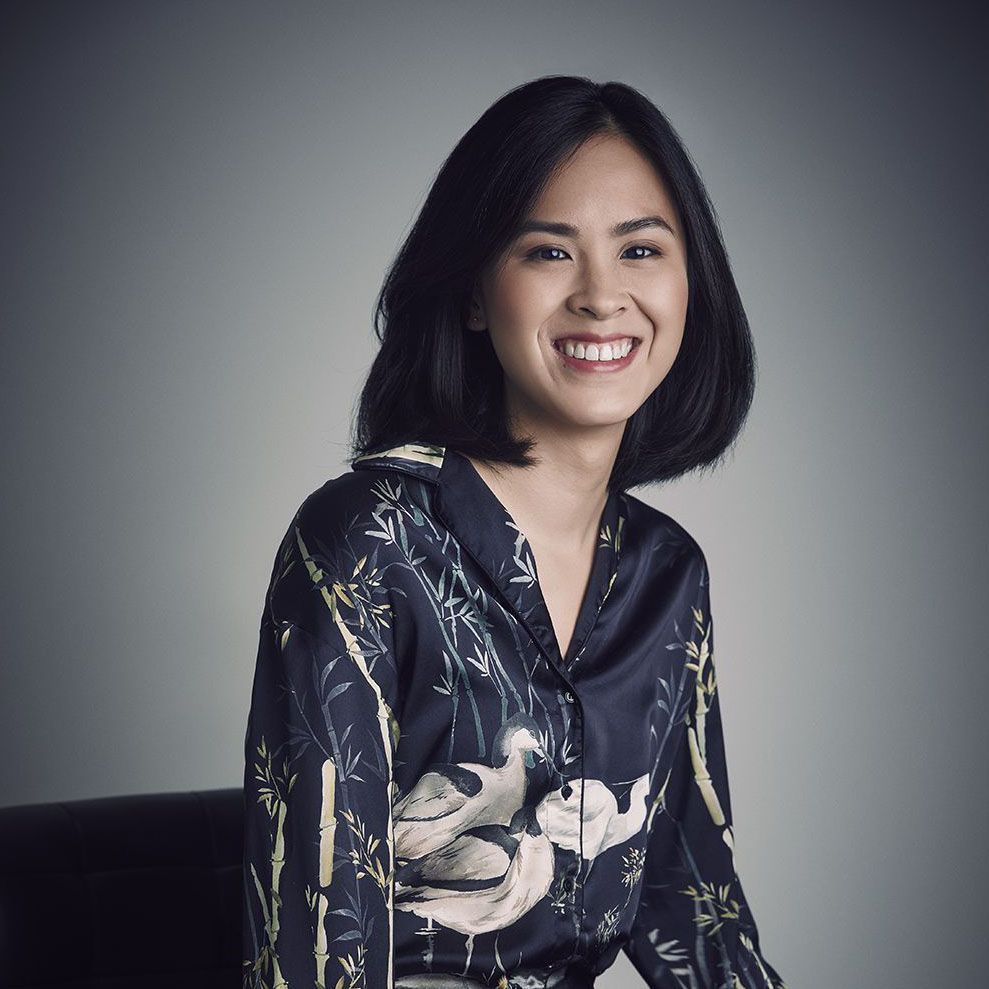
Chong Seow Wei is a regional senior editor covering business, innovation, impact and people. Based in Singapore, she oversees content for Gen.T, Tatler’s platform for promising entrepreneurs and new-generation leaders, and its Power & Purpose vertical.
Curated for you
The stories, profiles, and cultural moments featured on our Instagram feed