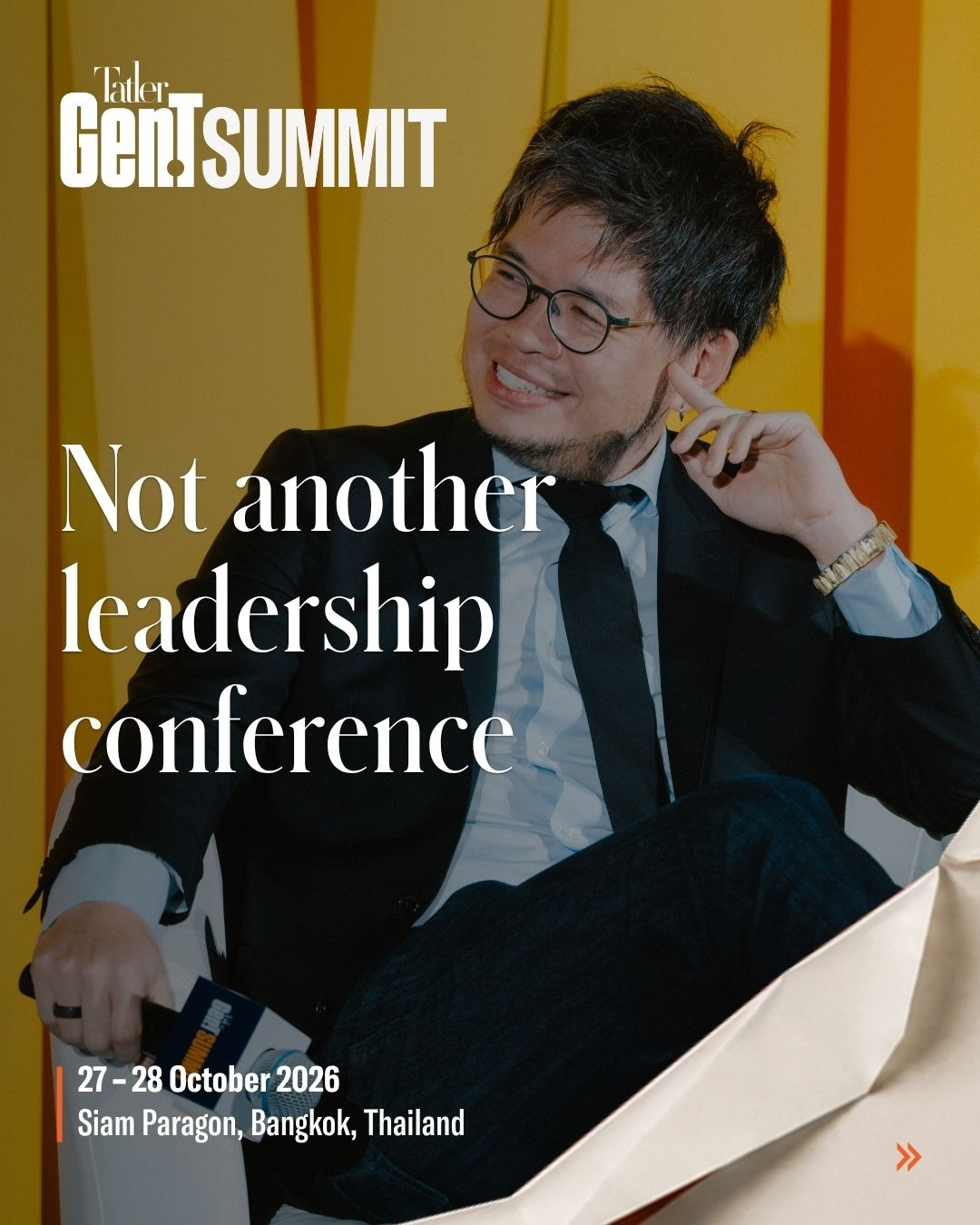
Cover Kingsley Leung, the Tatler Gen.T Leader of Tomorrow 2021, co-founded biotech company Great Bay Bio in 2019 (Photo: Affa Chan/Tatler Hong Kong)
Kingsley Leung, the Tatler Gen.T Leader of Tomorrow 2021, co-founded biotech company Great Bay Bio in 2019 (Photo: Affa Chan/Tatler Hong Kong)
1 / 1
The co-founder of Great Bay Bio explains how his company’s win-win solution can lower medication costs for patients while supporting ongoing pharmaceutical innovations
Biotechnology entrepreneur Kingsley Leung considers Iron Man the “coolest” superhero: “Everyone knows I love Iron Man. “I don’t need to be a billionaire. But I want to do something cool and interesting.”
The 2021 Gen.T Leader of Tomorrow didn’t create flying armour; instead, in 2019, he co-founded Great Bay Bio, which uses AI to develop new medicines for pharmaceutical companies. One of the company’s recent major achievements was securing the US government’s approval for one of its clients’ drugs, developed using its tools, for clinical trials.
One of the ways Leung’s venture can expedite drug development is by enhancing the chemistry, manufacturing and controls (CMC) stage, which is the process of producing the medicine on a larger scale before clinical trials. This technology, developed by Great Bay Bio, standardises the process and increases the product yield with less labour-intensive work, which could otherwise cost a fortune.
Pharmaceutical companies require cell culture media to cultivate proteins and create drugs, a process Leung compares to a parent feeding their baby. His AI-powered platform, supported by big data, can tailor the ideal “nutrition” for the cells so that they grow faster.
A win-win innovation
When asked about his company’s mission, Leung recalls watching the 2018 Chinese film Dying to Survive. The movie is based on the true story of Lu Yong, a leukaemia patient who was arrested in 2013 for smuggling affordable drugs from India to China for himself and others after he went bankrupt from buying medicine. The film, often compared to the critically acclaimed Dallas Buyers Club (2013) about smuggled HIV treatment, sparked public debate in mainland China about high medical costs.
Above The trailer of the Chinese film ‘Dying to Survive’, which was released in 2018 (Video: Edko Films/YouTube)
“Some patients suffering from life-threatening diseases are going broke to buy drugs. Companies need to make a profit to drive innovation. This is a complex reality. I stand in the middle and I see both perspectives,” says Leung, who also serves as a chairman of his family business, Uni-Bio Science Group, a traditional pharmaceutical R&D company headquartered in Hong Kong.
“Being able to disturb the drug development process is a common goal for many companies, including ours. And there is also a greater need for it. Social well-being should be at the top of everyone’s list.”
Read more: Sex and gender bias is prevalent in healthcare. Could AI be the solution?
Right place, right time
When Leung had the idea to establish Great Bay Bio, he felt like everything fell into place at the right time and in the right space: “AI was a hot topic. The Hong Kong government’s proposal sounded like they were going to build the Greater Bay Area (GBA) into a global innovation hub. I was about to graduate from the Executive MBA programme at Tsinghua University,” he recounts.
His idea was to build a spin-off company with one of the existing platforms in his pharmaceutical family business which runs a division in Dongguan, one of the 11 cities in the GBA. “There was a great asset within the group that didn’t fit into the company’s profile, so I found investors and gave them the idea: how about we spend some money, privatise it and make it an AI-focused entity?” he says.


Above The headquarters of Great Bay Bio at the Hong Kong Science Park (Photo: Great Bay Bio)
The headquarters of Great Bay Bio at the Hong Kong Science Park (Photo: Great Bay Bio)
1 / 1
The company now operates in two cities: 20 per cent of it is in Hong Kong, where corporate work primarily takes place and its principal scientists reside; the rest consists of R&D, which is in Dongguan. This includes generating data to input into AI algorithms or to train new ones in a 345,000 sq ft laboratory.
Just keep going
Throughout Leung’s journey running Great Bay Bio, one of the most critical moments he experienced was running out of money between the company’s seed and Series A rounds during the Covid-19 pandemic. “It was terrifying when we realised we only had one or two months of cash left. We didn’t want to cut salaries or let any of our employees go, as we knew they were counting on us,” he recalls.
Leung managed to steer the company through this crisis by securing a venture loan from the Alibaba Entrepreneurs Fund, which he later repaid. His takeaway was straightforward: raise as much as you can when you can. “Don’t be lazy,” he says, laughing.

Above Leung was the winner of GBA+ Award at the HK Hong Kong Innopreneur Award 2022 (Photo: Great Bay Bio)
Leung was the winner of GBA+ Award at the HK Hong Kong Innopreneur Award 2022 (Photo: Great Bay Bio)
1 / 1
This is just one of the many challenges entrepreneurs could face in making a name for themselves. Leung encourages his fellow start-up founders to keep their heads up and march on. “What I try to do is give positive energy. Many entrepreneurs are going through the same struggles. I’m sure they’re all smart enough and have the life experience they need, so I don’t need to share more. It’s more about giving them the positive energy to push them over that hump.”
Meet more Tatler Gen.T Leaders of Tomorrow from the Healthcare & Sciences sector.
NOW READ
Can AI help prevent 10 million cancer deaths per year? Qritive’s Kaveh Taghipour believes so
5 books recommended by Bill Gates on climate change, gender equality and more
Based in Hong Kong, editor Yoyo Chow covers the people and ideas redefining Asia’s future—from cutting-edge innovation and AI to bold moves in sustainability and diversity. She also drives content for Tatler Gen.T in Hong Kong, a platform and community spotlighting the region’s next generation of startup founders, creatives and changemakers.
Before that, she was a video journalist producing content for international TV and digital platforms, including Reuters and South China Morning Post. If you have a powerful story to share, she’s all ears. Send press materials, event invites and any inquiries to yoyo.chow@tatlerasia.com.

Curated for you
The stories, profiles, and cultural moments featured on our Instagram feed