

Cover Glenda Barretto, the woman who elevated the Filipino palate with her reinvention of iconic dishes, both local and international (Photo: Via Mare Archives)
Glenda Barretto, the woman who elevated the Filipino palate with her reinvention of iconic dishes, both local and international (Photo: Via Mare Archives)
1 / 1

We spoke to the grand dame of Philippine cuisine, Glenda Barretto, about how her 50-year-old brand, Via Mare, has created enduring flavours that are etched in everyone’s hearts and souls—and palates, of course
At the 2025 World Expo in Osaka, Japan, visitors, particularly the Japanese, would queue at the Philippine pavilion to sample a taste of Via Mare’s bagnet Bisaya with humba sauce. Golden and crispy pork belly slices are served with a side of the sauce, similar to adobo but sweeter and richer, additionally flavoured with braised peanuts and fermented black beans.
Another hit is the lumpiang Binondo, crisp Filipino-style spring rolls generously filled with savoury pork, shrimp and water chestnuts. First introduced by Via Mare at the 2005 World Exposition in Nagoya, Japan, the dish scores another hit at the Osaka Food Expo 2025.
This is vintage Barretto. Be it bagnet Bisaya or lumpiang Binondo or adobo flakes [“My father, who liked anything crispy, inspired me to invent this dish”], she has created them all, staples on the Via Mare menu that have hypnotised palates, elevating themselves into comfort foods or food cravings. More than a chef, she is a food creator blessed with a refined palate, educated at home by the cooking of her mother whose fame for her craft went beyond the family kitchen.
Read more: How one priest is restoring dignity to the shunned and the forgotten victims of the drug war


Above The meticulous Glenda Barretto, preparing a meal
The meticulous Glenda Barretto, preparing a meal
1 / 1
“For all the important occasions in our town then, my mother was always being asked to take care of the food. Cardinals and bishops called on her, including Msgr Rosales [the late Cebu Archbishop Julio Rosales], who was our relative. She was always in charge of the menu. I was only good for the eating,” Barretto, who hails from Calbayog, Samar, remembers.
Her education was not in the culinary arts but her first job, however, paved the way for her official entrance into the business of foods and flavours. She worked as a public relations writer for the D&E Restaurant on Roxas Blvd, owned by Samareños like her. She easily gravitated to the kitchen and bakeshop, showing an interest that did not escape co-founder Trinidad Enriquez. Soon Barretto was transferred to the catering department and thereafter, to the management of the Enriquezes’ fine-dining outlets at the Manila International Airport and Sulô Restaurant in Makati.
To date, she credits her mother for exposing her taste buds to the different flavours of excellent cooking. She has developed not only a discerning palate but one that can replicate a dish after just one tasting and even improve on it.
Foodies, old and new, will always seek the soft bibingka and tasty puto bumbong of Via Mare. Balikbayans crave for its fresh lumpiang ubod and adobo flakes; and those who have discovered the pinais na alimasag (stuffed crabs broiled in banana leaves) are lured by the flavours of the crab meat in coconut milk concoction served on a half crab’s shell then wrapped and broiled in banana leaves.
But one iconic dish is seared in Barretto’s memory. “My very first restaurant was a fine-dining establishment with seafood speciality,” she harks back to Greenbelt in the Seventies, where popular culinary haunts included La Tasca, Primavera, New Orleans, Truffles and Via Mare.
Barretto’s domain, originally called Via Mare Specialty Seafood Restaurant, opened in 1975 on top of La Tasca. Most popular on its menu was a dish she assembled and dubbed Bisque de Méditerranée au Croute.
“It was my own concoction, a mixture of bouillabaisse and sopa de mariscos (seafood soup),” she describes the combination of two classic seafood soup dishes, the former from France and the latter from Spain. Then, she added her own touch: a crust. “A soup with crust? Nobody has seen one in Manila at that time,” she says.
She herself saw the crusted soup for the first time at Tour d’Argent, the classic French restaurant at the Eiffel Tower. Beside her table was served an egg dish in a ramekin. “An idea popped into my head to do a seafood soup with a crust cover to keep the soup hot,” she says. At first she thought a mille-feuille cover would be great; however, it did not keep the soup hot when taken out of the oven and served on the table. Barretto saw the flaw: the container had a wide mouth. So, she ordered a special shell-shaped ceramic bowl with a narrow opening and made a sturdier crust. The special dish was also big enough for a generous serving. Because of this, Barretto says that “people would come to Via Mare just for that soup and a salad and be fully satisfied”.
With the redevelopment of the Greenbelt area, Via Mare relocated to a spacious area in front of the newly opened Greenbelt 1 in 1982. Its interiors, designed by the architect Bobby Mañosa (named National Artist in 2018), carried the same dark brown wood panels and capiz lamps as the first restaurant. The Oyster Bar, inspired by the iconic restaurant in Manhattan’s Grand Central Station and which she introduced in her first location, enjoyed a special place on one side.
Likewise, casual dining, which was an answer to a call of the times. “I had begun to notice that people started eschewing dressing up to dine out,” Barretto shares. “At my fine dining, I required my clientele to come properly attired. They followed; no complaints. But they began to prefer the more casual attire.”
Thus was born Café Via Mare, adjacent to but not accessible from the fine dining restaurant in Greenbelt 1. It offered popular Filipino delicacies she had introduced in her catering such as bibingka (rice cake cooked sandwiched in charcoal) and puto bumbong (rolled ube-flavoured rice cake individually cooked in small bamboo cylinders). Not only has the casual dining outlet drawn the crowds for decades, it had led to the opening of branches all over the country.
There was a time in the recent past when there was only one go-to caterer for huge (count a thousand or more pax) formal occasions: Via Mare. Under Barretto’s watch, one could sleep soundly that not only will there be a scrumptious beautifully presented spread and impeccable service, but that nothing will go wrong such as food spoiling, cold dishes melting in the heat, or hot dishes served cold. For over and above a well-trained staff, Via Mare has a mobile refrigerated van most useful in out-of-town events. To think that catering was not at all in Barretto’s plans.
Just less than six months from the opening of the first Via Mare, Barretto was cajoled by close friends Vicente and Nita Lim to cater their silver wedding anniversary. She even used her personal dinnerware, including her special Czech amber crystals, for the party of 80. Now, in attendance on this occasion was then First Lady Imelda Marcos who was so impressed that she invited Barretto to cater the upcoming state visit of US President Gerald Ford.
“It was the first time I served an entirely Filipino menu on such a formal occasion,” Barretto comments. The suggestion came from the First Lady herself who had just come from an event in Cancun, Mexico and told Barretto that there, the country’s traditional food was served to the guests and it was quite impressive. “At that time, French cuisine was de rigueur for formal events,” Barretto remarks.
More from Tatler: Chopard’s Caroline Scheufele proves luxury and responsibility aren’t mutually exclusive

Above Glenda Barretto, not quite in full retirement yet
Glenda Barretto, not quite in full retirement yet
1 / 1
The Ford state visit was the first of many state dinners, papal visits and international summits. On each occasion, Barretto brought out the best, sometimes accomplishing seemingly impossible feats, such as turning the Golden Odyssey yacht into a first-class hotel complete with food and beverage amenities for the 50th anniversary of the Leyte Landing on October 20, 1994. Or, satisfying the many different palate preferences and dietary restrictions of delegates from all over the world during the 3rd Asean Informal Summit in 1999. And, flying or shipping food to the islands where an international event was going to be held—as well as finding solutions when there are delays or cancellations.
Remembrances. Reminisces. Recollections. More than enough to while away quiet moments in retirement, where Barretto is at today. Losing husband Pancho two years ago and entrusting the management of Via Mare to the second generation of shareholders, Barretto has relocated a bit farther south, to a quieter closer-to-nature residential enclave where she delights in morning breakfasts watching colourful birds and listening to their joyful chirping. She entertains herself by watching documentaries and movies with her grandchildren. And she settles down in the evenings to the flicker of fireflies around her.
She keeps her family close. A house is already being built beside hers for her daughter Beatrice, while the adjacent empty lot is being prepared for a future home for her only son Alberto.
Nature. Family. Peace and quiet. The stillness and slowness of life become her. But for this former busybody, work still beckons, taking her to the city at least once a week.
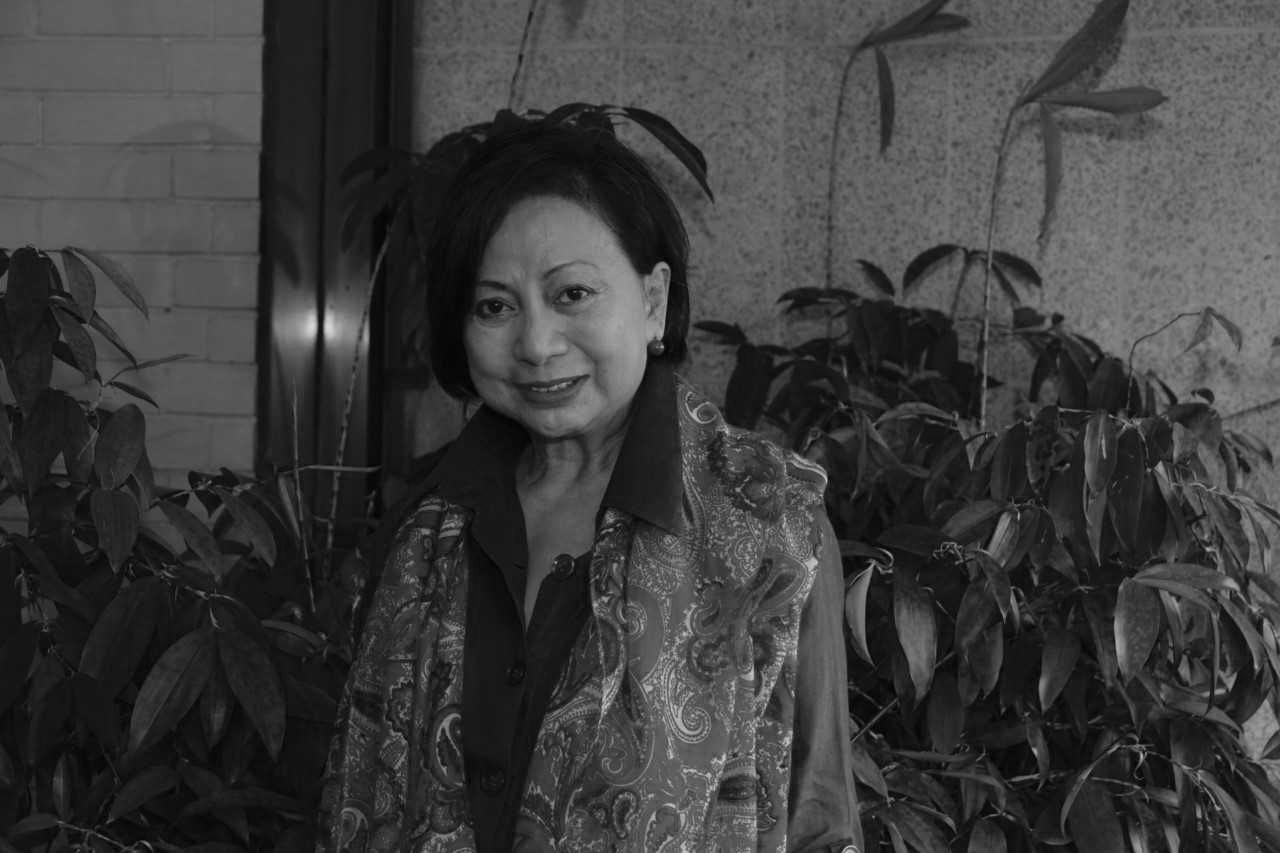
Above Glenda Barretto, the grand dame of Philippine cuisine
Glenda Barretto, the grand dame of Philippine cuisine
1 / 1
She also dreams of more travels and her sights are now set on visiting Cascia, where the cathedral of a special saint is located. “As a child I was stricken with polio,” she relates. “My mother was always praying to Saint Rita of Cascia.” One day after so many years, she just noticed that her affected leg was back to normal. “So, I want to pay homage to this saint I owe my life and, literally, my limb to.”
A few days before this pictorial/interview at her new home, her trusted manager of long-standing Rosendo “Boy” Cano, Jr called to ask what must be prepared. A list was served him, from clothes to indoor arrangements but with a cautionary request not to prepare a feast, perhaps just light sandwiches for lunch, as the Tatler crew would probably number only three. To which Cano quickly replied, “I am so sorry we cannot follow your last request. You see, in Via Mare, we only know how to prepare a feast.”
Habits are indeed hard to break. The kitchens of Via Mare will always be ready to cater to dozens, hundreds, thousands in their famed signature style and perfection. The staples will always be on the menu for cravings to be sated. But don’t write off the appearance of a new concoction, not yet, as Barretto, in retirement, admits to still be dreaming of new dishes to create.
NOW READ
Tatler Ball Asia 2025: meet the Tatler Impact Award recipients at this year’s regional ball
Silver linings: Hands On Manila gears toward 25 years of shaping Philippine volunteerism
The unshakeable hope: celebrating the life and enduring legacy of Dame Jane Goodall
Credits
Images: Via Mare Archives
A journalist of more than 30 years, Chit has had varied exposures in this field, both in hard news as well as in soft news, and brings everything she has learnt to the production of the magazine. When not writing or editing, Chit is deeply involved in her chosen service organisation, Rotary International.





