The new rules of getting ahead
For over a decade, we have been told that to succeed meant leaning in; if we just sat at the table and spoke louder, the system would eventually work for us. But when that table is rigged, is leaning out a better option? Let’s take a Deep Dive.
🚪 Leaning out can be a deliberate choice to set healthy boundaries and step away from workplace cultures that reward overwork, constant availability and unequal expectations.
🚶♀️ Walking away is what happens when leaning out stops being temporary. The exit is not a retreat, but the decision to move towards work, values and environments that offer real alignment.
📉 When employees leave, businesses pay the price in lost productivity, higher turnover and weaker pipelines for future leaders.
QUOTABLE
“It’s not an emotional response. This is a strategic response. It’s walking in the direction of where you want to go.”
— Sally J Clarke, author

BY THE NUMBERS

67% Support for gender diversity initiatives in the US has fallen from 90 per cent in 2021 to just 67 per cent in 2025.
73% In the same year, 73 per cent of international companies which committed to new gender-equality measures reported revenue growth in Grant Thornton’s International Business Report.
6% Singapore’s adjusted gender pay gap has narrowed to 6 per cent after accounting for job type and experience, helped by improvements in women’s occupational profile and higher representation in professional roles.
QUIZ
What is often cited as the hardest psychological obstacle when deciding to walk away from a corporate career?
A. Figuring out how to manage benefits, taxes and income once you leave
B. The loss of professional identity and the fear of failure
C. Deciding which slow living career path to pursue first
Scroll to the bottom for the answer.
DID YOU KNOW?

The girlboss era lost credibility as high-profile scandals like Theranos’ Elizabeth Holmes exposed what Lean In critics had long argued—that celebrating individual women at the top did nothing to fix the broken system beneath them.
THE EDIT
🚶♀️➡️ Stepping out. In the book Walk Away: Step Out to Step Up, authors Sally J Clarke and Deborah Overdeput document high-achieving women who left roles that no longer served them. Leaving was the beginning of something stronger.
⏰ Going part-time. As some women lean out of traditional leadership, more are choosing fractional work roles for flexibility, autonomy and impact.
🧘 Taking it lying down. In China, the ‘tang ping’ (lying flat) movement went viral as youth rejected the gruelling 996 work culture—referring to 9am to 9pm, six days a week—in favour of a low-desire, high-survival lifestyle.
👨👧 Being Dad. Men are leaning out too. Millennial fathers are increasingly prioritising family, trimming work demands and redefining success around being more present at home.
WATCH

Sheryl Sandberg, author of Lean In, Women, Work and the Will to Lead, clarifies that the ambition gap is not inherent to women. It only appears when they do not receive the same opportunities or support as their male peers, and is a fixable structural gap.
THE FULL PICTURE
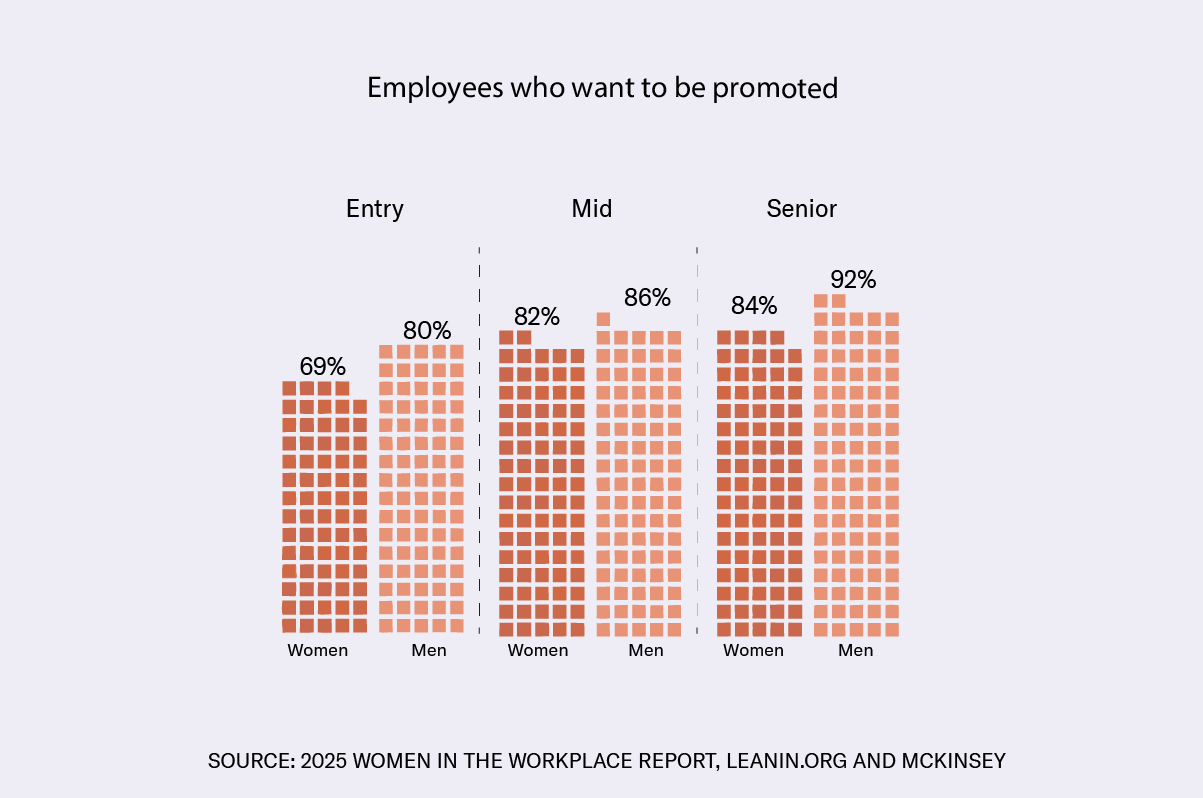
According to the 2025 Women in the Workplace report by LeanIn.org and McKinsey, women are more driven than ever to excel at work, yet for the first time, less interested in being promoted to the next level because of less sponsorship and lack of manager advocacy. The biggest gaps are at the entry and senior levels.
KEY PLAYER
Elissa Shevinsky
Tech entrepreneur Elissa Shevinsky published Lean Out: The Struggle for Gender Equality in Tech and Start-up Culture in 2015, a feminist critique of Silicon Valley culture and a rebuttal to corporate-style empowerment narratives.

HONOUREE TO KNOW
Fengru Lin
Co-founder and CEO Fengru Lin leant out of a toxic executive alignment to save TurtleTree’s culture. During a 2023 crisis, Lin cut 70 per cent of her staff and proposed executive pay cuts to show solidarity. When one leader refused to sacrifice his salary, she chose to let him go too.

ONE FINAL THING

Companies are starting to get the message. Microsoft Japan’s four-day workweek trial boosted productivity, and Unilever’s reduced-hours pilots in 2022 showed that output can hold steady even when hours drop.