Cover Menopause can change where the body stores fat, which means your waistline may shift even when your weight barely does (Photo: Getty Images)
Menopause can change where the body stores fat, which means your waistline may shift even when your weight barely does (Photo: Getty Images)
1 / 1
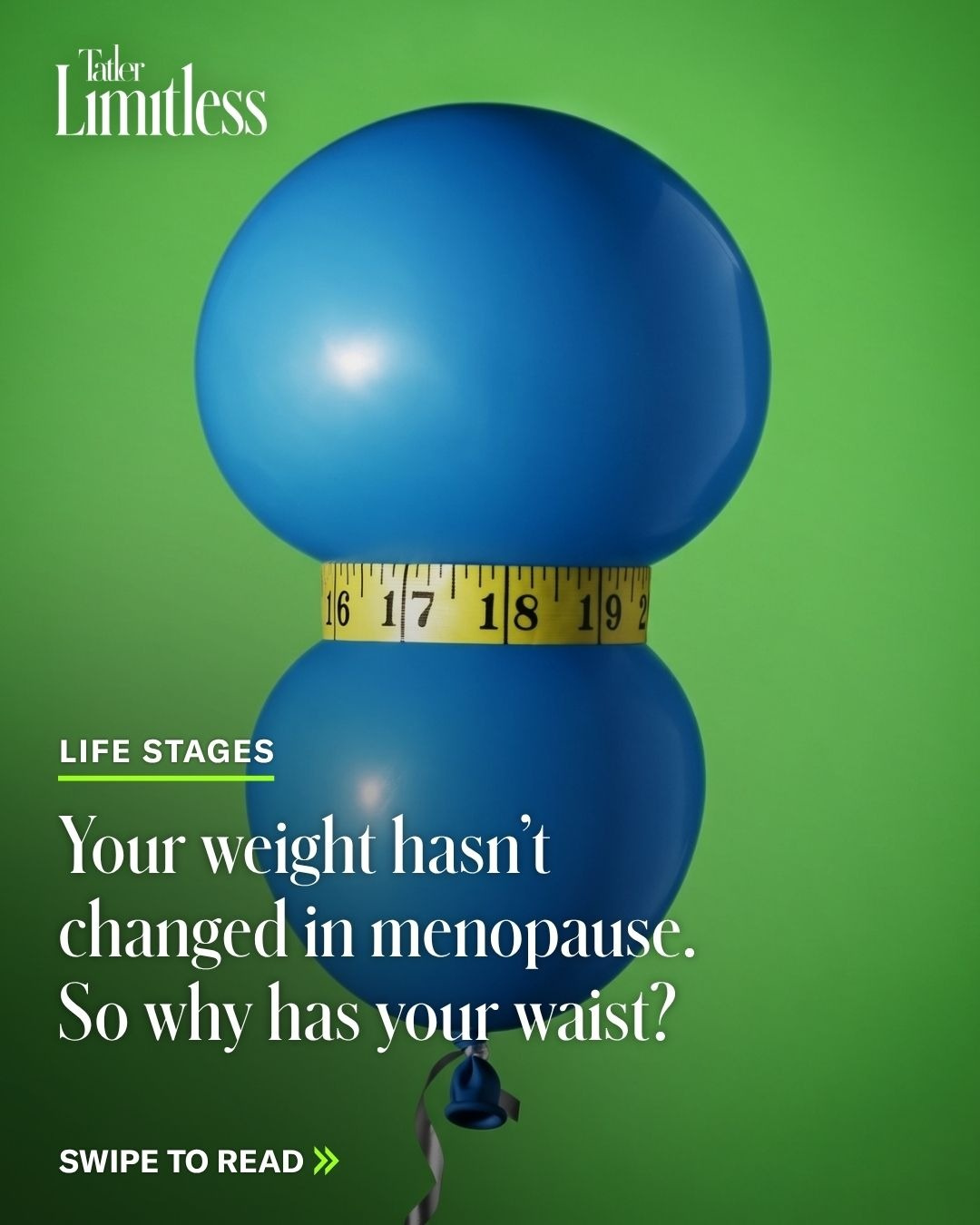
If your clothes fit differently but your weight has barely changed, menopause may be only part of the story
There is a particularly confusing riddle presented by the midlife body change: your weight is more or less where it has always been, but your trousers fit differently. Perhaps your waist has lost some definition, or you’re carrying more around the middle despite little movement on the scale.
It’s tempting to file all of this under “menopause weight gain”, but the science says it’s not as simple as that. Body weight, body composition and fat distribution are three different things, and they can change in midlife. Sometimes it happens on different timelines and for different reasons; this is how your body can change while the scale stays remarkably unimpressed.
Also read: How to explain perimenopause to your partner
What the scale can’t tell you


Above A weighing scale can miss some of the body composition changes that happen around menopause, including shifts in fat distribution and muscle mass (Photo: Getty Images)
A weighing scale can miss some of the body composition changes that happen around menopause, including shifts in fat distribution and muscle mass (Photo: Getty Images)
1 / 1
An expanding waistband isn’t necessarily evidence of a large increase in visceral fat, and waist circumference can’t reveal exactly what is happening inside the abdomen. It does show why researchers have become increasingly interested in fat distribution alongside total body weight.
The International Menopause Society’s 2026 recommendations make these distinctions very clearly: it concludes that midlife weight gain is largely attributable to chronological ageing, while declining oestrogen is a major contributor to increasing abdominal adiposity during menopause.
Read more: How to explain perimenopause to your partner
A bathroom scale does one simple job: it measures how much you weigh. It can’t tell you whether that weight is fat, muscle, bone or water, let alone where the fat is stored.
One of the most useful demonstrations comes from the Study of Women’s Health Across the Nation (SWAN), a long-running US study that has followed women through midlife. Researchers used DXA scans to track the body composition of 1,246 women participating in SWAN, following changes in relation to their final menstrual period. About two years before that final period, the rate at which women gained fat accelerated while lean mass began to decline, and both trends continued until roughly two years afterwards. Weight itself, however, didn’t speed up around menopause.
In case you missed it: It’s time that we learnt that menopause usually isn’t a time of poor mental health
Over the roughly three-and-a-half-year transition identified in the study, the average woman gained about 1.6kg of fat and lost around 0.2kg of lean mass. The researchers calculated a six per cent increase in fat mass and a 1.9 per cent fall in the proportion of lean mass over that period.
These figures are averages, not a forecast for every woman, but they show why the scale can miss a meaningful change in body composition. Fat can rise while lean tissue falls, softening the effect on total weight. It’s also why two people of identical weight can have very different body compositions, and why the same woman can weigh much the same at 50 as she did several years earlier while carrying that weight differently.
Why fat shifts towards the abdomen
The second part of the story concerns location. Before menopause, women tend on average to store more of their fat just under the skin, around the hips and thighs. Through the menopause transition, fat distribution commonly becomes more central, with a greater proportion settling around the abdomen.
While some of that abdominal fat sits subcutaneously, some is visceral fat, stored deeper in the abdominal cavity around the organs. The two depots behave differently from a metabolic standpoint.
Another SWAN analysis used CT scans to look at visceral fat specifically. In 362 women, visceral adipose tissue began increasing more rapidly from about two years before the final menstrual period. In the study’s unadjusted analysis, it rose by 8.2 per cent a year during those two years and by 5.8 per cent a year afterwards. The overall menopause-related pattern held after the researchers accounted for factors including BMI and lifestyle.
How much is menopause—and how much is ageing?

Above Menopause contributes to weight changes but lifestyle factors like sleep and stress can also affect weight (Photo: Getty Images)
Menopause contributes to weight changes but lifestyle factors like sleep and stress can also affect weight (Photo: Getty Images)
1 / 1
Usually, both are in the room. Menopause arrives when the body is already changing with age. Energy expenditure can decline, activity patterns can shift and lean mass becomes harder to maintain. Sleep, stress, illness, medication and day-to-day behaviour can also affect weight and body composition. It’s difficult, then, to take a change that appears at 50 and pin it entirely on ovarian hormones.
A 2025 review of menopause and body composition notes that surprisingly few studies have followed women longitudinally closely enough to separate normal ageing from the menopause transition. Its authors found convincing evidence of changes in muscle and fat distribution, but the exact contributions of hormones, ageing, energy balance and lifestyle remain hard to untangle.
We also have to be very careful about the familiar claim that “menopause slows your metabolism”: a study published in 2026 compared pre-, peri- and postmenopausal women and found no significant difference in the calories burned at rest or after eating, once body composition and movement were taken into account. Fat-free mass remained strongly related to calories burned.
So the science says that there’s more to it than metabolism switching down at menopause. Ageing influences energy needs and weight, while hormonal changes appear to have an additional effect on body composition, particularly the tendency to store more fat centrally.
In case you missed it: 6 books about menopause that tell it like it is
What oestrogen has to do with it
Why would fat distribution change at all? First of all, oestrogen does considerably more than regulate the reproductive cycle. Its signalling is involved in fat tissue, skeletal muscle, insulin sensitivity and energy regulation. As ovarian oestrogen production declines, researchers consistently observe a shift away from the typically female pattern of gluteofemoral fat storage—around the hips, buttocks and thighs—towards relatively greater abdominal storage.
The biology involves several interacting systems, so “low oestrogen causes belly fat” oversimplifies the science. Genetics, previous body composition, physical activity, diet, sleep and other metabolic factors all continue to matter.
Hormone therapy offers a clue, though not a weight-management shortcut. The 2026 International Menopause Society recommendations state that menopausal hormone therapy does not directly reduce body weight and shouldn’t be prescribed to improve weight or body composition. Oestrogen-based therapy can, however, ease some of the changes in fat distribution and insulin resistance that come with menopause. Together, these findings reinforce the difference between overall weight and where the body is predisposed to store fat.
Why muscle matters too

Above Building muscle is a cornerstone of the body composition story (Photo: Getty Images)
Building muscle is a cornerstone of the body composition story (Photo: Getty Images)
1 / 1
The changing waistline tends to get more attention, but muscle matters just as much to the body composition story. SWAN’s findings suggest that lean mass begins to decline in the same window in which fat gain accelerates. Newer research is also looking beyond how much muscle a person has to how well that muscle functions.
One emerging area is myosteatosis, the accumulation of fat within and around skeletal muscle. A 2026 review points to excessive intramuscular fat as a potential marker of poorer muscle quality, linked to lower strength, power and mobility. Researchers are still working out how useful it will be clinically, and some intramuscular fat is normal.
Another 2026 review, focused specifically on menopause, argues that changing fat and muscle may interact in midlife, so that BMI stays relatively stable while muscle quality and fat distribution become less favourable. Its authors also stress that definitions and measurement of conditions such as sarcopenic obesity, where low muscle mass comes with excess body fat, remain inconsistent.
For most women, there’s little reason to start thinking about their bodies in terms of obscure muscle biomarkers. The research makes a simpler point: preserving muscle and physical function becomes increasingly relevant in midlife, even when weight itself appears unchanged.
Why waist size can matter for health
The shift towards abdominal fat has health implications because visceral fat is associated more strongly with insulin resistance, unhealthy blood fats and cardiovascular disease than fat stored under the skin on the hips and thighs.
The SWAN Heart study found that the menopause-related rise in visceral fat around the final menstrual period was associated with greater thickness in part of the carotid artery wall, a marker of subclinical atherosclerosis—early artery changes that haven’t yet caused symptoms. This was an association within a relatively small study, not a prediction of what will happen to any individual woman.
Newer Asian research points in a similar direction. A 2026 study followed 841 Chinese women in the PALM cohort over time as they moved through stages of reproductive ageing. Metabolic syndrome became more common as women moved through the menopause transition, with the strongest link, even after accounting for other factors, in early postmenopause. Central obesity and elevated triglycerides were major contributors.
A bigger waist doesn’t automatically signal a medical problem, but it does help explain why clinicians may look at waist circumference, blood pressure, cholesterol, triglycerides and glucose alongside body weight, particularly as women move through midlife. The International Menopause Society now specifically notes that increased fat around the abdomen can carry a risk to heart and metabolic health even when BMI remains within the normal range.
Why weight only tells part of the story
None of this makes body weight useless. Weight remains one piece of information, and meaningful changes over time can matter. Its limits simply become more obvious around menopause.
A scale can’t see that someone has gained fat while losing lean tissue. It can’t distinguish visceral fat from subcutaneous fat, or tell you whether you’ve kept your strength or whether your blood pressure, glucose or cholesterol has shifted.
The changes described in population studies are also averages. SWAN itself found differences among the ethnic groups it studied: Japanese women, for example, did not follow exactly the same fat-mass trajectory as White women during the menopause transition. Individual bodies reflect genetics, activity, diet, health conditions, medication and many years of accumulated habits.
So if your waist changes while your weight barely does, the two measurements are simply describing different parts of the same picture. The scale tells you how heavy you are, while the changing fit of your clothes may be picking up a shift in body composition and fat distribution. In midlife, knowing the difference can save you from chasing a number on the scale that doesn’t—and was never going to—tell the whole story.
Kristine Fonacier is a widely published journalist and author, covering lifestyle, business, politics and travel. She was the editor in chief at the Philippine editions of Esquire and Entrepreneur, and the founding editor of Grid magazine. At Tatler, she was previously the regional editor for T-Labs, Power & Purpose and Asia’s Most Influential.
Curated for you
The stories, profiles, and cultural moments featured on our Instagram feed