Cover At these destinations in Asia, nature has shaped landscapes so surreal they appear lifted from another world. (Photo: Travel-Photography / Freepik)
At these destinations in Asia, nature has shaped landscapes so surreal they appear lifted from another world. (Photo: Travel-Photography / Freepik)
1 / 1
These destinations in Asia feature surreal terrains shaped by time, from barren badlands to floating limestone towers
Asia holds an astonishing range of terrains, from volcanic plateaus to limestone seascapes. Some places appear so unlike their surroundings that they seem detached from the planet altogether. These otherworldly sites reveal the continent’s geological extremes, shaped by millennia of tectonic shifts, erosion and evolution. For travellers seeking landscapes that challenge the familiar, these destinations in Asia offer scenes that feel suspended outside time. Each of these locations is accessible to visitors, though reaching them often involves journeys off the main tourist routes. Seen up close, they can feel like fragments of an entirely different world.
Read more: Exploring New Zealand's South Island on foot: 7 hikes with great views
1. Tianliao Moon World, Taiwan
In Kaohsiung in southern Taiwan, Tianliao Moon World is a terrain of grey clay badlands cut into sharp ridges and narrow gullies. Vegetation struggles to grow on the alkaline soil, leaving the surface bare and cracked. The landscape changes colour through the day as the light shifts across its folds. Wooden walkways have been built to allow visitors to navigate the steep slopes safely without disturbing the brittle earth.
2. Zhangjiajie National Forest Park, China
Zhangjiajie National Forest Park in Hunan Province is known for its towering sandstone pillars, some rising more than 200 metres. Formed over millions of years through erosion, the spires are often shrouded in mist that drifts through the forested valleys. Cable cars and glass-bottomed bridges give access to viewpoints high above the canopy. The scale of the formations is best seen at dawn, when low clouds pool between the columns.
3. Bask Nest, Gili Meno, Indonesia
Off the coast of Gili Meno lies Bask Nest, a submerged circle of life-sized human sculptures designed to become part of the reef. The figures are arranged in interlinked poses on the sea floor, where coral and marine life are slowly taking hold. Snorkellers can swim among the installation in shallow water. It was created as an underwater art piece and artificial habitat intended to support reef regeneration.
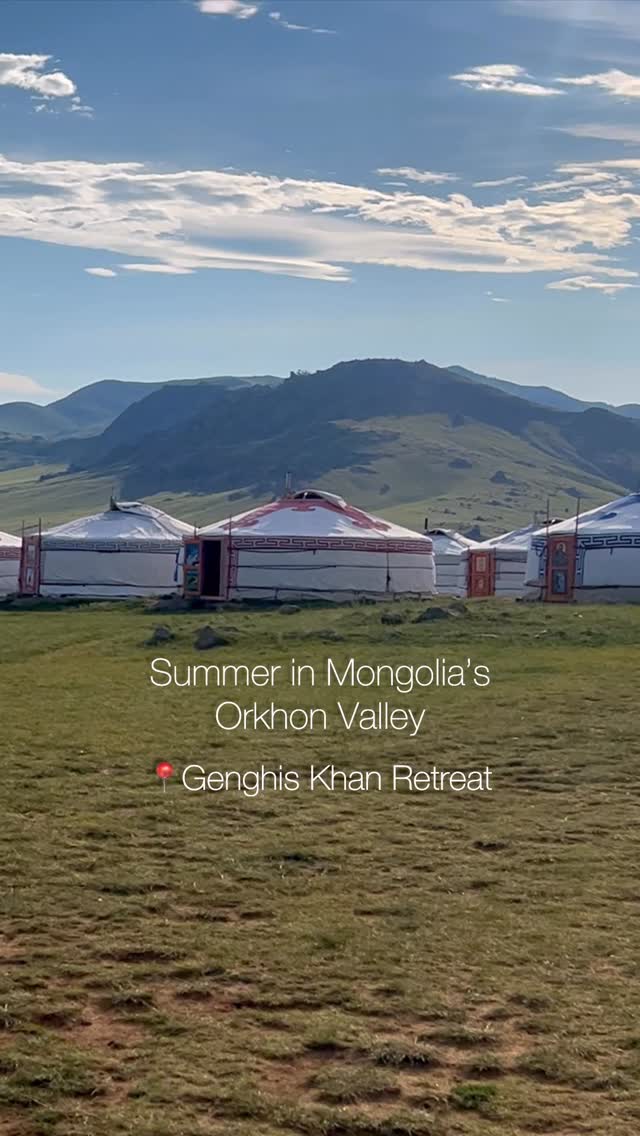
4. Gobi Desert, Mongolia
The Gobi Desert stretches across southern Mongolia into northern China, spanning gravel plains, sand dunes and fossil-rich cliffs. The Flaming Cliffs glow red at sunset, while the Khongoryn Els dunes rise in smooth, shifting slopes. Wildlife includes Bactrian camels and rare snow leopards in the surrounding mountains. Nomadic herders still traverse sections of this vast expanse, moving between seasonal pastures.
5. Halong Bay, Vietnam
Halong Bay on Vietnam’s northern coast is dotted with more than 1,600 limestone karsts that rise vertically from the emerald water. The formations are covered in tropical vegetation and riddled with caves shaped by waves over millions of years. Boats weave through the narrow channels, while floating fishing villages anchor in sheltered coves. The bay is a Unesco World Heritage Site and a key stop on many itineraries featuring distinctive destinations in Asia.
6. Chocolate Hills, Philippines
On Bohol Island in the Philippines, the Chocolate Hills are more than 1,200 almost symmetrical mounds spread across the landscape. They turn brown in the dry season when the grass covering them withers, then return to green with the rains. Their uniform shape is the result of uplifted coral limestone eroded over time. Viewing decks have been built on several of the larger hills for panoramic vistas.
These seven destinations in Asia reveal how varied the continent’s terrain can be, from submerged sculptures to towering sandstone peaks. For travellers seeking places that feel removed from the ordinary, these geological wonders remain some of the most striking destinations in Asia to experience firsthand.


Chonx Tibajia is a senior editor at Tatler Asia’s T-Labs team, where she writes widely on lifestyle subjects including beauty, style, entertainment and travel. She has a long career in journalism, including roles as a columnist at The Philippine Star, and is the founder of the creative platform Pineappleversed. Beyond Tatler, her bylines appear in regional lifestyle and business publications, showcasing a broad portfolio that spans beauty trends, travel guides and culture pieces.
Curated for you
The stories, profiles, and cultural moments featured on our Instagram feed