

Cover Should comedians deliver social commentary through their acts or material? We speak to Malaysian comedians Shamaine Othman, Gajen Nad, and Douglas Lim
Should comedians deliver social commentary through their acts or material? We speak to Malaysian comedians Shamaine Othman, Gajen Nad, and Douglas Lim
1 / 1
Through satire and parody, local comedians Douglas Lim, Shamaine Othman, and Gajendheran Nadaesan expose flaws in systems and leadership, inspiring social and political movements
Back in times of old, when royalty reigned and heads rolled, the court jester was a character with much to be told.
The court jester, or fool, was a multifaceted figure in historical courts, primarily serving as an entertainer with humour, jokes, and/or physical comedy. Beyond mere amusement, jesters acted as satirists, using wit to comment on political and social issues, and sometimes as informal advisors, offering honest opinions and criticisms without fear of retribution. They were trusted companions to royalty, providing comfort and distraction, and played a crucial role as social commentators, addressing sensitive topics and mediating conflicts through humour. Embodying both folly and wisdom, jesters used their unique position to entertain, advise, and influence court life.
Read more: Douglas Lim on the serious side of funny
Fast forward to modern times, the role of the jester is still required but has transformed in a sense, and is now taken up by comedians. By blending humour with information, comedians can educate their audiences, raise awareness and enjoyably increase knowledge.
We speak to Douglas Lim, Shamaine Othman, and Gajendheran Nadaesan, better known as Gajen Nad, to find out their insights on whether comedians can or should deliver social commentary through their acts or material.


Above Malaysian comedian Douglas Lim (Photo: All Is Amazing)
Malaysian comedian Douglas Lim (Photo: All Is Amazing)
1 / 1
While their origin stories may differ, the three personalities we spoke to are renowned in the comedy circuit, both in Malaysia and internationally. Douglas Lim got involved in comedy through the local English sitcom Kopitiam back in 1996. “It was my first big break in the industry; I’ve always enjoyed making people laugh, so to be able to turn my passion into a career is fantastic,” says Lim.
“About 12 years ago, some friends suggested I join an open mic night that was organised by Time Out KL—I got my first three minutes, then five minutes, then seven minutes, and the rest is history. However, before that, I was also doing sketch comedy with Projek Disko Baldi and improv comedy with AIIA Improv. I’ve always been a fan of comedy, and watching my dad produce Malaysia’s longest-running Malay sitcom, Pi Mai Pi Mai Tang Tu definitely inspired me. From there, I wanted to make my name in the Malaysian comedy scene and champion liberal creative expression in a time where conservatism is slowly creeping into the arts,” shares Shamaine, the daughter of director and screenwriter Othman Hafsham.
See also: How comedian Arwind Kumar heals with humour
Meanwhile, Gajen found his calling during his years of tertiary education. “I was a mechanical engineering student at Monash University Malaysia and a friend said, ‘Hey Gajen, there’s an upcoming talent competition called Monash Talent Night 2009. You’re funny, you should tell some jokes.’ He saw my future was not in engineering,” jokes Gajen. “I eventually became the first runner-up, and from then the university began asking me to perform at certain events. Then in early 2012, I decided to perform at an actual open mic stand-up comedy show called Comedy Kao Kao, held in Publika. Since then, I found my passion and ikigai,” he says.

Above Malaysian comedian Shamaine Othman (Photo: Bibo Aswan)
Malaysian comedian Shamaine Othman (Photo: Bibo Aswan)
1 / 1
While both men believe the primary role of a comedian is to incite laughter, Shamaine sees her role as an avenue for representation as well. “There aren’t many female comedians, so I hope by doing comedy more women will come to watch comedy and more women would want to become comedians. I also believe it’s good to have diverse voices in the creative industry. I think I, a female, Malay, Muslim, doing comedy is social commentary in itself. I’m giving a voice to a segment of society that often gets overlooked in this sphere. Loud and outspoken women are often deemed difficult in Malaysian society,” shares Shamaine.
“I believe my main role is to entertain, and if at the end of it all I manage to highlight certain issues or create awareness, it’s a bonus,” says Lim.“Laughter unites people of various backgrounds; it’s a truly wonderful sight to see when you’re up on stage,” adds Gajen.
Of course, comedy can be more than just making people laugh. This was evident in the skits produced by Lim during the height of the pandemic, which left many Malaysians in stitches. In times of crisis, comedians provide a much-needed release through laughter, underscoring the value of resilience and adaptability.
Don’t miss: Ron Josol on being a comedian, handling difficult audiences and more
Comedy captures the spirit of the times, offering a historical record of societal attitudes and events.
“I think when we are faced with issues, be they social, economic, political, etc, there are generally three ways of dealing with them. The first is to be angry and fight back, the second is to grudgingly accept and be bitter about it, and the third is to make fun of it. So technically everyone can be a social critic, but I think comedians do it with the most entertainment value,” says Lim.
“I believe that comedians are truth-tellers—we reflect on what’s going on in society. Our audiences know that, and they come for the truth while the mainstream media has to present a heavily censored observation of society. Yes, our main objective is to entertain, but as artists, I think we also must push boundaries and speak the truth to power,” adds Shamaine.
“Stand-up comedians tend to look at topics from various angles, sometimes perspectives not recognised by society, which is good. Whether stand-up comedians make good social critics, I can’t generalise; it’s subjective. A good social critic needs to be neutral, logical and have critical thinking skills to provide a balanced view—like me!” laughs Gajen.

Above Malaysian comedian Gajen Nad (Photo: All Is Amazing)
Malaysian comedian Gajen Nad (Photo: All Is Amazing)
1 / 1
Speaking of censorship, we also consider how cautious comedians need to be when they’re performing. Lim tends to avoid naming names and uses extended metaphors in his material. Meanwhile, Shamaine rarely posts her material online and typically performs in ticketed shows, so her audiences know what they have signed up for. Gajen adapts his material based on the type of shows he’s performing.
“If it’s a corporate show, then the material needs to be clean, and I tend to avoid social topics that can provoke—these are usually ironed out with the host before my performance. If it’s a stand-up comedy show at a club or event space, then the boundaries are wider,” he shares.
Read more: 5 Asian comedians celebrating heritage, humour and diversity on the stage, one joke at a time
When asked if they had ever gotten in trouble for their material, the trio shared their stories. “I was doing a corporate show when, at the time, the trending topic was a politician and his dodgy deeds—which I naturally made a joke about. Unbeknownst to me, the VIPs at the head table were close friends with said politician, so one guy stood up and shouted at me, ‘No more jokes about [redacted]!’ I apologised and moved on to my other material, but the mood of the room had already changed,” Lim tells of his ordeal.
“A few years ago, I was on Comedy Central Asia’s Stand Up Asia show which aired on a local IPTV channel—my set was edited out of the first airing but remained in the repeats. I take pride that censors think I’m a danger to Malaysian audiences,” Shamaine says.
“The general answer is no, but looking back at some of my material from years ago, I wouldn’t perform it today. Most of it doesn’t live up to my current standards, and some of it was not socially right either. But hey, growth takes time, and I urge audiences to understand that most, if not all, comedians and people who perform at open mics stand in front of you with the positive intention to entertain, and that we also need time and space to grow and hone our craft,” Gajen shares.
Above Lim performing at the 2019 Melbourne International Comedy Festival Gala
Lim agrees, “Any humour is bound to alienate some people. But what I try my best to do is to avoid overt provocation. Because that’s not what I am. I’m a comedian. I want to make you laugh, not make you angry.”
“My job is to make my jokes so funny that audiences don’t see them as provocation and alienating,” Shamaine shares about her professional role.
At the end of the day, comedians as social commentators play a vital role in shaping public discourse and can, in some way, influence societal change. Their unique blend of humour and insight offers valuable lessons and stands as a mark of time at that point in history for society.
NOW READ
Comedian Leslie Liao’s journey, from Netflix’s HR to a Netflix special
Kumar on his inspiration, the misconceptions surrounding him and more
Best of Tatler Asia video highlights
Featured videos from around Tatler Asia: Get exclusive behind-the-scenes look at the interviews we do, the events we attend, the shoots we produce, and the incredibly important people who are part of our community


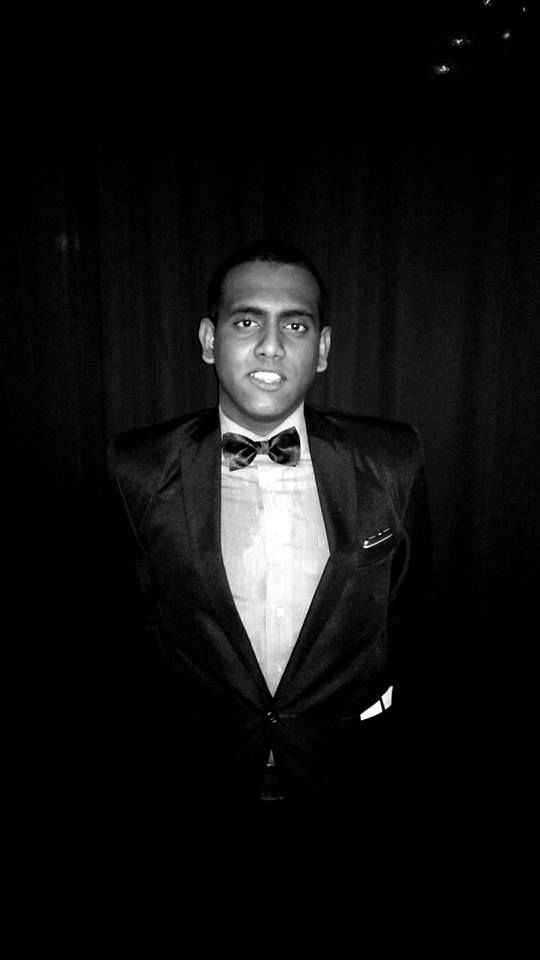
If tall, dark and handsome is what you're looking for, Aaron Pereira ticks two out of three. This fine chocolate man (that is, a connoisseur of fine chocolate), enjoys the theatre, futsal, real-life conversations and of course, the English language. He believes that language should first be used to express, but the business of a sub-editor is to impress.
Check out his Instagram @aaronlpereira.





