
Cover The Angono Petroglyphs in the province of Rizal was discovered by the late National Artist Carlos "Botong" Francisco (Photo: Lino C. Soriano/Smart Pinoys ATBP blog)
The Angono Petroglyphs in the province of Rizal was discovered by the late National Artist Carlos "Botong" Francisco (Photo: Lino C. Soriano/Smart Pinoys ATBP blog)
1 / 1
There is art even before the pre-colonial Philippines and one of the biggest proofs can be found in Angono, a municipality in Rizal, Philippines
One of the Philippines' most mind-blowing archaeological discoveries happened in 1965, during a Boy Scouts' field trip attended by the late National Artist for Painting Carlos "Botong" Francisco. The young visual artist was peacefully watching the clouds until his eyes caught a glimpse of the primitive drawings on a rock wall in Angono, Rizal.
A series of excavations revealed that the drawings were etched in 3000 BC during the neolithic period. More than 50 years since its discovery, drawings were studied and interpreted by various institutions and researchers, revealing deeper interpretations and statistical descriptions of the art.
Since then, the Angono Petroglyphs is widely regarded as the "oldest artwork in the country".


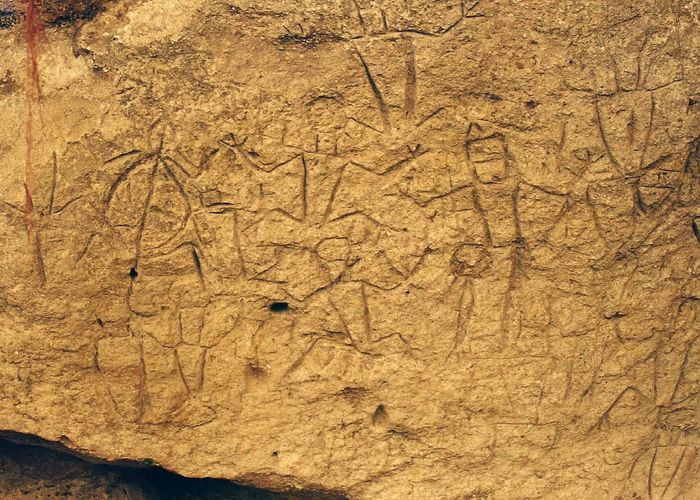
Above A closeup of the Angono Petroglyphs (Photo: A Momma Abroad Blog)
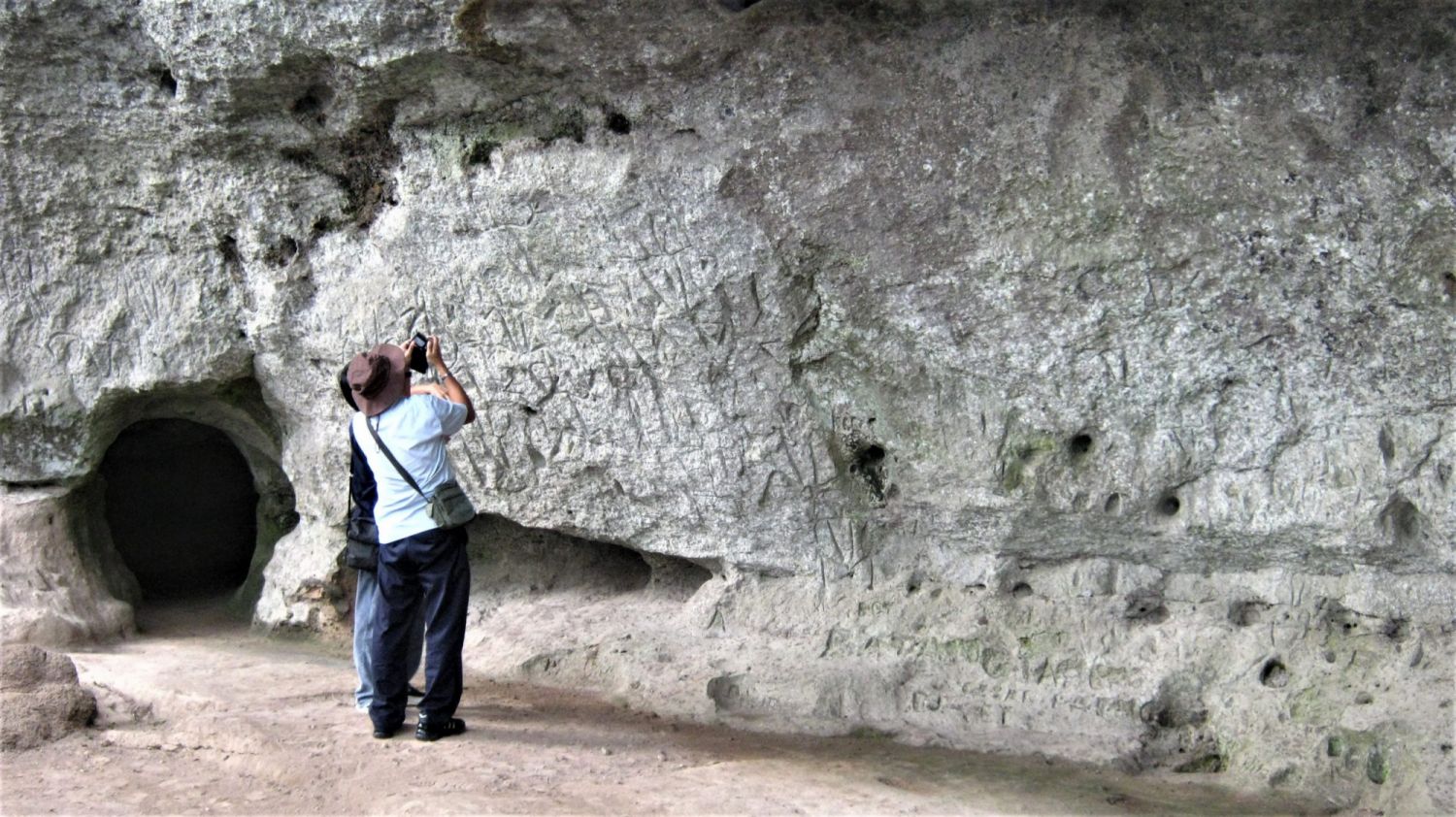
Above The Angono Petroglyphs in the province of Rizal were discovered by the late National Artist Carlos "Botong" Francisco (Photo: National Museum)
A closeup of the Angono Petroglyphs (Photo: A Momma Abroad Blog)
1 / 2
Above The Angono Petroglyphs is located in a shallow rock shelter (Photo: Deztreks)

Above In 1973, by virtue of Presidential Decree No. 260, the Angono Petroglyphs were declared as a national cultural treasure by the Philippine government (Photo: Jovial Wanderer Blog)
The Angono Petroglyphs is located in a shallow rock shelter (Photo: Deztreks)
1 / 2
The rock art is a collection of 127 figural carvings of humans and animals on a 25 x 3-metre wall. Out of all the drawings, there are 51 distinct figures that suggest different individuals or generations made them. The most prominent carvings appeared to be lizards and frogs.
Archaeologists in the site also found fragmented bits of earthenware, at least eight pieces of stone tools which consist of two pieces of Obsidian flakes, two pieces of stone cherts, two pieces of flake tool, one stone adze and a piece of stone core.
The Angono Petroglyphs were included in the Philippines' National Cultural Treasure in 1973. They were also listed on the World Inventory of Rock Art in 1985. The World Monument Watch also included them in the list of the world's top 100 most endangered sites.
Related: This 3,500-Year-Old Painting Was Found In Cagayan: Why Is It Important?
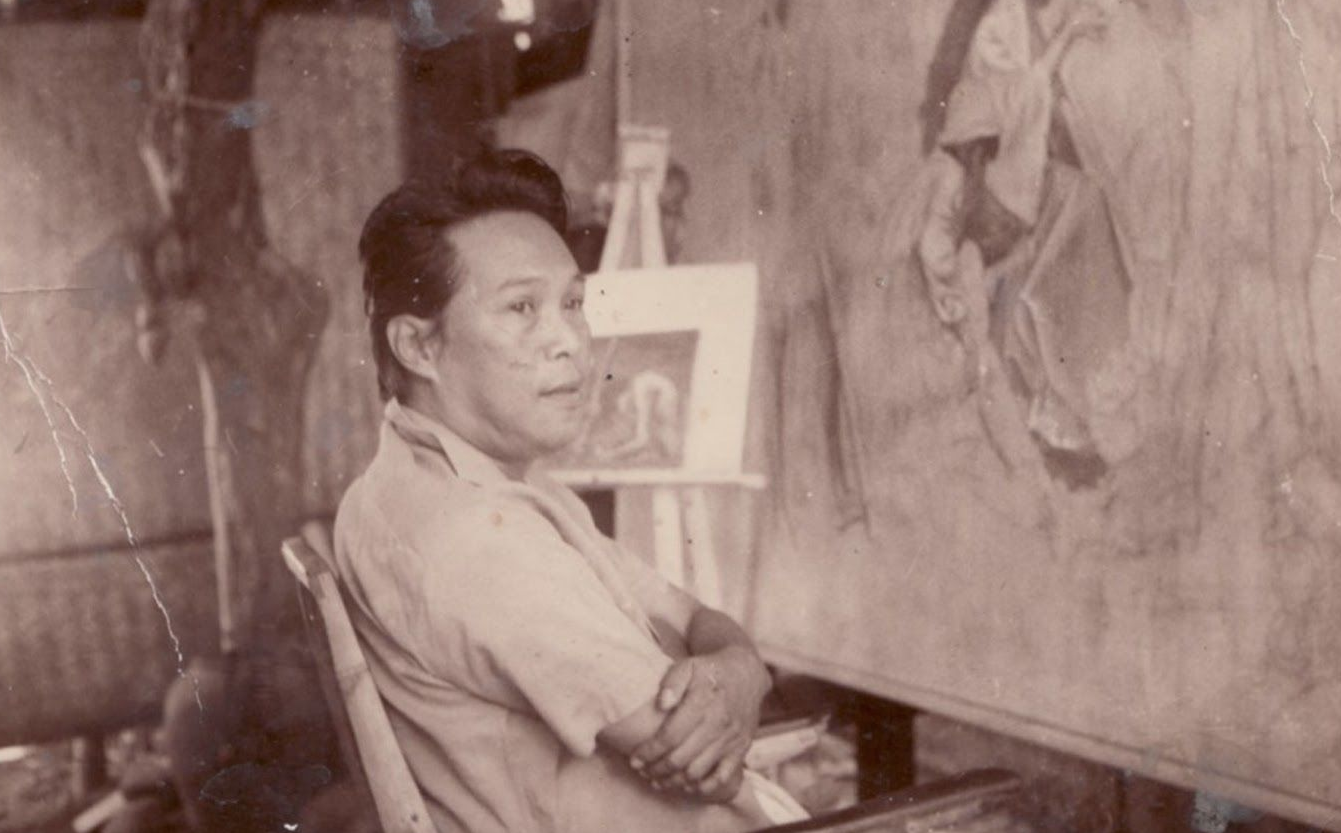
Above A photograph of the late National Artist for Painting Carlos "Botong" Francisco (Photo: NCCA Official)
A photograph of the late National Artist for Painting Carlos "Botong" Francisco (Photo: NCCA Official)
1 / 1
In order to protect the site from further deterioration caused by human activities, the National Museum of the Philippines took the initiative and placed a viewing deck where museum-goers can see the petroglyphs without causing damage.
This was upon the recommendation of Dr Nicholas Stanley Prince, an archaeological expert who conducted preservation and study for the site.
NOW READ
This Iconic Botong Francisco Is Yours For The Taking — The Starting Bid? 28 Million PHP
11 of the Most Famous Filipino Artists and their Artworks: Amorsolo, Bencab, And More
Magnetise Love and Luck: Crystals to Keep in Your Home to Attract Good Energy

Jove holds a degree in Journalism and is currently pursuing graduate studies in Philosophy at the University of the Philippines–Diliman. She has flair for in-depth, interview-driven stories that explore politics and culture, shaped by her background in national broadsheets.
When she’s not on assignment, Jove spends her days painting, sipping lemonade, and walking her dog, Jupiter. She can often be seen in Escolta with a film camera in hand, browsing novelty shops in search of rare memorabilia. For leads, reach her at Jove@tatlerphilippines.com.





