
Cover (Photo: Getty Images)
(Photo: Getty Images)
1 / 1
A testament to a precious cultural heritage, these Filipino weaves find themselves current through modern decorative interpretations
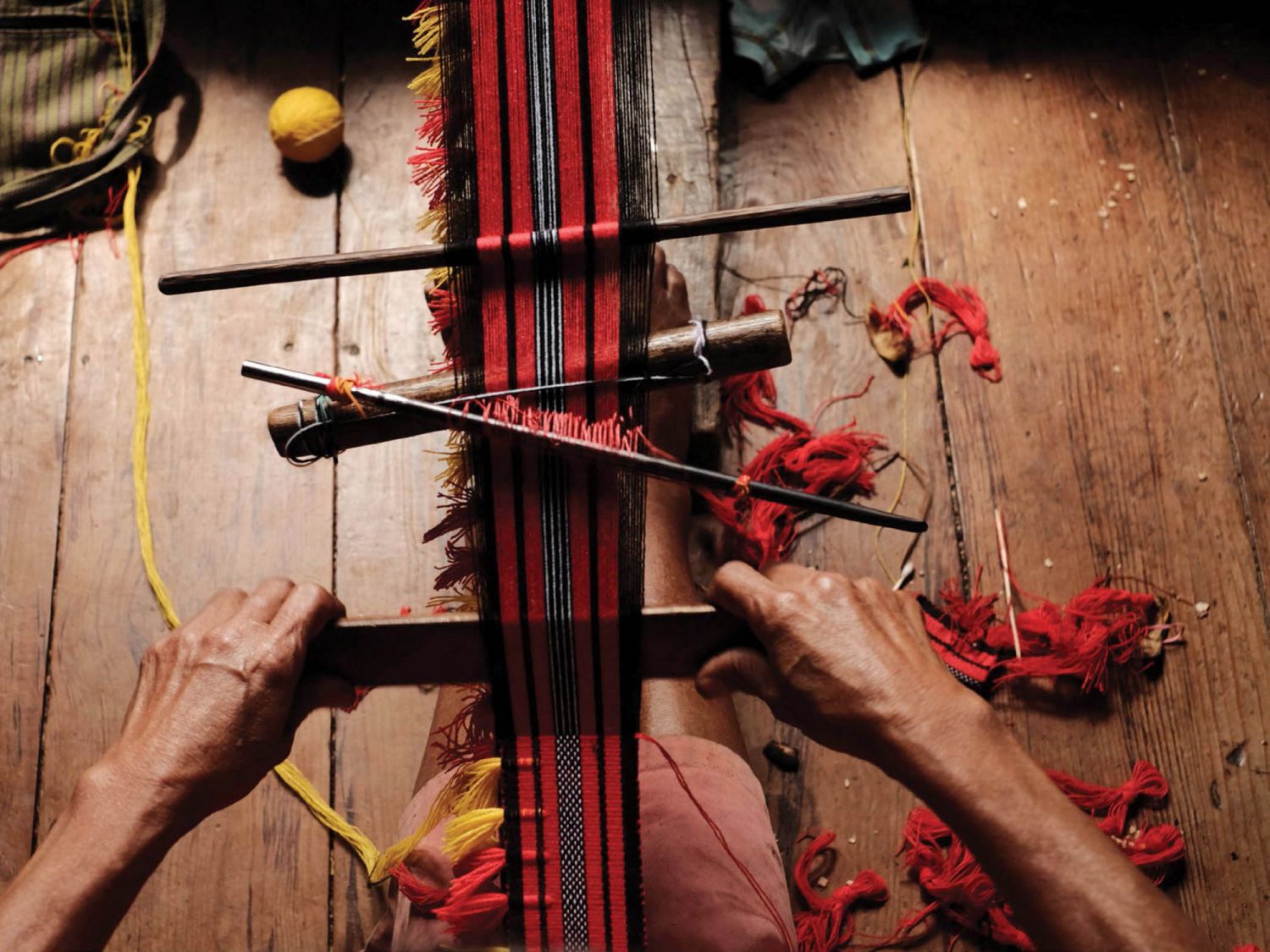
The Philippine weaving industry is rich with history, plenty of it hidden in unspoken narratives known only to its tribespeople. Combined, there are 110 indigenous groups all over the country, scattered across Luzon, Visayas, and Mindanao. Each of these groups is composed of a unique people, with varying traditions and histories to tell; one of their most celebrated art forms is the one they fabricate on their looms. Once considered a sunset industry, weaving and native textiles have made a well-deserved resurgence in a people hungry for pride. Before, only the respected elders were masters at the craft; and the young often left home to look for greener pastures in urban areas and commercialised industries. But now, there is a slow but significant change: there is empowerment. Social groups, lawmakers and laypeople are celebrating these textiles.
Read more: Walden Lam Of Unspun Is Using 3D Weaving To Create Sustainable Denim
Self-proclaimed maximalist and Manila-based interior decorator Raul Ramon “Ram” Lopez-Vito Bucoy II is among those championing weaves in the Philippines. “There is history, life and energy to these weaves,” he shares. “Be it a few yards of beautiful T’nalak fabric from the T’boli tribe of Lake Sebu in Cotabato to intricately handloom fabrics by the Yakans of Basilan and Zamboanga—no matter how one works with them, translates them, plays with them, they still have that visual excitement I am always looking for. It adds soul to one’s home.”

Above (Photo: Getty Images)
(Photo: Getty Images)
1 / 1
Some may find that incorporating weaves into their living space can be daunting. It is, after all, a symbol that must be revered. Not only that but how can something so traditional blend in with a contemporary or modern home? “I would advise not to think about it too much,” laughs Bucoy. “Trust your gut, have some fun, colour your world.” Mixing and matching may also be a good experiment for those seeking to add a splash of colour to their space. “Anyone who knows me knows I am a big believer in bringing colour into the home. Layering colour and prints add personality. You get a sense of who someone is,” the interior decorator adds.
A good step would be to familiarise oneself with the numerous kinds of weaves of the Philippines. Though there are plenty, the more well-known ones include the Binakol, the Ikat, the Hablon, the Yakan, the Pis syabit, the Kambut and the T’nalak. These weaves are made by various tribes located all over these 7,107 islands, and each
of them carries a distinctive pattern that may resonate more to some than others.
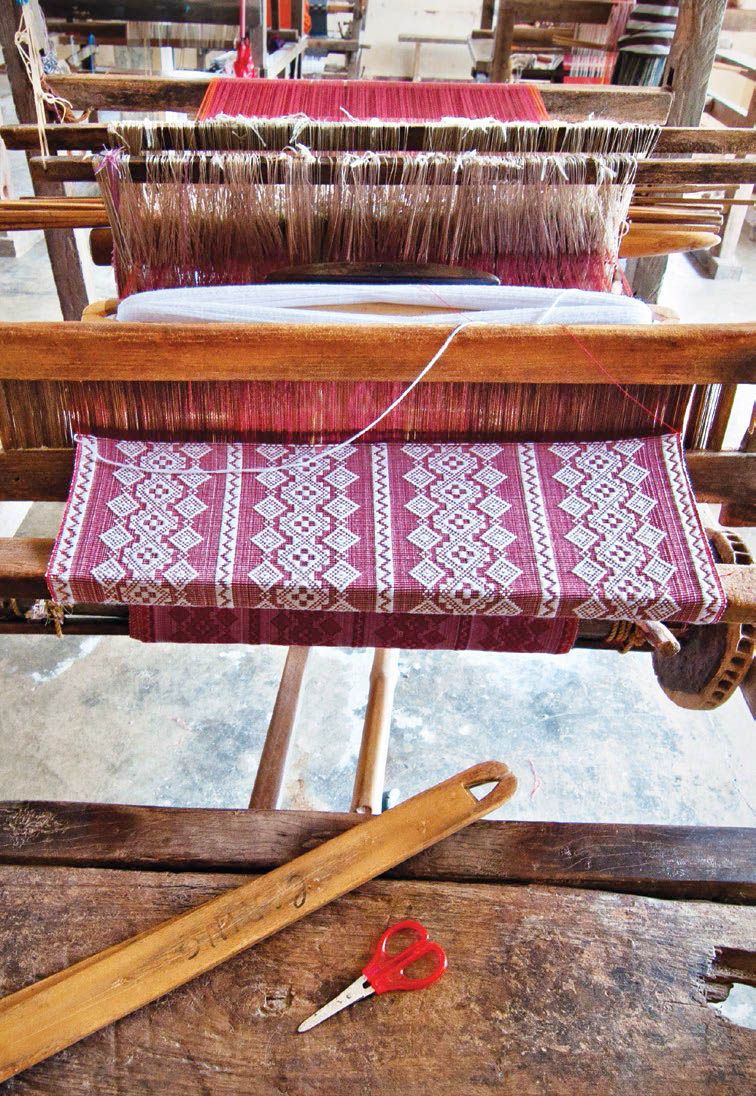
Described by Bucoy as “psychedelic”, the Binakol weave comes from Ilocos and Abra regions. It features interlocking geometric patterns and gives its viewers a sense of motion and optical illusion. It is said to represent nature, more specifically the waves of the sea. Ikat, on the other hand, is created by the Ifugaos. It refers to the dyeing technique that results in unique patterns depending on which yarns are dyed by its maker.
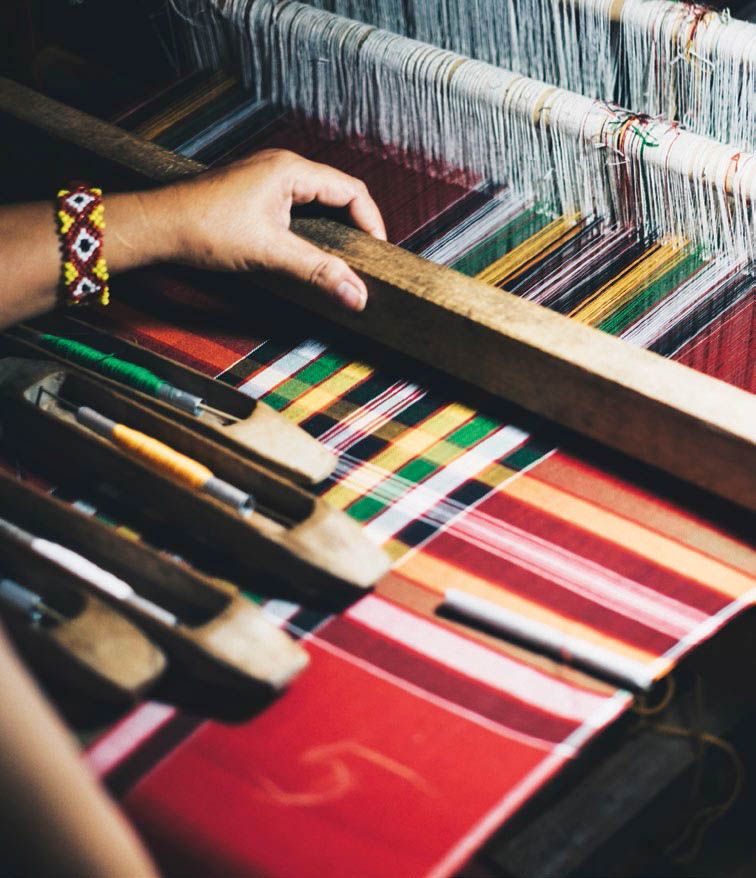
Hablon weaving from Iloilo comes in either a plaid or checked design. Though not as intricate as other local weaves, the Hablon comes from a special process that’s proudly Ilonggo. “Hablon is done by interlocking threads through a wooden handloom called a habulan,” explains Bucoy.
Above (Photo: Getty Images)
(Photo: Getty Images)
1 / 1
Those seeking something bright and bold may need to check the Yakan, originating from Basilan and Zamboanga. Said to have been inspired by the skin of the mighty python, the Yakan features bright and bold patterns that are “representative of nature and Islamic sacred geometry”. “Its repetitive patterns, mostly diamonds, are meant to represent the continuity of the universe,” shares Bucoy.
Read more: How Craftsman Cyrus Dan Cañares Funds His Travels Through Furniture Art
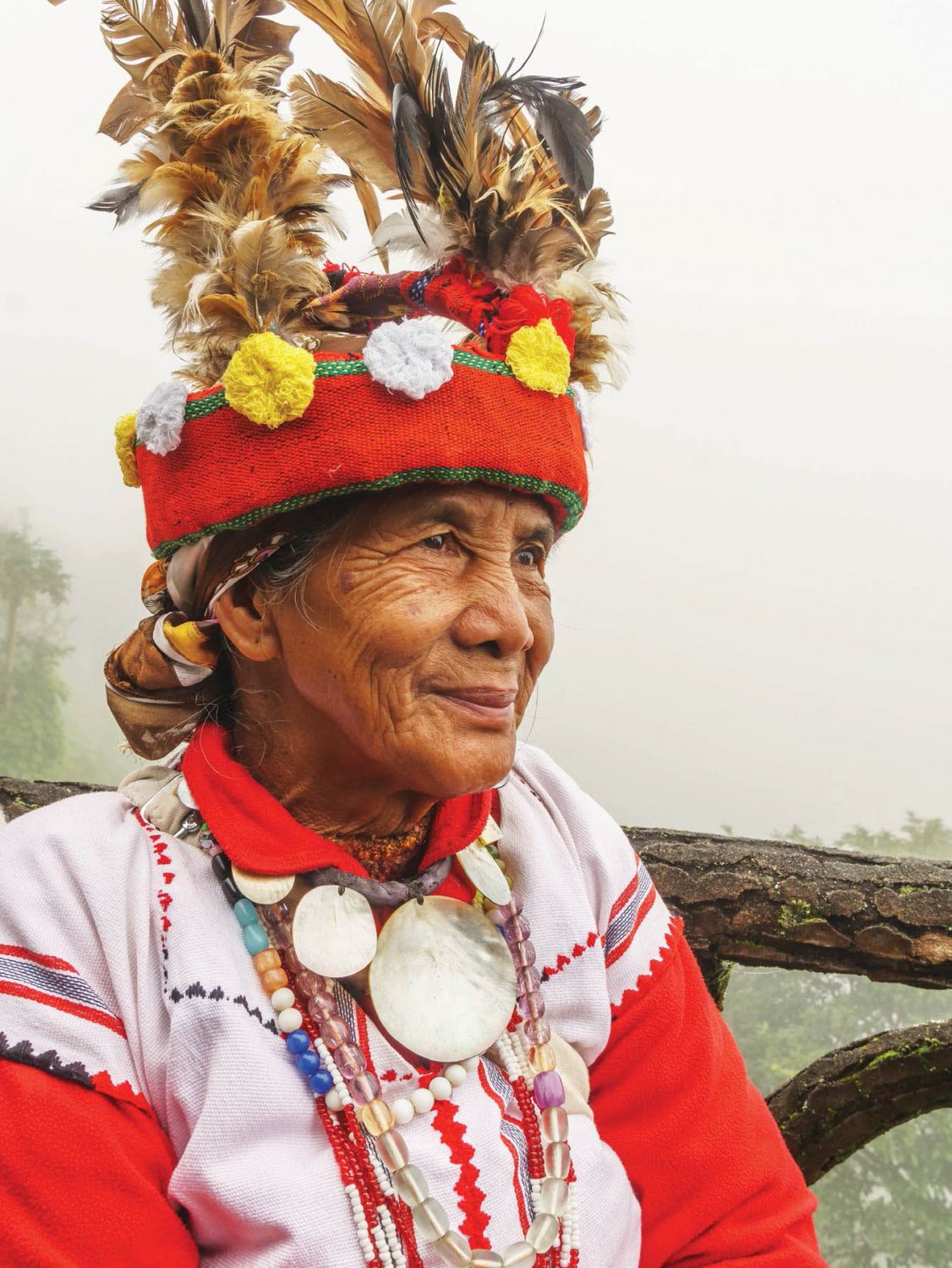
The Tausugs, from Sulu, are known for their Pis syabit and Kambut. These are traditional items of colourful clothing that are worn by men as headdresses. “Its symmetrical geometric designs represent the wearer’s rank in society,” Bucoy explains.
Lastly, the T’nalak weave from Southern Mindanao. “It comes in tones of red, brown and black, with the end product requiring months of work to produce a single, unique weaving,” says Bucoy of the artisanship required to create it. Women of the T’boli tribe produce these works as an artistic expression of their environment.
Above (Photo: Getty Images)
(Photo: Getty Images)
1 / 1
Considering the complexity of these weaves, it becomes incredibly important to revere the work of our indigenous people. These items are not just pretty things to have in our homes, they become a vehicle for cultural appreciation. To be responsible owners of indigenous weaves means understanding the culture, and researching about what these patterns mean, as some may retain spiritual or sacred symbolism.
In this way, we can avoid offensive cultural appropriation and allow our artisans to keep the soul of their work.“Our culture and its deep heritage [may it be pre-colonial or colonial Philippines] defines our national identity. It is always important to preserve our cultural heritage because it keeps our integrity as a people,” Bucoy expresses.
After educating oneself on the significance and meanings of these textiles, feel free to play around with your inspiration. “I go beyond turning each fabric into pillowcases,” Bucoy says of his weaves. “It is always best to be creative and playful with them. I always stock up on different local fabrics for lamp shades paired with antique Chinese vases to patchwork patterns upholstered on an accent chair and even wall tapestry—an added luxury and character to any room.”
NOW READ
Modern Filipino Fashion: What Inspires Alegre's Techie Hagedorn to Create Beautiful Pieces?
Hand-Beaded Swimwear by Local Tribes? Have a Look at Kaayo Resort's New Collection





