
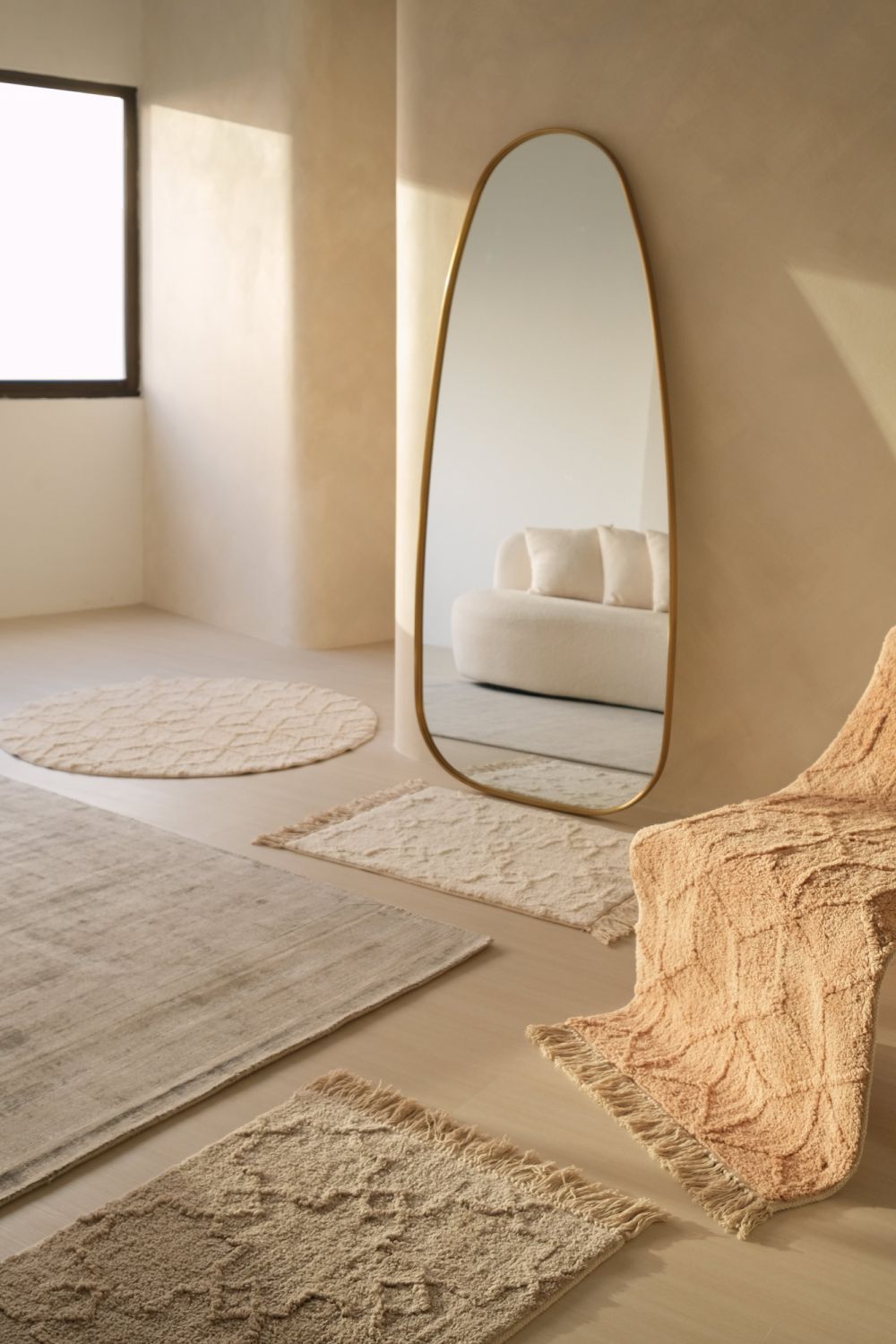
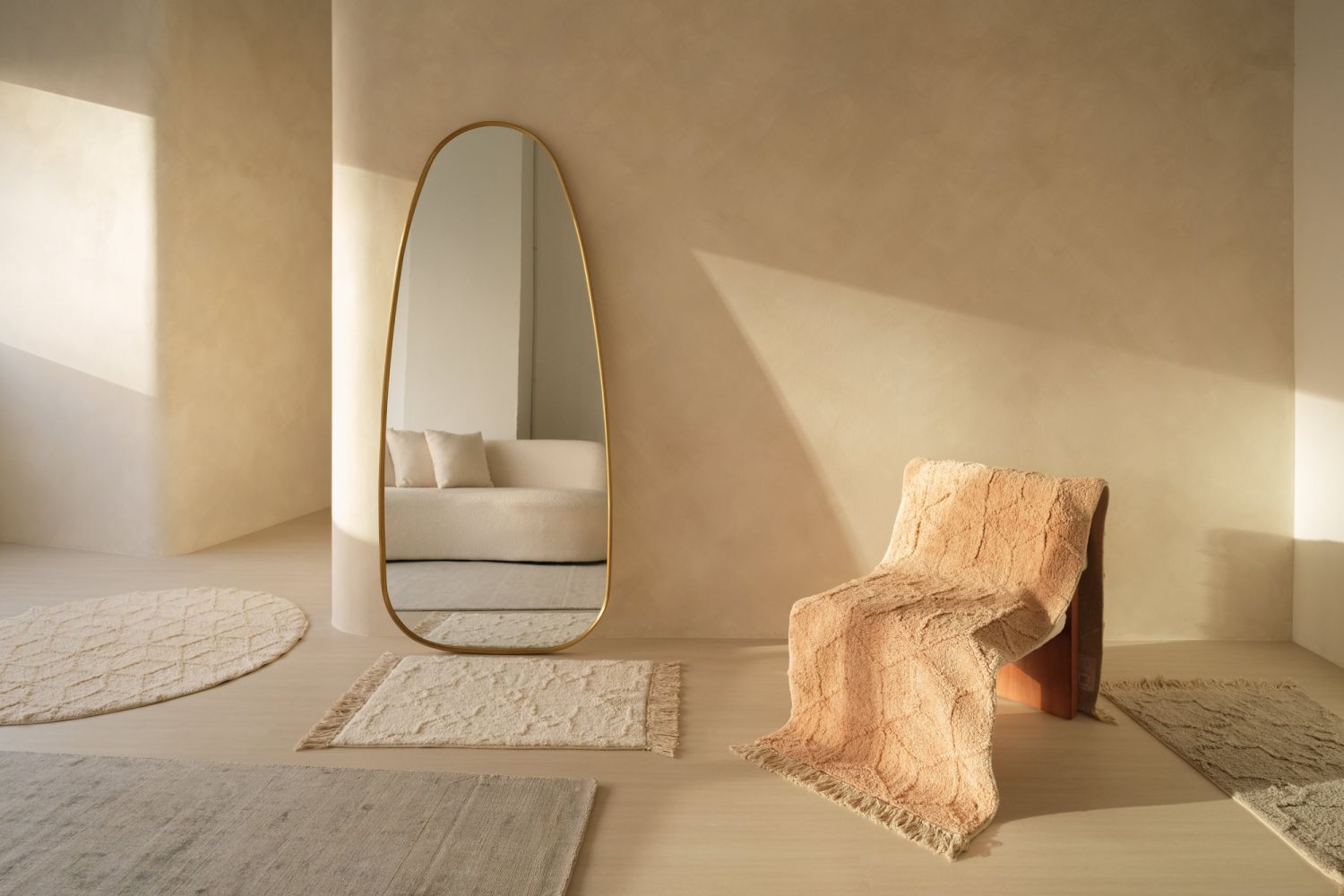
Cover Clockwise from left: the Lithe Gray rug, and Memphis Bath Rugs in Natural, Beige, and Gray, with the Amulet Ecru round rug in the background
Clockwise from left: the Lithe Gray rug, and Memphis Bath Rugs in Natural, Beige, and Gray, with the Amulet Ecru round rug in the background
1 / 1
Tatler+
Sustainable, unique, and with soul—these are the qualities Denise Taojo Kaur looks for on her mission to build the slow interiors movement in Singapore, one handmade rug at a time
On a trip back to her hometown of Davao City in the Philippines, Denise Taojo Kaur was treated to a spectacular sunset. From a stilt house by the shore, she saw the day end in a blaze of glory. The setting sun, mirrored on the surface of the calm sea, fired up not just the sky, but the entire vista with its warm glow. Simply snapping a photo wasn’t enough; instead, Kaur decided to immortalise the moment in a rug.
This gave birth to the Sunset rug in the Gradient series at Living DNA, the rug store Kaur founded in 2015. Featuring a vibrant colour palette of yellows that transition smoothly into oranges and reds, it remains Kaur’s favourite rug to this day, despite stiff competition from the large inventory of designs at Living DNA, which amounts to more than 150. “It’s really special to me because of the inspiration behind it,” she shares. “I wanted to put my roots into something that would define me going forward.”
Don't miss: 10 Colourful, Cosy Rugs That Add Comfort And Style To Your Home

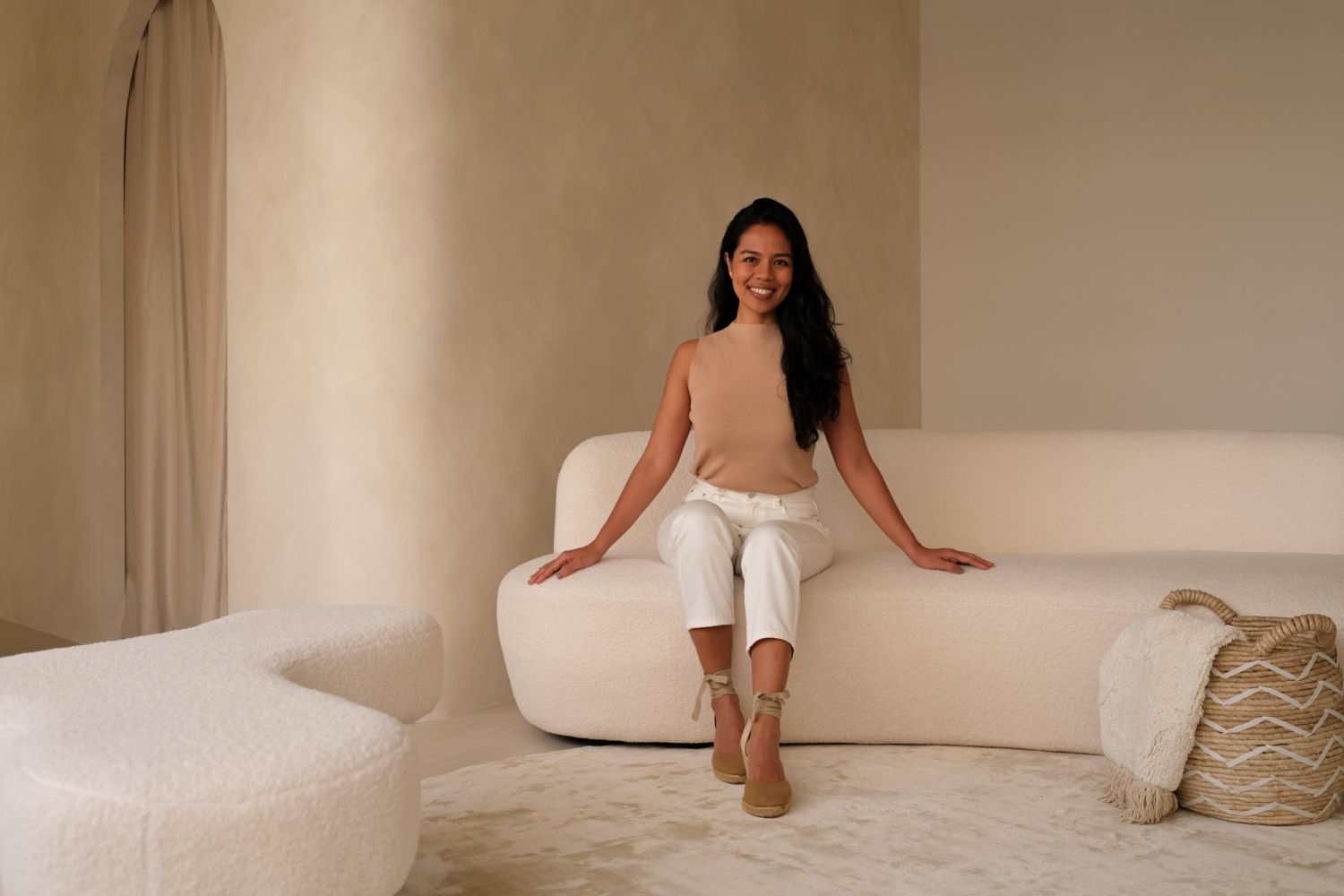
Above Kaur founded Living DNA in 2015, driven by a desire to bring sustainable, handmade decor items to the local market
Kaur founded Living DNA in 2015, driven by a desire to bring sustainable, handmade decor items to the local market
1 / 1
The Gradient series has certainly become somewhat of an icon at the store, and has been expanded to include three other colours—Eden, featuring green forest tones; Dawn, named after the dawn sky; and Sahara, which echoes the colours of a desert. Its popularity is proof that Kaur isn’t alone in her pursuit of the ideal that inspired the founding of Living DNA—slow interiors, based on pieces that have a story to tell.
“Living DNA is the result of a personal journey I went on to discover what resonated with me,” Kaur reminisces. “When I was furnishing my own home after getting married, I found myself buying items on my travels because the mass produced options that tend to dominate the local chains didn’t appeal to me. It made me reflect on the guiding philosophy behind most of my choices, and I realised that what resonated with me most were handmade pieces that held the stories of the maker and the history of a culture—things with soul, and usually made from natural materials.”
Rugs, being the epitome of the slow interiors ideal, had a clear pull to her. “Unlike many other products for the home, rugs, in general, are still better quality when handmade,” she attests—and it’s a quality difference that is visible.
I realised that what resonated with me most were handmade pieces that held the stories of the maker and the history of a culture.
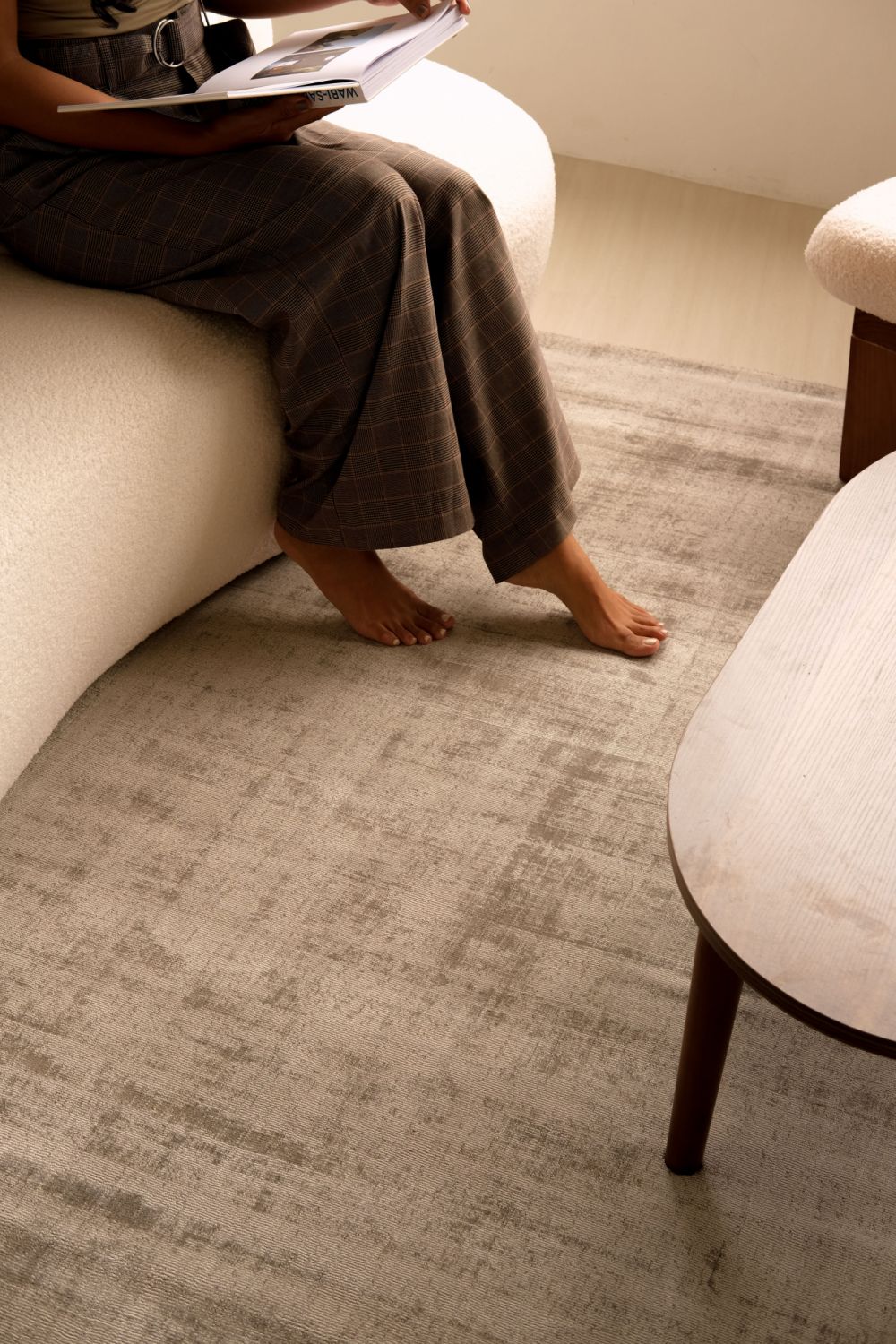
Above When it comes to rugs, handmade is still the best, offering a quality that is visible and can be felt
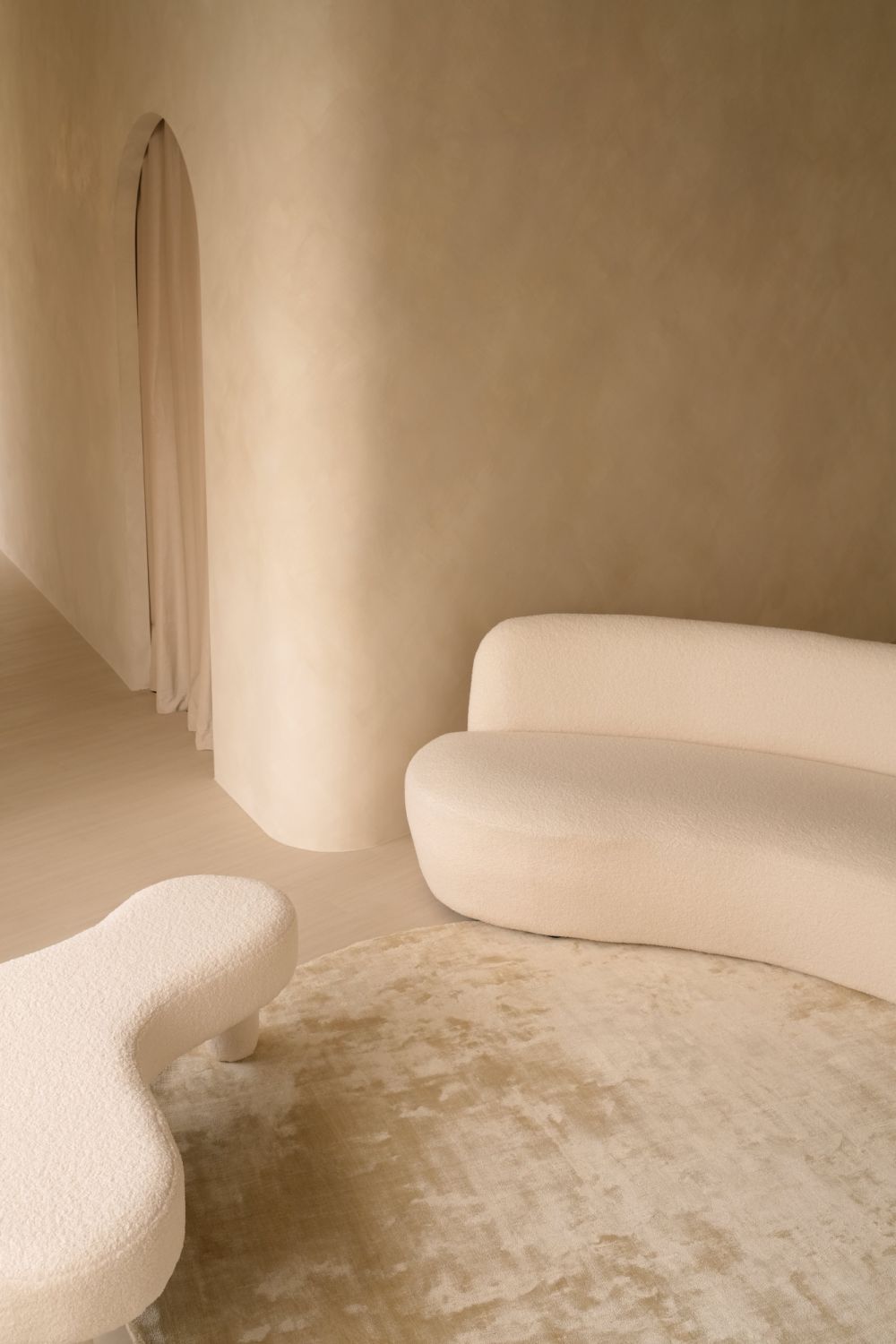
Above The Alchemy Cloud Cream round rug, made in viscose or Tencel using the handloom technique, has a two toned velvet-like sheen and is exceptionally soft to the touch
When it comes to rugs, handmade is still the best, offering a quality that is visible and can be felt
1 / 2
Kaur explains that there is a dizzying array of techniques to create different textures in rugs, with some being unique to certain materials. Jute, for example, can be flat woven or braided while silk can be tufted or knotted. The catch? These techniques are only achievable by hand. “There are currently only one or two weaving techniques machines can execute,” she reveals. “And the machines are quite rough with the material, so you can only use synthetic or heavy-use materials with them, such as polyester or sisal. More precious materials such as wool, bamboo silk, or silk can only be manipulated by hand.”
Further adding to the uniqueness of each handmade rug is a little known fact: they are seasonal in nature. Weather changes, floods and currents all affect the PH level of the ground water, resulting in slight colour differences in the dye mix. Post-dyeing, colour fastness is achieved by drying in the sun, which means that rainy monsoon seasons and cloudy winter skies affect how quickly a rug can be finished.
In case you missed it: 5 Home Decor Workshops in Singapore to Learn a New Hand-Made Craft
Above At Living DNA, even the most modern rug have been made with traditional techniques
At Living DNA, even the most modern rug have been made with traditional techniques
1 / 1
For many of the collections, Kaur works with organisations that deliver dyed yarns and other raw materials to the remote villages where the artisans live and work. Many of these artisans are women who weave during the pockets of time they have in between farming and taking care of their households. It’s a system that makes village life and artisanal work sustainable, simultaneously tackling the issue of rural-urban migration, persevering traditional crafts, and respecting a traditional way of life.
“Traditional craft is the foundation of our rugs, even the most modern ones you may see in our store. They have been woven using techniques that have been around for generations and centuries,” she says. “By the time a piece makes it into a customer’s home, it already carries with it many stories.”
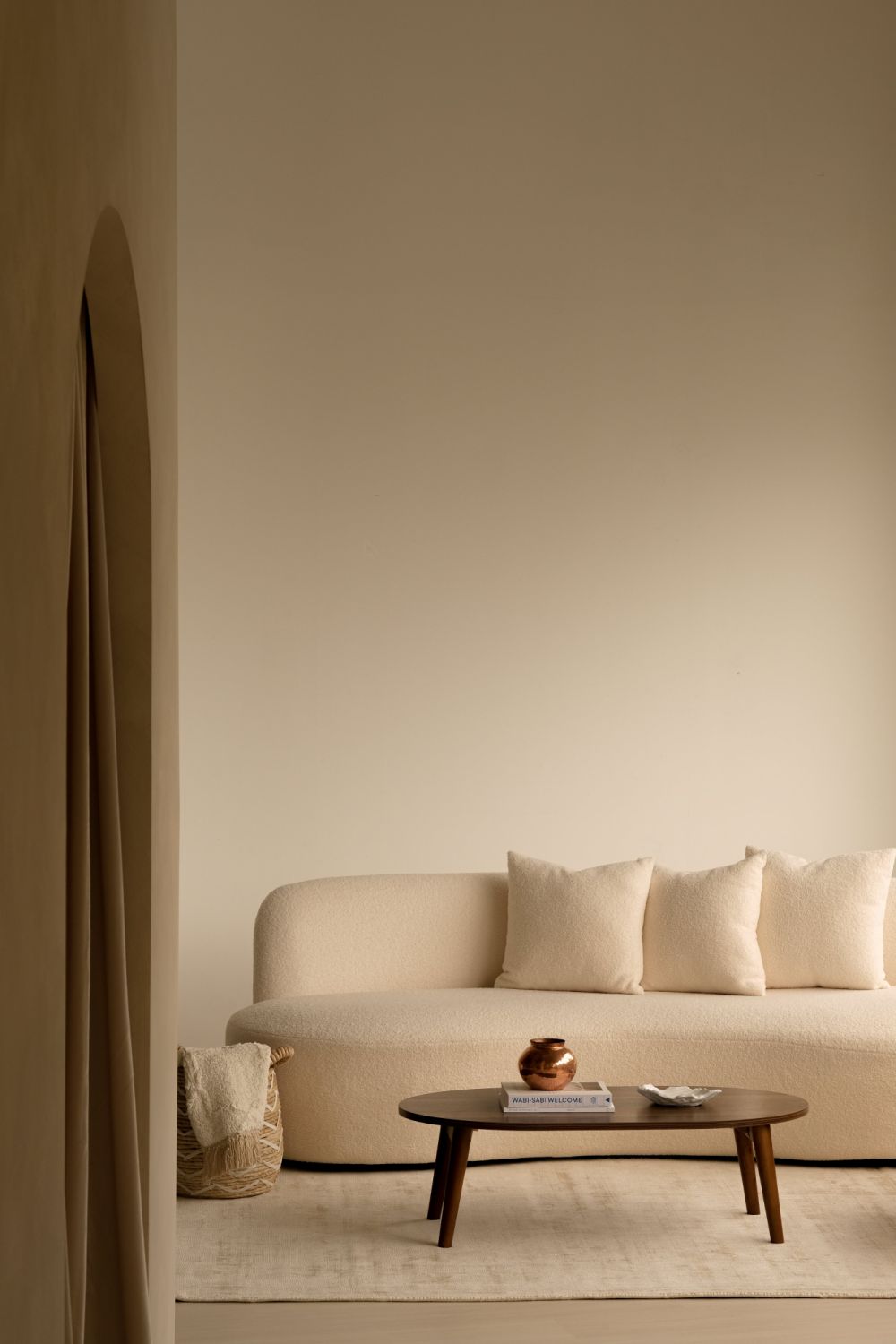
Above With Living DNA's bespoke service, you can customise every single detail, right down to the pile height and materials used, to create the perfect rug to suit your home and lifestyle
With Living DNA's bespoke service, you can customise every single detail, right down to the pile height and materials used, to create the perfect rug to suit your home and lifestyle
1 / 1
For the customers who want something truly one-of-a-kind, Living DNA provides a bespoke service. The design could be based on an existing rug in the Living DNA catalogue, or completely original. Colours are then chosen, and a rendering is made. Once the design and size have been approved by the client, the long process of making the rug starts.
“We will then source the materials, dye it by hand, dry it in the sun, and then weave it,” describes Kaur. “Bespoke rugs are made completely from scratch, with yarns dyed by a master dyer to the desired colour. It’s akin to commissioning a painting, where the colours are mixed by the artist.” Each rug may take two to three months to complete.
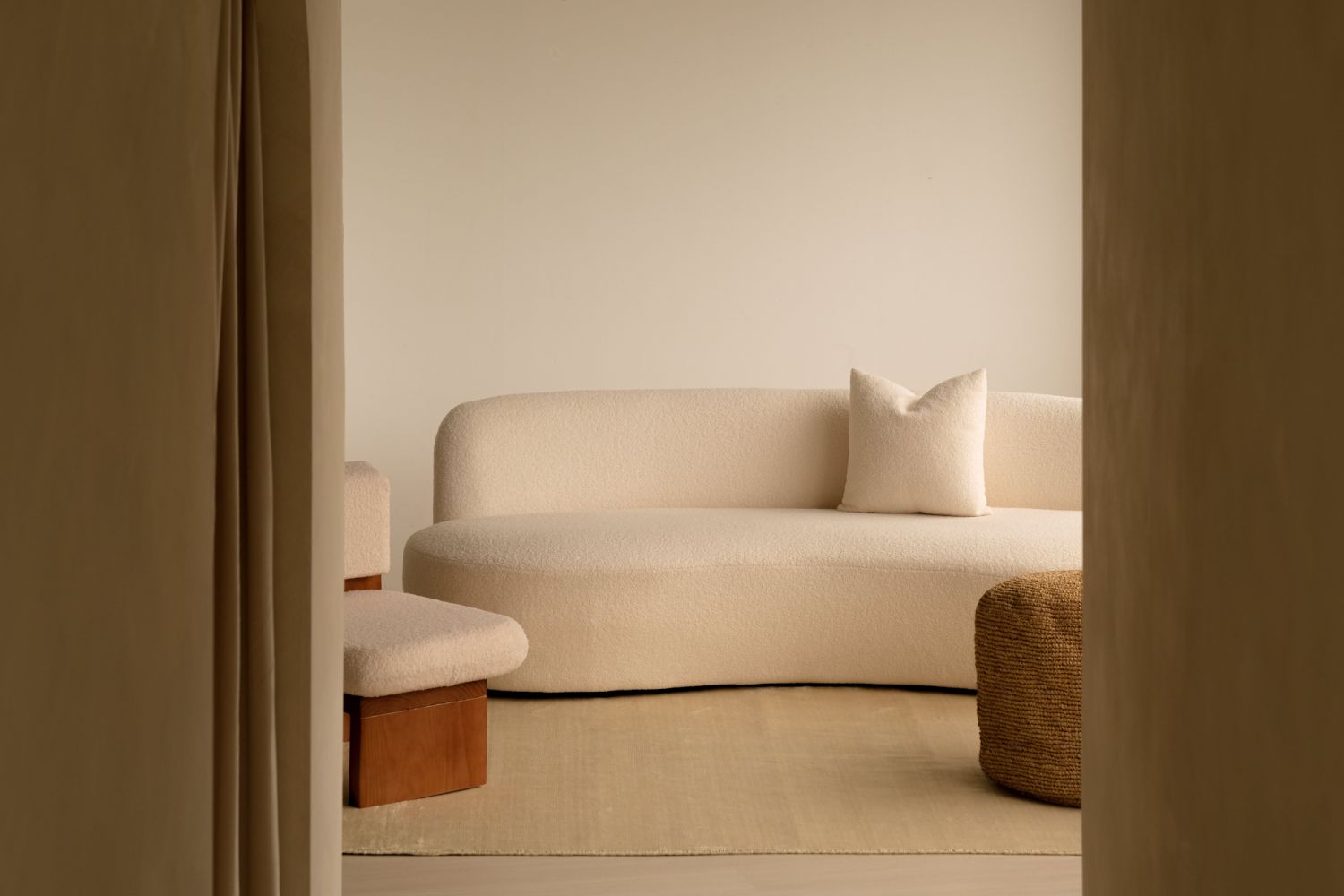
Above One misconception about rugs is that they are difficult to maintain. Kaur debunks this, saying that rugs with a pile height that is medium or below can be vacuumed like bare floors
One misconception about rugs is that they are difficult to maintain. Kaur debunks this, saying that rugs with a pile height that is medium or below can be vacuumed like bare floors
1 / 1
“When I started the business, I had three guiding principles: to live mindfully, meaningfully and beautifully,” Kaur shares. “Mindfulness is especially relevant to slow interiors. It’s about getting to know the impact of what we are buying. Does it benefit the person who makes it? What is its impact on the environment? The processes and contemplations behind every buying decision are slow, and one may even say inefficient. It goes against the culture of efficiency. But I think a life well-balanced is a life where contemplation and action go hand-in-hand.”
Living DNA is part of the Best of Singapore 2022 guide.
Credits
Images: Living DNA





