

Cover Dining room in Makati with lighting design by C Mark Wilson (Photo: C Mark Wilson)
Dining room in Makati with lighting design by C Mark Wilson (Photo: C Mark Wilson)
1 / 1
C. Mark Wilson of Wilson Escalona Design shares his creative process and teaches us how to light up the spaces we live in
We may not think much of it, but light is a big part of what makes a home so lovely to live in. Natural light pouring through glass windows, dim ambient light just right before we sleep: for those in high-end residential areas, these things take as much thought as one can imagine. "Lighting design is built around tasks," C. Mark Wilson, a Principal at Wilson Escalona Design, points out. "So if you're going to ask a doctor who performs heart surgery what he needs in lighting, it's very different from what you need for conversation at a dining table."


Above Designer C. Mark Wilson of Wilson Escalona Design (Photo: C. Mark Wilson)
Designer C. Mark Wilson of Wilson Escalona Design (Photo: C. Mark Wilson)
1 / 1
Design as Function
As with any aspect of home design, the lighting in various rooms of an abode must flow seamlessly according to the lifestyle of its owner. In the dining room for example, where the two main tasks are to sup and to converse, the lighting becomes an essential pillar of support. "You need to see the food . . . because if you can't see it, you don't know what you're doing," Wilson addresses. "The second task is conversation [which] is not just about what you hear, but also about reading the facial expression of the person [you're talking to]. So in a high-end residential interior, those two things are always addressed. My clients will often want a beautiful pendant fixture or chandelier or, what's [popular] nowadays, which a directional fixture [on the edge of the table]."
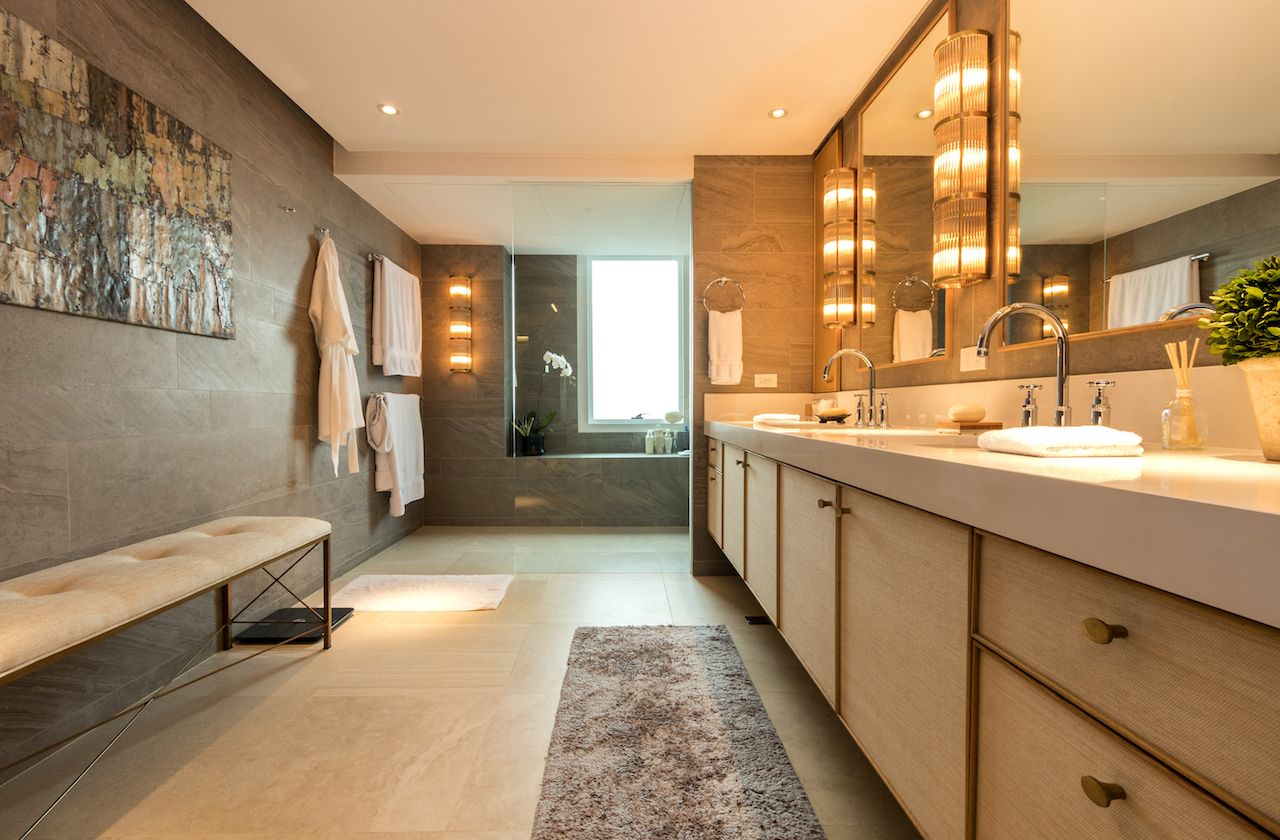
Above Bathroom in Makati with lighting design by C Mark Wilson (Photo: C Mark Wilson)
Bathroom in Makati with lighting design by C Mark Wilson (Photo: C Mark Wilson)
1 / 1
Throughout our conversation, Wilson continuously stresses the importance of what many designers—but few laypeople—understand: that design must be in accordance with function. For bathrooms, Wilson is an advocate of fashioning them brightly. "There are a number of tasks going on. Number one is a man might shave in it, a woman might check her makeup. You might have to look for medicine on a countertop. It's a more complex room than the bedroom so you have more brightness levels and probably even more light fixtures in the bathroom," he explains.
For the bedroom, which is a haven for one to unwind, rest, and sleep in, Wilson turns his opinion a full 180 and recommends going dimness. "There are new bulbs that are called dim to warm and when you're on the dimmer and you do 100 per cent, they're warm white. And then you go to the lowest intensity and they become like candlelight: very orange, orange, yellow, red."
This choice isn't strictly a design perspective either—on a very basic level, it's biological.
Read more: International Women's Day 2022: 5 Groundbreaking Female Architects and Designers
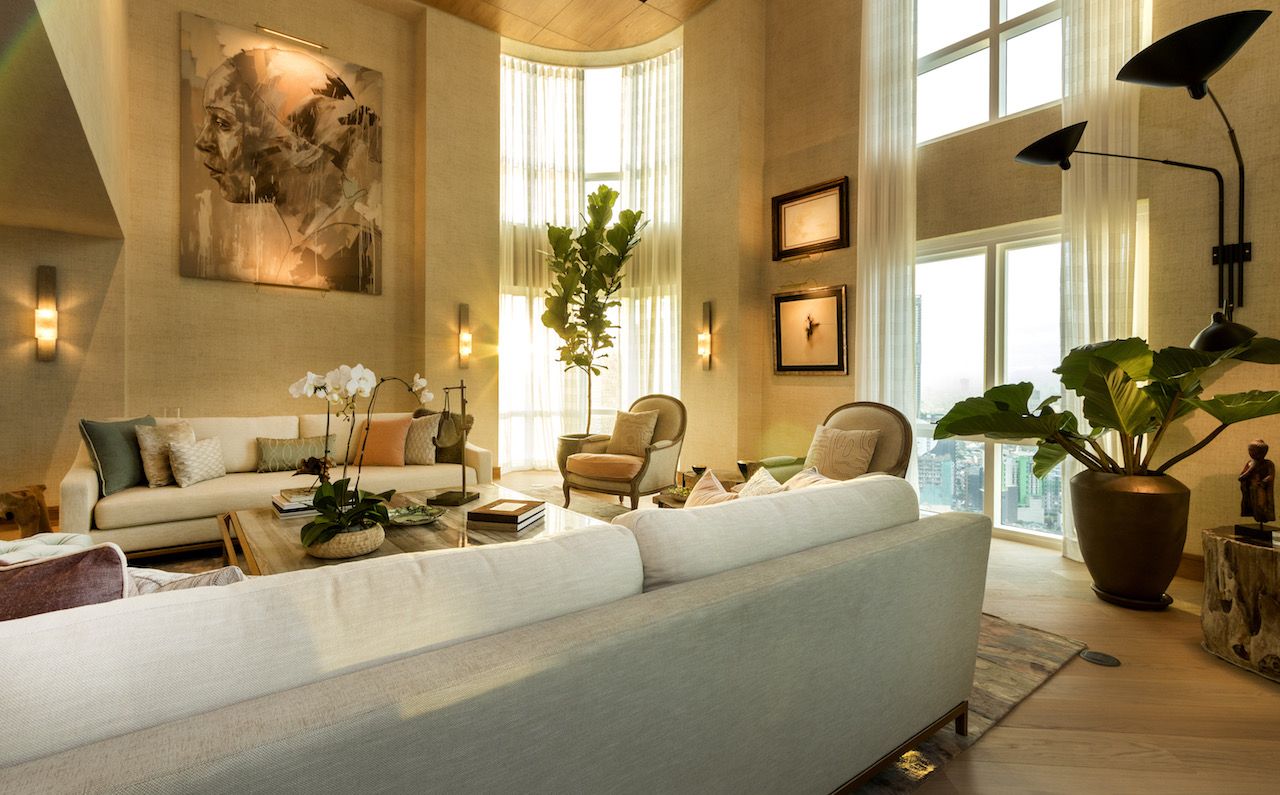
Above Living room in Makati with lighting design by C Mark Wilson (Photo: C Mark Wilson)
Living room in Makati with lighting design by C Mark Wilson (Photo: C Mark Wilson)
1 / 1
"Lighting is only 250 years old," Wilson explains. "Before that, everybody fell asleep when the sun went down . . . and they woke up when the sun rose. That was how it was, and you call that a Circadian rhythm." During these times, hormones such as melatonin and serotonin are naturally produced in the body to accord with the rhythm. But with modernisation comes disruption and creates a need for meticulous lighting design in bedrooms. "Melatonin is produced by a kind of warm, red light, and then no light [corresponding] to the sunset, which produces this orange, red light and fades into black, purple, black. Serotonin production time, on the other time, is daylight where we have a kind of white, blue light. This is why I believe a bedroom needs to be very calm and peaceful and dim, to allow us to [produce melatonin] and enter into the sleeping mode."
See also: 9 Curvy Furniture Items that Encourage You to Cuddle Up
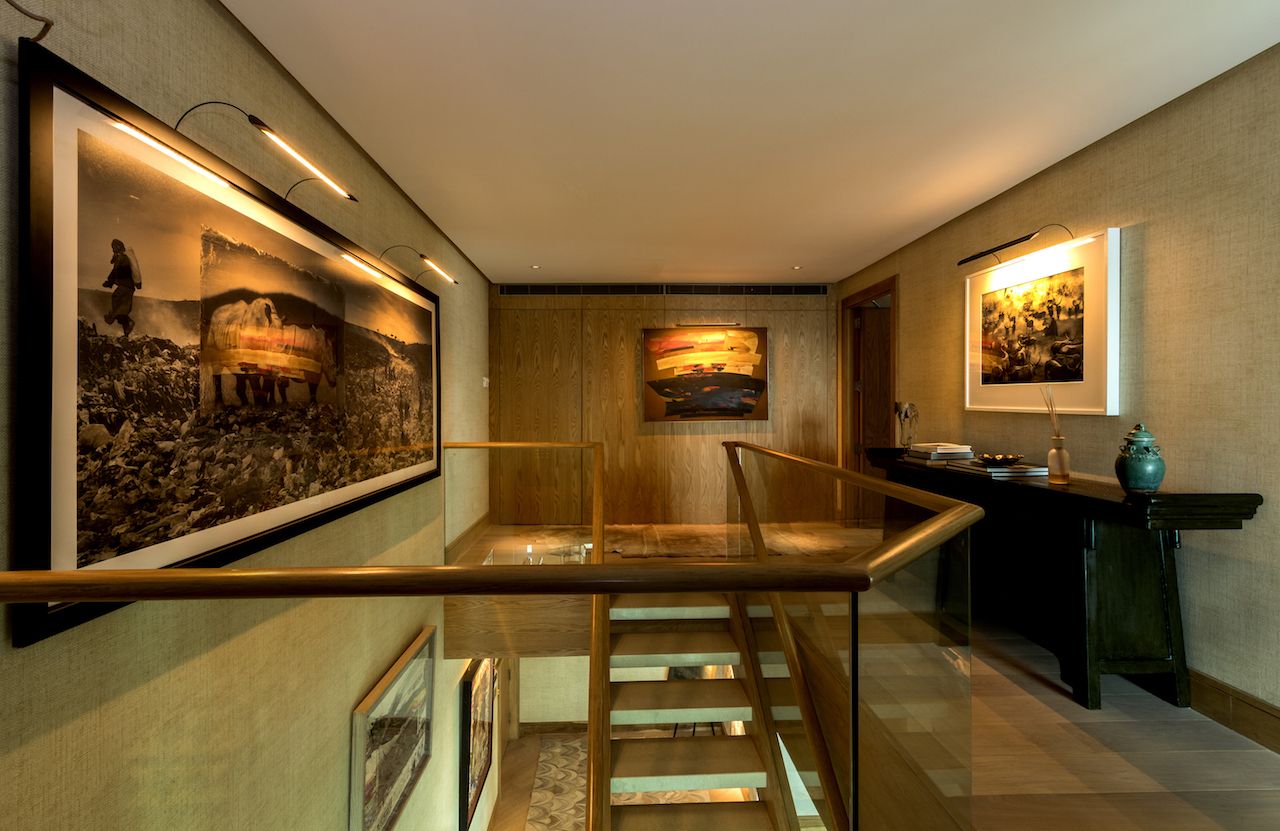
Above Makati residence with lighting design by C Mark Wilson (Photo: C Mark Wilson)
Makati residence with lighting design by C Mark Wilson (Photo: C Mark Wilson)
1 / 1
The Magic Ratio
Lighting a room doesn't simply require an understanding of lifestyle, it also requires a keen eye for aesthetics: in this case, shadows, angles, and contrast ratios. Imagine a supermarket where one giant bulb lights the entire warehouse. "You're not thinking, 'Wow, this is so beautiful," Wilson laughs, rolling his eyes.
To achieve a more elegant ambience, Wilson attests that any given space will have up to fifteen contrast ratios. "By this I mean, the amount of light on the floor and the amount of light on the brightest spot in the room is one is to fifteen," he explains. For the mathematically challenged (such as myself), Wilson suggests imagining a jewellery store—Tiffany's in New York, on Fifth Avenue in particular. "The brightest spot in that room is the vitrine with the diamonds. There is a tiny spotlight and it's shooting straight at the jewellery and the jewellery is glistening. Meanwhile, the light on the floor is not lit directly the way the jewellery is. It's lit by bounced light from the chandelier, the vitrines. So the floor doesn't need to be as bright as the diamonds. In fact, it has to be darker than the diamonds in order for you to see the diamonds. So there are fifteen different contrast ratios in order for you to feel that this is a very beautifully lit and exciting place."
See also: Home Tour: This Stylish Villa Is a Minimalist’s Dream Holiday Home
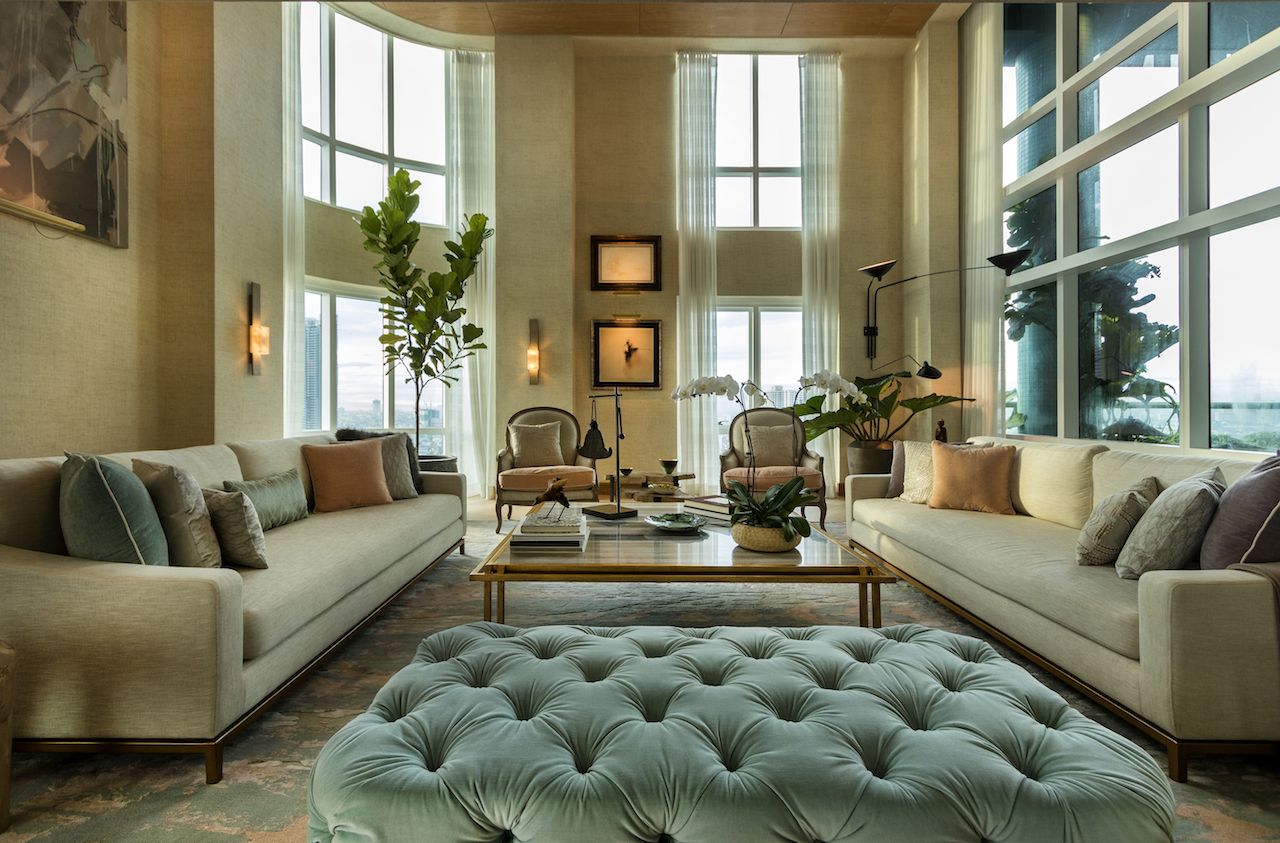
Above Living room in Makati with lighting design by C Mark Wilson (Photo: C Mark Wilson)
Living room in Makati with lighting design by C Mark Wilson (Photo: C Mark Wilson)
1 / 1
North, South, East, West
Natural light is another important aspect that Wilson usually answers for his clients. In a tropical country such as ours, light is often equivalent to heat—and during summer months, it's not quite so desirous. Basic geography tells us that the sun rises from the east and sets in the west, making eastern sunlight much stronger than light coming from other directions.
"Northern light has no direct penetration in the home," Wilson shares. "North has always been the preferred orientation for painters such as Rembrandt, Tisch. [They] are always looking for northern orientation because the light is always diffused. So if you're going to build a house, you want to open it as much to the north as possible and close to the west (where the sun sets for softer light)."
Topics





