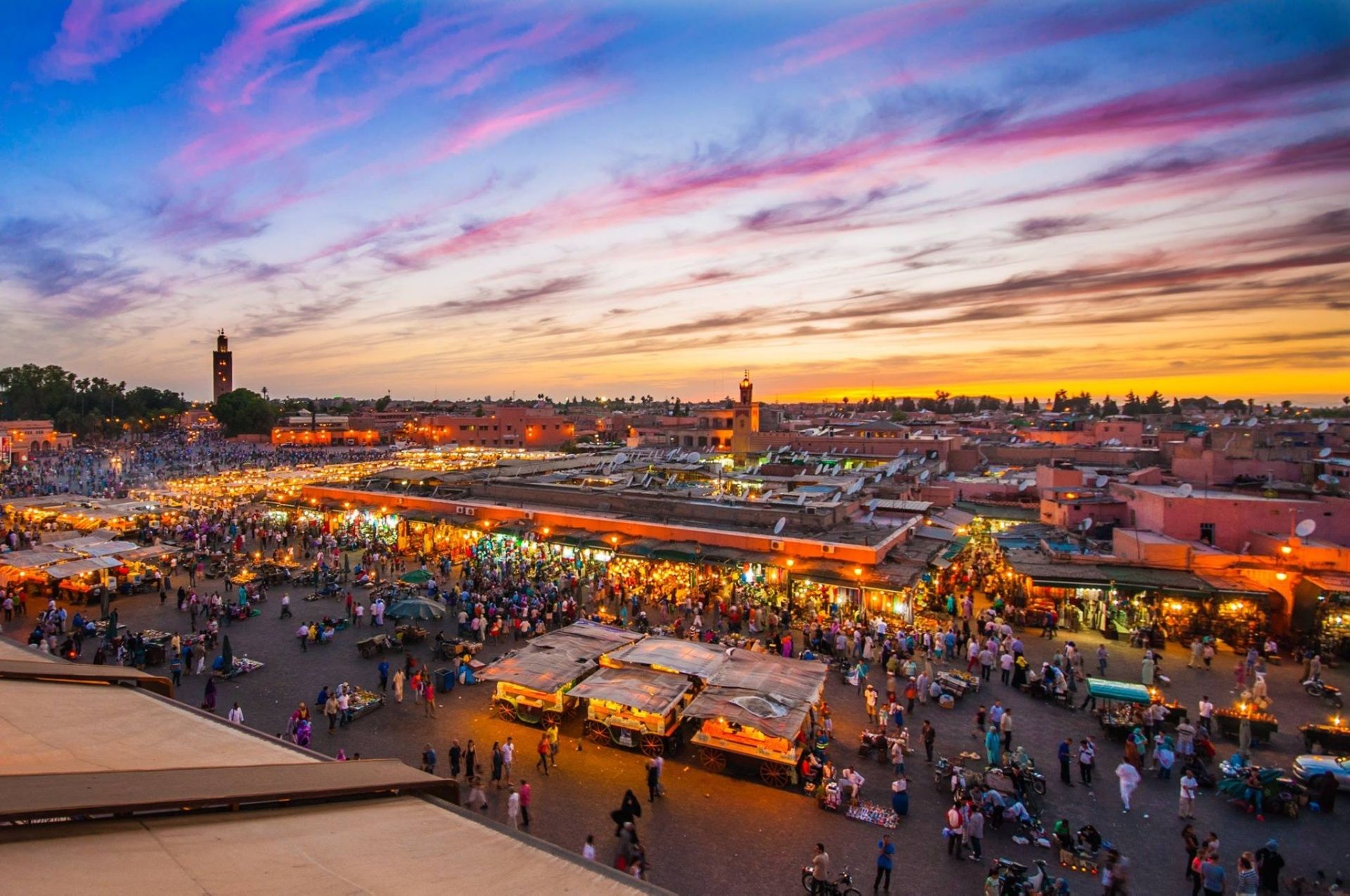
Cover Jemaa El Fna, Marrakesh’s iconic food market (Photo: Facebook /Jemaa El Fna)
Jemaa El Fna, Marrakesh’s iconic food market (Photo: Facebook /Jemaa El Fna)
1 / 1
From Tokyo’s Tsukiji to Budapest’s Nagycsarnok, these are the food markets worth building a trip around in 2026
A day at the food market is always a day well spent, whether you’re in London, Melbourne, or Madrid. The moment you step into one, your senses go haywire. Between the vibrant hues of fresh produce, the deafening orchestra of orders and conversation, and the irresistible aromas drifting through the air, a trip to the markets awakens the epicurean in all of us— and that’s before we even get to the feast itself.
Get your bucket lists ready: here are 16 of the world’s most famous, celebrating the craft of skilled artisans and the bold flavours of local cuisine.
Read More: Pocket List: 5 ways to experience Kyoto according to food stylist and writer Gloria Chung
1. Mercado de San Miguel - Madrid, Spain

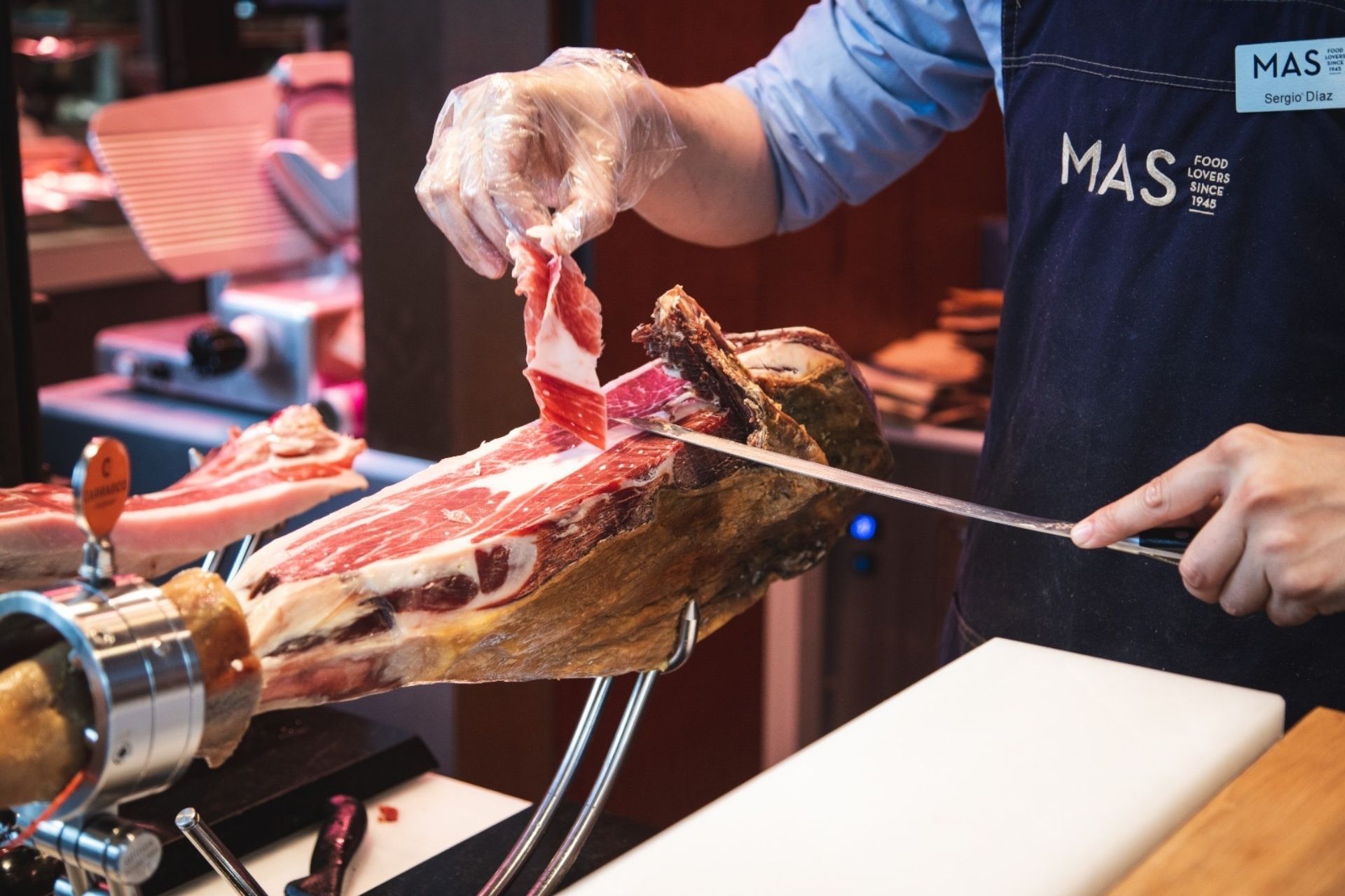
Above Madrid’s most glamorous market, built for grazing on tapas and Spanish wine beneath a century-old iron-and-glass roof. (Photo: Mercado de San Miguel Facebook Page)
Madrid’s most glamorous market, built for grazing on tapas and Spanish wine beneath a century-old iron-and-glass roof. (Photo: Mercado de San Miguel Facebook Page)
1 / 1
Madrid’s Mercado de San Miguel is an absolute dream for fans of tapas and wine. Housed in a stunning early 20th-century iron-and-glass building, this gourmet market is one of the finest in Europe—a shrine to Spanish culinary craft. Graze through Iberian ham sliced to order, Galician octopus dressed in olive oil and paprika, briny anchovies, and wheels of manchego, then wash it all down with a glass (or three) of Spain’s best wines. Unlike a traditional produce market, San Miguel is built for eating on your feet, stall by stall. Come hungry, come often, and resist the urge to rush.
2. Pike Place Market - Seattle, United States
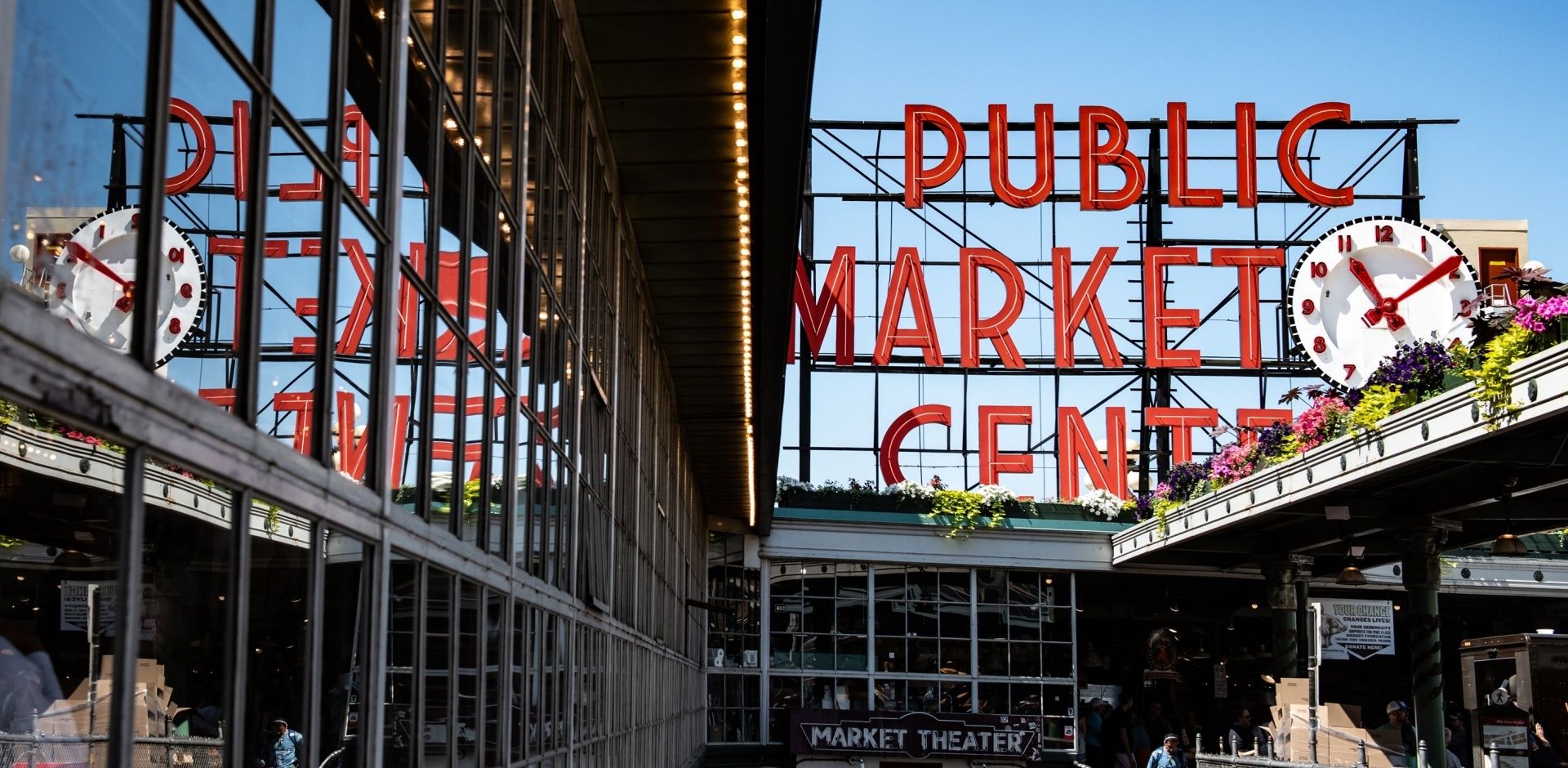
Above Seattle’s beloved waterfront institution, where fishmongers throw salmon, and the world’s first Starbucks still pulls its shots (Photo: Pike Place Market Facebook Page)
Seattle’s beloved waterfront institution, where fishmongers throw salmon, and the world’s first Starbucks still pulls its shots (Photo: Pike Place Market Facebook Page)
1 / 1
Pike Place is one of the United States’ oldest continuously operating public markets, having welcomed visitors since 1907. It’s famously home to the very first Starbucks—a pilgrimage site in its own right—but the market’s real draw is the sprawling network of fishmongers, produce vendors, artisan bakers, and craftspeople that line its bustling corridors. Watch the fish-throwing theatre at Pike Place Fish Co., then settle in for a bowl of the city’s finest clam chowder. For a more local experience, descend to the lower levels, where independent vendors and curiosity shops reward the adventurous.
3. Queen Victoria Market - Melbourne, Australia
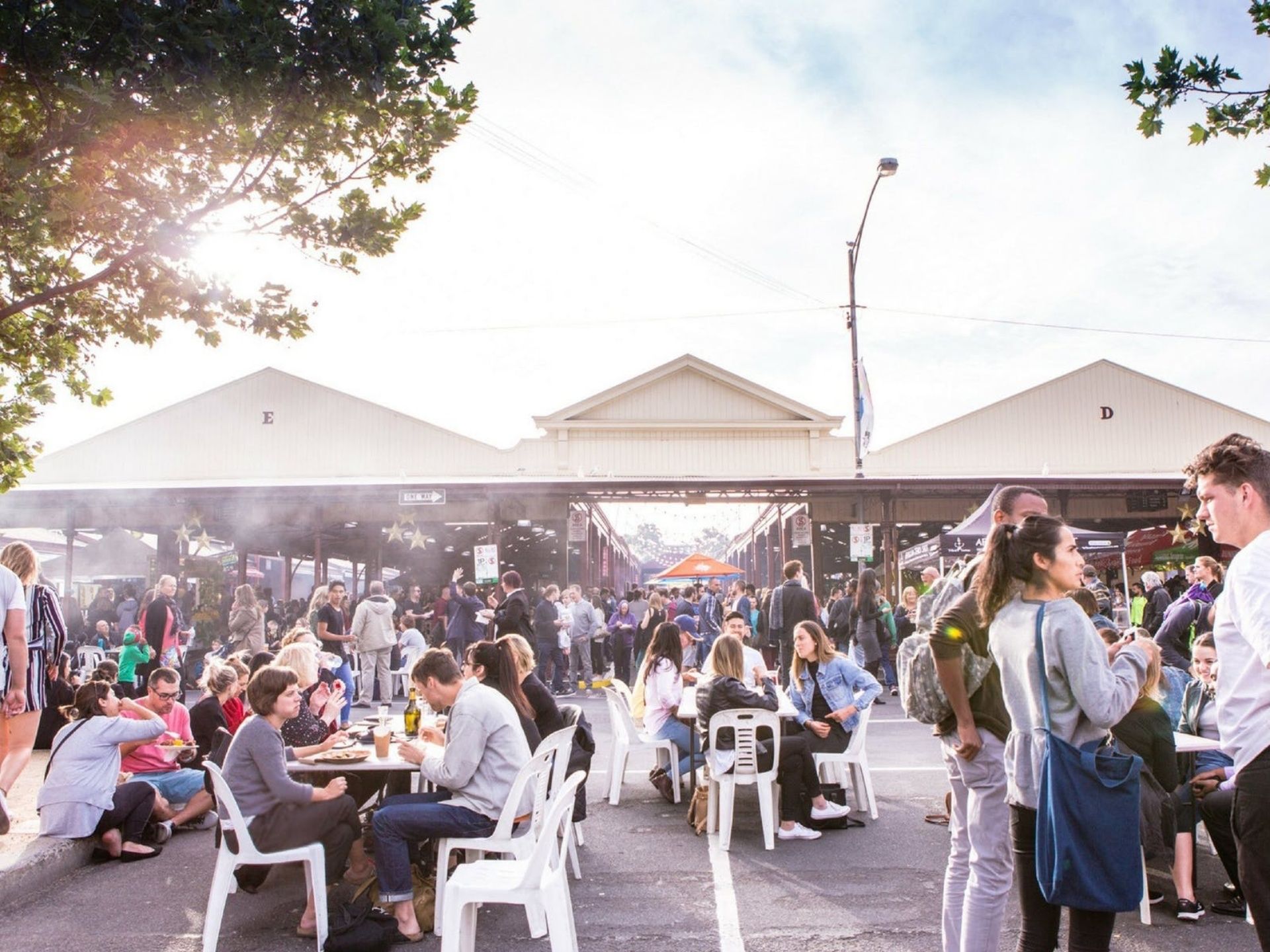
Above Melbourne’s 140-year-old beating heart, two city blocks of exceptional produce, cheese, meat, and some of the best night markets in Australia (QVM Visit Melbourne Website)
Melbourne’s 140-year-old beating heart, two city blocks of exceptional produce, cheese, meat, and some of the best night markets in Australia (QVM Visit Melbourne Website)
1 / 1
Situated at the edge of Melbourne’s CBD and spanning two full city blocks, Queen Victoria Market is a one-stop destination for anyone serious about good food. Between the rows of fresh produce, artisanal cheeses, quality meat and seafood, imported pantry staples, and a lively deli hall, the market brims with culinary inspiration. Its summer and winter night markets are equally unmissable—vibrant community events that reflect the city’s gloriously diverse food culture, with cuisines from every corner of the world. Queen Vic, as locals call it, has been feeding Melbourne since 1878.
4. Tsukiji Outer Market - Tokyo, Japan
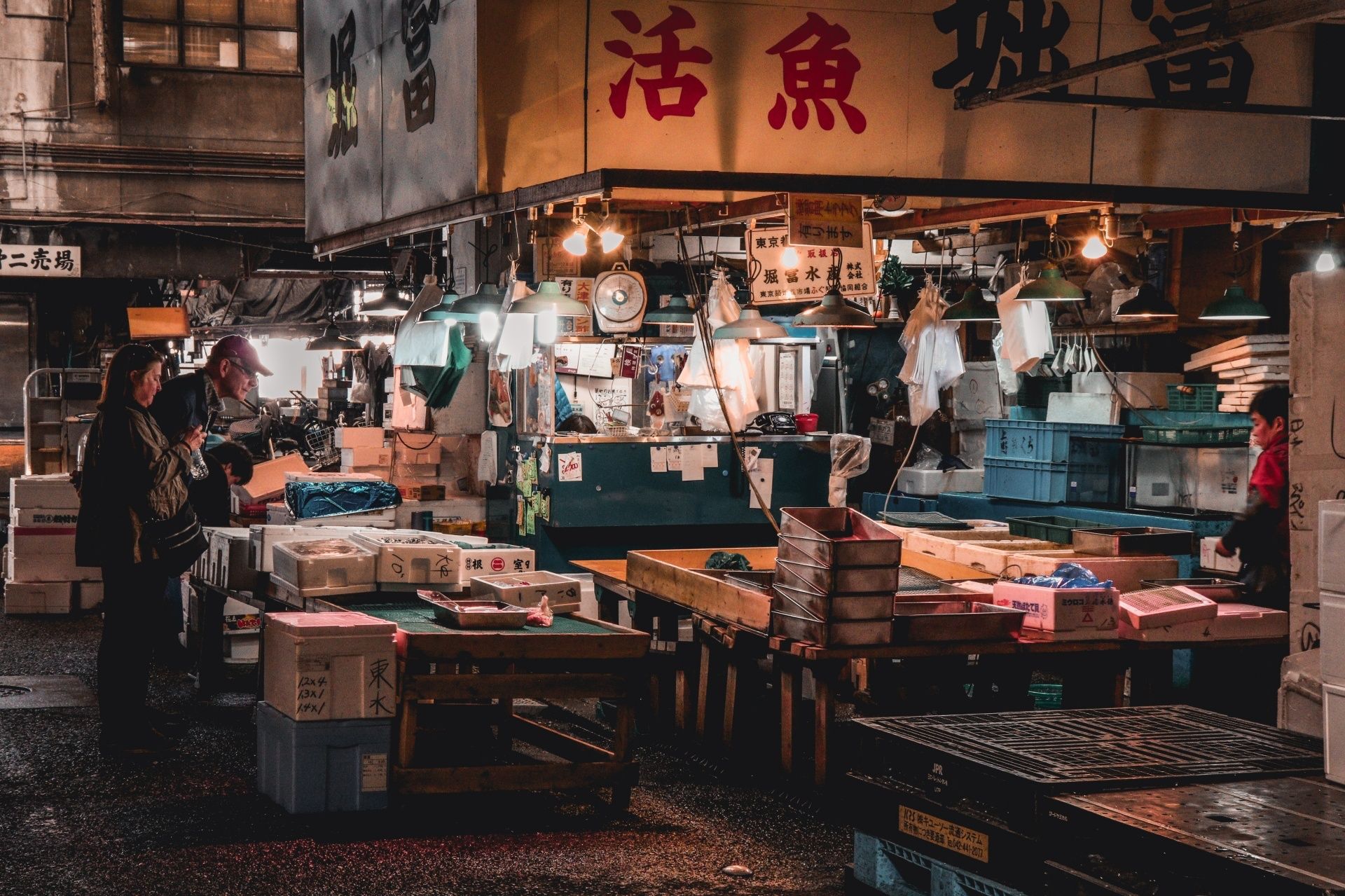
Above The legendary Tokyo fish district that survived the closure of its wholesale heart, still serving the city’s finest seafood breakfast before noon (Photo: Michael DeMarco / Unsplash)
The legendary Tokyo fish district that survived the closure of its wholesale heart, still serving the city’s finest seafood breakfast before noon (Photo: Michael DeMarco / Unsplash)
1 / 1
The closure of Tsukiji’s central wholesale market in 2018 marked the end of an era— Tokyo’s legendary tuna auctions now take place at the new Toyosu Market nearby, where a single bluefin tuna sold for a record-breaking sum at the first auction of 2026. But Tsukiji’s outer market, the sprawling network of retail stalls and sushi restaurants that wraps around the old site, remains very much alive and worth every early alarm call. Arrive before 9am for the best picks—fresh uni, grilled tamagoyaki skewers, razor-thin slices of sashimi—and end with breakfast omakase at one of the neighbourhood’s legendary counter sushi spots.
Read more: How to eat tempura: a practical guide to enjoying the Japanese dish
5. Marché des Enfants Rouges - Paris, France

Above Paris’s oldest covered market, a neighbourhood secret in the Marais where four centuries of food culture play out over communal tables (Photo: Ville de Paris; Mairie de Paris / Sophie Robichon)
Paris’s oldest covered market, a neighbourhood secret in the Marais where four centuries of food culture play out over communal tables (Photo: Ville de Paris; Mairie de Paris / Sophie Robichon)
1 / 1
Established in 1628, Marché des Enfants Rouges is Paris’s oldest covered market hall, yet it remains one of the city’s most beloved and least touristy. Tucked into the Marais on a quiet side street, it operates more like a neighbourhood secret than a landmark. Squeeze between vendors selling Lebanese mezze, Moroccan couscous, fresh oysters, crêpes, and impeccable pastries from the resident boulangerie. Grab a stool at one of the tiny communal tables, order a glass of wine, and spend the afternoon the way Parisians have been spending it here for four centuries.
6. Old Airport Road Food Centre - Singapore

Above Singapore’s most revered hawker centre, where over 150 stalls have been quietly producing some of the island’s best cooking since 1973 (Photo: 51 Old Airport Road Food Centre & Shopping Mall Facebook)
Singapore’s most revered hawker centre, where over 150 stalls have been quietly producing some of the island’s best cooking since 1973 (Photo: 51 Old Airport Road Food Centre & Shopping Mall Facebook)
1 / 1
With a hawker centre seemingly at every turn in Singapore, Old Airport Road Food Centre has serious competition—and it still wins. Opened in 1973 and now home to over 150 stalls, it holds a formidable reputation among locals as one of the island’s finest eating destinations. Don't miss the char kway teow at Dong Ji, the hokkien mee at the Original Serangoon, the popiah, and the celebrated lor mee. Hawker culture was inscribed on UNESCO’s list of Intangible Cultural Heritage in 2020, and Old Airport Road is as good an argument for that recognition as any.
7. La Boqueria - Barcelona, Spain

Above Barcelona’s 800-year-old market cathedral, a dazzling theatre of Spanish produce, seafood, and charcuterie right off La Rambla (Photo: Pexels / Chait Goli )
Barcelona’s 800-year-old market cathedral, a dazzling theatre of Spanish produce, seafood, and charcuterie right off La Rambla (Photo: Pexels / Chait Goli )
1 / 1
La Boqueria has been a fixture of Barcelona’s La Rambla since 1217, and it remains one of the most spectacular food market experiences in the world—a riot of colour, smell, and theatre beneath a soaring iron-and-glass roof. Visitors are spoilt for choice: fresh produce, gourmet meats and charcuterie, mountain cheeses, gleaming seafood, and dozens of tapas bars to graze at while you shop. A note for 2026 visitors: the market is currently undergoing a major renovation (2025–2027) with a budget of €12 million—it remains fully open throughout, though expect some construction activity. For the best experience, arrive before 10am and head to the back of the market, where the local vendors and serious cooking begin.
See also: What are Spanish cheeses? The 6 essentials for your tapas board
8. Gwangjang Market - Seoul, South Korea
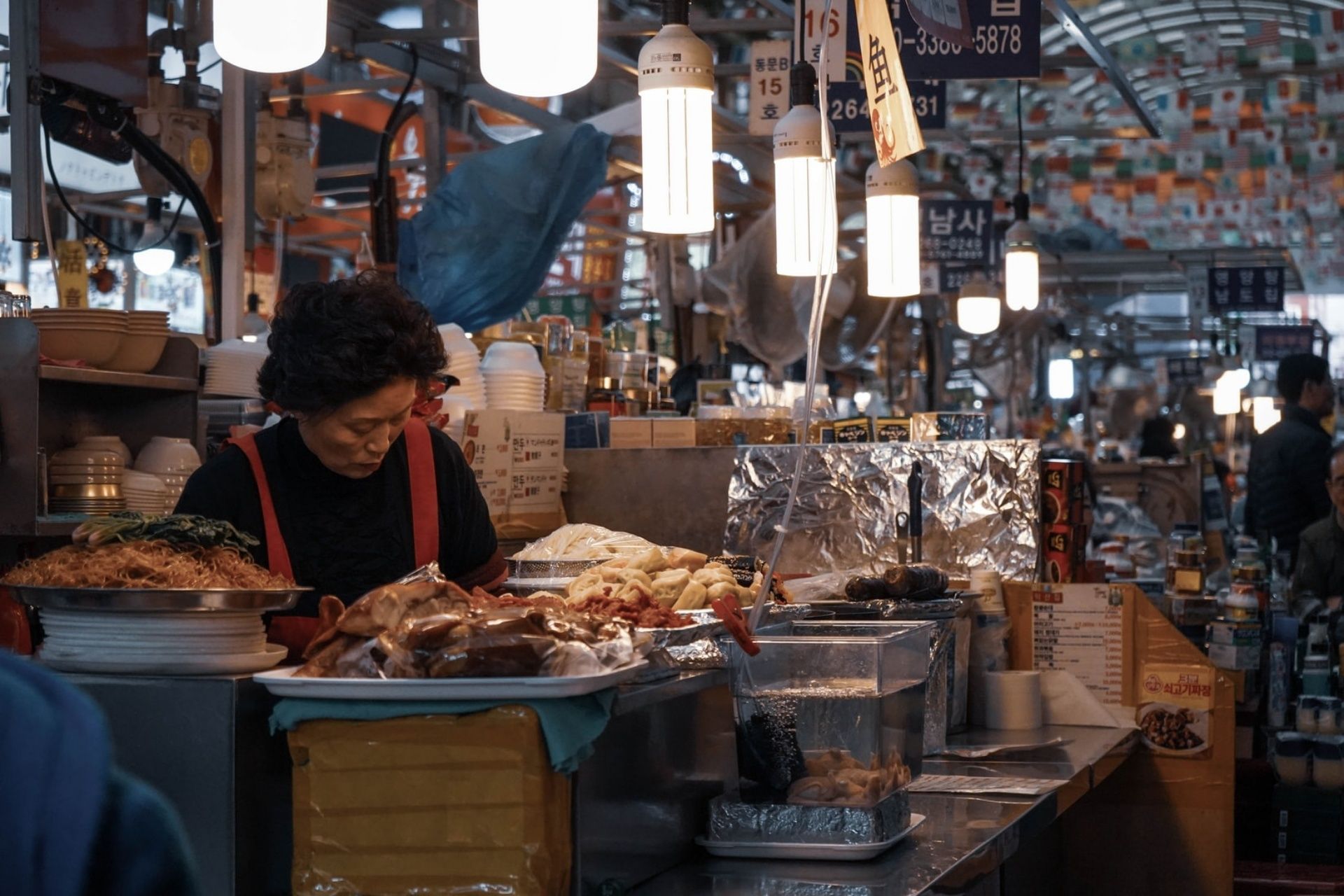
Above Seoul’s oldest and most electric street food market, serving bindaetteok, yukhoe, and hand-rolled gimbap since 1905 (Photo: Moujib Aghrout / Unsplash)
Seoul’s oldest and most electric street food market, serving bindaetteok, yukhoe, and hand-rolled gimbap since 1905 (Photo: Moujib Aghrout / Unsplash)
1 / 1
Gwangjang is Seoul at its most alive—a full-throttle sensory experience that has been drawing hungry Koreans to this address since 1905. The market’s covered food lane is perhaps the finest concentration of Korean street food on the planet: bindaetteok (mung bean pancakes) sizzling on cast iron griddles, hand-rolled mayak gimbap no bigger than a coin, silky yukhoe (beef tartare) served with sliced pear, and vats of tteok-bokki in crimson sauce. It was the market that introduced Korean street food to a global audience via Netflix’s Street Food Asia, and the crowds haven’t stopped since. Come with an empty stomach and no agenda.
Related: What to eat in Busan: 7 must-try local dishes for an authentic taste of the city
9. Viktualienmarkt - Munich, Germany
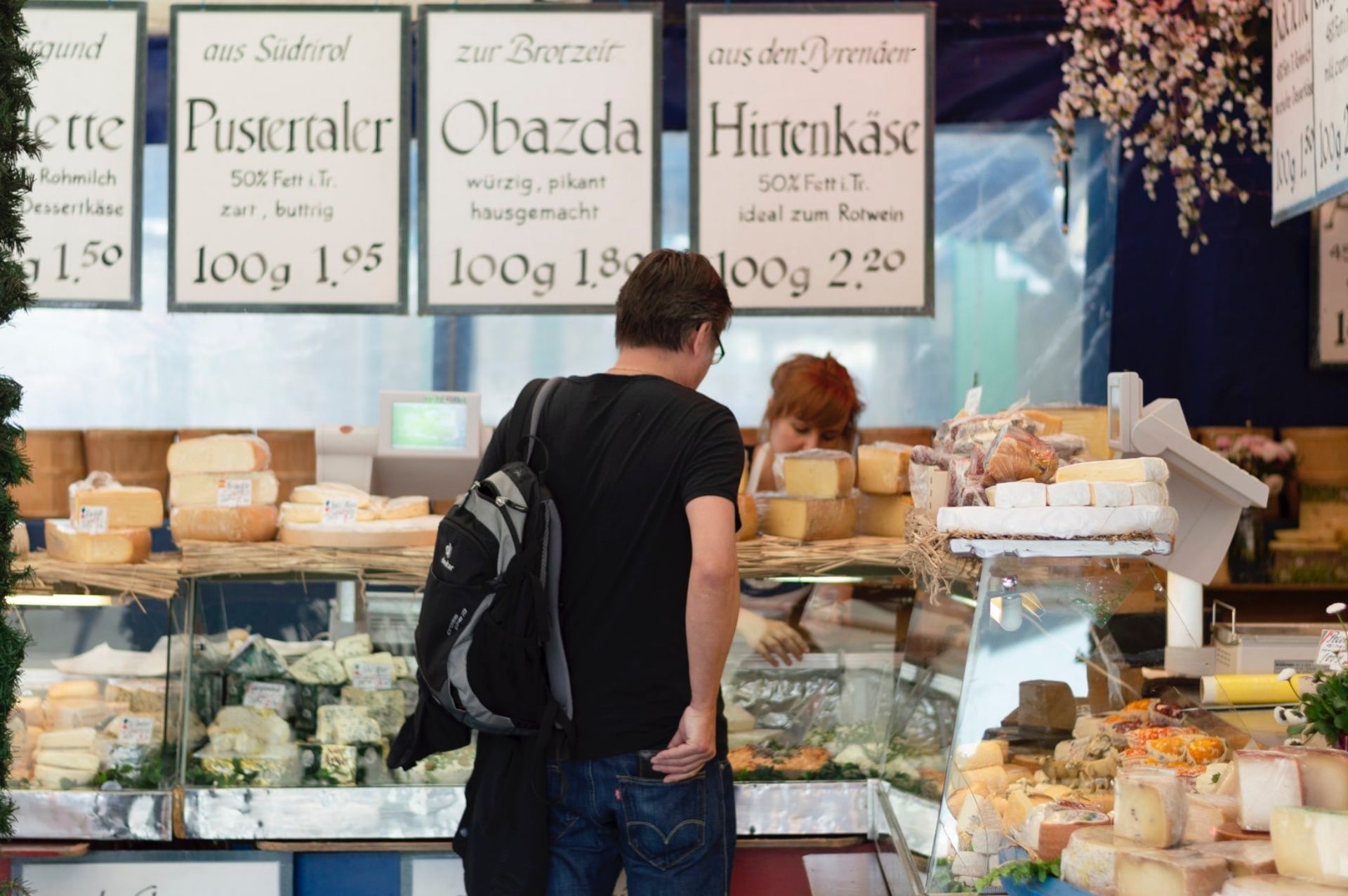
Above Munich’s open-air institution since 1807, where locals still shop for sausages and Alpine cheese and linger over a Maß of Bavarian lager (Photo: Sarah Donovan / Unsplash)
Munich’s open-air institution since 1807, where locals still shop for sausages and Alpine cheese and linger over a Maß of Bavarian lager (Photo: Sarah Donovan / Unsplash)
1 / 1
Fruits and vegetables, hand-crafted sausages, Alpine cheeses, pickled everything, and excellent German wine: you’ll find it all at Munich’s Viktualienmarkt, a sprawling open-air market in the very heart of the city that has been operating continuously since 1807. It is that rare thing—a working market that has resisted becoming a tourist attraction, with locals still arriving early for their weekly shop. The market’s permanent beer garden, shaded by five towering maypoles, is the ideal place to sit with a Maß of Bavarian lager and watch the city go about its business. Visit in the weeks before Christmas, and the atmosphere becomes something else entirely.
10. Torvehallerne - Copenhagen, Denmark

Above Copenhagen’s sleek twin glass halls, home to the finest smørrebrød, freshest oysters, and most beautiful produce in Scandinavia (Photo: Facebook / Torvehallerne)
Copenhagen’s sleek twin glass halls, home to the finest smørrebrød, freshest oysters, and most beautiful produce in Scandinavia (Photo: Facebook / Torvehallerne)
1 / 1
Torvehallerne is the jewel of Copenhagen’s food scene—a pair of sleek glass market halls flanking an outdoor square, opened in 2011 and already considered one of northern Europe’s essential food destinations. Inside, you’ll find artisan butchers, local cheeses and charcuterie, an excellent bottle shop, freshly shucked oysters, smørrebrød from some of the city’s finest purveyors, and restaurant stalls covering everything from Japanese noodles to wood-fired pizza. The outdoor section hosts a farmers’ market on Saturdays. Architecture, produce, and crowd-watching: Torvehallerne offers all three simultaneously and effortlessly.
11. Borough Market - London, England
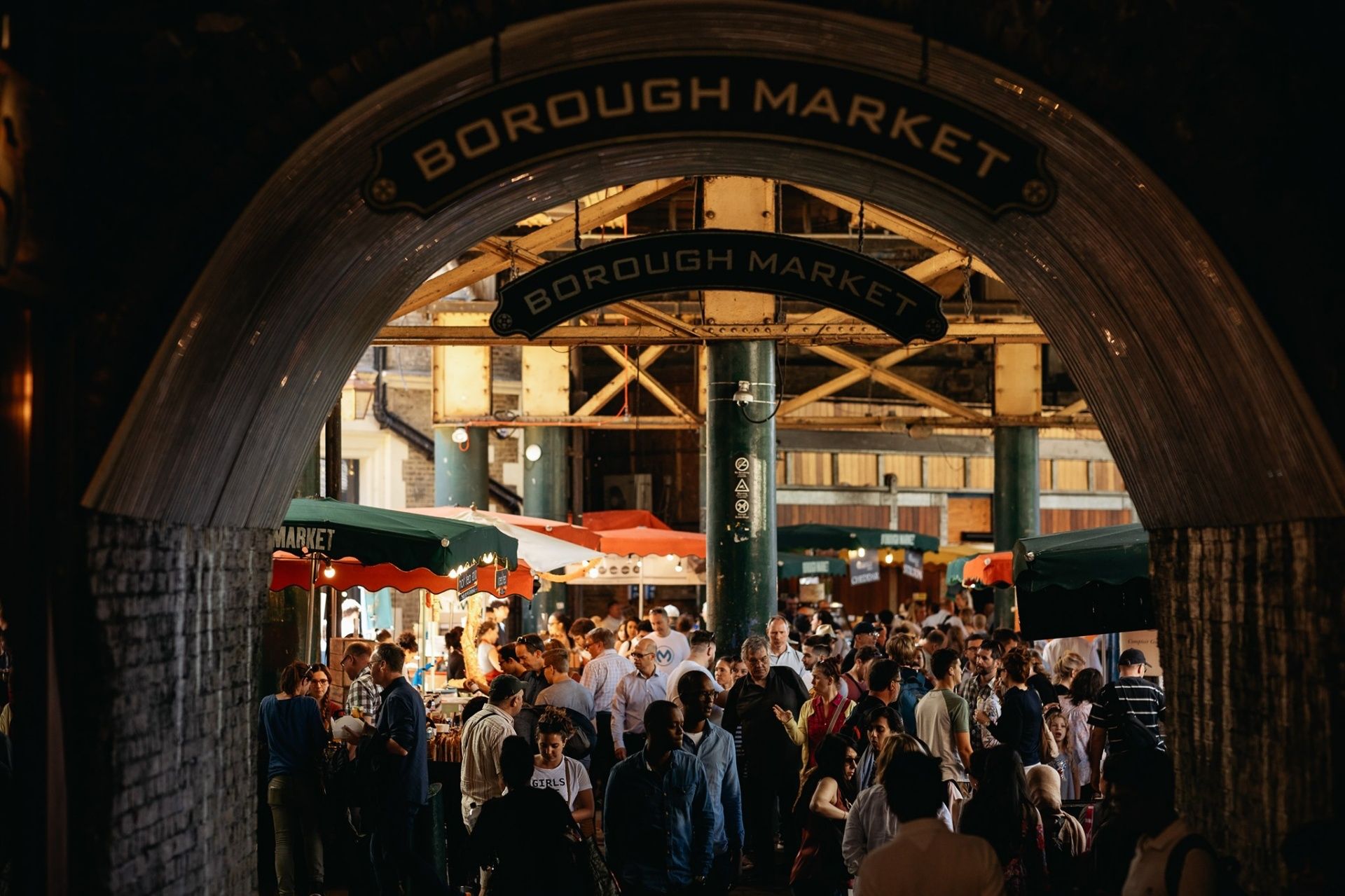
Above London’s oldest and greatest food market, an 11th-century trading site now home to the best artisan food in Britain (Photo: Borough Market Official Facebook Page)
London’s oldest and greatest food market, an 11th-century trading site now home to the best artisan food in Britain (Photo: Borough Market Official Facebook Page)
1 / 1
Borough Market is London’s oldest and most revered food market, with records of trading on this site dating back to the 11th century. Today, it is the gold standard for artisan food markets—a destination that draws professional chefs, serious home cooks, and curious visitors in equal measure. Stalls groan with rare British cheeses, sourdough loaves, charcuterie, sustainably caught fish, heritage vegetables, and hot food from every culinary tradition. Come on a Thursday, Friday, or Saturday for the full market. Come hungry, come with a tote bag, and come ready to spend more than you planned.
12. Jemaa el-Fna - Marrakesh, Morocco

Above Marrakesh’s legendary open square, where food stalls materialise at dusk and a hundred smoking grills turn the night into something unforgettable (Photo: Pexels)
Marrakesh’s legendary open square, where food stalls materialise at dusk and a hundred smoking grills turn the night into something unforgettable (Photo: Pexels)
1 / 1
Marrakesh’s Jemaa el-Fna is unlike any other market on this list—it is as much a performance as it is a place to eat. By day, the vast open square hosts storytellers, musicians, snake charmers, and herbalists; as the sun sets, it transforms entirely. Food stalls materialise by the hundred, filling the square with smoke and noise: grilled merguez, kofta skewers, harira soup, fried fish, lamb’s head, and towers of fresh-squeezed orange juice. Wander the stalls, pick a bench, and eat as the evening unfolds around you. It is chaotic, unpredictable, and completely irreplaceable.
See also: 7 dining rooms in Asia with histories worth knowing
13. St. Lawrence Market - Toronto, Canada
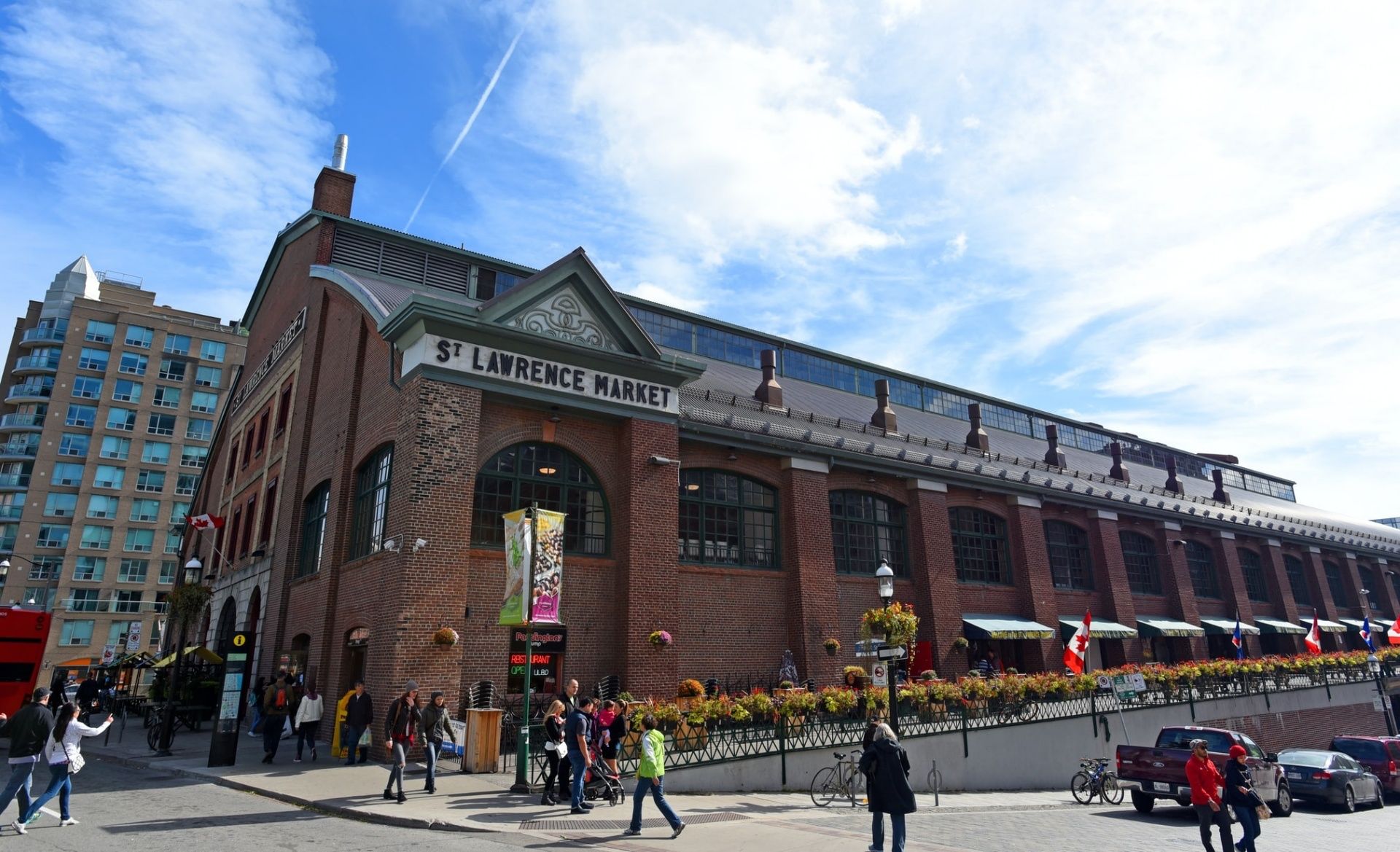
Above Toronto’s 200-year-old culinary landmark, best known for its peameal bacon sandwiches and some of the finest independent vendors in Canada. (Photo: Tommao Wang / Unsplash)
Toronto’s 200-year-old culinary landmark, best known for its peameal bacon sandwiches and some of the finest independent vendors in Canada. (Photo: Tommao Wang / Unsplash)
1 / 1
Once named the world’s best food market by National Geographic, St. Lawrence Market is Toronto’s most treasured culinary landmark. The South Market building—a grand 19th-century hall operating since 1803—is the main event: a multi-level food emporium stuffed with independent vendors selling everything from Quebec cheese and Mennonite charcuterie to peameal bacon sandwiches (a Toronto institution, not to be skipped) and some of the city’s finest pastries. The Saturday farmers market in the North Market building, where local producers bring their best seasonal goods, is equally rewarding.
14. Central Market Hall / Nagycsarnok - Budapest, Hungary
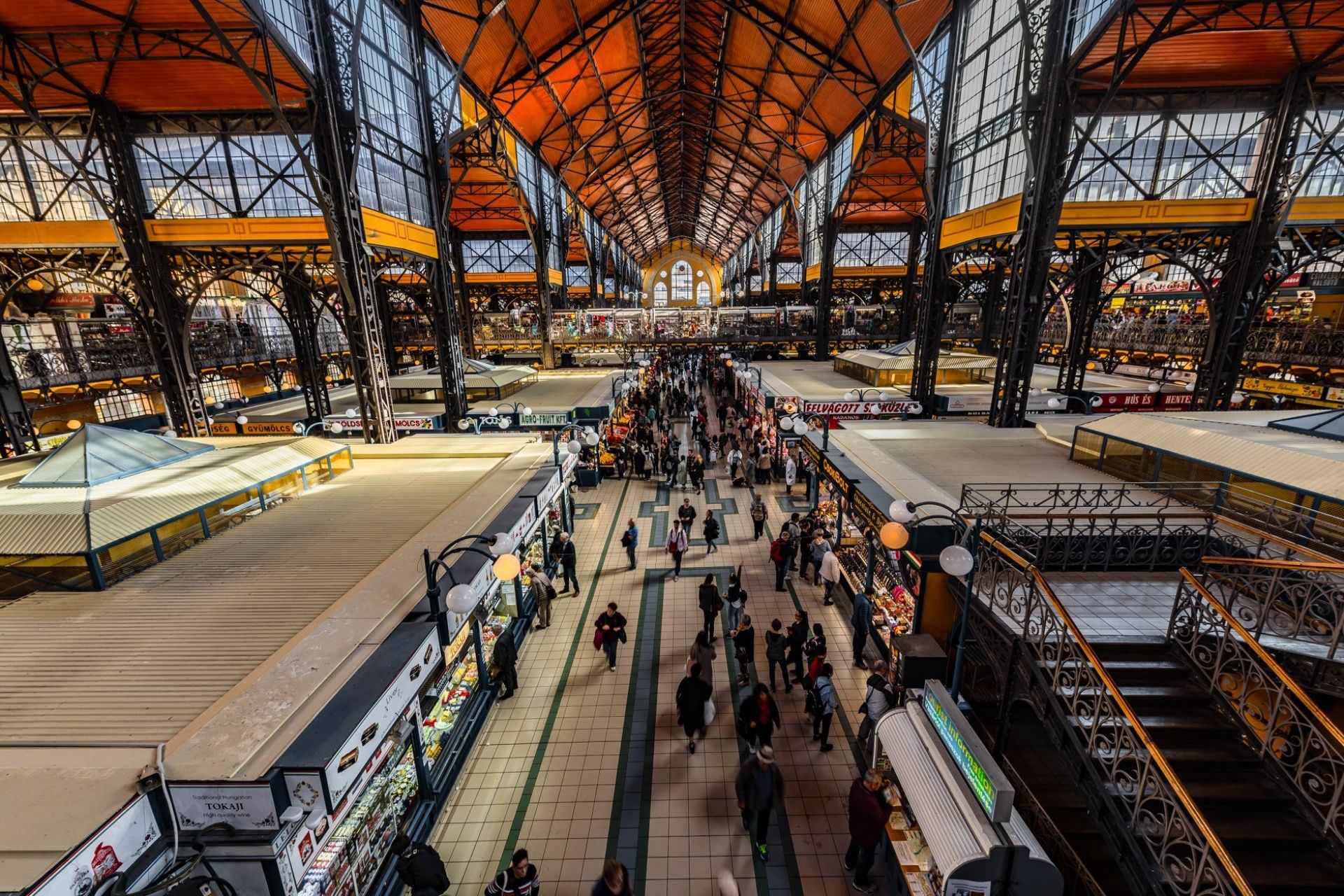
Above Budapest’s soaring neo-Gothic food palace, the place to find mangalica salami, smoked paprika, and magnificent Tokaj wine under one roof since 1897 (Photo: Central Market Hall / Nagycsarnok Official Facebook Page)
Budapest’s soaring neo-Gothic food palace, the place to find mangalica salami, smoked paprika, and magnificent Tokaj wine under one roof since 1897 (Photo: Central Market Hall / Nagycsarnok Official Facebook Page)
1 / 1
Central Market Hall, known locally as Nagycsarnok, is the oldest and largest food hall in Budapest—a soaring neo-Gothic red-brick cathedral of food that opened in 1897. The ground floor is a working market of genuine quality: gourmet mangalica salami, smoked paprika in every variety, handmade lángos, fresh produce, and Hungary’s magnificent Tokaj wines. Head upstairs to the gallery level for a generous serving of goulash or a portion of stuffed cabbage with sour cream, eaten overlooking the floor below. As central European market halls go, this one is hard to beat.
See also: Types of caviar: a guide to the world’s most coveted roe
15. Mercado Central — Santiago, Chile

Above Santiago’s cast-iron seafood cathedral, a Chilean National Monument and the finest place on earth to eat caldillo de congrio (Photo: Facebook / Mercado Central Santiago)
Santiago’s cast-iron seafood cathedral, a Chilean National Monument and the finest place on earth to eat caldillo de congrio (Photo: Facebook / Mercado Central Santiago)
1 / 1
Beneath a magnificent wrought-iron dome fabricated in Glasgow and shipped to Chile, Mercado Central has been feeding Santiago since 1872. It was designated a Chilean National Monument in 1984 and named by National Geographic as one of the world’s five best food markets. The market is devoted almost entirely to seafood—and Chile’s 6,000-kilometre Pacific coastline means the selection is extraordinary. Look for fresh loco (giant abalone), piure (a fleshy, intensely savoury sea creature unlike anything in European markets), king crab, scallops, and the market's signature dish: caldillo de congrio, a rich conger eel stew that Pablo Neruda immortalised in verse. Sit at a smaller perimeter restaurant for better value and fewer theatrics.
16. Or Tor Kor Market — Bangkok, Thailand

Above Bangkok’s premium fresh market, where the city’s top chefs shop for immaculate produce and the food court quietly serves some of Thailand’s best cooking (Photo: David LEFRANC/Gamma-Rapho via Getty Images)
Bangkok’s premium fresh market, where the city’s top chefs shop for immaculate produce and the food court quietly serves some of Thailand’s best cooking (Photo: David LEFRANC/Gamma-Rapho via Getty Images)
1 / 1
Or Tor Kor is Bangkok’s best-kept food secret — an impeccably clean, well-organised indoor market adjacent to the famous Chatuchak Weekend Market that consistently ranks among Asia’s finest fresh produce destinations. Where other Bangkok markets trade in noise and chaos, Or Tor Kor trades in quality: the fruit selection alone—durian, mangosteen, pomelo, and seasonal rarities—is among the best in the country, and the market is where the city’s top chefs do their serious shopping. The food court at the back serves outstanding Thai cooking at fair prices: braised duck noodles, fried oyster pancakes, som tam pounded to order. Take the MRT to Kamphaeng Phet Station, walk out of Exit 3, and you’re there.

About
Lauren’s love for food came much later in life than one would expect— an obsession awakened in the streets of Melbourne’s multicultural dining scene. Armed with this newfound passion, she returned to the Philippines determined to discover the best eats in her home country, with a personal advocacy to champion local cuisines and homegrown talent. Nothing is off-limits; if it’s delicious, it’s worth celebrating.
Work
As Tatler Dining associate editor, Lauren covers all things food and drink, from listing the latest openings in our monthly Dining Radar to interviewing chefs and bartenders about the biggest obstacles crippling the industry today. Beyond the digital space, she also organises Tatler Dining’s tentpole events, including Off Menu and Tatler Dining Kitchen, as well as the annual Tatler Best Philippines awards night and guide launch, detailing the best restaurants in the country.
For leads and event invites, contact her via lauren@tatlerphilippines.com or follow her on Instagram at @laurengolangco.
Photo: Ralph Mendo

Curated for you
The stories, profiles, and cultural moments featured on our Instagram feed