Cover Chipta 11a's nigiri, part of the restaurant’s indigenous omakase course which often makes use of local Malaysian ingredients
Chipta 11a's nigiri, part of the restaurant’s indigenous omakase course which often makes use of local Malaysian ingredients
1 / 1
On 25 December this year, Chipta 11A will turn 6
The restaurant has become so familiar to many local Malaysian foodies that it’s hard to imagine Paramount Garden without it. Arriving at the doorway next to 7-11 and ascending the flight of stairs has become a ritual.
Over these 6 years, it has been thrilling to see executive chef Jack Weldie grow and hone his craft. Whilst Jack’s skills have grown and evolved, his culinary vision remains true to what he first set out to achieve when he and partner, Diane Ong, opened Chipta 11A. The driving force of his food is his heritage: Jack is a descendant of Kadazan Dusun, the largest ethnic group in Sabah located on Borneo (one of Malaysia’s 14 states).
Throughout a meal service at the restaurant, one becomes privy to flavours drawn from his memory, childhood and indeed, the culture of the Kadazan Dusun people. However, the food you will be served at Chipta 11A bears a twist, for Jack fuses his heritage with the one cuisine he has trained for up to this point in his culinary career: Japanese. We admire the way that Jack deftly melds both unexpected aspects together to create a cuisine that is distinct and unmistakably “Chipta”, and of course, quintessentially Malaysian. It all seems very effortless too, organic rather than forced.
So on this latest visit to Chipta 11A we find that it has now coined their cuisine “indigenous omakase”, which quite aptly describes the food one is served here. Things started creatively: a sea bream tartare on a thosai dressed with chives, shallots, budu garum (a kind of local Malaysian fish sauce) and strawberry vinegar gel. Light and delicate, but full of textures and flavours.


Above Chipta 11a's sea bream tartare on a thosai dressed with chives, shallots, budu garum and strawberry vinegar gel
Chipta 11a's sea bream tartare on a thosai dressed with chives, shallots, budu garum and strawberry vinegar gel
1 / 1
Then, came an amberjack sashimi, but dressed in a way that we have only ever had at Chipta 11a. It was topped with finely sliced jicama, and topped with garlic chive oil, aged soy, spring onions and pickled wasabi. Particularly enjoyable, the flavours were strong and appetising but matched the fish well.

Above Chipta 11a's amberjack sashimi, topped with finely sliced jicama, and topped with garlic chive oil, aged soy, spring onions and pickled wasabi
Chipta 11a's amberjack sashimi, topped with finely sliced jicama, and topped with garlic chive oil, aged soy, spring onions and pickled wasabi
1 / 1
Then came a procession of dishes which showcased Jack’s recent forage into tempura, but with his own spin on things. First was an avocado tempura with bernaise sauce and pickled mackerel, which tasted like a recreation of McDonald’s filet-o-fish. Then, a tempura of baby barracuda sandwiching some Japanese ume and ohba. The cooking style suited the combination of ingredients very well; we were licking our lips from the heightened umami of aged fish, balanced out by tartness of the plum and the minty kick of the shiso leaf. A delightful plate which we begged Jack to keep as a mainstay on his current menu.

Above Chipta 11a's avocado tempura with bernaise sauce and pickled mackerel

Above Chipta 11a's tempura of baby barracuda sandwiching some Japanese ume and ohba
Chipta 11a's avocado tempura with bernaise sauce and pickled mackerel
1 / 2
The deep fried theme took a backseat when the next dish arrived. It was nicknamed the “Scalken”, a dumpling of sorts made from blending chicken and scallop together. Served in a steaming hot, flavourful collagen broth and spiked with the citrusy zing of kafir lime zest. Comforting stuff. Straight after, the kitchen took us back on the tempura path with a duo of tempura ming prawn and Japanese whiting stuffed with Spanish mackerel mousse.

Above Chipta 11a's version of dumplings, called the "Scalken"

Above Chipta 11a's duo of tempura ming prawn and Japanese whiting stuffed with Spanish mackerel mousse
Chipta 11a's version of dumplings, called the "Scalken"
1 / 2
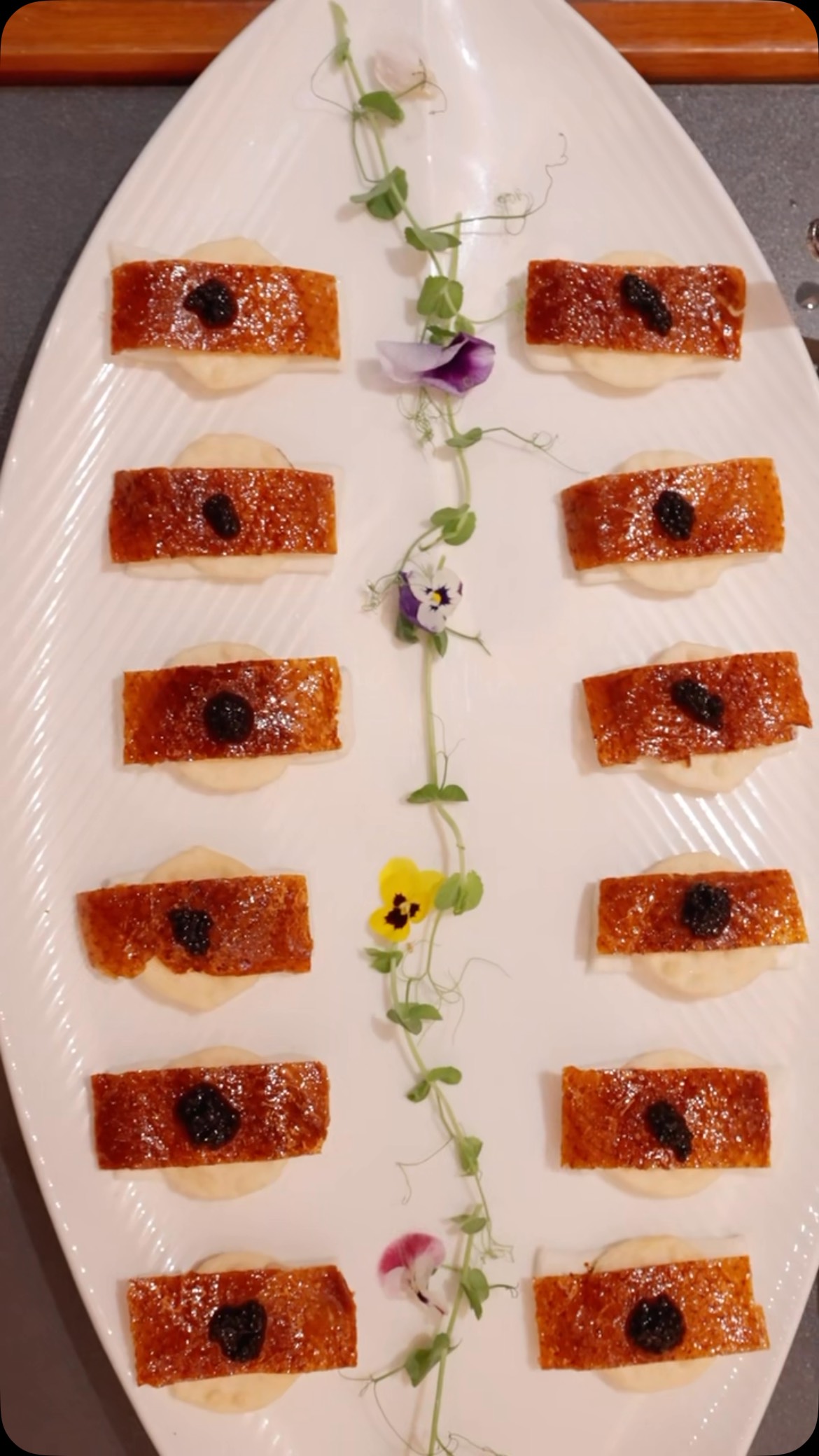
Next, our favourite segment of the meal arrived: nigiri. The sushi at Chipta is unique because they are the only restaurant we know, which seasons the rice with tamarind (or asam jawa) instead of the rice vinegar.

Above Chipta 11a's nigiri is unique because they are the only restaurant we know, which seasons the rice with tamarind (or asam jawa) instead of the rice vinegar

Above Chipta 11a's nigiri is unique because they are the only restaurant we know, which seasons the rice with tamarind (or asam jawa) instead of the rice vinegar
Chipta 11a's nigiri is unique because they are the only restaurant we know, which seasons the rice with tamarind (or asam jawa) instead of the rice vinegar
1 / 2
We found out, for the first time since dining here five years ago, that this inspiration came from Jack’s mother. When she was still alive, she would cook a dish called “pinarasakan”, made from a sour fruit, fish and some Kadazan-Dusun spices. That dish was the ultimate late night comfort food for Jack, especially when he had the remnant sauce to go with steamed white rice.
This twist in the shari, we know, can be an acquired taste, especially for sushi purists who prefer the classic style. But for those of you who have an adventurous palate and wish to try a true fusion of Japanese and Malaysian flavours, we think that this is a great place to experience that.

Above Chipta 11a's nigiri is unique because the restaurant seasons the rice with tamarind (or asam jawa) instead of the rice vinegar
Chipta 11a's nigiri is unique because the restaurant seasons the rice with tamarind (or asam jawa) instead of the rice vinegar
1 / 1
The neta is typically seasonal, and on this visit, amongst the pieces we had were:
- Striped Jack with nori jam
- Stone castle clam with cured mackerel roe
- Torched Hokkaido scallop with sansho powder, szechuan peppercorn oil, pickled wasabi
- Japanese sardines with grated ginger and garlic chive
- Akami with seaweed and bambangan paste
- Torched angel prawn with cured egg yolk and kaffir lime zest

Above Chipta 11a's nigiri is especially interesting when Borneo produce are used, such as bambangan (wild mango) or tuhau (wild ginger)
Chipta 11a's nigiri is especially interesting when Borneo produce are used, such as bambangan (wild mango) or tuhau (wild ginger)
1 / 1
The list above should give you an idea of how unconventional the sushi is at Chipta. It is especially interesting when local produce (especially from Borneo) are used, such as bambangan (wild mango), or tuhau (wild ginger). What better way to experience Malaysia than through cuisine?

Above Chef Jack Weldie working his magic at Chipta 11a
Chef Jack Weldie working his magic at Chipta 11a
1 / 1
For the main dish, to our surprise Jack brought out an old favourite, one that we tried on our first visit 5 years ago and made us fall head over heels for his cuisine. A braised fish seasoned with soy, dried chilli, cardamom and cinnamon among other things. It was paired with a claypot rice with egg serunding, deep fried pucuk manis and bottarga. And a truly special chicken and lihing soup.
If you’re a visitor to Malaysia, it is understandable that many of these ingredients aren’t common to you, which make dining at Chipta all the more exploratory and rewarding. Take “lihing” for example, a fermented rice wine from Borneo which is golden in colour and has a sweet taste.

Above The food at Chipta 11A bears a twist, for Chef Jack fuses his Kadazan-Dusun heritage with the one cuisine he has trained for up to this point in his culinary career: Japanese
The food at Chipta 11A bears a twist, for Chef Jack fuses his Kadazan-Dusun heritage with the one cuisine he has trained for up to this point in his culinary career: Japanese
1 / 1
By the time dessert arrived, we were completely stuffed. But the tempura red bean paste coated cassava was utterly delightful.
NOW READ
Wee-Liam Foo
Curated for you
The stories, profiles, and cultural moments featured on our Instagram feed