
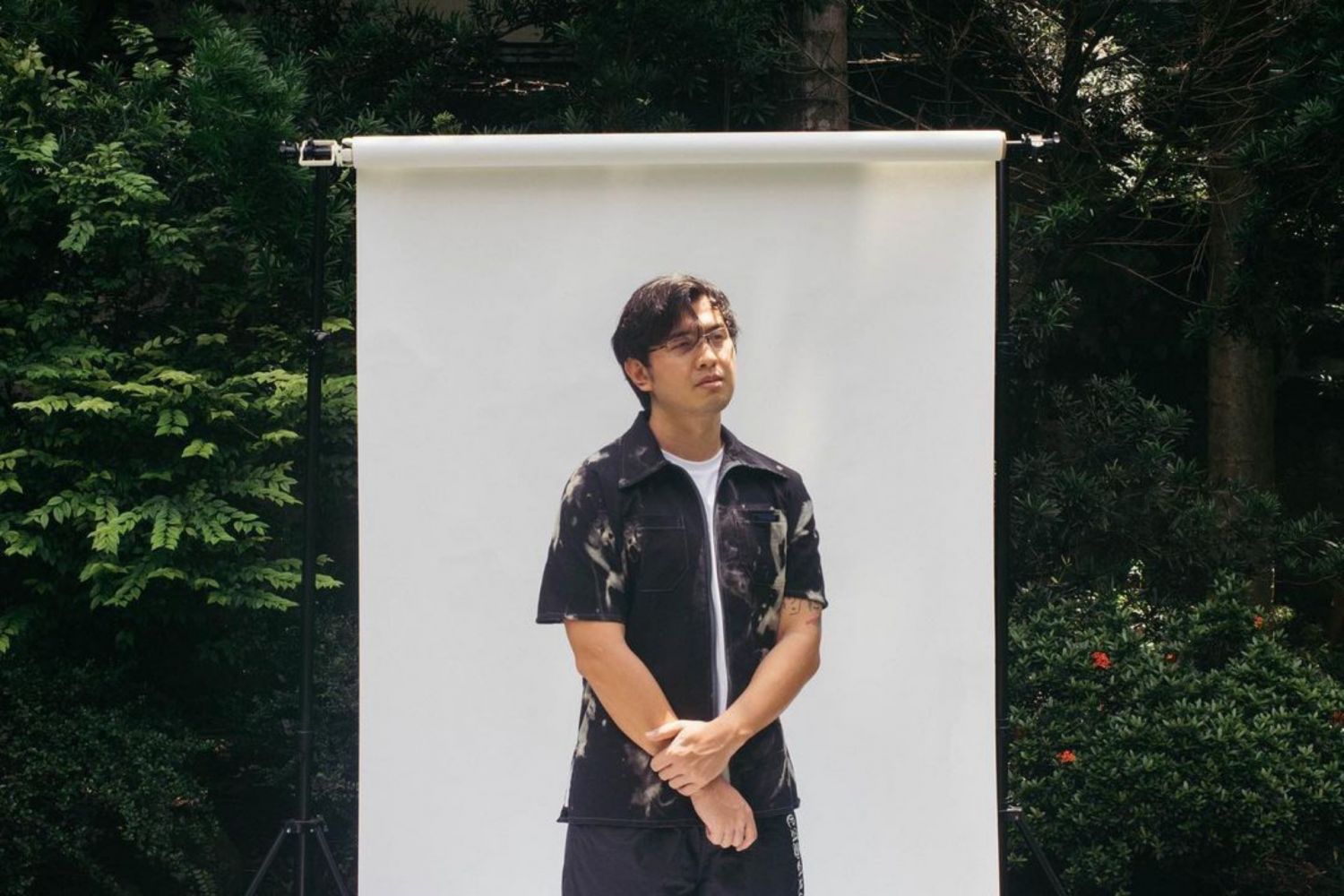
Cover Mito Fabie, aka Curtismith (Photo: Instagram / @curtismito)
Mito Fabie, aka Curtismith (Photo: Instagram / @curtismito)
1 / 1
Gen.T 2017 Honouree Mito Fabie, known on-stage as rapper Curtismith, speaks on his growing appreciation for jazz, maintaining artistic integrity, and how we can better support local Filipino artists
Since the release of his first single, “For the Love”, in 2015, Mito Fabie has made waves in the local music scene donning the stage name Curtismith. Jump forward six years, one mixtape, a handful of EPs, and an impromptu performance for Richard Branson, and we arrive at Museo, the rapper’s debut studio album.
Held at the Pintô Art Museum last July, the launch of Museo was a brilliant marriage of the visual and auditory arts. “As somebody who loves going to museums, I would always look at paintings and listen to my own music, and I was like, Wow, it would be an amazing idea if I could execute something like this,” the young creative explains. Complete with noise-cancelling headphones, the multisensory exhibition featured original works from 17 artists hand-picked by Fabie himself, each a visual interpretation of lyrics from the album. “I wanted to make sure that if you were to come here and experience it, it was not just a sonic experience... you could pair the audio with the visuals.”
“Downtown as Fruits” (styled “downtown as fruits”), the first track released ahead of the LP, not only teased the rest of the album but offered a glimpse into how Fabie now contends with his integrity as Curtismith. He reveals with Tatler: “I realised I was limiting myself by trying to make music that I considered to be ‘profitable’. Since then, I’ve reflected on why I love music in the first place, and it has nothing to do with profitability. Museo was a snapshot of what that journey looked like.” The song’s enchanting reprise brilliantly captures this epiphany, a celebration of the intangible, emotional power that overcomes you as you fall infatuated with music:
“Something takes over me
Touching my soul is not foreseen
Nothing comes easier
Electric saturation so familiar”
Paired with an irresistible, funky groove, “Downtown as Fruits” effortlessly enamours its listeners and instils the very “electric saturation” it describes. The song also hints at Fabie’s growing penchant for bass—an instrument he recently picked up over the pandemic.
Currently juggling his day job and career as an independent musician, Fabie reveals that he’s taking some time to explore what’s next for Curtismith. In the meantime, get to know the artist behind the moniker below:
See also: ‘Blast From The Past’: We Look Back at OPM Alternative Rock of the ’90s
What is the one album that has had the greatest impact on your life? Why?
To Pimp a Butterfly by Kendrick Lamar at the moment. It came out around 2015 and gets better each year I play it. The way he weaves his life’s problems with the bigger issues of the African American struggle through a fusion of rap with funk and jazz deeply inspired me.
Who would you say has had the greatest influence on your style as an artist? Why and how so?
I would say the people I encounter who make an impact in my life—whether through allowing me to see through the lens of a different perspective, personal relationships I go through, or simply fellow lovers of art, expression and craft help me push myself further in my artistic journey.
What is one genre you’ve always wanted to explore further? Why?
Jazz. I picked up the bass over the pandemic, and my goal is to be able to express myself freely and authentically without using my voice, and I think jazz is the purest form of that.
See also: 6 Traditional Filipino Musical Instruments You Should Know About
Which of your songs was the most challenging to complete? Why?
I think my album Museo in its entirety, was [the most challenging work to complete]. I was trying to cope with what the pandemic had brought upon my life, and the album allowed me to zoom out of my own perspective and look at things from a different lens.
What do you love most about what you do? What is your least favourite part of what you do?
I love creating—bringing an idea to life. My least favourite part is probably the entitlement of some peoples’ opinions towards my work.
In a previous interview, you mentioned that you’ve been writing music since you were 14. Now, 14 years since you began, how would you describe your transformation as an artist? How has your style, theme, and process changed, and in what ways have they stayed the same?
At this point, I’m slowly growing more into myself, I guess. Shedding away what isn’t truly me, valuing each message, word, and punch line rather than just trying to make something that sounds good. Although I still enjoy simply having fun and creating music for the sake of it.
See also: Up Dharma Down: 8 Of The Band’s Most Heart-Wrenching Lyrics
I read somewhere that there are artists who reflect the culture and some artists who change culture. I think with the current climate of the Philippines, we need both.
What first drew you to rap? What do you love most about the medium?
I didn’t grow up with any siblings, and my parents weren’t home often, so rap music felt like I had an older brother whom I aspired to be like.
It’s been almost one year since the launch of your first-ever album, Museo—congratulations! You once described Museo as an exploration of the “middle ground” between “somebody trying to maintain a lifestyle through art, and somebody trying to be an artist,” a product of you trying to be “as authentic as an artist as [you] can be.” What does being an authentic artist mean to you? How does this manifest through Museo?
Thank you so much. I think I answered that in the previous question, but to go further, I realised that I didn’t need to maintain my lifestyle through art. I realised I was limiting myself by trying to make music that I considered to be ‘profitable’. Since then, I’ve reflected on why I love music in the first place, and it has nothing to do with profitability. Museo was a snapshot of what that journey looked like.
If you had the opportunity to collaborate with any artist, local or international, living or dead, who would it be and why?
It would probably be Pharrell [Williams] because I love how he’s been able to grow authentically through the years without putting the money before the craft.
What is your favourite new find as of late?
I’ve been digging into Japanese funk and jazz. Artists like Hiroshi Suzuki, Ryuichi Sakamoto and a bunch of artists I can’t pronounce or read the name of.
What excites you most about the local music scene at the moment? How do you hope the industry will change in the next ten years, and what needs to happen for us to get there?
I read somewhere that there are artists who reflect the culture and some artists who change the culture. I think with the current climate of the Philippines, we need both. Recently, I’ve been meeting a bunch of artists doing either one of the two or both. They’ve been doing inspiring things for years, but the masses have yet to value their craft over what we see currently in mainstream media. I don’t have an answer to what we need to do to change things; all I know is that any artist with integrity has my support.
How can we better support and empower our local Filipino artists?
More than money, it’s time and presence. Independent artists wear different hats and put a lot of work behind the scenes to give people a unique and authentic experience, so it’s an honour when people support us through their patronage, time, and presence.
NOW READ
The Creative List: Film, Music, and Dance
5 Tools Fit For Every Music Lover: Nest Audio, Vinyl Player, And More
6 Things You Need To Know About Nadine Lustre: Music, Endorsements, And More
Topics


About
Lauren’s love for food came much later in life than one would expect— an obsession awakened in the streets of Melbourne’s multicultural dining scene. Armed with this newfound passion, she returned to the Philippines determined to discover the best eats in her home country, with a personal advocacy to champion local cuisines and homegrown talent. Nothing is off-limits; if it’s delicious, it’s worth celebrating.
Work
As Tatler Dining associate editor, Lauren covers all things food and drink, from listing the latest openings in our monthly Dining Radar to interviewing chefs and bartenders about the biggest obstacles crippling the industry today. Beyond the digital space, she also organises Tatler Dining’s tentpole events, including Off Menu and Tatler Dining Kitchen, as well as the annual Tatler Best Philippines awards night and guide launch, detailing the best restaurants in the country.
For leads and event invites, contact her via lauren@tatlerphilippines.com or follow her on Instagram at @laurengolangco.
Photo: Ralph Mendo





