
1 / 1
The experimental "hypnotropicalia" Hong Kong group, whose two albums have made waves the world over, beguile with a sound that draws from jazz to electronica to Afrobeat.
When Blood Wine or Honey burst onto the Hong Kong music scene in 2017 with debut EP Anxious Party People, the genre-shifting sound they established was only a prelude for the experimentation to come. Their early releases and first studio album, Fear and Celebration, received international airplay and plaudits after being picked up by some of the world's most respected music tastemakers, including British DJ and broadcaster Gilles Peterson. Impossible to pigeonhole, the band has been likened to acts from across the musical spectrum, including the cutting-edge nu-jazz of Sons of Kemet and the machine-driven pulsation of Kraftwerk. The group—first a trio, now a duo—returned this year with their second full-length album, DTx2, which signalled more of a dance-led direction without sacrificing any of the creativity or high production value of previous work.
Every detail of Blood Wine or Honey's sound and image is meticulously thought-out—from matching white jumpsuits during early live shows, to artwork that attempts to translate the technicolour explosion of inspirations heard within songs, to working with some of Hong Kong's most exciting and cutting-edge figures in music, such as post-punk group David Boring's lead singer Janice Lau. Fuelled by the mood and climate of the current era, the band rockets into a kaleidoscopic galaxy of synths, saxophone trills and supersonic soundscapes, a combination they term "hypnotropicalia".
Of their latest release's title, the band explains: "We discovered, fittingly, that DTx2 encodes all sorts of things: it’s a human enzyme, a protein coding gene; a make of Yamaha electronic drums from 1996; a model of underwater drone. It feels like everything has already been said but in the small spaces between all the monumental tropes there is, perhaps, room for some interstitial fauna; some remaining species of idea worth talking about."
Here, James Banbury (synths, bass, percussion, cello) and Joseph von Hess (vocals, clarinet, sax, percussion) explain the process, prognostication and partnerships behind their ambitious new record.
What changes has Blood Wine or Honey undergone since Fear and Celebration?
James Banbury: Well, a fundamental one is that we were a trio for the first album and now we’re a duo. This has its advantages (quicker to make musical decisions, more nimble and flexible for live stuff, better royalty splits (joke) and disadvantages (less workload-spreading, more individual scrutiny) Also we're on a new label for DTx2, Brooklyn's very own B*****d Jazz. I think we’re more focused now—we’re certainly putting more time in than we used to. We think our sound is more distilled and we’re more able to bring out our individual strengths.
Don't miss: The Playlist: Gothic Style Queen Diana D'Arenberg Shares Her Favourite Songs


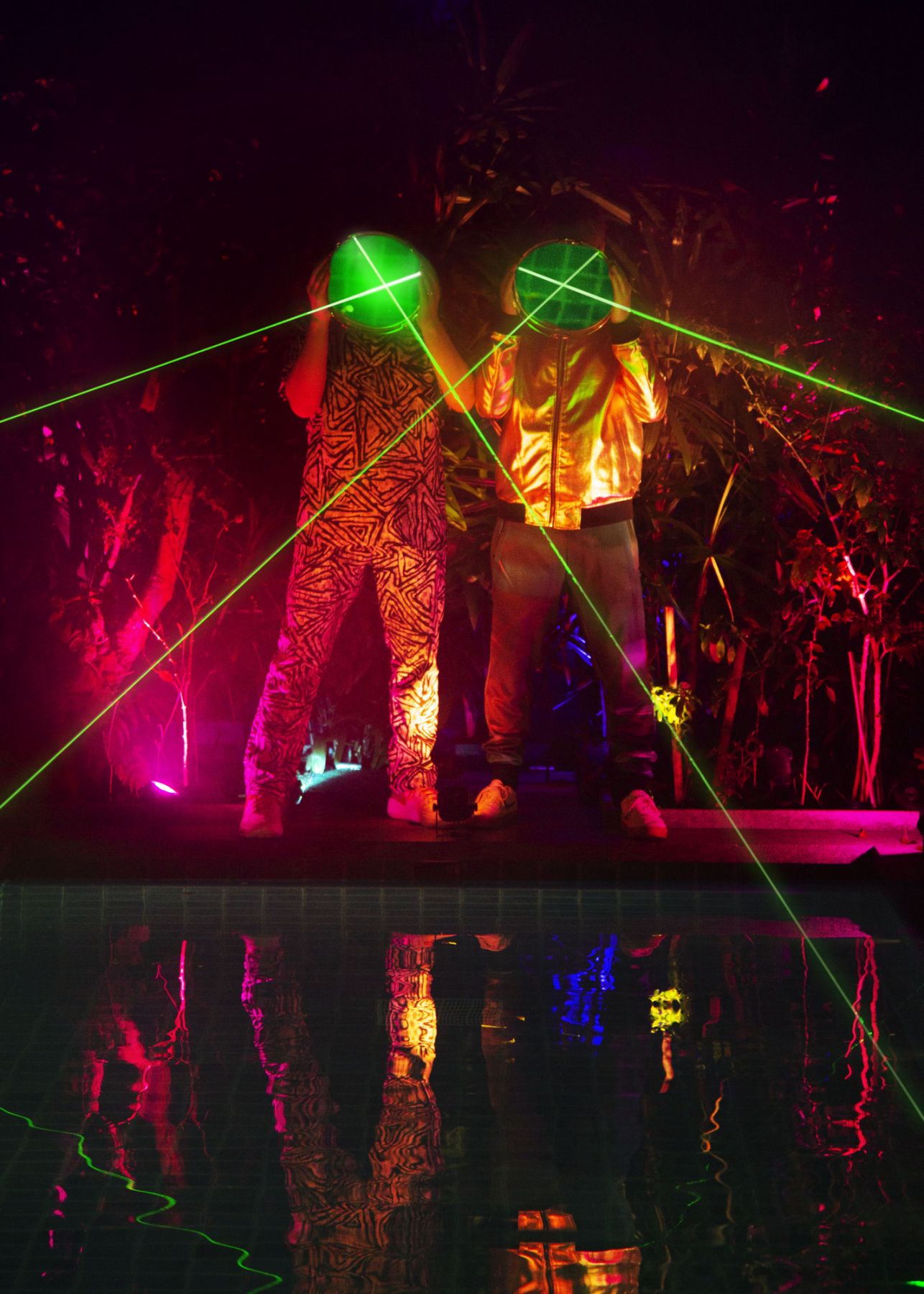
Above Banbury and Van Hess embark on a sonic canoe journey through a river of otherworldly sounds
Banbury and Van Hess embark on a sonic canoe journey through a river of otherworldly sounds
1 / 1
DTx2 has a much more dance-centric sound than previous releases. How did you settle on this sound? And what are the themes and thoughts central to the album?
Joseph von Hess: The album is more dance-adjacent than it is dance-centric. It's a bit off to the side, on the margins of many things. We didn't settle on a sound. We don't really work that way. Rather than deciding on a sound, the sound found us. We make noises and then we justify it later. We're a mere conduit for the totality of eternal vibration, a medium for the message that's already out there. We had been talking a lot about the wonderful craft of making records calibrated to induce the body to move. We also thought a lot about stirring in all sorts of disparate elements: disco stabs, found sounds, rave synths, folk instruments, chants, sub bass.
Themes and thoughts-wise: well, the album took shape over quite a long period of time, rather than that idea of being thrashed out in a rented studio with a producer over a week or two. We are our own engineers and producers, which gives us choices, and therefore sometimes it takes quite a while to narrow down or frame what it is we're doing. Although it was largely completed during these months, getting on for years now, of Covid, it isn't a "lockdown" album. However it is a bit agoraphobic: we decided it was like dancing inside a wardrobe.
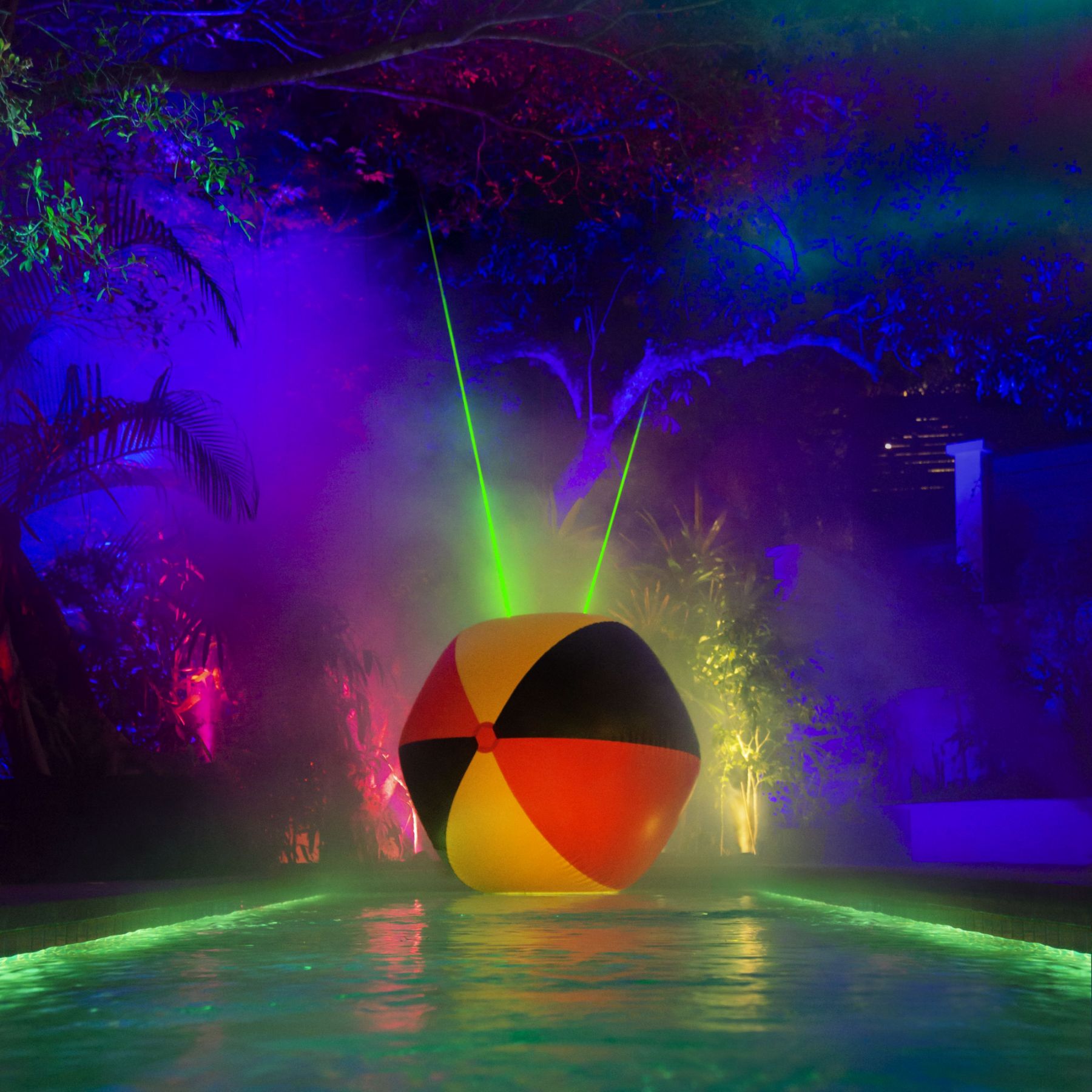
Above The album artwork for Blood Wine or Honey's latest album, DTx2
The album artwork for Blood Wine or Honey's latest album, DTx2
1 / 1
What is your favourite memory from the process of making this album?
JB: On this album we worked with a bunch of new and old friends on collaborative tracks and that was pretty exciting: Laujan from David Boring and Paul Morley from Art Of Noise on I Shall Rush Out As I Am, Preservation on Messenger, Zoë Brewster and Kamal on Testing Time, and of course KT Tunstall on Attraction (with some ace drumming from Tim Weller.) In most cases, we didn’t know what to expect from these collaborations and that was interesting for us. There was the whiff of danger, as to whether we could pull things off, whether we could make things work.
Read more: The Favourite Songs Of Genre-Defying DJ Xiaolin—From City Pop To Reggae To Acid House
One thing that surprised us was when KT Tunstall came back to us with a whole song she’d conceived, with words and everything. We thought she was going to do a bit of flute (she’s pretty good by all accounts) and instead she’d written this anthem. Working with Laujan [Janice Lau] was another highlight. Once we understood Paul Morley’s vision for the track, we thought Janice would be a good fit and that decision was vindicated by the result. She is very passionate about what she does and was quite involved in the gestation of the sound and the structure. It’s great to have that level of commitment from another artist.
Could you explain the artwork of your new album? What inspired it?
JvH: Someone suggested it looks a little like the aftermath of a rave. That's fine, but like the music, we wanted the incongruities of the images to speak to people in different ways. We did want to centre and elevate this beach ball so that it became imbued with meanings, as if it were a sacred object, or had just landed or been left behind. It’s an alien anti-monolith, since like all objects, it is fundamentally temporary: the air will slowly escape, or the bubble might burst. It’s a toy. It’s vulnerable, a little bit silly and frivolous. And we liked the idea of us solemnly straining, Atlas-like, to support this object that is so lightweight, hollow; an empty vessel.
In case you missed it: Rockstar And Rebel Josie Ho On A Lifetime As A Habitual Rule-Breaker
During the pandemic when playing live was off the cards, how did you maintain creative expression and stay connected with fans?
JB: We didn’t really try to maintain engagement with fans; we just focused on creative expression. Of course, it's easy to get a bit lost in the hermetic environment of a studio, which is basically what we were doing during the more extreme covid times. So that was easy enough, enabled even, with the lack of shows or other distractions. But we are very lucky, somehow people still care about what we are up to even when we ignore them!
Above Blood Wine or Honey feat. KT Tunstall — Attraction (Official Video)
You have attracted lots of attention internationally, but what is it about the band that is intrinsically Hong Kong? How does the city inspire your music? What is the value of being a band linked to and based in Hong Kong?
JvH: Yes we have, um, raised some eyebrows internationally, which is good. Somehow being a "Hong Kong band" is interesting for anyone outside Hong Kong, but until recently maybe not so interesting for those from here. However, you're never a prophet in your own town. And we can accept we're always, in some way, going to be on the margins. That's not such a bad place to be, though. Culturally, Hong Kong has so often looked to the West. Maybe that's changing. One thing is clear: Hong Kong is obviously so much more than the limp clichés of "East meets West". It's a far weirder cross-fertilisation of ideas and influences. I like to think the music reflects this complexity.
Read more: Meet The Rising Stars Who Are Redefining Culture In Hong Kong
As a band, we're just as likely to be influenced by memes as by music, images, food or nature. We make all this stuff inside these industrial buildings, these concrete monoliths, to the sound of industrial presses. So the city does loom large. Creatively, the totality of our respective experiences is there, and that is impossible to unravel. But from our lives here—both of us in the band have brought up children, created music and performed here. I hope that has value and I think that being linked to Hong Kong has tremendous value, at least to me. I am proud of it. I have thrived here as a musician in ways I never expected to.
Above Blood Wine or Honey - I Shall Rush Out As I Am (feat. Janice Lau & Paul Morley)
Playing live in Hong Kong has always been a challenge, now more so than ever. What do you envision for the future of Hong Kong's live music scene?
JB: We haven't really played live that much: a combination of being picky and being in Hong Kong. Performing in other countries comes with logistical considerations. The current quarantine requirements for entering Hong Kong have basically stopped most outside artists coming here to play. This seems to be creating more opportunities for local independent acts to perform on larger stages with more fervent local support. Hopefully we can be part of that, and it should lead to a more vibrant and diverse local live scene. We recently just did a secret show in a swimming pool. They took the water out for that. We're really excited to see where our live show leads—we're full of new ideas, interested in getting guests in, and want to make it really special.
Hear more from Blood Wine or Honey via Bandcamp, Spotify and Apple Music.
NOW READ
Industry Insiders Reveal How Covid-19 Has Affected Asia's Music Scene
Star Mixologist Chanel Adams On Her All-Time Favourite Songs
8 Record Stores To Visit In Hong Kong





