
1 / 1
On the eve of polo’s debut at the Longines Hong Kong Masters, one of the city’s keenest aficionados of the sport, Raphael le Masne de Chermont talks about teenage dreams, adrenaline and finding balance
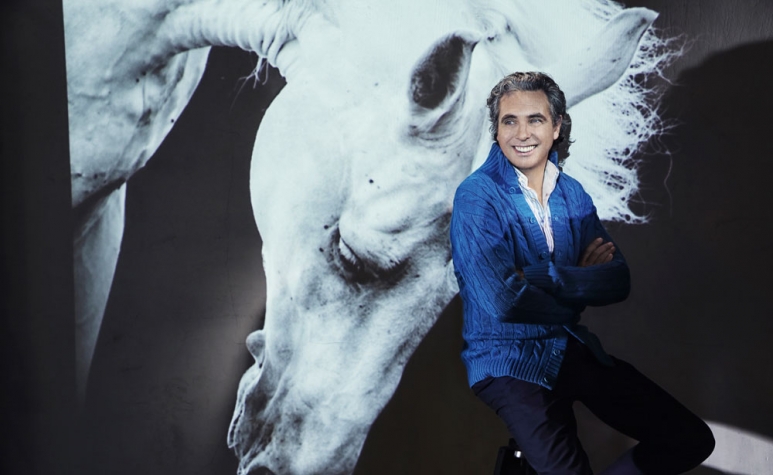
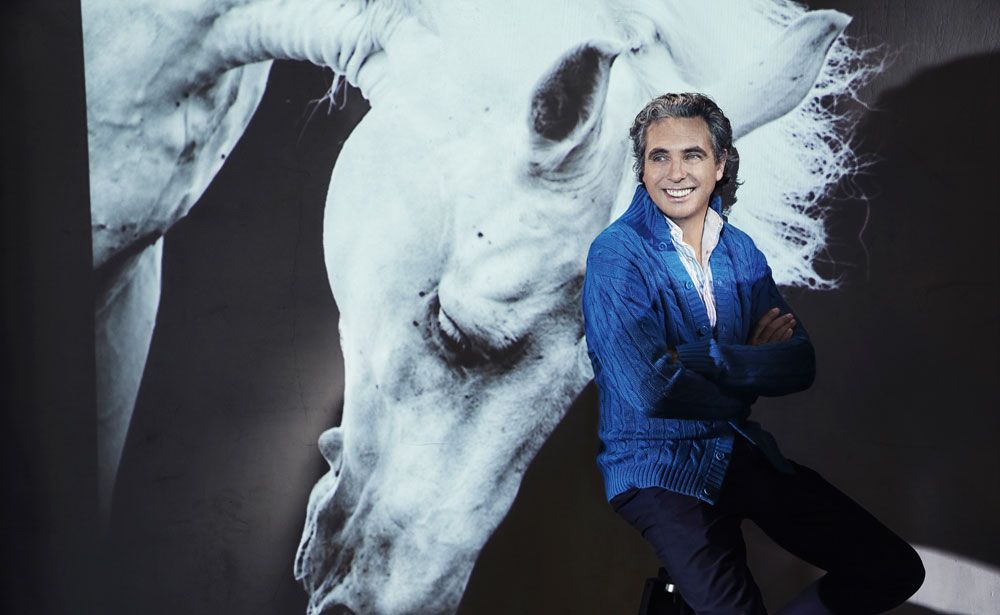
It all started with a donkey called Zephir. Named after the monkey in the Babar children’s books and television series, Zephir was an obstinate ass that enjoyed an idyllic life on the rural estate of the Le Masne de Chermont family just outside Nantes in Brittany, France.
His dreamy existence, however, came at a price. Each weekend young Raphael, the eldest of the four Le Masne de Chermont brothers, would return from boarding school intent on teaching Zephir to play polo, the thrilling sport played by his father. With a scaled-down mallet and ball, and the anything-is-possible attitude of a 12-year-old boy, Raphael would force the beast to trot up and down the grounds of the family’s castle as he walloped winners into makeshift goals.
Perhaps luckily, the polo ponies of Raphael’s engineer father, the vice-mayor of Nantes and proprietor of a construction business, were off limits to the tempestuous tween. “I learnt a lot from Zephir because donkeys are impossible to ride,” says the charismatic Breton as we sip fruit punch on the terrace at Duddell’s. After more than 22 years in Hong Kong, the affable executive chairman of Shanghai Tang has maintained a remarkably strong French accent. “They’re so stubborn; you can’t move them unless they want to be moved, and when they’ve had enough, they kick you off. When I finally made it on to a horse, it was as if I was gliding.”
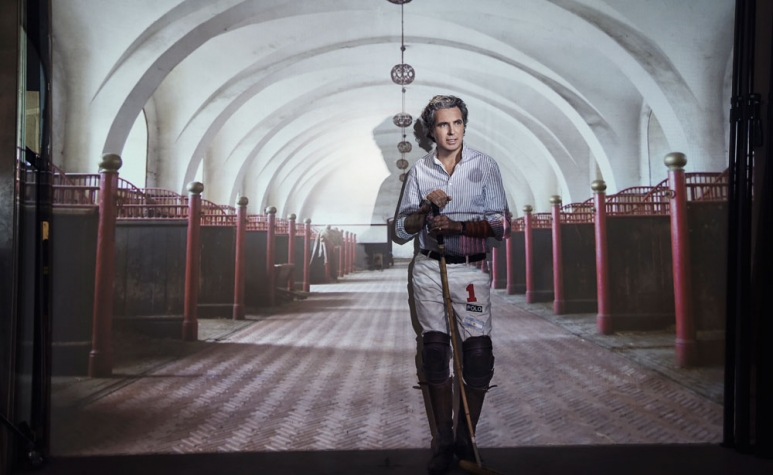
After a few years tormenting Zephir, Raphael graduated to horses. Flexibility and great balance made him a natural at showjumping and polo, and he competed in the sports with local teams. By the time he finished school, he was determined to be a professional. He dreamed of going to Argentina, the modern-day heartland of polo, and dedicating his life to this game of speed and agility. Nothing, it seemed, would shake his resolve—not even a mallet in the face, an accident that shattered his right cheekbone when he was 16. “My eye was basically falling out of its socket on the field. All I wanted to do was finish the match, but they forced me to stop and I spent three months in hospital undergoing reconstructions. But there was no coma or anything,” he adds matter-of-factly. The ligaments in his right leg were also badly damaged. Unsurprisingly, his mother and his wife of 23 years are squeamish spectators when he plays.
Polo is a violent sport. Raphael whips out his mobile and plays a YouTube clip of the most nail-biting falls and collisions—of players riding each other off and horses crashing to the ground. I can’t help but wonder what brand of thrill trumps the fear of shattering one’s spine, so I ask why he always gets back on the horse. “Okay,” he pauses. “Think about the best sex you’ve ever had.” He lets that percolate. “That’s the feeling you get every time you hit that ball.”
It’s no wonder, then, that he wanted to play professionally, but his father was adamant that he should attend business school first, which he did, gaining qualifications in finance and management. “It was a good decision because now I can do both.”
“Think about the best sex you’ve ever had.” He lets that percolate.
“That’s the feeling you get every time you hit that ball.”
Both he does: as the chairman of China’s first luxury brand by day and as a jet-setting polo player by weekend. Raphael is one of the original players on the Hong Kong Polo Team, which came into being just over a year ago. He and a handful of die-hard players, including Harilela Group chief Aron Harilela and banker Patrick Furlong, have teamed up with David Savage, founder and president of Asia World Polo, to play in tournaments around Asia, and, ultimately, to return polo to Hong Kong. They are currently lobbying the government to provide land to build a home for an official polo club in the city. “Hong Kong is probably the only city in the world not to have a polo club,” says Raphael, listing London, Paris, Singapore and even Bangkok as hubs for the sport.
It’s not as if Hong Kong doesn’t have historical ties to the sport. The British army used to play in Lo Wu just across the border from Shenzhen, but since the handover no polo has been played in the former colony. While acquiring suitable land is the major hurdle, it’s also necessary to convince the Hong Kong Jockey Club, which imports Hong Kong’s racehorses, to begin importing polo ponies. “You would think polo, the king of sports and the sport of kings, would be wildly popular here because you have head offices for so many luxury brands who would love to sponsor these games, yet it still hasn’t happened,” says Raphael.
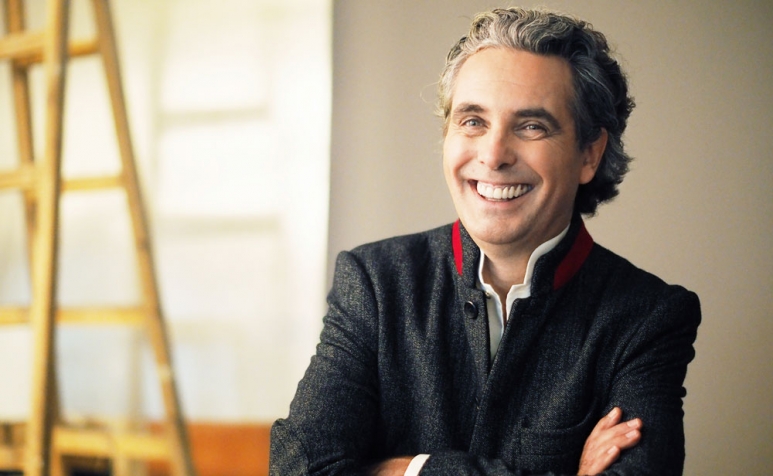
A defining moment in the campaign to find a local home for polo will be the sport’s debut at this year’s Longines Hong Kong Masters. “It’s going to be an exhibition match—the first step in bringing polo back to Hong Kong. The Masters is a truly world-class event and there aren’t many world-class events in Hong Kong, perhaps just the Rugby Sevens. The showjumpers coming out for this are the ones competing at the Olympics in Rio. Likewise, the polo players are incredible professionals from all over the world. I’m not sure Hong Kong has realised how lucky they are to have an event like this. It’s huge.” Shanghai Tang will be sponsoring the event across the three days. Aside from the Masters, Raphael is working with David Savage to confirm other firsts for the sport in the city, including a festival of beach polo on the Central Harbourfront on November 18 and 19 that involves importing 20 horses from Europe and many tonnes of sand from Guangdong.
Raphael arrived in Hong Kong in 1994 as the managing director of the watch division of the Richemont group, overseeing the operations of Piaget, Baume & Mercier and Panerai in Asia. That happened to be the year David Tang founded Shanghai Tang. “I fell in love with it. It was revolutionary for the time,” remembers Raphael, who took control of the brand eight years later following its acquisition in 1998 by Richemont.
He is widely credited with taking Shanghai Tang in a new direction, away from haute kitsch, which mainly attracted a Western customer base, to a purveyor of luxury apparel with an overwhelmingly Asian clientele. “Before the handover, everyone wanted a little piece of Hong Kong, so you had so many tourists coming to the stores,” he says. Times changed and it was clear Shanghai Tang needed to rethink its raison d’être. Mainland China’s economy began to boom and, simultaneously, its manufacturing capabilities blossomed. Suddenly it was possible to produce all kinds of high-quality apparel on the mainland. Disposable incomes grew and a budding sense of national pride following the 2008 Beijing Olympics gave birth to a desire to embrace ethnic identity in the way people dressed.

Photography: Olivia Tsang
Styling: Harry Lam
Hair: Serfeit Cheung
Make-up: Marian Woo
If the brand was to make a genuine appeal to the sensibilities of an increasingly sophisticated, cashed-up consumer cohort, it needed to cut the clichés and reposition itself as a modern, wearable brand. So Raphael developed a pool of designers from all corners of the globe, including the mainland, and recently installed Raffaele Borriello (formerly of Tom Ford, Gucci and YSL) as creative director. “We are not trying to make people look ‘interesting,’” says Raphael. “We are trying to make people look good. We are trying to bring an alternative elegance from this part of the world to the global market.”
These days Raphael counts Tory Burch, Max Mara and Ralph Lauren as the brand’s key competitors, at least in terms of price. As for aesthetic and ethos, however, “we don’t have much competition—perhaps Vivienne Tam, but no one else.” What about other designers of Chinese descent, like Phillip Lim? “Phillip is way more edgy and he doesn’t design as per his [Chinese] culture. He could be Western.” Raphael says Shanghai Tang will be making some major moves in the next few years. “We have come to the end of the building phase of the brand and have a very good distribution network in Asia. We are just about to present the brand for the first time to wholesalers in the US and Europe.”
“We are not trying to make people look ‘interesting.'
We are trying to make people look good."
Perhaps it was destiny that Raphael ended up in one of Asia’s key port cities. “The Bretons have strengths and drawbacks. Our best quality is that we travel. Bretons have always been seamen, fishermen and traders. We have always been by the sea.” But his wanderlust stretches far beyond leaving his hometown. “I am a free man. You can’t restrict me. I have built my life on a need to feel free—I think because I was constrained in boarding school for so long.”
Aside from polo, Raphael loves to go on walking expeditions with his wife and two children. They spent last Christmas in the mountains of the Indian state of Kerala exploring tea plantations. When his son and daughter were less than five years old, he took them hiking in Nepal through the foothills of the Himalayas. “My children walked for six hours a day, but they had Sherpas to help them. Some of their best memories are from that trip.” Trekking in Bhutan was another highlight.
The dynamo’s style of letting off steam is very different from the adrenaline-seeking, box-ticking mentality of so many of today’s type-A business personalities. “I’m not the type of guy who is going to climb the highest mountains. That doesn’t interest me. What I’m interested in is walking. If you do it for long enough, it becomes like a drug. I love reconnecting with nature. Cities have a tendency to alienate us and disconnect us from who we really are. I spend all my weekends either hiking or at sea, and I couldn’t live in Hong Kong if I wasn’t doing this.”
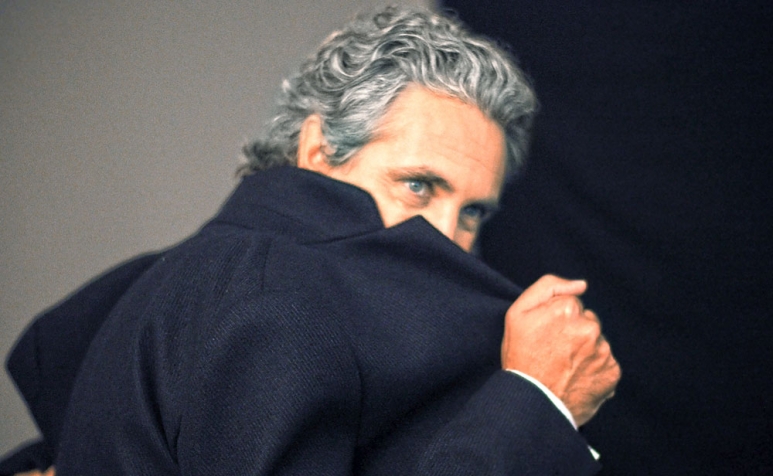
Raphael’s wife, Marie, a Belgian journalist who reports on the watch and jewellery sectors, sounds like a calming presence in his life. “The Belgians are the French in a good mood: easy-going, gentle, generous, spiritual. Marie puts the whole world into meditation.” The couple met during an interview (“just like this,” he notes, raising his eyebrows) when he was launching Piaget in Brussels more than two decades ago. We laugh at the thought of love blossoming over a Dictaphone. I ask which of Marie’s interview questions won him over. “I don’t remember—we didn’t talk much,” he smiles, his eyes twinkling. The couple have been married for 23 years and it’s clear Raphael is thoroughly enchanted with his life partner. As well as walking, he loves having a project to share with Marie. Lately they have busied themselves building a holiday house in Bali. “Having a project together is the healthiest way to keep life interesting.”
I ask what personality trait he thinks is most underrated these days, assuming he’ll say something suitably managerial, like perseverance or diligence. “Kindness,” he responds. “Without a doubt. My relationship works because I am with a very kind person. It’s the only thing that lasts. Nothing else is important.” For a high-profile businessman in the fickle world of fashion, the answer seems wonderfully substantial.
The sun has sunk low in the sky and is getting in Raphael’s eyes. I glance at my watch and realise the afternoon has flown by. It’s time to wrap things up and let him get back to the office. “The office? No, no,” he smiles. “I’m going to hike the Twins before sunset.”
This story was originally published in Hong Kong Tatler's February 2016 issue





