
1 / 1
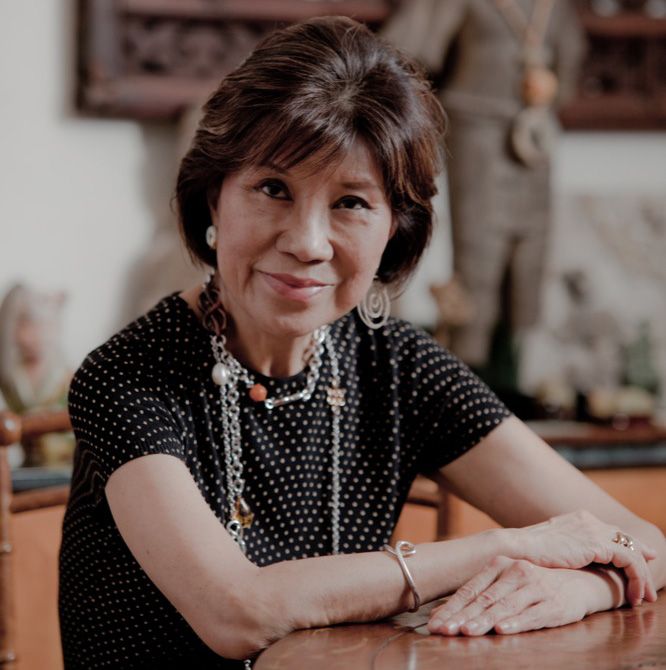
Vocal, passionate and brave, Kai Yin Lo on what it is like and what it takes to be a jewellery designer

Through the archway of jewellery designer Kai Yin Lo’s corner booth at Fine Art Asia, walks a chatty fan wearing one of Lo’s pieces. The woman bypasses a stunning jade necklace, whose carvings were formerly owned by Helena Rubenstein and was repurposed by Lo, and inquires about a mother of pearl and red jade brooch, once presented by the Hong Kong government to the wife of Chinese President Hu Jintao.
“I wasn’t meant to be a jewellery designer,” admits Kai Yin Lo, who hails from a family of bankers, once her customer leaves with a gift for her mother. In the 1970s, after earning a degree in European history from Cambridge University, Lo returned to Hong Kong, where she started as a court reporter for the South China Morning Post. “Yes, the crime beat,” she laughs. “But I quickly gave it up because it was so boring and so badly paid.”
Like more than a few Hong Kong journalists, Lo moved into public relations, at the Mandarin Oriental. In the ’80s, she lived in New York City, where she worked for Time magazine’s public affairs division before embarking on her new career as a jewellery designer, without any formal training in art or design.
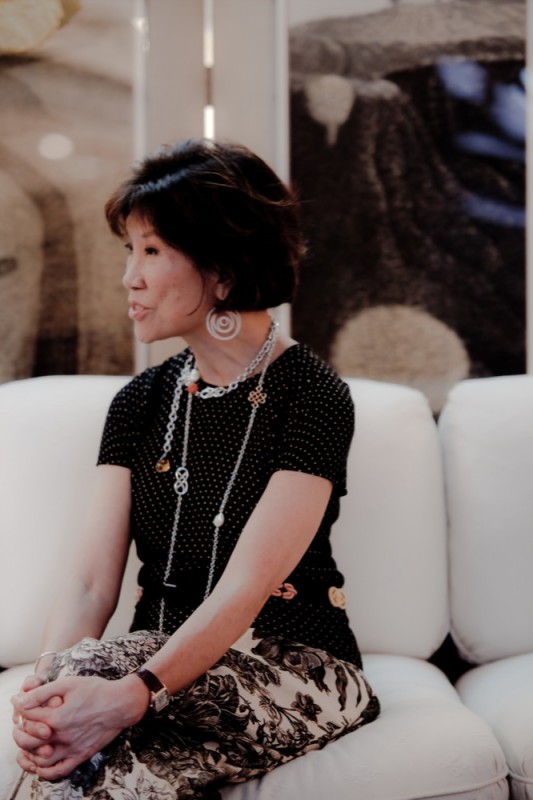
Armed with US$5,000 in seed money and a small treasure chest of ivory, bronze and jade, Lo transformed these timeless elements into wearable contemporary art. “I found myself trying to identify concepts, representations and design treatments that would transcend borders and gain wide or universal acceptance,” she says. And it worked.
“I walked into Cartier and just queued up,” she says almost too easily, explaining that the boutique held open calls every week, and adds more humbly: “I used to sit in St Patrick’s Cathedral for hours before the next appointment because I was so afraid of being rejected.”
But Cartier pounced, and soon Lo went mainstream, selling in Neiman Marcus, Bergdorf Goodman and Harrods to a client list that included Princess Diana, Hillary Clinton and the Japanese imperial family. What she inadvertently created was a new class of jewellery dubbed “bridge,” which was neither fine nor costume but included semi-precious stones and silver, and, according to International Herald Tribune fashion critic Suzy Menkes, established an entirely “new value system” for jewellery. Lo assumes, “High style, high taste, not expensive – I suppose that’s why I was successful.”
Her triumphs faded when the US went into economic recession in the early ’90s. For four years, Lo faltered, even returning to Hong Kong in pursuit of another fresh start. “I tried Seibu, all sorts of places, but they wouldn’t give me entrée,” she remembers. “I don’t know how I had the courage, the stamina, the patience. I just went on trying. Did I think of giving up? Oh yes, very often,” she admits.
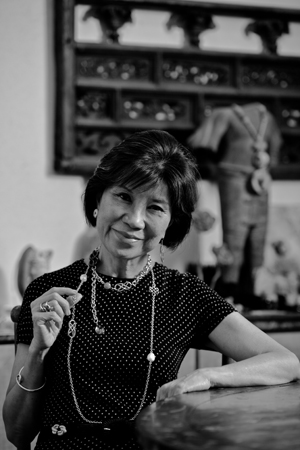
Later, she found her niche in lower-key venues such as art fairs. “I just don’t have the strength to go and hustle. One moves on to another level of realisation of and self-satisfaction,” Lo says. She also drew from her education in history and culture, both European and Chinese, to write books and produce exhibitions, solidifying her presence in the art world as an historian, curator and consultant.
More recently, Lo spearheaded a design exhibition at last year’s Shanghai Expo, and edited a book on the show titled Hong Kong Creative Ecologies: The Shaping of a Design Culture. She also served on the Asian art acquisitions board of London’s Tate Modern and helped bring in its first Asia-Pacific artist, the controversial Ai Weiwei, for The Unilever Series, Sunflower Seeds. At the time of going to press, when Ai had just been arrested before boarding a plane to Hong Kong, Lo says, “I – together with many – was hoping that despite Ai Weiwei’s attitude flaunting Chinese authorities, he would be tolerated as he is internationally well known and a public figure of many facets. If he is to be detained, it could be taken that the Chinese government does not care for its international image.”
Topics





