

1 / 1
The canny restaurateur who built the Aqua empire, David Yeo, speaks to Charmaine Mok about fashion, food and the future of dining

The familiar ding-dinging of trams drifts through concertina doors flung open in the early summer sunshine at Tivo, the latest addition to the Aqua Restaurant Group. As the Kennedy Town street chatter punctuates an early noughties pop tune, the group’s founder, David Yeo, strides in a little late, beaming and only mildly affected by the humidity outside. The Singapore-born restaurateur draws up a stool, orders a tall glass of iced water and grins for the camera.
Yeo carries the professional air of lawyer, which is not surprising, as he studied law at Cambridge and spent 19 years as a high-flying legal adviser to Freshfields and Credit Suisse in the City of London before founding his company in 2003 with Richard Ward. The final three of those years were spent juggling his Credit Suisse role and that of a nascent Hong Kong restaurateur, after he parlayed his passion for throwing lavish dinner parties into his first restaurant. Yeo opened a 60-seat eatery serving border-blurring Western cuisine at 49 Hollywood Road, now the site of Sushi Sase, in 2000 and gave it the name he would soon bestow on his company and a string of other restaurants.
That first Aqua, however, had originally been planned as a Thai restaurant, but the project came crashing down at the 11th hour. The idea had come to Yeo during a trip to Bangkok, when friends took him to dine at a tiny food shack at a Sunday market. The stall belonged to a former Thai Airways flight attendant, who crafted “the most exciting food” from old recipes running the gamut of Thai cuisine. “The restaurant looked as though she had been out foraging,” Yeo recalls. “Wild mango, tamarind, whole baskets of salads from which you’d just help yourselves.”
Yeo convinced the woman to help him plan his Hong Kong restaurant and to recruit a chef for it. “And then,” he says, pausing for drama, “she disappeared. Yau mo gau chor!” His eyes crinkle with laughter as the humorous Cantonese colloquialism for “are they kidding me?” rolls off his tongue. Years later, he reconnected with the runaway chef and found that “when Thais don’t know how to say no, they just disappear. So there I was, all pregnant, but it was a phantom birth.”
It was quite the contrary, however. Quick-thinking Yeo switched the concept from Thai to contemporary food on plates for sharing; Aqua was born and quickly became a success. Yeo’s first creation was a wonton crisp stacked with soy-tinged tuna, dressed with olive oil, garlic, anchovy paste, roasted walnuts, honey and fresh black grapes.
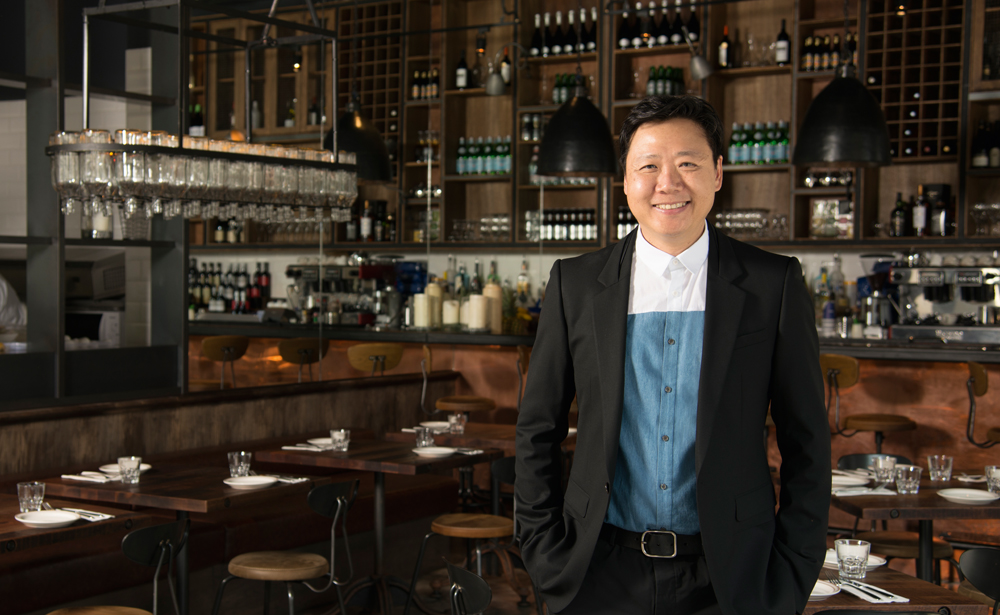
The Aqua brand has now grown to include 25 outlets in Hong Kong, London and Beijing in just a little over a decade, many occupying prime real estate. One Peking Road in Tsim Sha Tui houses four: Aqua Roma, Aqua Tokyo, Aqua bar, and Hutong, serving northern Chinese cuisine. Other outlets include two at Causeway Bay’s Hysan Place: Shiro, a modern sushi bar, and Red Almond, known as the little sister of Hutong. In 2006, Yeo launched Aqua Luna, a custom-built replica of the iconic Hong Kong junk—a luxurious floating cocktail bar plying dramatic Victoria Harbour.
Despite his close ties to Singapore and Hong Kong, Yeo is a Londoner at heart. (“I know every street; it’s my home.”) So it’s no surprise that a good chunk of Aqua’s overseas expansion has been in the British capital, it’s fortuitous that Yeo has developed the stoicism of the British. When he opened two lavish restaurants in Soho in 2009, Aqua Kyoto and Aqua Nueva, it was the height of the economic meltdown. They suffered crushing reviews, including one by Britain’s most acerbic critic, A A Gill. Yeo took it hard, not because of the snide remarks depicting him as a privileged Hongkonger, but because of the highly personal remarks directed at his staff.
“I was brought up from the gutter, so I have absolutely no problem with failure or criticism,” he says. “But I did feel bad for my team. It’s kind of like someone is abusing your children. What have these poor people done?”
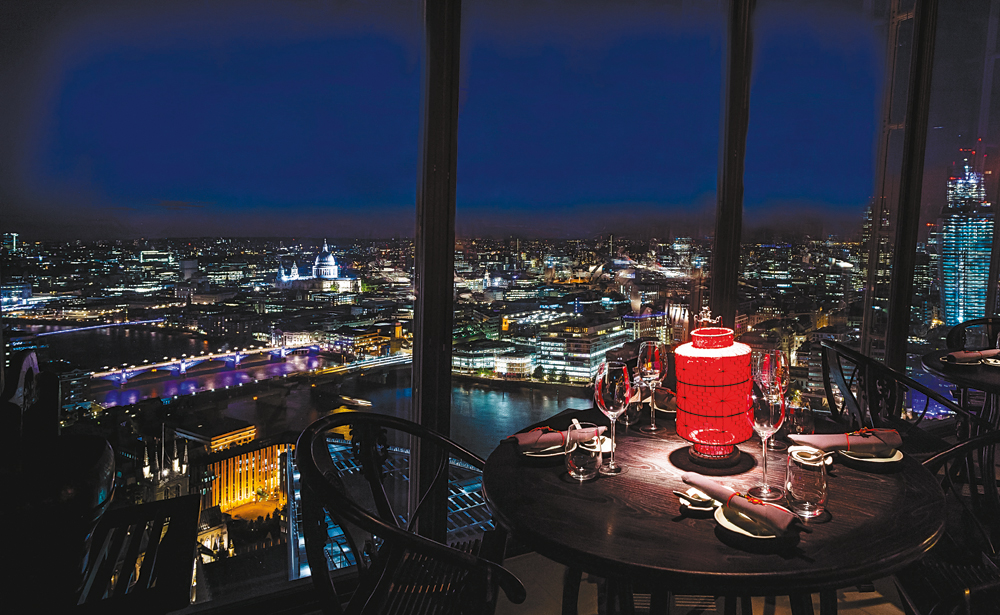
Fast-forward four years and Yeo has had the last laugh. As well as a string of accolades for the London incarnation of Hutong since it began serving its brand of northern Chinese cuisine on the 33rd floor of The Shard last year, Yeo says the Aqua restaurants remain two of the highest grossing restaurants in the capital. “It was tough, but it also made me realise that there is no such thing as bad PR.”
So what’s the secret behind Aqua’s success. Here Yeo casually segues into his choice of footwear for the day—Prada Levitates, the love-it-or-hate-it shoe of 2012, with its polished leather Derby uppers and bright orange Nike sneaker soles—and draws a few comparisons between fashion and food. The appeal of Aqua restaurants, he explains, hinges on their ability to give customers a reliable dining experience—one that always comes with a little dash of humour and innovation.
“Aqua is definitely not high street, but we’re not Prada either. I would definitely put us in the category of an emerging brand that is a little bit edgy. We’re not chasing Michelin stars, nor do we have starched white tablecloths. We’re like a comfortable cardigan or a good jacket; it doesn’t have to have fancy patterns or padded shoulders. Something that is a good basic will always have us going back.”
The restaurant world is changing, he says. “People are no longer flocking to a fine-dining restaurant every night of the week. They want to go to a place like this,” he says, gesturing towards the room, “have a glass of wine or two, and some nibbles. That’s what the world is going towards, and that’s why it’s no accident that the tapas bar trend is taking over everywhere, from Italy to New York.”
Yeo is planning the Group’s expansion to the west coast of the US and elsewhere in Europe, a project he admits is a little daunting. “It’s like learning to walk all over again.” He remains very hands-on with his 25 outlets, and while he is open to new things, he doubts he will stray too far from Aqua’s brand DNA. “We are doing new things, more casual stuff (such as Shiro, Tivo and Red Almond). Like when Giorgio Armani becomes Emporio Armani—we’re going diffusion. But will I go into something trendy like Peruvian cuisine?” Yeo has a little twinkle in his eye. “No, not really. It’s like when every dish had foam on it. Now, if you say ‘Oh, I have this foam machine,’ suddenly you’re wearing the biggest shoulder pads in the room.”
Topics


Charmaine Mok was formerly the Content Director of Dining for Tatler Hong Kong, overseeing Tatler Dining, the Off Menu festivals and the annual Tatler Dining Guide and Awards. As well as penning the latest stories about the city's newest restaurant openings, dining trends and food culture, she's constantly searching for leads on new flavours, food personalities, and thrilling new culinary destinations. Follow her on Instagram @supercharz





