
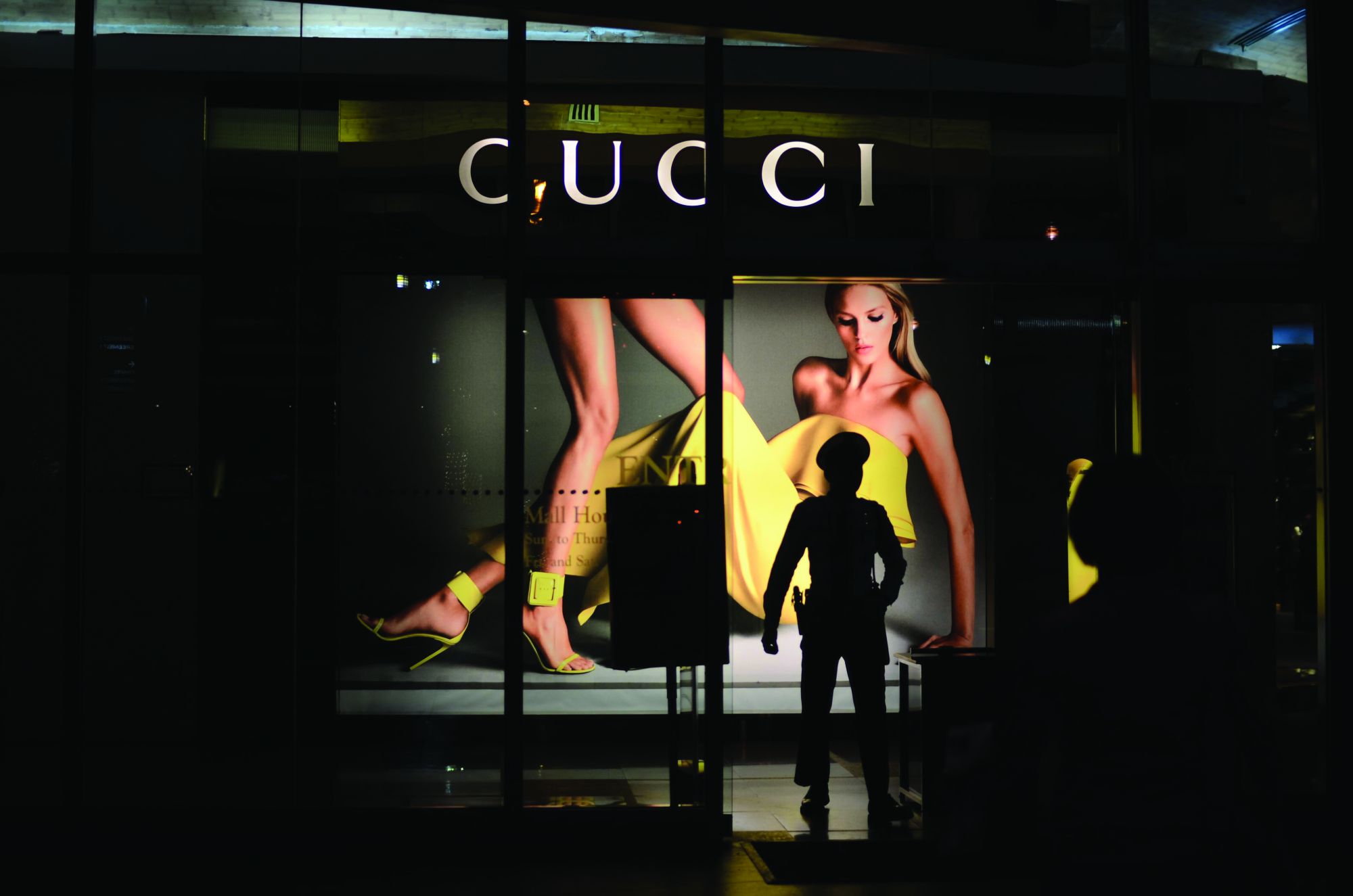
Cover MANILA, PHILIPPINES - MAY 31: A security guard stands in an upscale mall in the financial district of Makati on May 31, 2013 in Manila, Philippines. The Philippines had the fastest-growing economy among Asian countries in the first quarter of the year, with a growth rate of 7.8 percent, driven by strong manufacturing and construction sectors as well as mining, according to the National Statistical Coordination Board. Helped by increases in government and consumer spending, the year-on-year growth exceeded
MANILA, PHILIPPINES - MAY 31: A security guard stands in an upscale mall in the financial district of Makati on May 31, 2013 in Manila, Philippines. The Philippines had the fastest-growing economy among Asian countries in the first quarter of the year, with a growth rate of 7.8 percent, driven by strong manufacturing and construction sectors as well as mining, according to the National Statistical Coordination Board. Helped by increases in government and consumer spending, the year-on-year growth exceeded
1 / 1
Industry experts weigh in on the evolving retail landscape as a result of the global pandemic and how consumers will shop in a “new normal” world
In many parts of the globe, stores were forced to shutter down in compliance with government regulations, as lockdowns became imperative to arrest the spread of Covid-19. In the Philippines, the entirety of Luzon was placed under Enhanced Community Quarantine (ECQ) from 16 March to 15 May, and only businesses deemed essential were allowed to operate. It was inevitable that the pandemic would put a considerable damper on economic growth. In a report sent to journalists, the Bangko Sentral ng Pilipinas (Philippine Central Bank), said that growth would be sluggish for the remainder of 2020, with no rebound expected until 2021.
Hard-hit by present circumstances, the retail industry is one of those scrambling to adapt to what has been coined as “the new normal”. To stay afloat, short- and long-term solutions that cater to both business continuity and public safety are required. No textbook crisis communication plan has all the answers; in such unprecedented times, business owners must think on their feet. Now that the region is under the more relaxed General Community Quarantine (GCQ), malls and other businesses have resumed operations, with only non-leisure shops allowed to open.


Above Shoppers
following safety protocols
by wearing face masks
inside a shopping mall
Shoppers following safety protocols by wearing face masks inside a shopping mall
1 / 1
The coronavirus pandemic might have inflicted a brutal blow on the economy, but it has led to a spike in the e-commerce industry, with consumers ordering essentials and goods online. “Lockdowns have increased online consumer activity,” said Lee Ju Ye and Chua Hak Bin, analysts of Maybank Kim Eng, a subsidiary of the Malaysian financial giant Maybank, in an 20 April report titled “Consumer Behavior During a Pandemic”. So how do businesses adapt to the evolving retail landscape amid the crisis?
For businessman Bryan Lim, vice president of Suyen Corporation, the pandemic that caught them off-guard when lockdowns were first announced pushed them to institute a post-ECQ action plan immediately. “The priority was to ensure the safety and employment of our people; next was customer safety and a business continuity plan,” he shares. Lim believes that the only way for retail to move forward is with the “support between LGUs, malls, retailers and consumers.”
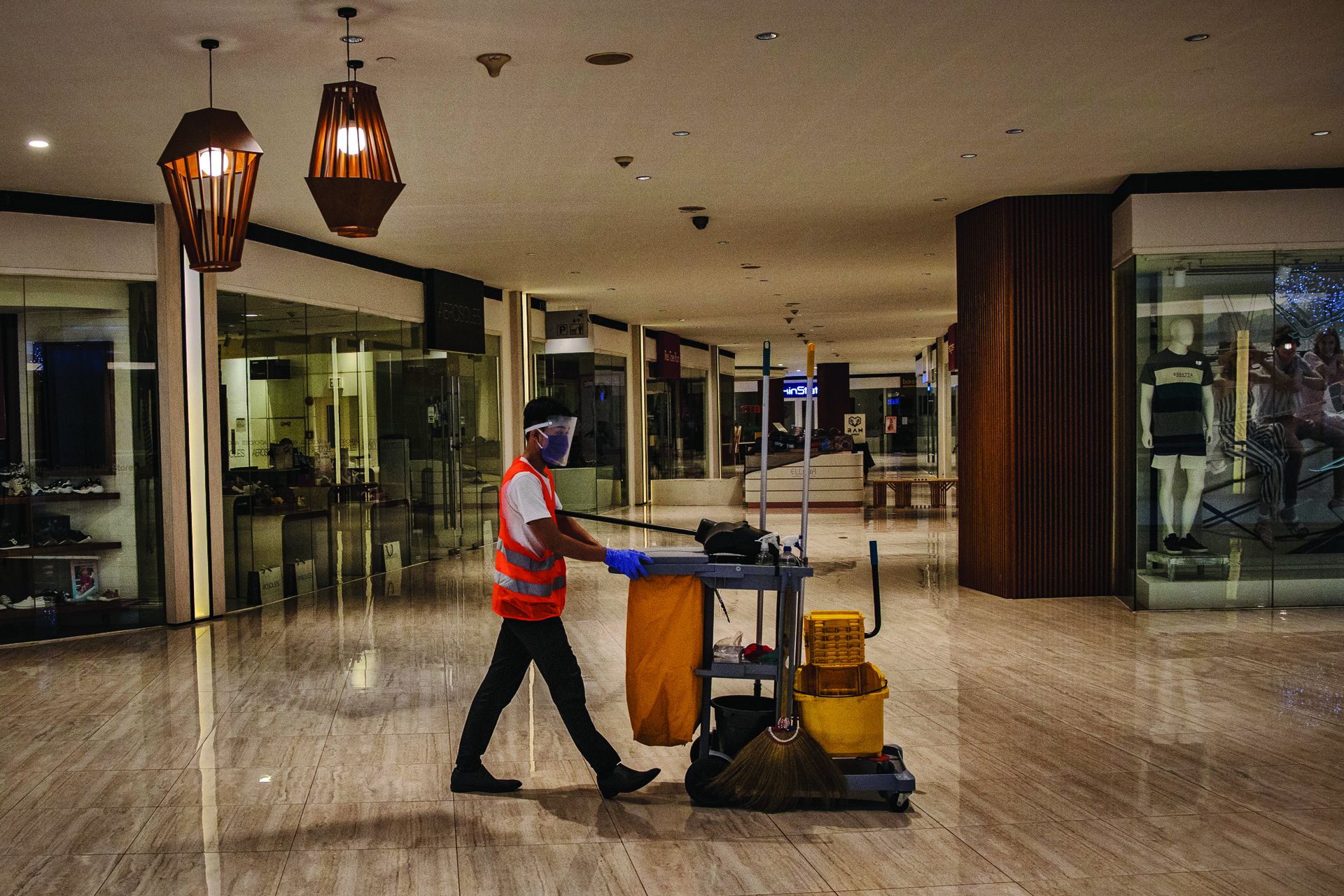
Above A cleaner geared with
face masks, gloves and
face shield at a mall in
Quezon City
A cleaner geared with face masks, gloves and face shield at a mall in Quezon City
1 / 1
“From the onset, around the time of the announcement of the lockdown, our efforts went directly to e-commerce. We knew that this would be the only way to continue operations,” says Jappy Gonzalez, founder and managing director of H&F Retail Concepts, the company behind Homme et Femme, Univers and several mono-brand stores including Comme des Garçons, Balenciaga, Lanvin and Y-3.
Donnie Tantoco, president of Rustan Commercial Corporation, which owns upmarket department stores and supermarkets in the country, says, “We are taking a very careful and thoughtful approach to the resumption of operations. Our paramount concern is the safety of our employees and customers. It will not be an immediate bounce back, but a gradual transition to ensure that all safety and precautionary measures are in place.”
We are intensifying our sanitation procedures throughout the customer’s journey in our stores, beginning with temperature checks upon arrival, to complimentary masks for customers
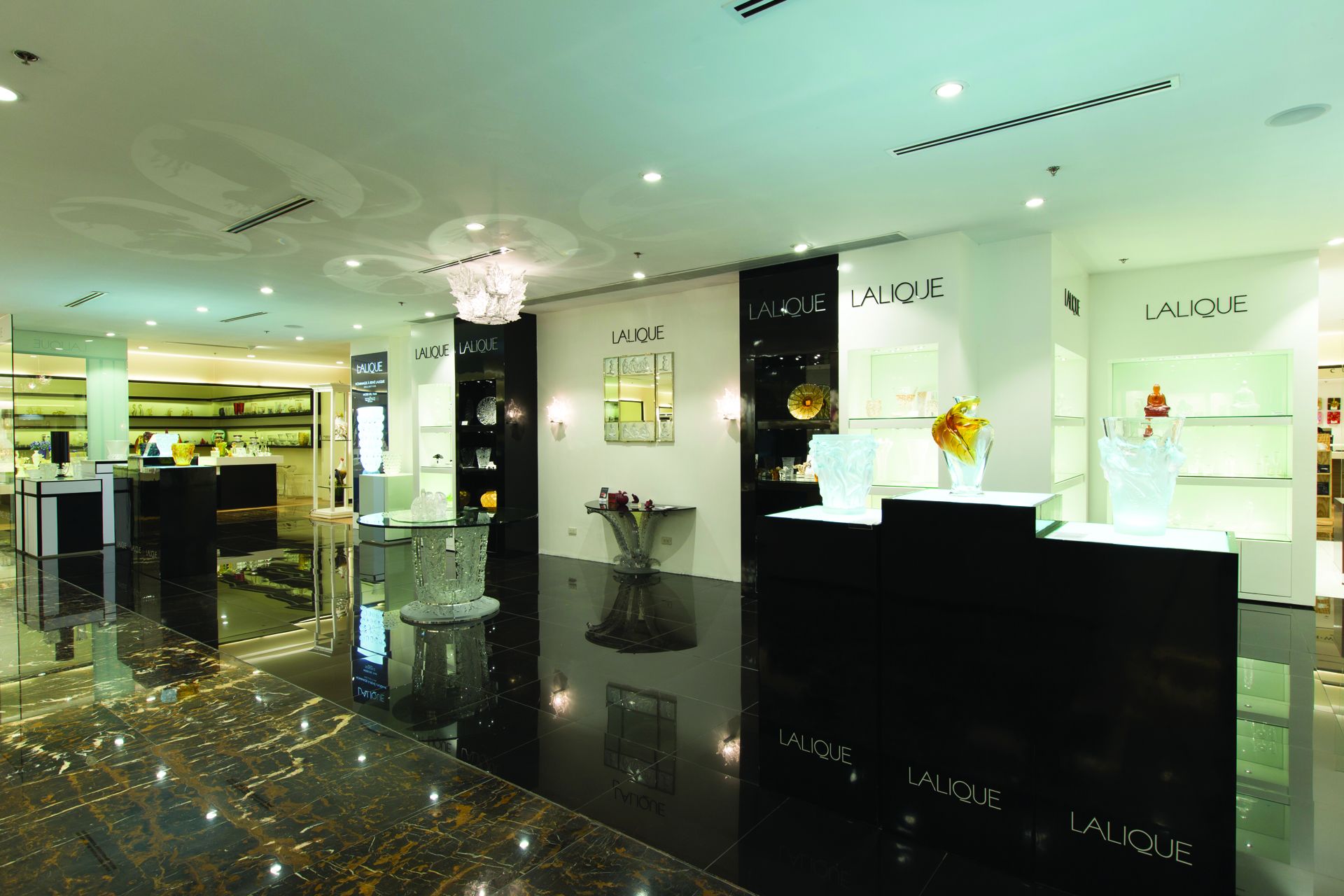
Above Inside a Lalique boutique at
Rustan’s Makati
Inside a Lalique boutique at Rustan’s Makati
1 / 1
As economies reopen and social distancing and safety measures become paramount, uncertainties remain in the retail industry, with changes expected ahead. Businesses are enforcing strict regulations for the aforementioned protocols as retail resumes operations under GCQ.
“Aside from prescribed IATF measures we have tested all employees for the virus. For the time being, we don’t allow fitting or any skin contact with our merchandise. The store and the items are UV light sanitised daily,” says Gonzalez. For his part, Tantoco remarked that intense procedures will be implemented with the opening of Rustan’s. “We are intensifying our sanitation procedures throughout the customer’s journey in our stores, beginning with temperature checks upon arrival, to complimentary masks for customers, proper sanitation procedures throughout, especially in high touch areas like escalators, fitting rooms, and checkout counters. The aim is to make Rustan’s the safest, most trusted place to shop.”
If one thing is certain, retail as we know it is forever changed by Covid-19. With retailers trying to ramp up and optimise their capabilities to meet the needs of the consumers, businesses are now seeing opportunities through online platforms. Withal, luxury companies, on the other hand, were quick to pivot to e-commerce as a response to the pandemic.
Lim touches on the fact that consumer behaviour will change: “We will move toward essentials. These essentials may not only translate to food and clothing but also to what makes a consumer feel good. Every day, we’re working with our team to improve consumers’ e-commerce experience, so they can have their items delivered to their homes.”





